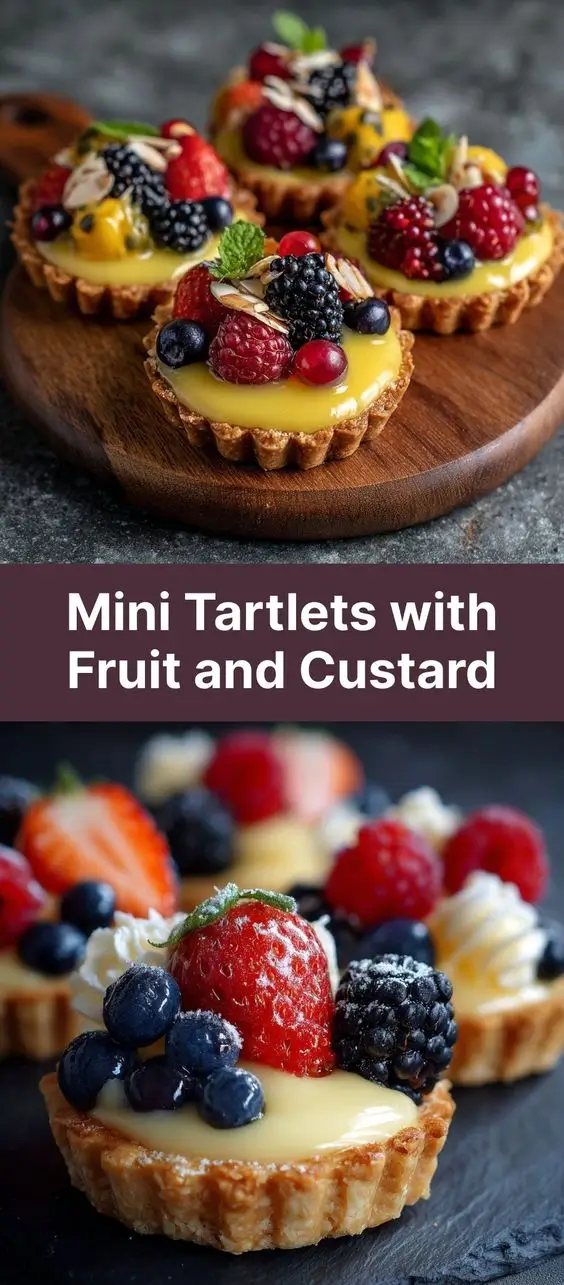
Mini Tartlets with Fruit and Custard: A Delightful Dessert Experience
The History
The tradition of tartlets dates back to medieval Europe, where small open-faced pies were a staple in royal courts and common households alike. These early tarts often featured fruit fillings preserved with honey or sugar, which was a luxury at the time. The concept evolved during the Renaissance, particularly in France and Italy, where pastry chefs began refining crust techniques and experimenting with custard-based fillings. By the 18th century, custard tarts had become a celebrated dessert across Europe, with Portugal’s famous Pastéis de Nata emerging as a shining example.
The miniaturization of tarts into bite-sized tartlets became popular in the Victorian era, when afternoon tea culture flourished in England. Elegant gatherings demanded dainty desserts that were both visually appealing and easy to eat. Mini tartlets with fruit and custard soon became a favorite, combining flaky pastry, smooth custard, and fresh seasonal fruits. Today, they remain a beloved treat at weddings, brunches, baby showers, and fine dining events, symbolizing sophistication and culinary artistry.
Ingredients Breakdown
Creating perfect mini tartlets requires high-quality ingredients that balance texture, flavor, and freshness. Here’s a detailed breakdown:
For the Pastry Crust:
- All-purpose flour – Provides structure and a tender crumb. Some bakers substitute part of it with cake flour for extra tenderness.
- Cold unsalted butter – Essential for flakiness. Keeping it cold prevents premature melting, ensuring distinct layers.
- Granulated sugar – Adds subtle sweetness and helps with browning.
- Salt – Enhances overall flavor and balances sweetness.
- Ice water – Binds the dough without activating too much gluten, keeping the crust tender.
- One egg yolk (optional) – For a richer, more golden crust with improved binding.
For the Custard Filling:
- Egg yolks – Provide richness and help thicken the custard through coagulation.
- Whole milk and heavy cream – A blend creates a creamy texture with balanced fat content. Some recipes use all cream for extra decadence.
- Granulated sugar – Sweetens the custard; can be adjusted based on fruit sweetness.
- Vanilla bean or extract – Adds aromatic depth. Real vanilla bean offers speckled elegance and superior flavor.
- Cornstarch or flour – Acts as a thickener to stabilize the custard, especially important for holding shape in mini tartlets.
For the Fruit Topping:
- Fresh seasonal fruits – Berries (strawberries, raspberries, blueberries), kiwi, mango, peaches, and figs work beautifully.
- Apricot glaze (optional) – A warmed apricot jam brushed over the fruit enhances shine and prevents drying.
- Lemon juice – Keeps cut fruits from oxidizing and adds brightness.
Step-by-Step Recipe
Makes approximately 24 mini tartlets
Ingredients
- 1 ½ cups (190g) all-purpose flour
- ½ teaspoon salt
- 1 tablespoon granulated sugar
- ½ cup (1 stick / 115g) cold unsalted butter, cubed
- 3–4 tablespoons ice water
- 1 egg yolk (optional, for richer crust)
- 3 large egg yolks
- ½ cup (100g) granulated sugar
- 2 tablespoons cornstarch
- 1 cup (240ml) whole milk
- ½ cup (120ml) heavy cream
- 1 teaspoon vanilla extract or seeds from ½ vanilla bean
- 2 cups mixed fresh fruit (e.g., strawberries, blueberries, kiwi slices)
- 2 tablespoons apricot jam + 1 teaspoon water (for glaze)
Directions
- Prepare the pastry dough: In a food processor, pulse flour, sugar, and salt. Add cold cubed butter and pulse until the mixture resembles coarse breadcrumbs with pea-sized butter pieces. Add egg yolk (if using) and 1 tablespoon of ice water. Pulse briefly, then add more water, one tablespoon at a time, until the dough begins to clump together. Do not overmix.
- Chill the dough: Turn the dough onto a lightly floured surface, shape into a disk, wrap in plastic wrap, and refrigerate for at least 1 hour (up to 2 days).
- Preheat oven: Set oven to 375°F (190°C). Lightly grease or line a 24-cup mini muffin tin with non-stick spray.
- Roll and shape tart shells: On a floured surface, roll the chilled dough to about ⅛-inch thickness. Use a round cutter slightly larger than the muffin cups (about 2.5 inches) to cut out circles. Gently press each into the muffin tin, ensuring no air pockets. Trim excess dough if needed.
- Blind bake the shells: Prick each shell with a fork. Line with parchment paper and fill with pie weights or dried beans. Bake for 12 minutes. Remove weights and parchment, then bake an additional 5–7 minutes until golden. Cool completely.
- Make the custard: In a medium saucepan, heat milk, cream, and vanilla over medium heat until steaming (do not boil). In a bowl, whisk egg yolks and sugar until pale. Gradually whisk in cornstarch until smooth.
- Temper the eggs: Slowly pour the hot milk into the egg mixture, whisking constantly. Return the mixture to the saucepan and cook over medium-low heat, stirring continuously with a wooden spoon or silicone spatula, until thickened (about 3–5 minutes). It should coat the back of the spoon.
- Cool the custard: Transfer custard to a bowl. Press plastic wrap directly onto the surface to prevent a skin from forming. Refrigerate for at least 1 hour until cold and firm.
- Fill the tartlets: Once shells are cool and custard is set, use a small spoon or piping bag to fill each shell three-quarters full.
- Add fruit topping: Arrange fresh fruit on top of the custard. For berries, place them cut-side up; for sliced fruit like kiwi or peach, layer attractively.
- Glaze (optional): Warm apricot jam with water and brush gently over the fruit to add shine and preserve freshness.
- Chill before serving: Refrigerate tartlets for 30 minutes to set. Serve cold for best texture.
Tips
- Keep everything cold: Cold butter and ice water are crucial for flaky pastry. Work quickly and avoid warming the dough with your hands.
- Don’t skip blind baking: This prevents soggy bottoms, especially important when adding moist custard and fruit.
- Use room temperature egg yolks: They incorporate more smoothly into custard, reducing the risk of scrambling.
- Stir custard constantly: Prevent scorching by using a silicone spatula and scraping the bottom of the pan.
- Customize fruit seasonally: Summer calls for berries and peaches; fall pairs well with pears and figs; winter citrus like clementines make stunning toppings.
- Prevent fruit from sliding: Pat fruit dry before placing on custard. Overly juicy fruits (like watermelon) are best avoided.
- Make ahead: Dough can be made 2 days in advance; baked shells keep in an airtight container for up to 3 days; custard lasts 3 days in the fridge.
Variations and Customizations
- Gluten-free option: Substitute all-purpose flour with a gluten-free 1:1 baking blend. Add ¼ teaspoon xanthan gum if not included in the mix.
- Dairy-free custard: Use full-fat coconut milk instead of dairy milk and cream. Add a bit more cornstarch to account for lower protein content.
- Chocolate tartlets: Add 2 tablespoons cocoa powder to the pastry dough, or mix melted dark chocolate into the custard.
- Lemon curd variation: Replace custard with homemade lemon curd for a tangy twist. Top with blueberries or raspberries.
- Almond crust: Replace ¼ cup flour with finely ground almond meal for a nutty, rich base.
- Savory-sweet option: Add a thin layer of goat cheese or mascarpone beneath the custard for a sophisticated flavor contrast.
- Kid-friendly version: Use colorful candies or chocolate shavings instead of fruit (though fresh fruit is recommended for health).
- Boozy twist: Infuse custard with 1 tablespoon Grand Marnier, Amaretto, or rum for adult gatherings.
Health Considerations and Nutritional Value
While mini tartlets with fruit and custard are undeniably indulgent, mindful preparation can enhance their nutritional profile:
Nutritional Highlights (per tartlet, approximate):
- Calories: 110–140 kcal
- Fat: 6–8g (mostly from butter and cream; includes healthy fats from egg yolks)
- Saturated Fat: 3–4g
- Carbohydrates: 12–15g (includes natural sugars from fruit and added sugar)
- Protein: 2–3g (from eggs and dairy)
- Fiber: 0.5–1g (increases with fruit-rich toppings like berries)
- Vitamins & Minerals: Rich in vitamin A (egg yolks), calcium (dairy), and antioxidants (berries, kiwi, citrus)
Health Tips:
- Reduce sugar: Cut custard sugar by 25% and rely on naturally sweet fruits like ripe mango or banana.
- Bake with whole grains: Substitute half the flour with whole wheat pastry flour for added fiber.
- Portion control: Their small size makes them ideal for moderation—stick to 1–2 per serving.
- Boost nutrition: Top with antioxidant-rich berries (blueberries, blackberries) or vitamin C-packed kiwi.
- Allergen awareness: Contains dairy, eggs, and gluten. Always label accordingly for guests with allergies.
- Storage: Keep refrigerated and consume within 24–48 hours for food safety, especially with dairy-based custard.
FAQ
- Can I make these tartlets ahead of time?
- Yes! Prepare the dough, blind-bake shells, and make custard 1–2 days in advance. Assemble with fruit and glaze just before serving to maintain freshness.
- Why did my custard curdle?
- This usually happens due to overheating or insufficient tempering. Always warm the milk slowly and whisk vigorously when combining with eggs. If slightly curdled, strain through a fine sieve.
- Can I freeze mini tartlets?
- Not recommended. Freezing affects custard texture (becomes watery) and causes fruit to degrade. Best enjoyed fresh or refrigerated short-term.
- How do I prevent soggy tart shells?
- Ensure thorough blind baking and allow shells to cool completely before filling. You can also brush cooled shells with melted white chocolate or egg wash for a moisture barrier.
- Can I use store-bought crusts?
- Absolutely. Pre-made mini tart shells save time. Choose high-quality brands or frozen puff pastry cut into rounds.
- What fruits should I avoid?
- High-moisture fruits like watermelon, oranges, or very ripe bananas can release juice and soften the custard. If using, pat dry and add last minute.
- Can I make vegan mini tartlets?
- Yes! Use plant-based butter and a flax-egg (1 tbsp ground flax + 3 tbsp water) for the crust. For custard, use cornstarch-thickened coconut milk and agar-agar for firmness.
Summary
Mini Tartlets with Fruit and Custard are elegant, customizable desserts that combine buttery pastry, velvety custard, and vibrant fresh fruit for a perfect balance of flavors and textures.
Ideal for entertaining or treating yourself, these delightful treats blend timeless technique with modern versatility, making them a must-have in any dessert repertoire.