Introduction
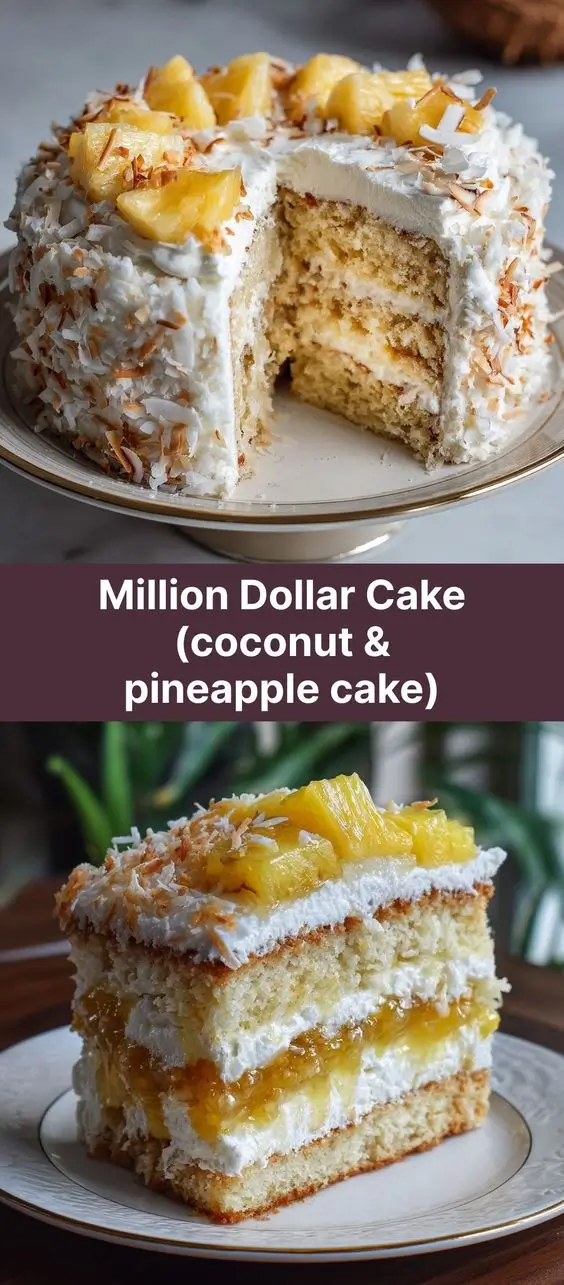
The Million Dollar Cake, often referred to as the “Cake Worth a Fortune,” is a luscious, decadent dessert that lives up to its name with every bite. This heavenly confection combines the tropical sweetness of pineapple and coconut with layers of moist cake, creamy frosting, and a hint of nostalgia that transports you straight to a sunny beachside paradise. Revered for its rich texture, vibrant flavor profile, and eye-catching appearance, this cake has earned its place in family gatherings, holiday celebrations, and potlucks across generations. Whether you’re baking it for a special occasion or simply treating yourself to something extraordinary, the Million Dollar Cake is more than just dessert—it’s an experience.
The History
The origins of the Million Dollar Cake are somewhat shrouded in culinary folklore, but most food historians agree that it emerged in the American South during the mid-20th century—a time when canned fruits, boxed cake mixes, and convenience ingredients became household staples. The cake likely evolved from earlier “pineapple upside-down” and “coconut layer cake” recipes, combining them into a more indulgent version enhanced with cream cheese frosting and maraschino cherries. Its name, “Million Dollar Cake,” may have originated from a promotional campaign by a Southern bakery or home economist who wanted to emphasize the cake’s luxurious taste and perceived extravagance despite its simple, affordable ingredients. Over time, the recipe spread through church cookbooks, women’s magazines like Betty Crocker’s Cookbook, and community recipe swaps, becoming a beloved classic. Today, variations appear on Pinterest boards, cooking blogs, and family recipe cards, each baker adding their own personal touch while honoring the cake’s sweet, tropical roots.
Ingredients Breakdown
The beauty of the Million Dollar Cake lies in its harmonious blend of simple yet flavorful ingredients. Here’s a detailed breakdown of what goes into this show-stopping dessert:
- Yellow Cake Mix (1 box, about 15–18 oz): Forms the base of the cake, providing structure, sweetness, and consistent rise. Opt for a premium brand for better texture.
- Creamed Coconut (or Sweetened Flaked Coconut – 1 cup): Adds chewy texture and authentic tropical flavor. Toasting enhances aroma and depth.
- Canned Crushed Pineapple (1 can, 20 oz, undrained): Contributes moisture, tangy sweetness, and tender crumb. The juice integrates into the batter naturally.
- Maraschino Cherries (1 jar, 10 oz, drained): Offers bursts of bright red color and sweet-tart contrast. Chop finely or leave whole depending on preference.
- Vegetable Oil (½ cup): Keeps the cake moist and tender. Can substitute with melted butter for richer flavor.
- Eggs (3 large): Bind ingredients together and contribute to the cake’s lift and softness.
- Vanilla Extract (1 tsp): Enhances overall flavor complexity and rounds out sweetness.
For the frosting:
- Cream Cheese (16 oz, softened): The star of the frosting—tangy, smooth, and rich. Full-fat blocks work best; avoid spreadable tubs.
- Unsalted Butter (½ cup, softened): Adds silkiness and helps stabilize the frosting.
- Powdered Sugar (4 cups, sifted): Sweetens and thickens the frosting. Sifting prevents lumps.
- Vanilla Extract (1 tsp): Complements the cream cheese without overpowering.
- Pinch of Salt: Balances sweetness and sharpens flavors.
Optional garnishes: extra toasted coconut, maraschino cherries (halved), pineapple chunks, or edible flowers for presentation.
Step-by-Step Recipe
- Preheat Oven & Prepare Pans: Preheat your oven to 350°F (175°C). Grease and flour two 9-inch round cake pans or line them with parchment paper for easy release.
- Toast the Coconut (Optional but Recommended): Spread flaked coconut evenly on a baking sheet and toast in the preheating oven for 5–7 minutes until golden brown, stirring once. Set aside to cool.
- Mix Wet Ingredients: In a large mixing bowl, beat eggs, vegetable oil, vanilla extract, and the entire contents of the crushed pineapple (juice included) until well combined.
- Incorporate Dry Ingredients: Add the dry yellow cake mix to the wet mixture. Stir until just blended—do not overmix. Overmixing can lead to a tough cake.
- Fold in Add-ins: Gently fold in the toasted coconut and chopped maraschino cherries. Ensure even distribution throughout the batter.
- Divide & Pour: Evenly divide the batter between the two prepared cake pans. Use a spatula to smooth the tops for even baking.
- Bake: Place pans in the center rack of the oven. Bake for 25–30 minutes, or until a toothpick inserted into the center comes out clean. Rotate pans halfway through for even browning.
- Cool Completely: Allow cakes to cool in their pans for 10 minutes, then run a knife around the edges and invert onto wire racks. Remove parchment if used and let cool completely—this is crucial before frosting.
- Prepare Cream Cheese Frosting: In a stand mixer fitted with a paddle attachment (or using a hand mixer), beat softened cream cheese and butter on medium speed until smooth and creamy (about 2 minutes).
- Add Sugar Gradually: With the mixer on low, gradually add sifted powdered sugar, one cup at a time, scraping down the sides as needed. Once all sugar is incorporated, increase speed to medium and beat for another 2–3 minutes until light and fluffy.
- Final Flavor Touch: Mix in vanilla extract and a pinch of salt. Taste and adjust if necessary—add more vanilla or a tiny bit more salt to balance sweetness.
- Assemble the Cake: Place one cooled cake layer on a serving plate or cake stand. Spread a generous amount of frosting evenly over the top. Carefully place the second layer on top.
- Frost the Entire Cake: Apply a thin crumb coat first—this seals in loose crumbs. Refrigerate for 15–20 minutes, then apply the final layer of frosting, smoothing sides and top with a bench scraper or offset spatula.
- Garnish: Press additional toasted coconut onto the sides of the cake. Arrange maraschino cherry halves or pineapple tidbits on top in a decorative pattern.
- Chill Before Serving: Refrigerate the assembled cake for at least 1 hour to set the frosting and enhance flavor melding.
Tips
- Room Temperature Ingredients: Always use room temperature cream cheese, butter, and eggs for smoother mixing and better emulsification.
- Don’t Skip Draining Cherries: Excess liquid from maraschino cherries can make the batter too wet. Drain thoroughly and pat dry with a paper towel.
- Use Real Cane Sugar Cake Mix: Some premium cake mixes use real sugar instead of dextrose or corn syrup solids—they produce a cleaner, less artificial taste.
- Toasting Coconut Makes a Difference: Toasted coconut adds a nutty depth that raw coconut cannot match. Watch closely to prevent burning.
- Stabilize Frosting for Warm Climates: If serving in heat, consider adding 1 tablespoon of meringue powder or an extra 2 tablespoons of cream cheese to help hold shape.
- Make Ahead Friendly: Bake cake layers a day ahead, wrap tightly, and refrigerate. Frost the day of serving for best texture.
- Freezing Options: Unfrosted cake layers freeze well for up to 3 months. Wrap in plastic and foil. Thaw overnight before frosting.
- Level Your Layers: If your cakes domed during baking, level them with a serrated knife for a professional finish.
- Consistent Frosting Thickness: Use a turntable and icing comb for polished results if decorating for events.
- Serve Chilled: This cake tastes best when served cold or slightly chilled—the cream cheese frosting shines at cooler temperatures.
Variations and Customizations
The Million Dollar Cake is incredibly versatile. Here are some creative twists to personalize your version:
- From Scratch Version: Replace the cake mix with a homemade vanilla sponge made with buttermilk, offering a lighter, more delicate texture.
- Pineapple Variations: Swap crushed pineapple for diced fresh pineapple for a brighter, less syrupy taste. Sauté briefly to reduce acidity.
- Alcohol-Infused: Brush baked layers with pineapple juice mixed with rum (¼ cup dark rum per ½ cup juice) for a Caribbean flair.
- Fruit Swaps: Try mandarin oranges instead of pineapple, or add shredded apple for autumnal vibes.
- Nutty Crunch: Fold in chopped pecans or macadamia nuts for added crunch and richness.
- Chocolate Twist: Add chocolate chips or drizzle ganache between layers for a tropical-chocolate fusion.
- Gluten-Free Option: Use a high-quality gluten-free yellow cake mix and ensure other ingredients are certified GF.
- Dairy-Free/Lactose-Free: Substitute butter and cream cheese with plant-based alternatives like Miyoko’s or Kite Hill brands.
- Vegan Million Dollar Cake: Use flax eggs (3 tbsp ground flax + 9 tbsp water), vegan cake mix, and dairy-free frosting made from coconut cream and powdered sugar.
- Mini Versions: Bake in cupcake tins for individual servings—top with piped frosting and a cherry.
- Sheet Cake Style: Bake in a 9×13-inch pan for easier serving at parties. Frost and garnish similarly.
- Layered Parfait: Crumble cake and alternate with whipped cream and fruit in glasses for a deconstructed trifle effect.
- Spice It Up: Add ½ teaspoon ground cinnamon or nutmeg to the batter for warmth and complexity.
- Coconut Milk Boost: Replace half the crushed pineapple liquid with full-fat coconut milk for intensified tropical flavor.
Health Considerations and Nutritional Value
While undeniably delicious, the traditional Million Dollar Cake is a dessert best enjoyed in moderation due to its high sugar, fat, and calorie content. A typical slice (1/12 of the cake) contains approximately:
- Calories: ~450–500 kcal
- Total Fat: ~22g (including 10g saturated fat)
- Carbohydrates: ~65g (with 50g sugars)
- Protein: ~4g
- Sodium: ~350mg
Considerations:
- Sugar Content: High due to cake mix, frosting, canned fruit in syrup, and cherries. Diabetics should exercise caution or explore sugar substitutes.
- Saturated Fat: Primarily from cream cheese and butter. Opt for reduced-fat versions if needed, though texture may suffer.
- Gluten: Standard version contains gluten. Gluten-sensitive individuals should use certified GF alternatives.
- Preservatives & Food Coloring: Maraschino cherries and some cake mixes contain artificial dyes (Red #40, etc.). Choose natural versions if preferred.
- Healthy Tweaks:
- Use pineapple packed in juice instead of syrup.
- Reduce sugar in frosting by 1 cup and add a mashed banana or applesauce to maintain moisture.
- Replace half the oil with unsweetened applesauce.
- Top with fresh fruit instead of cherries.
- Use Greek yogurt in place of some cream cheese for added protein and tang.
This cake isn’t health food—but it brings joy, comfort, and celebration. Enjoy mindfully and savor every bite.
Ingredients
For the Cake:
- 1 box (15.25 oz) yellow cake mix
- 1 cup sweetened flaked coconut (toasted)
- 1 can (20 oz) crushed pineapple, undrained
- 1 jar (10 oz) maraschino cherries, drained and chopped
- ½ cup vegetable oil
- 3 large eggs
- 1 teaspoon vanilla extract
For the Cream Cheese Frosting:
- 16 oz (2 blocks) cream cheese, softened
- ½ cup (1 stick) unsalted butter, softened
- 4 cups powdered sugar, sifted
- 1 teaspoon vanilla extract
- Pinch of salt
For Garnish (optional):
- Extra toasted coconut
- Maraschino cherry halves
- Pineapple chunks
Directions
- Preheat oven to 350°F (175°C). Grease and flour two 9-inch round cake pans or line with parchment paper.
- Toast coconut on a baking sheet for 5–7 minutes until golden. Cool completely.
- In a large bowl, whisk eggs, oil, vanilla, and crushed pineapple (with juice).
- Add cake mix and stir until just combined.
- Fold in toasted coconut and chopped cherries.
- Divide batter evenly between pans and smooth tops.
- Bake 25–30 minutes until a toothpick comes out clean. Cool in pans 10 minutes, then transfer to wire racks to cool completely.
- For frosting, beat cream cheese and butter until smooth. Gradually add powdered sugar, then vanilla and salt. Beat until fluffy.
- Place one cake layer on a plate. Frost top with a thick layer. Top with second layer.
- Apply crumb coat, chill 15–20 minutes, then frost entire cake smoothly.
- Press toasted coconut onto sides. Decorate top with cherries and pineapple.
- Refrigerate at least 1 hour before slicing. Serve cold.
FAQ
Q: Can I make this cake ahead of time?
A: Yes! Bake the layers up to 2 days in advance and store wrapped at room temp. Frost the day of serving. Fully assembled, it keeps refrigerated for up to 5 days.
Q: Why is my frosting too runny?
A: Likely cause: warm ingredients or overbeating. Chill the bowl and beaters, use colder cream cheese, or add ½ cup more powdered sugar. Never use whipped cream cheese spread.
Q: Can I use fresh pineapple?
A: Yes, but drain excess juice after chopping. You’ll need about 1 ¾ cups crushed fresh pineapple. Sauté lightly to reduce tartness if desired.
Q: Is this cake freezable?
A: Absolutely. Wrap unfrosted layers tightly in plastic and foil; freeze up to 3 months. Frosted cake can be frozen for up to 6 weeks—wrap in cling film and place in an airtight container.
Q: Can I bake this as a sheet cake?
A: Yes. Use a 9×13-inch pan and bake for 35–40 minutes. Adjust frosting quantity slightly.
Q: What can I substitute for maraschino cherries?
A: Diced red bell pepper (no, just kidding!). Seriously: try candied cranberries, dried cherries soaked in juice, or omit entirely for a simpler tropical vibe.
Q: Can I make it less sweet?
A: Reduce powdered sugar to 3 cups, use unsweetened coconut, and choose pineapple in 100% juice. Balance with a squeeze of lime in the frosting.
Q: Why did my cake sink in the middle?
A: Possible causes: underbaking, too much batter, opening oven too early, or expired leavening agents. Check your cake mix expiration date!
Summary
The Million Dollar Cake is a sumptuous fusion of fluffy yellow cake, juicy pineapple, sweet cherries, and toasted coconut, all crowned with velvety cream cheese frosting. A timeless Southern-inspired dessert that delivers unforgettable tropical flavor in every luxurious bite.