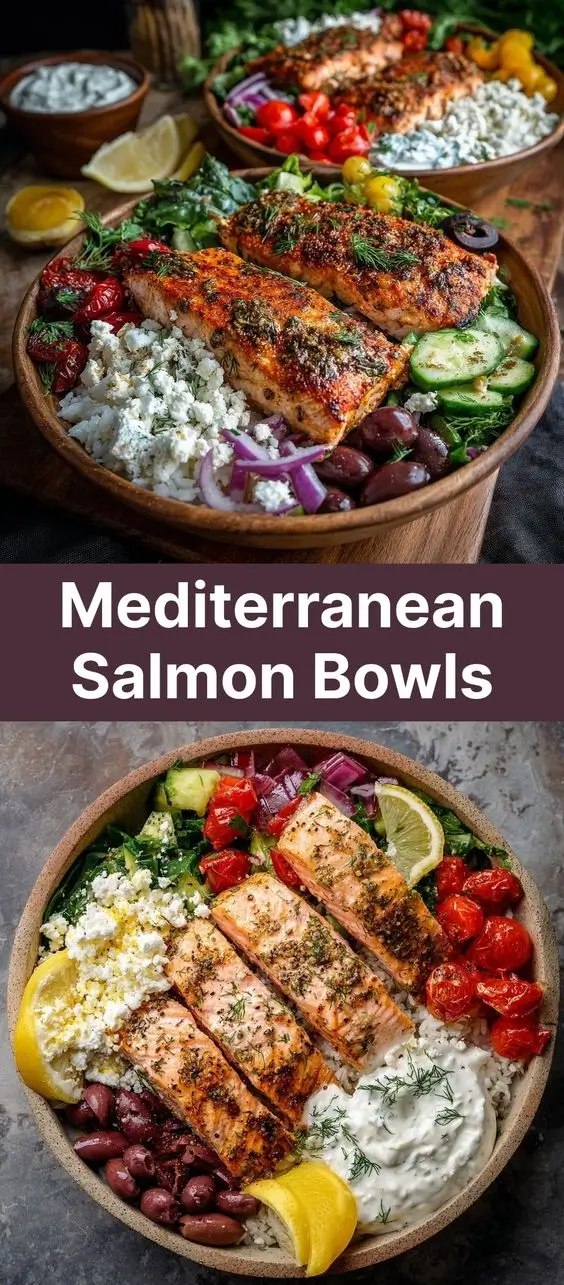
Mediterranean Salmon Bowls: A Flavorful Journey of Health and Taste
The Mediterranean diet has long been celebrated for its heart-healthy benefits, rich flavors, and emphasis on whole, unprocessed ingredients. Among the standout dishes inspired by this culinary tradition is the Mediterranean Salmon Bowl — a vibrant, nutrient-dense meal that combines the omega-3 richness of salmon with fresh vegetables, wholesome grains, and zesty Mediterranean flavors. Whether you’re looking to boost your intake of healthy fats, enjoy a quick weeknight dinner, or simply eat more plant-forward meals, this bowl delivers on every front.
The History Behind the Mediterranean Diet and This Dish
The roots of the Mediterranean diet trace back to the traditional eating patterns of countries bordering the Mediterranean Sea, including Greece, Italy, Spain, and Southern France. In the 1950s, researchers noticed that populations in these regions had lower rates of chronic diseases and longer life expectancies, despite relatively high-fat diets. This sparked interest in their food habits, which emphasized olive oil, fish, legumes, fruits, vegetables, nuts, and moderate wine consumption.
Over time, the Mediterranean diet gained global recognition, culminating in its designation as a UNESCO Intangible Cultural Heritage in 2013. The modern Mediterranean Salmon Bowl is a contemporary adaptation of this diet, designed for today’s health-conscious, time-starved individuals who still crave bold taste and balanced nutrition. While salmon isn’t native to all Mediterranean coastal areas (where sardines, anchovies, and mackerel are more common), it fits perfectly into the spirit of the diet due to its high omega-3 content and culinary versatility.
Ingredients Breakdown: What Goes Into a Perfect Mediterranean Salmon Bowl?
A well-crafted Mediterranean Salmon Bowl brings together a symphony of textures and tastes — creamy, crunchy, savory, tangy, and fresh. Each component plays a role in creating a satisfying and nutritious meal. Here’s a detailed look at the essential elements:
- Salmon Fillet: Wild-caught salmon is preferred for its superior omega-3 fatty acid profile and lower environmental impact. It provides high-quality protein and essential fats crucial for brain and heart health.
- Quinoa or Farro: These ancient grains serve as the hearty base. Quinoa is a complete protein, while farro offers a nutty flavor and chewy texture. Brown rice or couscous can also be used.
- Cucumber: Adds crunch and hydration. English or Persian cucumbers work best due to their thin skin and minimal seeds.
- Cherry Tomatoes: Burst with sweetness and acidity, contributing lycopene, an antioxidant linked to reduced risk of certain cancers.
- Kalamata Olives: A staple of Greek cuisine, these briny olives add depth and healthy monounsaturated fats.
- Red Onion: Thinly sliced for sharpness and color. Soaking in cold water for 5–10 minutes reduces pungency if desired.
- Feta Cheese: Typically made from sheep’s or goat’s milk, feta lends a creamy, salty tang. For a vegan version, dairy-free feta alternatives are available.
- Fresh Herbs: Parsley and dill are most common, adding brightness and aroma.
- Lemon: Both zest and juice are used to elevate flavors throughout the dish.
- Olive Oil: Extra virgin olive oil is the cornerstone fat, drizzled over the salmon and used in dressings for its polyphenols and anti-inflammatory properties.
- Lentils or Chickpeas (optional): Add plant-based protein and fiber, making the bowl even more filling and balanced.
- Tzatziki or Lemon-Tahini Dressing: Creamy sauces that tie everything together with cool, tangy notes.
Step-by-Step Recipe: How to Make Mediterranean Salmon Bowls at Home
Follow this comprehensive guide to create restaurant-quality Mediterranean Salmon Bowls in under 45 minutes.
Ingredients (Serves 4)
- 4 wild-caught salmon fillets (5–6 oz each)
- 1 cup quinoa (or farro)
- 2 cups water or vegetable broth
- 1 medium cucumber, diced
- 1 pint cherry tomatoes, halved
- ½ cup Kalamata olives, pitted and halved
- ½ red onion, thinly sliced
- 1 cup crumbled feta cheese
- ⅓ cup fresh parsley, chopped
- 2 tablespoons fresh dill, chopped
- 1 lemon (zest and juice)
- ¼ cup extra virgin olive oil
- 3 cloves garlic, minced
- Salt and freshly ground black pepper to taste
- Optional: 1 cup cooked lentils or chickpeas
- For dressing: ½ cup tzatziki or homemade lemon-tahini sauce (mix 3 tbsp tahini, juice of 1 lemon, 1 clove minced garlic, 2 tbsp water, salt to taste)
Directions
- Prepare the Grain Base: Rinse quinoa under cold water to remove saponins (which can cause bitterness). In a saucepan, combine quinoa and water (or broth). Bring to a boil, then reduce heat to low, cover, and simmer for 15 minutes or until liquid is absorbed and quinoa is fluffy. Remove from heat, fluff with a fork, and let sit covered for 5 minutes. Season with a pinch of salt, lemon zest, and 1 tablespoon olive oil. Set aside.
- Season the Salmon: Pat salmon fillets dry with paper towels. On a plate, mix 2 tablespoons olive oil, juice of half a lemon, 1 minced garlic clove, salt, and pepper. Brush mixture over salmon fillets. Let marinate for 10–15 minutes at room temperature.
- Cook the Salmon: Preheat oven to 400°F (200°C). Line a baking sheet with parchment paper. Place salmon on the sheet, skin-side down. Roast for 12–15 minutes, depending on thickness, until salmon flakes easily with a fork and reaches an internal temperature of 145°F (63°C). Alternatively, pan-sear skin-side down in a hot skillet with olive oil for 5–6 minutes per side for a crispier texture.
- Prep the Vegetables: While the salmon and quinoa cook, dice the cucumber, halve the cherry tomatoes, slice the red onion, pit and chop the olives, and chop the herbs. Combine in a large bowl. Toss with 1 tablespoon olive oil, juice of half a lemon, salt, and pepper. Add cooked lentils or chickpeas if using.
- Make the Dressing: In a small bowl, whisk together tzatziki or prepare the lemon-tahini dressing. Adjust seasoning to taste.
- Assemble the Bowls: Divide quinoa among four bowls. Top evenly with the vegetable mixture. Flake the cooked salmon into large pieces and place on top. Sprinkle generously with feta cheese, additional herbs, and olives. Drizzle with dressing just before serving.
- Serve: Serve immediately, with extra lemon wedges on the side for a final burst of freshness.
Tips for the Best Mediterranean Salmon Bowls
- Don’t Overcook the Salmon: Salmon is best when slightly translucent in the center. Remove it from the oven or pan just before it looks fully done — residual heat will finish cooking it.
- Use High-Quality Olive Oil: Since it’s used raw in dressings and drizzled on finished dishes, opt for a flavorful, fruity extra virgin variety.
- Bulk Up with Greens: Add a layer of baby spinach, arugula, or kale for extra vitamins and fiber.
- Meal Prep Friendly: Cook quinoa, chop veggies, and make dressing up to 4 days in advance. Store components separately; assemble bowls fresh to maintain texture.
- Get Creative with Grains: Try freekeh, bulgur, or cauliflower rice for a low-carb alternative.
- Add Crunch: Top with toasted pine nuts, slivered almonds, or sunflower seeds for added texture and healthy fats.
- Boost Umami: A sprinkle of capers or a few drops of balsamic glaze can deepen the flavor profile.
Variations and Customizations
The beauty of the Mediterranean Salmon Bowl lies in its adaptability. Here are several ways to personalize it:
- Vegan/Vegetarian Version: Replace salmon with grilled tofu, tempeh, or a spiced chickpea patty. Use vegan feta and ensure dressing is dairy-free.
- Pescatarian Twist: Swap salmon for seared tuna, grilled shrimp, or baked cod.
- Low-Carb Option: Skip the grains and double the vegetables. Serve over a bed of mixed greens or shredded cabbage.
- Spicy Kick: Add sliced jalapeños, a dash of harissa paste to the dressing, or a pinch of red pepper flakes.
- Greek-Inspired: Include diced bell peppers, pepperoncini, and a dollop of hummus.
- Protein-Packed: Layer on hard-boiled eggs, white beans, or edamame.
- Kid-Friendly: Reduce strong flavors like raw onion and olives. Offer salmon in bite-sized pieces with mild tzatziki.
Health Considerations and Nutritional Value
The Mediterranean Salmon Bowl aligns closely with evidence-based dietary guidelines for promoting long-term health. Here’s why:
- Heart Health: Rich in omega-3 fatty acids from salmon and monounsaturated fats from olive oil and olives, this bowl supports cardiovascular function and helps reduce inflammation.
- Brain Function: DHA, a type of omega-3 found in fatty fish, is essential for cognitive performance and may reduce the risk of neurodegenerative diseases.
- Digestive Health: High fiber content from vegetables, legumes, and whole grains promotes gut motility and feeds beneficial microbiota.
- Weight Management: The combination of protein, fiber, and healthy fats increases satiety, helping to prevent overeating.
- Blood Sugar Control: Low glycemic index ingredients help maintain steady blood glucose levels, beneficial for those managing insulin resistance or type 2 diabetes.
- Nutrient Density: Packed with vitamins A, C, K, B-complex, potassium, magnesium, selenium, and antioxidants like lycopene and beta-carotene.
Nutritional Estimate (per serving, with quinoa and full toppings):
- Calories: ~580
- Protein: 35g
- Fat: 32g (mostly unsaturated)
- Carbohydrates: 40g
- Fiber: 8g
- Sugar: 7g (naturally occurring)
- Sodium: ~650mg (can be reduced by limiting feta and olives)
Note: Those with hypertension should monitor sodium intake by choosing low-sodium feta, rinsing olives, or reducing portion sizes of salty ingredients.
Frequently Asked Questions (FAQ)
Can I use frozen salmon?
Yes, but thaw it slowly in the refrigerator overnight for best texture. Avoid microwaving, as it can partially cook the fish and affect consistency.
How do I store leftovers?
Store components separately in airtight containers in the fridge for up to 3 days. Reheat salmon gently to avoid drying it out, or enjoy it cold.
Is wild-caught salmon worth the extra cost?
Generally, yes. Wild salmon typically has a better omega-3 to omega-6 ratio, fewer contaminants, and a more natural diet than farmed salmon. However, responsibly farmed salmon (look for ASC or MSC certifications) can also be a sustainable choice.
Can I grill the salmon instead?
Absolutely! Grilling adds a smoky dimension. Oil the grill grates well and cook over medium heat for 4–5 minutes per side, depending on thickness.
What if I don’t like fish?
You can omit the salmon and increase plant-based proteins like lentils, chickpeas, or grilled halloumi for a satisfying alternative.
Are these bowls safe during pregnancy?
Yes, salmon is one of the safest fish during pregnancy due to its low mercury levels and high nutrient value. Just ensure it’s cooked thoroughly to 145°F.
Can I make this ahead for meal prep?
Definitely. Prepare grains, chop veggies, and make dressing 3–4 days in advance. Cook salmon the night before or morning of; reheat gently or eat chilled.
Summary
Mediterranean Salmon Bowls are a delicious, nutrient-packed fusion of fresh vegetables, whole grains, heart-healthy fats, and premium salmon, all brought together with zesty lemon and herbal notes. Inspired by the time-honored Mediterranean diet, this bowl supports overall wellness while delivering restaurant-quality flavor in every bite.