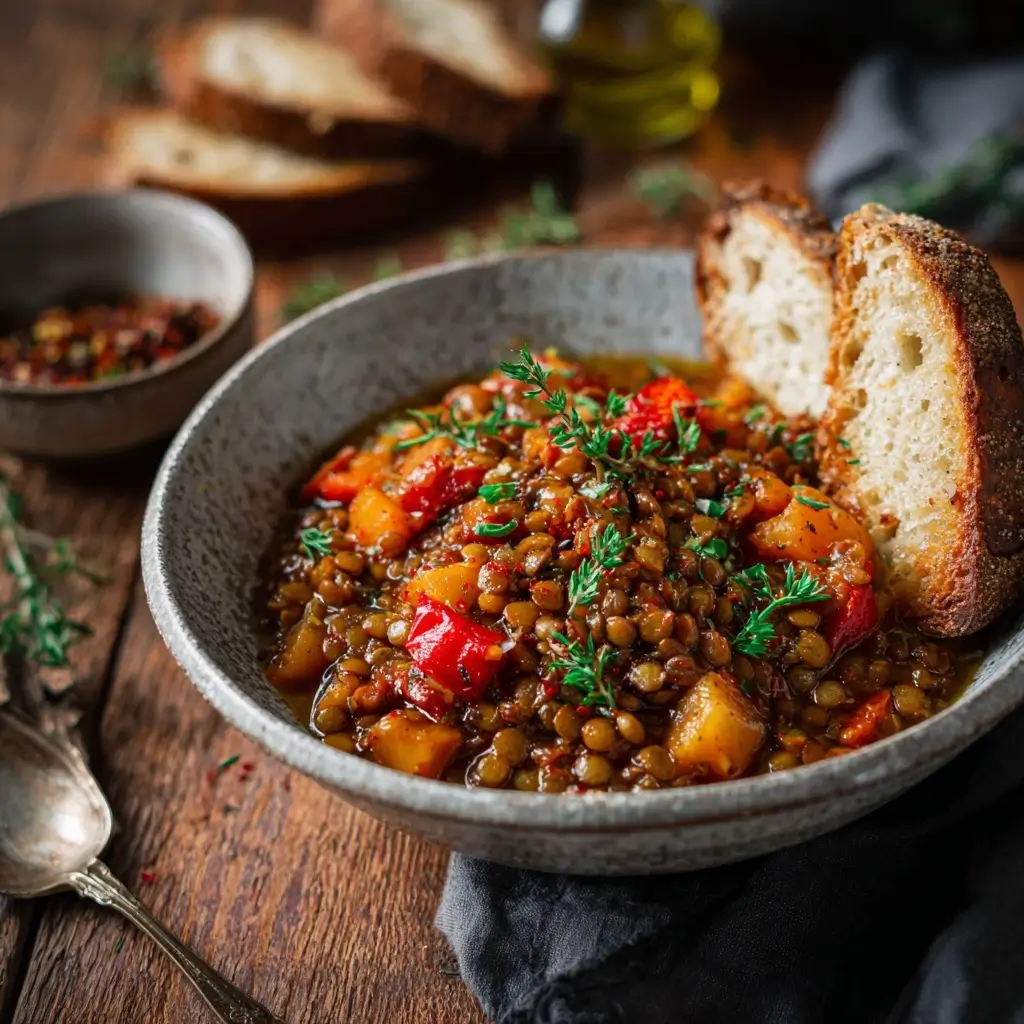
Mediterranean Lentil Stew
Mediterranean Lentil Stew: A Wholesome Journey Through Flavor and Tradition
The History
The roots of Mediterranean Lentil Stew trace back thousands of years, deeply embedded in the culinary traditions of the Mediterranean Basin. Lentils have long been a staple in the diets of ancient civilizations including the Greeks, Romans, Egyptians, and Phoenicians due to their abundance, affordability, and impressive nutritional profile. In fact, lentils are mentioned in historical texts such as the Bible and ancient Greek literature, often symbolizing sustenance, humility, and nourishment.
In countries like Greece, Turkey, Lebanon, Italy, and Morocco, lentil-based stews have evolved with regional twists—infused with local herbs, spices, vegetables, and cooking techniques passed down through generations. The modern version of Mediterranean Lentil Stew draws inspiration from these diverse cultures, combining simplicity with bold flavors characteristic of the Mediterranean diet—one of the healthiest and most celebrated dietary patterns in the world. This stew embodies the essence of rustic home cooking: hearty, flavorful, and deeply satisfying, making it a timeless favorite across seasons and continents.
Ingredients Breakdown
The magic of Mediterranean Lentil Stew lies in its harmonious blend of wholesome, nutrient-dense ingredients that come together to create a rich, savory dish. Let’s explore each component:
- Lentils: Typically brown or green lentils are used because they hold their shape well during cooking while offering an earthy flavor and meaty texture. Red lentils can also be used for a creamier consistency.
- Olive Oil: A cornerstone of Mediterranean cuisine, extra virgin olive oil adds richness, depth, and heart-healthy monounsaturated fats.
- Onion, Garlic, Carrots, and Celery: These aromatic vegetables form the flavor base (known as “soffritto” in Italian or “mirepoix” in French cuisine), providing sweetness, savoriness, and complexity.
- Tomatoes: Fresh diced tomatoes, crushed tomatoes, or tomato paste contribute acidity, sweetness, and umami depth.
- Vegetable or Chicken Broth: Enhances moisture and infuses the stew with savory notes. Using homemade broth intensifies the flavor significantly.
- Herbs and Spices: Dried oregano, thyme, bay leaves, cumin, smoked paprika, and black pepper lend warm, herbal, and slightly smoky undertones unique to Mediterranean cooking.
- Lemon Juice: Added at the end, fresh lemon juice brightens the entire dish, balancing richness and enhancing freshness.
- Spinach or Kale: Leafy greens add color, nutrients, and a tender texture when wilted into the stew near the end of cooking.
- Parmesan Rind (optional): Often simmered in the stew for added umami and depth—removed before serving.
Each ingredient plays a vital role, contributing not only to taste but also to the stew’s remarkable balance of protein, fiber, vitamins, and antioxidants.
Step-by-Step Recipe
- Prepare Ingredients: Rinse 1 cup of dried lentils under cold water, picking out any debris. Dice 1 medium onion, 2 carrots, and 2 celery stalks. Mince 4 cloves of garlic. Measure out 1 can (14 oz) of diced tomatoes or use 2 cups fresh ripe tomatoes.
- Sauté Aromatics: Heat 3 tablespoons of extra virgin olive oil in a large heavy-bottomed pot over medium heat. Add onions, carrots, and celery. Cook for 8–10 minutes until softened and lightly golden, stirring occasionally.
- Add Garlic and Spices: Stir in minced garlic, 1 teaspoon ground cumin, 1/2 teaspoon smoked paprika, 1 teaspoon dried oregano, and 1/2 teaspoon black pepper. Sauté for 1 minute until fragrant, being careful not to burn the garlic.
- Incorporate Tomatoes: Pour in the diced tomatoes (with juices) or crushed tomatoes. Stir well and cook for another 5 minutes to develop the flavor and reduce slightly.
- Add Lentils and Liquid: Stir in the rinsed lentils, then pour in 4 cups of vegetable or chicken broth. Add 1 bay leaf and optionally a Parmesan rind for extra depth.
- Simmer: Bring the mixture to a boil, then reduce heat to low. Cover and simmer gently for 30–40 minutes, or until lentils are tender but not mushy. Stir occasionally to prevent sticking.
- Add Greens: About 10 minutes before finishing, stir in 2–3 cups of chopped spinach or kale. Allow them to wilt into the stew.
- Finish with Lemon and Herbs: Remove the bay leaf and Parmesan rind (if used). Stir in the juice of 1 fresh lemon and adjust seasoning with salt and pepper to taste. For added freshness, fold in chopped parsley or cilantro just before serving.
- Rest and Serve: Let the stew sit off the heat for 10 minutes to allow flavors to meld. Serve hot with crusty bread, over couscous, or alongside a Greek salad.
Tips
- Don’t Skip the Sauté: Taking time to properly sauté the vegetables builds a deep flavor foundation. Don’t rush this step—low and slow is key.
- Rinse Lentils Thoroughly: Always rinse dried lentils to remove dust, debris, and potential anti-nutrients like lectins.
- Use Quality Broth: Homemade or low-sodium store-bought broth makes a noticeable difference. Avoid overly salty broths to maintain control over seasoning.
- Acidity is Essential: Never underestimate the power of lemon juice or a splash of red wine vinegar at the end—it lifts the entire dish.
- Let It Rest: Like many stews, this tastes even better the next day after the flavors have fully integrated. Reheat gently on the stove.
- Freeze for Later: This stew freezes exceptionally well. Store in airtight containers for up to 3 months.
- Adjust Consistency: If the stew thickens too much upon standing, thin it with a bit of warm broth or water when reheating.
Variations and Customizations
Mediterranean Lentil Stew is incredibly versatile and welcomes creative adaptations based on dietary needs, seasonal produce, or cultural preferences:
- Vegan Version: Omit Parmesan rind and ensure broth is plant-based. Boost umami with a splash of tamari or miso paste.
- Spicy Kick: Add a pinch of red pepper flakes or a diced fresh chili with the aromatics for heat.
- Herb Variations: Swap oregano for marjoram, rosemary, or herbes de Provence for a different aromatic profile.
- Grain Addition: Stir in cooked bulgur, quinoa, or farro at the end for a more substantial meal.
- Protein Boost: Add crumbled feta cheese on top, or mix in cooked chickpeas or shredded rotisserie chicken.
- Root Vegetables: Include diced sweet potatoes, parsnips, or turnips for added sweetness and texture.
- Turkish-Inspired: Add a touch of cinnamon and mint, serve with yogurt and flatbread.
- Greek Style: Finish with a dollop of tzatziki, Kalamata olives, and a sprinkle of dried mint.
- Moroccan Twist: Use red lentils with ras el hanout spice blend, apricots, and serve over couscous.
Health Considerations and Nutritional Value
Mediterranean Lentil Stew isn’t just delicious—it’s a powerhouse of nutrition aligned perfectly with the principles of the Mediterranean diet, which is linked to reduced risks of heart disease, diabetes, obesity, and cognitive decline.
A typical one-cup serving (approx. 250g) contains approximately:
- Calories: 220–260 kcal
- Protein: 14–18g (excellent plant-based source)
- Fiber: 12–16g (supports digestion and satiety)
- Fat: 7–10g (mostly healthy unsaturated fats from olive oil)
- Carbohydrates: 30–35g (complex carbs with low glycemic impact)
- Iron: 25–30% of daily value (important for oxygen transport)
- Folate, Magnesium, Potassium: High levels support cardiovascular and nervous system health
- Vitamin C & K: From tomatoes and leafy greens, aiding immunity and bone health
This stew is naturally gluten-free (if using gluten-free broth), low in saturated fat, and rich in antioxidants from colorful vegetables and herbs. Its high fiber and protein content promote fullness, making it ideal for weight management and blood sugar control. However, individuals with legume sensitivities or those on low-FODMAP diets may need to modify or limit lentil intake. Soaking lentils before cooking can improve digestibility for some people.
Ingredients
- 1 cup dried brown or green lentils, rinsed and drained
- 3 tbsp extra virgin olive oil
- 1 medium yellow onion, finely diced
- 2 medium carrots, diced
- 2 celery stalks, diced
- 4 garlic cloves, minced
- 1 (14 oz) can diced tomatoes or 2 cups fresh ripe tomatoes, chopped
- 4 cups low-sodium vegetable or chicken broth
- 1 tsp ground cumin
- 1/2 tsp smoked paprika
- 1 tsp dried oregano
- 1 bay leaf
- 1/2 tsp black pepper
- Optional: Parmesan rind (about 2 inches)
- 2–3 cups fresh spinach or kale, roughly chopped
- Juice of 1 large lemon
- Salt to taste
- Fresh parsley or cilantro, chopped (for garnish)
Directions
- In a large Dutch oven or heavy soup pot, heat olive oil over medium heat.
- Add onion, carrots, and celery. Sauté for 8–10 minutes, stirring occasionally, until vegetables soften and begin to caramelize slightly.
- Stir in garlic, cumin, smoked paprika, oregano, and black pepper. Cook for 1 minute until fragrant.
- Add diced tomatoes with their juices. Simmer for 5 minutes, allowing the mixture to thicken slightly.
- Stir in lentils, broth, bay leaf, and optional Parmesan rind. Bring to a boil.
- Reduce heat to low, cover, and simmer for 30–40 minutes, or until lentils are tender but not disintegrated.
- Add chopped spinach or kale and stir. Continue cooking uncovered for 8–10 minutes until greens are wilted and tender.
- Remove from heat. Discard bay leaf and Parmesan rind. Stir in lemon juice. Season with salt and additional pepper to taste.
- Let the stew rest for 10 minutes to allow flavors to deepen.
- Ladle into bowls and garnish with fresh herbs. Serve warm with crusty whole-grain bread, pita, or over a bed of grains.
FAQ
Can I use canned lentils instead of dried?
Yes, though dried lentils are preferred for texture and flavor control. If using canned, drain and rinse 2–3 cans (15 oz each) and add them in the last 10 minutes of cooking to avoid overcooking.
How long does this stew keep in the fridge?
It stays fresh in an airtight container for up to 5 days. In fact, the flavor improves after 24 hours!
Can I make this in a slow cooker or Instant Pot?
Absolutely! For a slow cooker: combine all ingredients except greens, lemon, and herbs. Cook on low for 6–8 hours or high for 3–4 hours. Add greens in the last hour. For Instant Pot: use Saute function for veggies, then pressure cook on High for 15 minutes with natural release. Quick-release any remaining pressure, then stir in greens and finish as directed.
Is this stew gluten-free?
Yes, provided you use certified gluten-free broth and ensure no cross-contamination. Always check labels if serving someone with celiac disease.
Why did my lentils turn mushy?
Overcooking or using red lentils (which break down easily) can cause mushiness. Stick to brown or green lentils and monitor tenderness closely toward the end of cooking.
Can I freeze Mediterranean Lentil Stew?
Yes, it freezes beautifully. Cool completely, portion into freezer-safe containers, and freeze for up to 3 months. Thaw overnight in the fridge and reheat gently on the stove with a splash of broth.
What can I serve with this stew?
Excellent pairings include warm pita bread, feta cheese, hummus, tabbouleh, roasted vegetables, or a simple arugula salad with lemon vinaigrette.
Summary
Mediterranean Lentil Stew is a nourishing, flavor-packed dish that celebrates the vibrant ingredients and healthful traditions of the Mediterranean region. Hearty lentils, aromatic vegetables, and bright lemon come together in a comforting bowl that’s as good for your body as it is for your soul.