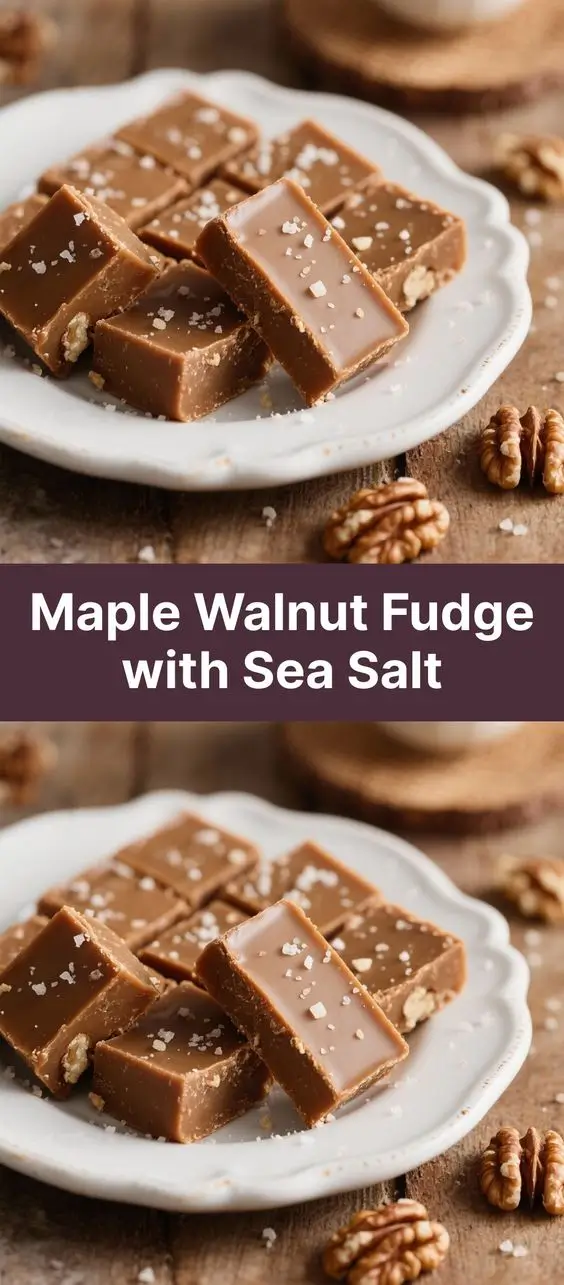
Maple Walnut Fudge with Sea Salt: A Decadent Delight for Every Sweet Tooth
Indulging in a rich, creamy piece of homemade fudge is one of life’s simplest yet most luxurious pleasures. Among the many variations that grace dessert tables around the world, Maple Walnut Fudge with Sea Salt stands out as a sophisticated blend of earthy sweetness, nutty crunch, and a subtle savory finish. This confection marries the deep, caramel-like richness of pure maple syrup with the buttery texture of walnuts and the delicate contrast of flaky sea salt. Whether you’re preparing it for holiday gifts, a cozy winter treat, or simply to satisfy your own cravings, this fudge offers an elegant balance of flavors that elevates it far beyond ordinary candy.
The History of Maple Walnut Fudge with Sea Salt
Fudge, as we know it today, traces its origins back to the late 19th century in the United States. The story goes that fudge was “accidentally” created when someone botched a batch of caramels—hence the name “fudged.” It quickly became popular among college students at women’s colleges like Vassar and Wellesley, where it was made in large batches and sold as fundraising ventures. Over time, fudge evolved from a simple sugar-and-butter concoction into a canvas for creative flavor experimentation.
Maple syrup, on the other hand, has roots deeply embedded in North American Indigenous traditions. Long before European settlers arrived, Native peoples in northeastern North America were harvesting sap from sugar maple trees and reducing it into syrup and sugar. This natural sweetener eventually found its way into colonial kitchens and later into mainstream American desserts.
The combination of maple and nuts—especially walnuts—is a nod to regional cuisine in areas like Vermont, Quebec, and the Great Lakes region, where both ingredients are abundant. Adding sea salt to sweet treats is a more recent culinary trend, gaining momentum in the early 2000s thanks to chefs who championed the concept of sweet-salty balance. Salted caramel paved the way, and now salted maple desserts, including fudge, have become beloved staples in artisanal confectionery.
Maple Walnut Fudge with Sea Salt is thus a modern heirloom—a fusion of traditional techniques, local ingredients, and contemporary taste preferences. It honors heritage while embracing innovation, making it not just a dessert but a cultural artifact on a plate.
Ingredients Breakdown: What Makes This Fudge So Irresistible?
The magic of Maple Walnut Fudge lies in the quality and harmony of its ingredients. Each component plays a vital role in creating the perfect texture, flavor profile, and mouthfeel. Let’s take a closer look:
- Pure Maple Syrup – Not pancake syrup, not imitation—real Grade A or Grade B maple syrup is essential. Grade B (now labeled as “Grade A Dark Color/Robust Flavor”) offers a deeper, more complex maple taste ideal for fudge. It provides natural sweetness and contributes to the smooth, glossy texture when cooked properly.
- Heavy Cream – Adds richness and helps create the creamy, melt-in-your-mouth consistency. Its high fat content ensures the fudge sets firmly without becoming crumbly.
- Unsalted Butter – Enhances creaminess and adds a velvety mouthfeel. Using unsalted butter allows you to control the overall salt level, especially important when finishing with sea salt.
- Granulated Sugar – Works with the maple syrup to form the structure of the fudge. While maple syrup sweetens, sugar aids in achieving the proper crystallization needed for a firm yet tender bite.
- Salt – A pinch of kosher salt enhances all the other flavors, balancing the sweetness and bringing out the nuttiness.
- Vanilla Extract – Adds warmth and depth, rounding out the flavor profile with a subtle floral note.
- Walnuts – Toasted chopped walnuts provide crunch, protein, and healthy fats. Their slightly bitter, earthy flavor complements the sweetness of the maple perfectly.
- Flaky Sea Salt (for topping) – The crowning glory. Sprinkled on top after pouring, it delivers bursts of savory contrast with every bite. Maldon salt or another flaky variety is preferred for its delicate crunch and visual appeal.
Using high-quality, fresh ingredients is non-negotiable. Substitutions like corn syrup instead of maple syrup or margarine instead of butter will alter the taste and texture dramatically. For the best results, source organic maple syrup and raw, unsalted walnuts whenever possible.
Step-by-Step Recipe: How to Make Maple Walnut Fudge with Sea Salt
Making fudge at home may seem intimidating, but with patience and attention to detail, it’s entirely achievable—even for novice cooks. Follow these steps carefully for flawless, restaurant-quality fudge every time.
What You’ll Need:
- 8×8-inch baking pan
- Parchment paper
- Heavy-bottomed saucepan (at least 3-quart capacity)
- Candy thermometer (highly recommended)
- Wooden spoon or silicone spatula
- Mixing bowls
- Knife for cutting
Ingredients:
- 2 cups (480 ml) pure maple syrup (preferably dark robust grade)
- 1 cup (240 ml) heavy cream
- 1/2 cup (113 g) unsalted butter
- 1 1/2 cups (300 g) granulated sugar
- 1/4 teaspoon fine kosher salt
- 1 tablespoon pure vanilla extract
- 1 1/2 cups (150 g) toasted chopped walnuts
- Flaky sea salt, for garnish (e.g., Maldon)
Directions:
- Prepare the Pan: Line an 8×8-inch baking pan with parchment paper, leaving overhang on two opposite sides for easy removal. Lightly grease the parchment with butter or non-stick spray.
- Toast the Walnuts: Preheat oven to 350°F (175°C). Spread walnuts on a baking sheet and toast for 8–10 minutes until fragrant and slightly darkened. Let cool, then chop coarsely. Set aside.
- Combine Wet Ingredients: In a heavy-bottomed saucepan, combine the maple syrup, heavy cream, and butter. Stir gently over medium heat until the butter melts completely.
- Add Sugar and Salt: Stir in the granulated sugar and kosher salt until fully dissolved. Increase heat to medium-high and bring the mixture to a boil. Attach a candy thermometer to the side of the pot, ensuring it doesn’t touch the bottom.
- Cook to Soft-Ball Stage: Boil the mixture without stirring, allowing it to reach 238°F (114°C)—the soft-ball stage. This typically takes 15–20 minutes. Watch closely; boiling too long can cause graininess or hardness, while undercooking leads to fudge that won’t set.
- Remove from Heat: Once the temperature hits 238°F, immediately remove the pan from the heat. Let it sit undisturbed for 5 minutes. This allows the temperature to stabilize and prevents premature crystallization.
- Beat the Fudge: After resting, add the vanilla extract and begin beating the mixture vigorously with a wooden spoon or electric mixer on low speed. Continue beating for 5–7 minutes until the fudge thickens, loses its gloss, and starts to hold its shape when drizzled. This step is crucial—it encourages small crystal formation, which gives fudge its signature smooth, dense texture.
- Fold in Walnuts: Gently fold in the toasted walnuts until evenly distributed.
- Pour and Smooth: Pour the fudge into the prepared pan. Use a spatula to spread it evenly into the corners. Tap the pan lightly on the counter to release air bubbles.
- Top with Sea Salt: While still warm, sprinkle a generous amount of flaky sea salt evenly over the surface. Press down lightly so the salt adheres.
- Cool Completely: Let the fudge cool at room temperature for at least 2 hours, or refrigerate for 1 hour if you’re in a hurry. Do not cover until fully cooled to prevent condensation.
- Cut into Squares: Lift the fudge out using the parchment overhang. Place on a cutting board and slice into 1-inch squares using a sharp knife dipped in hot water for clean cuts.
Your Maple Walnut Fudge with Sea Salt is now ready to enjoy!
Tips for Perfect Fudge Every Time
- Use a Candy Thermometer: Guessing the temperature leads to inconsistent results. A reliable digital or analog candy thermometer ensures precision.
- Don’t Stir During Boiling: Stirring during the boil can cause sugar crystals to form prematurely, leading to grainy fudge. Only stir before boiling and during the final beating phase.
- Let It Rest Before Beating: Allowing the mixture to cool slightly off the heat prevents rapid crystallization and gives you better control over texture.
- Beat Until Dull: The visual cue—when the fudge changes from shiny to matte—is key. Under-beaten fudge will be too soft; over-beaten can become crumbly.
- Toasting Nuts Makes a Difference: Never skip toasting the walnuts. It intensifies their flavor and removes any raw bitterness.
- Control Humidity: Avoid making fudge on rainy or humid days if possible. Moisture in the air can interfere with setting.
- Store Properly: Keep fudge in an airtight container at room temperature for up to 2 weeks. For longer storage, freeze for up to 3 months.
- Use Parchment Paper: It makes removal effortless and prevents sticking better than greasing alone.
Variations and Customizations
While classic Maple Walnut Fudge with Sea Salt is divine on its own, feel free to experiment with these delicious twists:
- Pecan Swap: Replace walnuts with toasted pecans for a richer, butterier nut flavor—perfect for Southern-style fudge.
- Chocolate Swirl: Melt 1/2 cup dark chocolate and drizzle into the fudge before smoothing. Use a knife to swirl for a marbled effect.
- Bourbon Infusion: Add 1–2 tablespoons of bourbon along with the vanilla for a warm, boozy complexity.
- Maple Crystals: Garnish with crushed maple sugar crystals instead of sea salt for a purely sweet finish.
- Spiced Version: Add 1/2 teaspoon ground cinnamon, a pinch of nutmeg, and a dash of clove for a fall-inspired spiced fudge.
- Gluten-Free & Vegan Option: Use vegan butter and full-fat coconut cream in place of dairy. Ensure all other ingredients are certified GF/vegan. Note: Texture may vary slightly.
- Mini Fudge Bites: Drop spoonfuls onto a parchment-lined tray and chill for bite-sized treats.
- Layered Fudge: Create a double layer—one plain maple, one with nuts—and press together before cooling.
You can also customize the presentation by adding edible gold flakes, dipping edges in melted chocolate, or packaging in decorative tins for gifting.
Health Considerations and Nutritional Value
While Maple Walnut Fudge is undeniably indulgent, understanding its nutritional components can help you enjoy it mindfully.
Nutritional Highlights (per 1-inch square, approximately 30g):
- Calories: ~180–200 kcal
- Total Fat: 12–14g (mostly from butter, cream, and walnuts)
- Saturated Fat: 6–7g
- Carbohydrates: 18–20g (primarily sugars from maple and granulated sugar)
- Protein: 2–3g (from walnuts and dairy)
- Fiber: 1g (from walnuts)
- Sodium: Varies based on sea salt used (~50–100mg base + additional from topping)
Health Notes:
- Walnuts: Rich in omega-3 fatty acids, antioxidants, and plant-based protein. They support heart health and brain function.
- Maple Syrup: Contains trace minerals like manganese, zinc, calcium, and potassium. It has a lower glycemic index than refined sugar but should still be consumed in moderation.
- Dairy: Provides calcium and vitamin D, though those with lactose intolerance may need alternatives.
- Sugar Content: High in natural and added sugars. Best enjoyed occasionally, especially for individuals managing diabetes or insulin resistance.
- Portion Control: One square is satisfying due to richness. Savor slowly to enhance enjoyment and reduce overconsumption.
This fudge is not a health food, but when made with real ingredients and eaten in moderation, it can be part of a balanced diet. Consider offering smaller portions at gatherings or pairing with green tea or black coffee to offset sweetness.
Frequently Asked Questions (FAQ)
Can I make this fudge without a candy thermometer?
Yes, but it’s riskier. You can use the cold water test: drop a small spoonful of syrup into cold water. If it forms a soft ball that holds its shape but flattens when pressed, it’s ready (soft-ball stage). However, a thermometer is far more accurate.
Why did my fudge turn out grainy?
Graininess usually occurs due to premature crystallization. Causes include stirring during boiling, using a dirty saucepan (residue acts as seed crystals), or not beating long enough after cooling.
Can I double the recipe?
Yes, but only if you have a very large, heavy saucepan. Doubling increases cooking time and requires even more care to avoid scorching. It’s often safer to make two separate batches.
How do I store Maple Walnut Fudge?
Store in an airtight container at room temperature for up to 2 weeks. Layer between parchment paper to prevent sticking. For longer shelf life, refrigerate (up to 3 weeks) or freeze (up to 3 months).
Can I use honey instead of maple syrup?
Not recommended. Honey has a different water content and flavor profile. It may prevent proper setting and overpower the walnut notes.
Is this fudge gluten-free?
Yes, provided all ingredients used are certified gluten-free. Always check labels on vanilla extract and butter substitutes if concerned.
Can I omit the walnuts?
Yes, though you’ll lose the signature crunch and some nutritional benefits. Substitute with pecans, almonds, or omit entirely for a smoother texture.
Why use sea salt instead of table salt?
Sea salt, especially flaky varieties, dissolves slowly and provides a burst of salinity with a pleasant crunch. Table salt dissolves quickly and can make the entire batch taste uniformly salty.
Can I make this fudge on a rainy day?
Humid conditions can interfere with sugar crystallization and cause fudge to remain sticky. If possible, choose a dry day—or run a dehumidifier in your kitchen.
Can I use salted butter?
You can, but reduce or eliminate the added kosher salt in the recipe to avoid oversalting.
Summary
Maple Walnut Fudge with Sea Salt is a harmonious blend of rich maple flavor, buttery creaminess, crunchy toasted walnuts, and a delicate finish of flaky sea salt that dances on the palate. Handcrafted with care, this gourmet treat brings together tradition, technique, and modern taste sensibilities into one unforgettable bite.