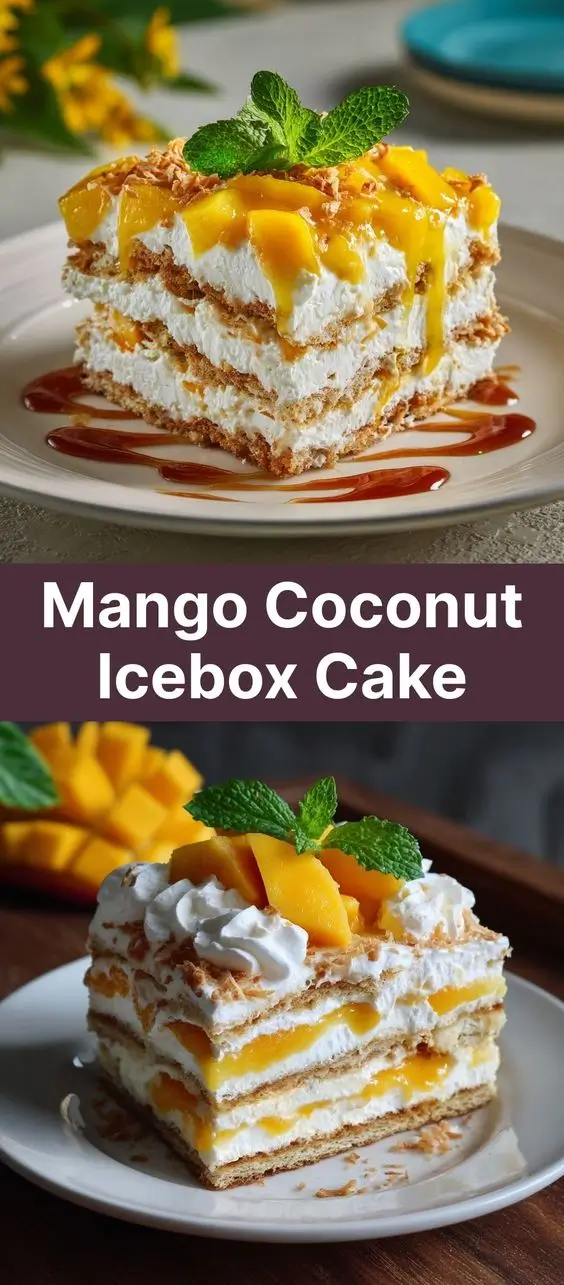
Mango Coconut Icebox Cake: A Tropical Delight
The History of the Icebox Cake
The icebox cake has its roots in early 20th-century America, when households began acquiring mechanical refrigeration units known as “iceboxes.” Before modern refrigerators, cooling food required actual blocks of ice, hence the name. As home kitchens evolved and access to chilled storage became more common, dessert lovers sought no-bake treats that could set and firm up in the cold. The classic icebox cake traditionally consisted of layers of sweetened whipped cream and cookies—typically chocolate wafers—that softened over time, creating a pudding-like texture similar to a trifle or tiramisu.
Over the decades, the concept of the icebox cake spread globally, adapting to local flavors and ingredients. In tropical regions like Southeast Asia, the Caribbean, and parts of Latin America, where mangoes and coconuts flourish, bakers began incorporating these native fruits into the traditional format. The result? A luscious fusion dessert now celebrated as the Mango Coconut Icebox Cake—a creamy, fruity, and refreshing treat perfect for warm weather and exotic cravings alike.
This modern twist marries the velvety richness of coconut milk and whipped cream with the bright, tangy sweetness of ripe mangoes, all layered between delicate ladyfingers or graham crackers. It’s a celebration of tropical abundance and culinary innovation, requiring no oven and minimal prep time—ideal for summer gatherings, potlucks, or simply satisfying a craving for something cool and indulgent.
Ingredients Breakdown
To make an authentic and delicious Mango Coconut Icebox Cake, you’ll need carefully selected ingredients that balance sweetness, creaminess, and tropical flavor. Here’s a detailed breakdown of each component and why it matters:
- Ripe Mangoes (3–4 large): The star of the show. Choose fragrant, golden-yellow mangoes like Ataulfo, Kent, or Alphonso for their smooth texture and intense sweetness. They’re blended into a puree that infuses every layer with tropical sunshine.
- Coconut Milk (1 can, full-fat, 13.5 oz): Provides a rich, creamy base. Full-fat is essential for proper chilling and layer stability. It adds a subtle nutty, floral depth that complements the mango beautifully.
- Heavy Whipping Cream (2 cups): Used to create light, airy whipped cream. When folded into the coconut mixture, it gives the filling its signature fluffiness and melt-in-your-mouth texture.
- Sweetened Condensed Milk (½ cup): Acts as both a sweetener and stabilizer. Its thick, syrupy consistency helps bind the cream layers while adding a caramelized sweetness that enhances the overall flavor profile.
- Vanilla Extract (1 tsp): Adds warmth and complexity. Pure vanilla extract brings out the natural aromas in both mango and coconut without overpowering them.
- Ladyfingers or Graham Crackers (20–24 pieces or 2 cups crushed): Serve as the structural foundation. Ladyfingers soften elegantly into a custard-like layer, while graham crackers offer a slightly toasted, honeyed crunch. You can also use vanilla wafers or coconut-flavored cookies for extra flair.
- Unflavored Gelatin (1 packet, 2.25 tsp) or Agar-Agar (for vegan option): Helps stabilize the coconut-mango mousse, especially important if serving in hot conditions. Prevents weeping and maintains clean layers.
- Lime Juice (1 tbsp): A splash of acidity brightens the mango flavor and cuts through the richness of the cream and coconut.
- Shredded Coconut (½ cup, toasted or raw): Optional garnish or mix-in. Toasted coconut adds a delightful crunch and deeper coconut aroma.
- Fresh Mint Leaves and Mango Slices (for garnish): For presentation and freshness. Elevates the visual appeal and adds a herbal note.
Step-by-Step Recipe
Follow this detailed guide to create a stunning Mango Coconut Icebox Cake that’s as beautiful as it is delicious.
- Prepare the Mango Puree: Peel and dice 3–4 ripe mangoes. Remove the pit and place the flesh in a blender. Blend until completely smooth. Strain through a fine mesh sieve if you prefer a silky texture without fibers. Set aside 1 cup of puree for layering; reserve the rest for garnish or another use.
- Bloom the Gelatin: In a small bowl, sprinkle 1 packet of unflavored gelatin over 3 tablespoons of cold water. Let sit for 5–7 minutes until it becomes spongy. Then, microwave for 10–15 seconds or heat gently on the stove until fully dissolved and liquid. Set aside to cool slightly.
- Chill Mixing Bowls: Place two large mixing bowls and your beaters or whisk attachment in the freezer for 10 minutes. Cold tools help whipped cream form faster and hold better.
- Whip the Heavy Cream: Remove chilled bowl and beaters. Add 2 cups of cold heavy cream and begin whipping on medium-high speed. Once soft peaks form, gradually add ¼ cup powdered sugar and 1 tsp vanilla extract. Continue until stiff peaks form. Do not overbeat. Transfer to another bowl and set aside.
- Combine Coconut Mixture: In the same (now cleaned) bowl, pour one can of chilled full-fat coconut milk (refrigerated overnight so the cream separates). Scoop out only the thick cream from the top (discard watery part or save for smoothies). Add ½ cup sweetened condensed milk, lime juice, and the dissolved gelatin. Whip on high until smooth and fluffy, about 2–3 minutes.
- Fold in Whipped Cream: Gently fold the whipped cream into the coconut mixture using a spatula. Be careful not to deflate the mixture. The goal is a cloud-like, airy filling.
- Layer the First Base: Select a 9×5 loaf pan or 8-inch springform pan. Line with parchment paper for easy removal. Dip ladyfingers briefly in reserved mango puree (don’t soak, or they’ll disintegrate) and arrange in a single layer at the bottom. Alternatively, press a layer of crushed graham crackers (about ¾ cup) mixed with 2 tbsp melted butter into the base for a firmer crust.
- Add Cream Layer: Spread half of the coconut-mango mousse evenly over the first layer.
- Repeat Layers: Add another layer of mango-dipped ladyfingers or graham cracker crumbs. Spoon the remaining mousse on top and smooth with a spatula.
- Final Touches: Drizzle remaining mango puree over the top in a swirled pattern. Sprinkle with toasted coconut or fresh diced mango. Cover loosely with plastic wrap.
- Chill Overnight: Refrigerate for at least 6 hours, preferably 8–12 hours. This allows the layers to meld, the mousse to set, and the cookies to soften into a luxurious texture.
- Serve: Remove from the refrigerator 10–15 minutes before slicing. Use a sharp knife dipped in hot water for clean cuts. Garnish with mint leaves, mango slices, and a dusting of coconut.
Tips for the Perfect Mango Coconut Icebox Cake
- Use Very Cold Ingredients: Chilling coconut milk and creaming tools ensures maximum volume and stability in your mousse.
- Don’t Skip the Gelatin: Especially in warm environments, gelatin prevents the cake from becoming soupy. For a vegetarian version, use agar-agar following package instructions.
- Balance Sweetness: Taste your mango puree first. If it’s very sweet, reduce condensed milk slightly. You can also use coconut condensed milk for deeper flavor.
- Prevent Soggy Layers: When dipping ladyfingers, do it quickly—just a second per side. Over-soaking causes collapse.
- Toast Your Coconut: Lightly toasting shredded coconut in a dry pan enhances flavor and adds a gourmet touch.
- Customize Presentation: Use a clear glass trifle dish to showcase the beautiful layers. Pipe the mousse instead of spreading for an elegant effect.
- Freeze for Firmer Texture: For a semi-frozen dessert akin to ice cream cake, freeze for 2–3 hours before serving. Thaw slightly before cutting.
- Make Ahead Friendly: This cake actually improves after 24 hours in the fridge as flavors deepen and textures harmonize.
Variations and Customizations
The beauty of the Mango Coconut Icebox Cake lies in its adaptability. Try these creative twists to suit dietary needs or flavor preferences:
- Vegan Version: Replace heavy cream with chilled coconut cream only, use full-fat coconut milk, and substitute gelatin with agar-agar. Sweeten with maple syrup or agave if avoiding dairy-based condensed milk; or use store-bought vegan condensed milk.
- Gluten-Free: Use gluten-free ladyfingers or grind gluten-free graham crackers. Ensure all packaged ingredients are certified GF.
- Tropical Fusion: Add layers of passion fruit curd, pineapple puree, or banana slices between the mousse for a fruit medley effect.
- Chocolate Swirl: Melt dark chocolate and drizzle between layers or on top for a decadent contrast to the fruity creaminess.
- Citrus Zest: Add grated lime or orange zest to the mousse for a vibrant aromatic lift.
- Alcohol Infusion: Soak ladyfingers in a splash of rum, coconut liqueur, or mango-infused vodka for an adult-only version.
- Protein Boost: Fold in a scoop of unflavored or vanilla collagen peptides or plant-based protein powder into the mousse (adjust liquid if needed).
- No-Cookie Option: Create a crustless version by increasing mousse quantity and setting in individual glasses for parfait-style servings.
- Mini Jars: Layer in mason jars or dessert cups for portable, party-friendly portions.
Health Considerations and Nutritional Value
While undeniably indulgent, the Mango Coconut Icebox Cake does offer some nutritional benefits when enjoyed in moderation:
- Mangoes: Rich in vitamin C, vitamin A (beta-carotene), folate, and antioxidants like mangiferin, which may support immune function and reduce inflammation.
- Coconut Milk: Contains medium-chain triglycerides (MCTs), which are metabolized differently than long-chain fats and may provide quick energy. However, it’s high in saturated fat, so those monitoring cholesterol should consume in moderation.
- Dairy Components: Provide calcium and protein but also contribute significant saturated fat and calories. Opt for lower-fat versions if desired, though results may be less creamy.
- Sugar Content: This dessert is relatively high in sugar due to condensed milk, ripe mango, and added sweeteners. Diabetics or low-sugar dieters can substitute with sugar-free condensed milk and reduce or omit added sugars.
- Portion Control: One serving (1/10 of cake) contains approximately 280–350 calories, depending on ingredients. Stick to modest slices to enjoy without guilt.
- Allergens: Contains dairy, coconut (a tree nut), and potential gluten (if using regular cookies). Always label accordingly for guests.
Full Ingredient List
- 3–4 large ripe mangoes (about 2 cups diced)
- 1 can (13.5 oz) full-fat coconut milk, refrigerated overnight
- 2 cups heavy whipping cream, cold
- ½ cup sweetened condensed milk (dairy or coconut-based)
- 1 packet (2.25 tsp) unflavored gelatin
- 3 tbsp cold water
- 1 tsp pure vanilla extract
- 1 tbsp fresh lime juice
- 20–24 ladyfingers or 2 cups graham cracker crumbs
- 2 tbsp unsalted butter, melted (if using graham crust)
- ½ cup shredded coconut (toasted or raw)
- Additional mango slices, mint, and coconut for garnish
Directions Recap
- Blend mangoes into a smooth puree; reserve 1 cup.
- Bloom gelatin in cold water, then dissolve.
- Whip cold heavy cream with powdered sugar and vanilla to stiff peaks.
- Whip coconut cream, condensed milk, lime juice, and gelatin until fluffy.
- Fold whipped cream into coconut mixture gently.
- Line pan with parchment. Layer soaked ladyfingers or graham crust.
- Spread half the mousse, add another cookie layer, then remaining mousse.
- Swirl with extra mango puree, sprinkle coconut, and chill 8–12 hours.
- Garnish and slice with a warm knife before serving.
FAQ
Can I make this without gelatin?
Yes! Use agar-agar (1 tsp dissolved in ¼ cup water, boiled 1 minute) as a vegan alternative. Note: agar sets faster and firmer.
How long does it keep?
Up to 5 days in the refrigerator. Flavor remains best within 3 days. Do not freeze long-term as texture may degrade.
Why is my coconut milk not separating?
Ensure the can is full-fat and refrigerated upright for at least 12 hours. Avoid shaking the can before opening.
Can I use frozen mango?
Yes, thaw and drain excess liquid first. Fresh is preferred for optimal flavor and texture.
What can I use instead of ladyfingers?
Graham crackers, vanilla wafers, Biscoff, coconut cookies, or gluten-free alternatives work well.
Is this safe for pregnant women?
Yes, since no raw eggs are used. Just ensure all dairy is pasteurized.
Can I double the recipe?
Absolutely. Use a larger pan (9×13 inch) and increase chilling time slightly.
Why is my cake weeping liquid?
Too much mango puree or under-drained coconut milk. Also, avoid using the watery part of coconut milk.
Summary
The Mango Coconut Icebox Cake is a no-bake tropical masterpiece combining creamy coconut mousse, sweet mango layers, and tender cookies, all chilled to perfection.
Easy to customize, rich in flavor, and stunning to serve, it’s the ultimate refreshing dessert for summer days and exotic cravings alike.