Introduction
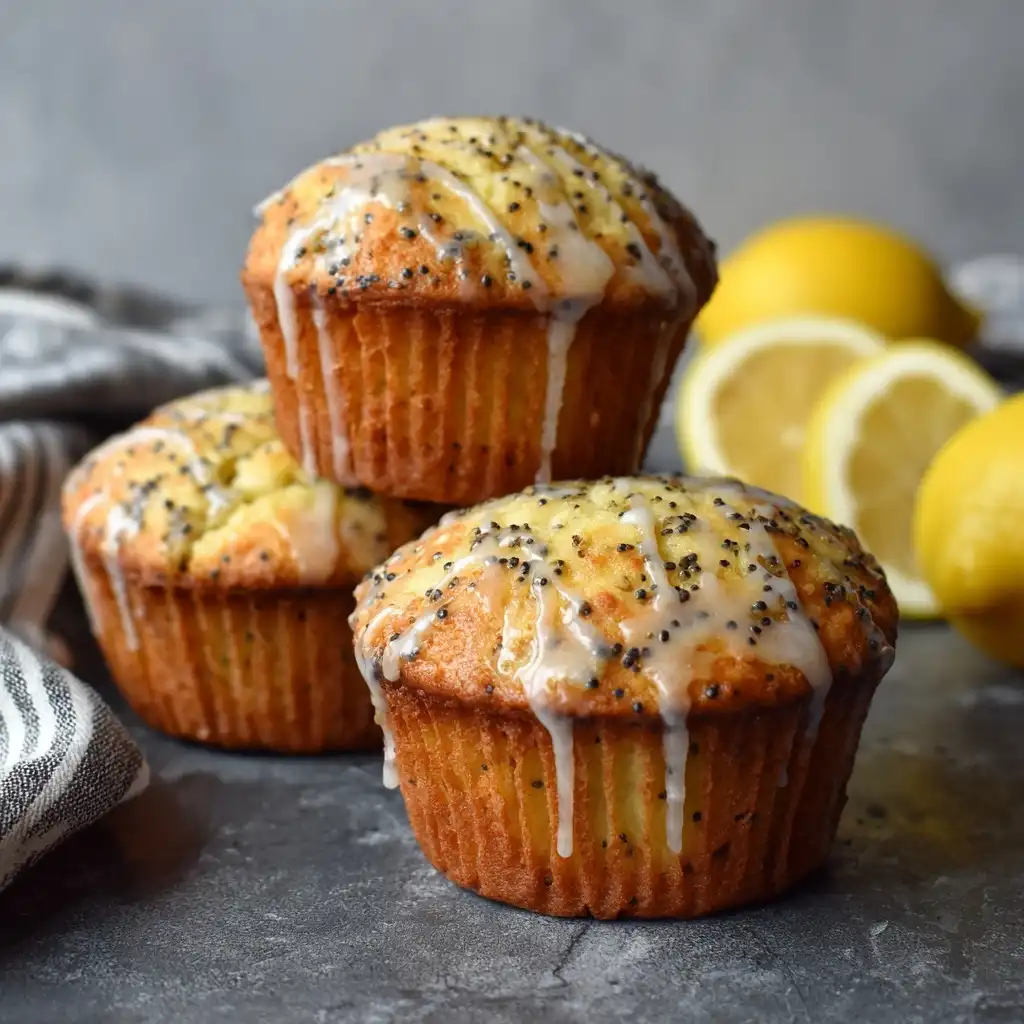
Imagine waking up to the bright, zesty aroma of freshly baked lemon mingling with the subtle nuttiness of poppy seeds—and the gentle, buttery sweetness of a silky glaze glistening atop golden, domed muffins. Lemon Poppy Seed Glazed Muffins are more than just a breakfast staple; they’re a sensory celebration—tangy yet tender, moist yet structured, elegant yet effortlessly homey. Whether served alongside morning coffee, packed into a child’s lunchbox, or offered as a refined afternoon treat at a garden party, these muffins strike a perfect balance between vibrant citrus brightness and comforting bakery warmth. Their signature speckled appearance—flecked with tiny black poppy seeds—and glossy lemon-infused glaze make them as visually captivating as they are delicious. This guide dives deep into every dimension of this beloved classic: its cultural roots, precise ingredient science, foolproof baking methodology, expert pro-tips, creative adaptations for dietary needs and flavor cravings, comprehensive nutritional analysis, and answers to the questions bakers ask most—so you can bake with confidence, creativity, and consistent success.
The History
Lemon poppy seed muffins trace their lineage to a confluence of culinary traditions spanning continents and centuries. Poppy seeds—harvested from the opium poppy (*Papaver somniferum*)—have been used in European, Middle Eastern, and South Asian baking for over 3,000 years, prized not only for their delicate crunch and nutty-oily flavor but also for symbolic associations with fertility, sleep, and remembrance. In Central and Eastern Europe, poppy seed fillings were staples in strudels, hamantashen, and yeast cakes long before the muffin era. Meanwhile, lemons—native to Southeast Asia and cultivated widely across the Mediterranean by the 1st century CE—became essential in British and American baking as citrus cultivation expanded and preservation techniques (like candying and curd-making) flourished.
The modern American muffin—as distinct from the English “muffin” (a griddle cake)—emerged in the late 19th century with the rise of chemical leaveners like baking powder (invented in 1856). Early American cookbooks, including Fannie Farmer’s *Boston Cooking-School Cook Book* (1896), featured fruit- and nut-studded quick breads baked in tin molds—but lemon poppy seed didn’t gain widespread popularity until the mid-20th century. Its breakthrough coincided with post-war suburban baking culture, the proliferation of reliable supermarket ingredients (including pre-packaged poppy seeds and bottled lemon juice), and the rise of coffeehouse culture in the 1980s and ’90s. Chains like Starbucks and local bakeries elevated the lemon poppy seed muffin to iconic status—often pairing it with lavender, blueberry, or almond variations. Today, it endures as a benchmark of artisanal home baking: a recipe that honors tradition while inviting endless reinvention—from gluten-free adaptations to vegan renditions and globally inspired twists like matcha-lemon or cardamom-poppy hybrids.
Ingredients Breakdown
Understanding *why* each ingredient matters—not just *what* goes in—is key to mastering Lemon Poppy Seed Glazed Muffins. Below is a detailed functional analysis of every component in both the muffin base and the glaze:
- All-Purpose Flour (2 ½ cups / 315g): Provides structure via gluten formation. Too much mixing develops excess gluten, leading to toughness—hence the “mix until *just* combined” directive. For optimal tenderness, many bakers prefer bleached all-purpose flour (lower protein, softer crumb), though unbleached works well when handled gently.
- Granulated Sugar (1 cup / 200g): Sweetens, aids browning (via Maillard reaction), retains moisture, and tenderizes by interfering with gluten development. A portion is often reserved for the glaze, where it dissolves into a glossy, stable matrix.
- Baking Powder (2 tsp) & Baking Soda (½ tsp): A dual-leavener system. Baking powder (double-acting) provides lift during both mixing and oven spring; baking soda neutralizes acidity (from lemon juice/zest and buttermilk/yogurt), enhances browning, and contributes to a finer, more open crumb. Omitting either compromises rise and texture.
- Salt (¾ tsp): Not merely for seasoning—it sharpens overall flavor perception, controls yeast activity (irrelevant here, but critical in fermented batters), and strengthens gluten bonds just enough to support structure without denseness.
- Poppy Seeds (¼ cup / 35g): Adds signature visual appeal, textural contrast (a gentle, pleasant crunch), and subtle earthy, sesame-like notes. Whole seeds retain oil and flavor best; pre-ground poppy loses potency quickly. Toasting (optional, 2–3 min in dry skillet) intensifies nuttiness but may darken batter slightly.
- Lemon Zest (from 2 large lemons / ~2 tbsp): The aromatic oils in zest contain >90% of lemon’s volatile flavor compounds—far more concentrated than juice alone. Microplane grating ensures fine, even distribution without bitter pith. Never substitute dried zest; it lacks vibrancy and moisture.
- Fresh Lemon Juice (⅓ cup / 80ml): Provides tart acidity that balances sweetness, activates baking soda, and contributes subtle liquid. Bottled juice lacks nuanced flavor and may contain preservatives that dull brightness. Always strain to remove pulp/seeds.
- Buttermilk (¾ cup / 180ml) or Full-Fat Plain Yogurt (substitute 1:1): Adds acidity (for leavener activation), fat (for tenderness), and tang (for complexity). Its lactic acid further tenderizes gluten. If substituting, ensure yogurt is thick, unsweetened, and unflavored. For dairy-free options, use cultured coconut milk or lemon-vinegar “buttermilk” (1 tbsp lemon juice + plant milk to ¾ cup, rested 5 min).
- Unsalted Butter (½ cup / 115g), melted and cooled: Contributes richness, flakiness (in layers), and moisture. Melted (not browned) butter integrates smoothly without creating pockets of cold fat—ideal for tender muffins. Salted butter can be used, but reduce added salt by ¼ tsp to avoid oversalting.
- Eggs (2 large, room temperature): Bind ingredients, add structure (via proteins), contribute moisture and richness (yolks), and aid emulsification. Room-temperature eggs incorporate more evenly and prevent seizing when mixed with warm butter.
- Vanilla Extract (1 tsp, pure): Enhances and rounds out citrus notes—its phenolic compounds amplify perception of sweetness and brightness without adding sugar. Imitation vanilla lacks depth and may clash with lemon’s high-frequency aromatics.
- Glaze Ingredients — Powdered Sugar (2 cups / 250g), Fresh Lemon Juice (3–4 tbsp), Lemon Zest (1 tsp), Pinch of Salt: Powdered sugar (confectioners’ sugar) contains cornstarch (2–3%), which stabilizes the glaze, prevents crystallization, and yields a smooth, satiny sheen. Fresh lemon juice provides acidity to cut sweetness and adjust consistency; too little = chalky, too much = runny. Zest adds aromatic punch *on top*. A pinch of salt balances and lifts all flavors. Optional additions: ½ tsp melted white chocolate (for silkiness), 1 tsp honey (for gloss and floral notes), or a drop of lemon oil (for intensified aroma).
Step-by-Step Recipe
This meticulously tested method prioritizes texture, flavor development, and reliability—even for first-time bakers. Yield: 12 standard muffins (or 24 mini muffins).
- Prep & Preheat: Position oven rack in the center. Preheat oven to 425°F (220°C) for initial high-heat burst (encourages dramatic dome rise), then reduce to 375°F (190°C) after 5 minutes. Line a 12-cup muffin tin with parchment liners (or grease thoroughly with butter or non-stick spray). Parchment ensures effortless release and preserves the delicate glaze integrity later.
- Toast Poppy Seeds (Optional but Recommended): In a small dry skillet over medium-low heat, toast poppy seeds 2–3 minutes, shaking pan constantly, until fragrant and lightly golden. Cool completely on a plate—this prevents premature melting of butter in batter.
- Mix Dry Ingredients: In a large bowl, whisk together flour, sugar, baking powder, baking soda, and salt until fully homogenous (no streaks). Whisk in toasted (or raw) poppy seeds and lemon zest—coating them in dry mix prevents sinking during baking.
- Mix Wet Ingredients: In a separate medium bowl, vigorously whisk melted (and cooled) butter, eggs, buttermilk (or yogurt), lemon juice, and vanilla until emulsified and uniform—about 30 seconds. No separation should remain.
- Combine Batter Gently: Pour wet mixture over dry ingredients. Using a silicone spatula or wooden spoon, fold *just until no dry flour remains*—approximately 12–15 strokes. Do *not* overmix: batter will be lumpy and shaggy. Overmixing develops gluten → tunneling, toughness, and peaked, cracked tops instead of smooth domes.
- Portion & Bake: Divide batter evenly among lined cups (fill each ~¾ full—about ¼ cup per muffin). Tap tin firmly twice on counter to release air bubbles and level surface. Place in preheated 425°F oven. Immediately reduce heat to 375°F. Bake 5 minutes at high heat, then continue baking 15–18 minutes, or until a toothpick inserted into the center of a muffin comes out with *moist crumbs* (not wet batter, not completely clean—this ensures moistness). Total bake time: ~20–23 minutes. Rotate tin halfway through for even browning.
- Cool Strategically: Remove tin from oven. Let muffins cool in pan for exactly 5 minutes—this sets structure and prevents collapse. Then transfer to a wire rack to cool completely (minimum 45 minutes) before glazing. Warm muffins will melt the glaze; cold muffins absorb it poorly. Patience here is non-negotiable for professional results.
- Prepare Glaze: While muffins cool, sift powdered sugar into a medium bowl to eliminate lumps. Whisk in lemon juice 1 tsp at a time until desired consistency is reached: thick enough to coat the back of a spoon and hold a ribbon for 5 seconds, but fluid enough to drizzle smoothly. Stir in lemon zest and salt. If too thin, add more powdered sugar (½ tbsp at a time); if too thick, add lemon juice (¼ tsp at a time). Let glaze rest 2 minutes to hydrate fully.
- Glaze with Precision: Using a small spoon, squeeze bottle, or fork, drizzle glaze generously over *completely cooled* muffins. Allow glaze to set naturally at room temperature for 30–45 minutes before serving. For extra elegance, sprinkle with additional lemon zest or a few reserved poppy seeds immediately after glazing.
Tips
- Zest First, Juice Second: Always zest lemons before juicing—they’re easier to grip and yield more zest. Roll lemons firmly on the counter before zesting to maximize oil release.
- Measure Flour Correctly: Spoon flour into measuring cup, then level with straight edge. Scooping packs flour → up to 25% more → dense muffins. For accuracy, weigh flour (315g = 2 ½ cups).
- Room-Temperature Matters: Cold eggs or buttermilk can cause melted butter to solidify into greasy flecks—ruining texture. Take ingredients out 30–60 min ahead.
- Don’t Skip the High-Heat Start: That initial 425°F blast creates rapid steam expansion and oven spring—essential for the iconic tall, rounded crown. Reducing heat prevents burning while finishing the bake evenly.
- Test Doneness Correctly: Insert toothpick into the *centermost* muffin, not the edge. Look for moist crumbs—not wet batter, not dry crumbs. Overbaking dries out lemon’s delicate moisture.
- Glaze Timing is Everything: Glazing warm muffins causes runoff and pooling; glazing cold muffins leads to patchy, uneven coverage. Cool completely—use this time to prep tea or tidy your kitchen!
- Storage for Freshness: Store unfrosted, cooled muffins in an airtight container at room temperature up to 2 days. Frosted muffins keep best refrigerated (up to 5 days) but soften slightly—bring to room temp 20 min before serving. Freeze unfrosted muffins up to 3 months; thaw overnight, then glaze fresh.
- Make-Ahead Strategy: Prepare dry and wet mixes separately up to 1 day ahead—store dry mix covered at room temp, wet mix refrigerated. Combine just before baking for maximum freshness and rise.
- Uniform Portioning: Use a 2-tablespoon ice cream scoop for perfectly even muffins—and consistent bake times.
- Altitude Adjustments: Above 3,000 ft: increase oven temp by 15–25°F, reduce sugar by 1–2 tbsp, increase liquid by 1–2 tbsp, and decrease baking powder by ⅛ tsp.
Variations and Customizations
These muffins are a canvas for creativity—adaptable to diets, seasons, occasions, and global palates—without sacrificing integrity:
- Gluten-Free: Substitute 1:1 gluten-free all-purpose flour blend containing xanthan gum (e.g., King Arthur or Bob’s Red Mill). Add ½ tsp xanthan gum if blend doesn’t include it. Increase buttermilk by 1 tbsp for moisture. Expect slightly denser crumb—compensate with extra lemon zest (1 tsp) for brightness.
- Vegan: Replace eggs with 2 flax eggs (2 tbsp ground flax + 5 tbsp water, rested 10 min); use melted coconut oil (refined for neutral taste) or vegan butter; swap buttermilk with almond milk + 1 tbsp lemon juice; ensure sugar is vegan (many brands now are). Glaze: use organic powdered sugar (no bone char) + lemon juice.
- Low-Sugar / Refined-Sugar-Free: Reduce granulated sugar to ¾ cup; replace glaze sugar with monk fruit–erythritol blend (1:1 ratio) or date paste thinned with lemon juice. Add 1 tbsp unsweetened applesauce to batter for moisture retention.
- Whole Grain: Substitute ¾ cup of all-purpose flour with white whole wheat flour or oat flour. Add 1 extra tbsp buttermilk. Flavor deepens beautifully—pair with orange zest instead of lemon for a twist.
- Lemon Blueberry Poppy Seed: Gently fold in 1 cup fresh or frozen (unthawed) blueberries tossed in 1 tsp flour. Add ½ tsp cinnamon to dry mix for warmth. Blueberries add juicy bursts and natural sweetness—reduce sugar by 2 tbsp.
- Lavender-Lemon Poppy: Infuse buttermilk with 1 tsp culinary-grade dried lavender (steep 10 min, strain). Add ¼ tsp lavender buds to dry mix. Elegant and floral—perfect for bridal showers or afternoon tea.
- Maple-Lemon Poppy: Replace ¼ cup granulated sugar with pure maple syrup (reduce buttermilk by 1 tbsp to compensate for added liquid); use maple extract (¼ tsp) with vanilla. Glaze: substitute half the lemon juice with pure maple syrup for amber hue and earthy sweetness.
- Chai-Spiced Lemon Poppy: Add to dry mix: 1 tsp ground ginger, ½ tsp ground cardamom, ¼ tsp ground cloves, ⅛ tsp black pepper. Warm, complex, and deeply aromatic—especially lovely in fall.
- Mini Muffins: Fill liners ⅔ full. Bake at 425°F → 375°F for 10–12 minutes total. Perfect for parties, brunch buffets, or portion-controlled snacking.
- Muffin Tops Only: Line a sheet pan with parchment. Drop ¼-cup portions 2 inches apart. Bake same temp/time as regular muffins—but watch closely: done in ~14–16 min. Crisp edges, ultra-soft centers—ideal for texture lovers.
Health Considerations and Nutritional Value
A single standard Lemon Poppy Seed Glazed Muffin (based on this recipe, 1/12th of batch) contains approximately:
- Calories: 320–350 kcal
- Total Fat: 12–14g (mostly unsaturated from poppy seeds and butter)
- Saturated Fat: 7–8g
- Carbohydrates: 52–56g
- Dietary Fiber: 2–3g (poppy seeds provide ~1.5g fiber per tbsp; whole grain versions boost this significantly)
- Sugars: 32–36g (including ~22g added sugar from granulated + powdered sugar)
- Protein: 5–6g (from eggs, dairy, and poppy seeds)
- Vitamin C: ~15mg (40% DV) from fresh lemon juice and zest
- Calcium: ~120mg (10% DV) from buttermilk and fortified flour
- Iron: ~2.5mg (15% DV) — poppy seeds are rich in non-heme iron (enhanced by vitamin C in lemon)
- Omega-3 ALA: ~800mg per muffin — poppy seeds are one of the richest plant sources of alpha-linolenic acid, supporting heart and brain health.
Key Health Notes:
- Poppy Seeds Are Nutrient-Dense, Not Narcotic: Despite coming from the opium poppy, commercially sold poppy seeds contain negligible, non-psychoactive levels of opium alkaloids (morphine/thebaine). They are safe, legal, and nutritionally beneficial—rich in magnesium, zinc, copper, and manganese.
- Sugar Awareness: The glaze contributes ~15g added sugar per muffin. For reduced sugar impact, serve one muffin with Greek yogurt or berries—or omit glaze entirely and dust with lemon sugar.
- Dairy Considerations: Buttermilk is lower in lactose than regular milk due to bacterial fermentation—many lactose-sensitive individuals tolerate it well. Vegan versions use naturally low-lactose or lactose-free alternatives.
- Glycemic Impact: Moderate-to-high glycemic load due to refined flour and sugars. Pairing with protein (e.g., hard-boiled egg) or healthy fats (e.g., almond butter) slows glucose absorption.
- Allergen Alert: Contains wheat (gluten), dairy, eggs, and sesame (poppy seeds are botanically unrelated but may be processed in facilities handling sesame—check labels if severe allergy exists).
- Pregnancy & Poppy Seeds: Safe in culinary amounts. Concerns about trace opium compounds are unfounded at typical intake (<2 tbsp/day). Always consult your healthcare provider for personalized guidance.
Ingredients
Makes 12 standard muffins
For the Muffins:
- 2 ½ cups (315g) all-purpose flour (spooned & leveled)
- 1 cup (200g) granulated sugar
- 2 tsp aluminum-free baking powder
- ½ tsp baking soda
- ¾ tsp fine sea salt
- ¼ cup (35g) whole poppy seeds (toasted optional)
- Zest of 2 large lemons (about 2 tbsp, finely grated)
- ⅓ cup (80ml) fresh lemon juice (from ~2 lemons, strained)
- ¾ cup (180ml) full-fat buttermilk (or plain whole-milk yogurt)
- ½ cup (115g) unsalted butter, melted and cooled to lukewarm
- 2 large eggs, room temperature
- 1 tsp pure vanilla extract
For the Lemon Glaze:
- 2 cups (250g) powdered sugar (confectioners’ sugar), sifted
- 3–4 tbsp fresh lemon juice (start with 3, add more as needed)
- 1 tsp finely grated lemon zest
- Pinch of fine sea salt
Directions
- Preheat oven to 425°F (220°C) with oven rack in center position. Line a 12-cup standard muffin tin with parchment liners or grease generously.
- (Optional) Toast poppy seeds in a dry skillet over medium-low heat 2–3 minutes, stirring constantly, until fragrant and lightly golden. Transfer to a plate to cool completely.
- In a large bowl, whisk together flour, granulated sugar, baking powder, baking soda, and salt until fully blended. Stir in cooled poppy seeds and lemon zest until evenly distributed.
- Pour wet ingredients into dry ingredients. Using a silicone spatula or wooden spoon, fold gently just until no dry flour remains—about 12–15 strokes. Batter will be thick, lumpy, and shaggy. Do not overmix.
- Divide batter evenly among prepared muffin cups (fill each ~¾ full, ~¼ cup per cup). Tap tin firmly twice on countertop to settle batter and remove air pockets.
- Place in preheated oven. Immediately reduce temperature to 375°F (190°C). Bake 5 minutes at 425°F, then continue baking at 375°F for 15–18 minutes, or until a toothpick inserted into the center of a muffin comes out with moist crumbs (not wet batter).
- Remove tin from oven. Let muffins cool in pan for exactly 5 minutes. Then carefully transfer to a wire rack to cool completely (minimum 45 minutes) before glazing.
- While muffins cool, prepare glaze: Sift powdered sugar into a medium bowl. Whisk in lemon juice 1 tsp at a time until glaze reaches thick, pourable consistency (like heavy cream)—it should coat the back of a spoon and hold a ribbon for 5 seconds. Stir in lemon zest and salt. Let rest 2 minutes.
- Once muffins are fully cooled, drizzle generously with glaze using a spoon, squeeze bottle, or fork. Allow glaze to set at room temperature for 30–45 minutes before serving. Optional: garnish with extra lemon zest or poppy seeds immediately after glazing.
FAQ
- Can I make these muffins ahead of time?
- Yes! Unfrosted muffins freeze exceptionally well for up to 3 months. Cool completely, wrap individually in plastic wrap, then place in a freezer bag. Thaw overnight at room temperature or microwave 15–20 seconds. Glaze fresh just before serving for best appearance and texture.
- Why did my muffins sink in the middle?
- Sinking usually indicates underbaking (remove too soon), excessive leavening (too much baking powder/soda), opening oven door too early, or overmixing. Ensure toothpick test shows moist crumbs—not wet batter—and avoid stirring batter beyond the shaggy stage.
- Can I use bottled lemon juice?
- Fresh is strongly recommended for superior flavor and brightness. Bottled juice often contains preservatives (sodium benzoate) that mute aroma and can impart bitterness. If necessary, choose 100% pure, refrigerated juice—but zest must still be fresh.
- My glaze is too runny/thick—how do I fix it?
- Too runny? Add sifted powdered sugar ½ tablespoon at a time, whisking well between additions. Too thick? Add lemon juice ¼ teaspoon at a time. Always let glaze rest 1–2 minutes after adjusting—it thickens slightly as sugar fully hydrates.
- Can I add blueberries without changing the recipe?
- Yes—but toss 1 cup fresh or frozen (do not thaw) blueberries in 1 tsp flour first to prevent sinking and bleeding. Fold in gently at the very end, after initial mixing. Reduce sugar by 2 tbsp if using sweetened frozen berries.
- Are poppy seeds safe to eat regularly?
- Absolutely. Culinary poppy seeds contain only trace, non-psychoactive alkaloid levels—well below safety thresholds. They’re a nutritious source of calcium, iron, magnesium, and heart-healthy fats. Enjoy daily in moderation as part of a balanced diet.
- Can I bake these in a loaf pan instead?