Lemon Meringue Pie Bars: A Zesty, Fluffy Delight
Introduction
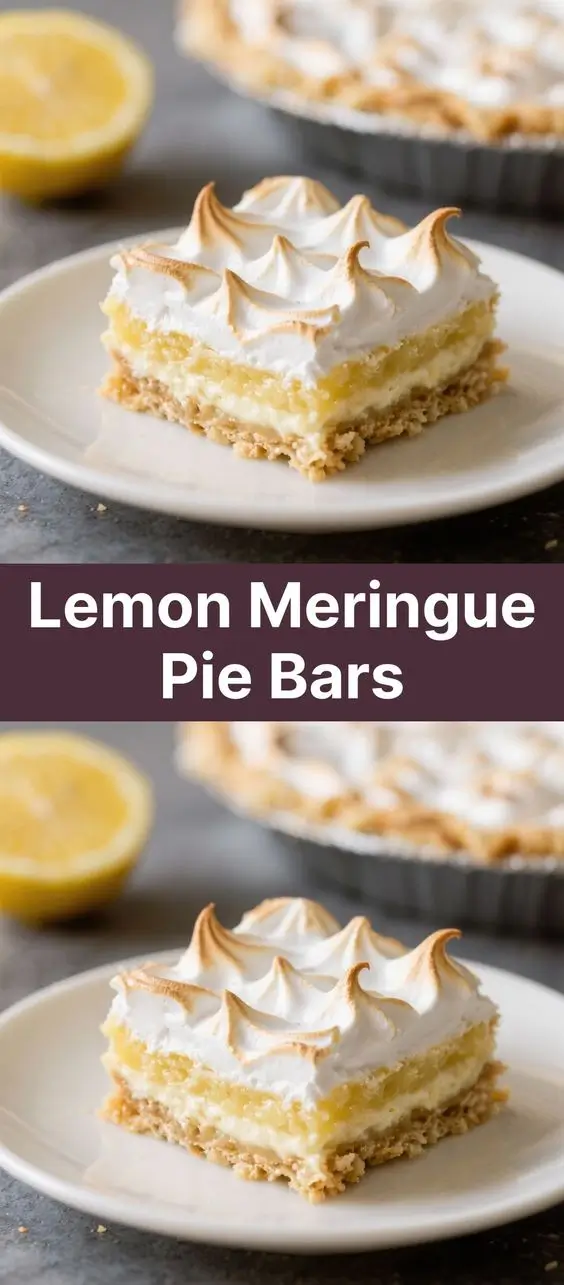
Lemon meringue pie bars are a modern twist on the classic American dessert, combining the buttery richness of shortbread, the tangy brightness of lemon curd, and the airy sweetness of toasted meringue. These handheld treats offer all the flavor complexity of traditional pie in an easy-to-serve, no-fork-required format. Perfect for brunches, afternoon tea, potlucks, or holiday gatherings, these bars deliver a perfect balance between tart and sweet, creamy and crisp. Whether you’re a seasoned baker or a curious beginner, this recipe is approachable, rewarding, and sure to impress with its vibrant color and exquisite texture.
The History
The roots of lemon meringue pie stretch back to 19th-century Europe, where both meringue and custard-based desserts were gaining popularity. The first known recipe resembling lemon meringue pie was published in a Swedish cookbook in 1874, though variations appeared across England and America around the same time. By the early 20th century, with the widespread availability of bottled lemon juice and refined sugar, the pie became a staple in American kitchens. The transformation into bar form likely emerged during the mid-20th century as home bakers sought convenient, portion-controlled versions of classic desserts. Lemon meringue pie bars represent a fusion of tradition and practicality—offering the elegance of pie with the ease of a tray bake. Today, they’re beloved for their nostalgic charm and refreshing citrus kick, making them a year-round favorite.
Ingredients Breakdown
Understanding each ingredient helps ensure success and opens the door to customization. Here’s a detailed look at what goes into perfect lemon meringue pie bars:
- All-Purpose Flour: Forms the structure of the shortbread crust. Provides a tender yet sturdy base that holds up under the filling.
- Unsalted Butter (cold): Adds richness and flakiness to the crust. Using cold butter ensures a crumbly, melt-in-your-mouth texture.
- Powdered Sugar: Sweetens the crust without adding moisture, helping maintain its delicate consistency.
- Salt: Enhances all flavors and balances sweetness.
- Lemon Zest: Intensely aromatic, it infuses the crust with fresh citrus fragrance.
- Fresh Lemon Juice: The star of the filling—provides sharp acidity and natural pectin for thickening.
- Granulated Sugar: Sweetens the lemon layer; quantity can be adjusted based on desired tartness.
- Egg Yolks: Thicken the curd and give it a rich, velvety texture.
- Cornstarch: Acts as a stabilizer and thickener for the lemon filling, ensuring it sets firmly.
- Water: Helps dissolve sugar and activate cornstarch evenly.
- Egg Whites: Used in the meringue—when whipped, they create a light, stable foam.
- Cream of Tartar: Stabilizes egg whites, helping them achieve maximum volume and resist collapsing.
- Vanilla Extract: Adds depth and warmth to the meringue, balancing the sharp lemon.
Step-by-Step Recipe
Follow this detailed guide to make flawless lemon meringue pie bars from scratch.
- Preheat Oven & Prepare Pan: Preheat your oven to 350°F (175°C). Line a 9×13-inch baking pan with parchment paper, leaving overhang on two sides for easy removal. Lightly grease the parchment and any exposed pan edges.
- Make the Crust: In a food processor, pulse together 2 cups all-purpose flour, 1/2 cup powdered sugar, and 1/4 teaspoon salt. Add 1 cup (2 sticks) cold unsalted butter, cut into cubes, and 1 tablespoon finely grated lemon zest. Pulse until the mixture resembles coarse sand with pea-sized butter pieces.
- Press Into Pan: Transfer the dough to the prepared pan. Use your fingers or a flat-bottomed glass to press it evenly across the bottom. Bake for 20–25 minutes, until lightly golden. Remove and let cool slightly while preparing the filling. Reduce oven temperature to 325°F (160°C).
- Prepare Lemon Filling: In a medium saucepan, whisk together 1 cup granulated sugar, 1/4 cup cornstarch, and 1/4 teaspoon salt. Gradually stir in 1 cup water and 1/2 cup fresh lemon juice (about 2–3 lemons). Whisk in 4 large egg yolks. Cook over medium heat, stirring constantly, until the mixture thickens and comes to a gentle boil. Boil for 1 minute, then remove from heat.
- Add Butter & Cool Slightly: Stir in 2 tablespoons unsalted butter until melted and smooth. Stir in 1 teaspoon lemon zest. Pour this hot filling over the warm crust. Spread evenly. Let sit while making meringue.
- Whip the Meringue: In a clean, dry bowl, beat 4 large egg whites with 1/4 teaspoon cream of tartar using an electric mixer on medium speed until soft peaks form. Gradually add 1/2 cup granulated sugar, one tablespoon at a time, increasing speed to high. Beat until stiff, glossy peaks form. Mix in 1/2 teaspoon vanilla extract.
- Top the Bars: Carefully spread the meringue over the still-warm lemon layer, sealing it all the way to the edges to prevent shrinking. Use a spatula to create decorative swirls.
- Bake the Meringue: Bake at 325°F (160°C) for 15–18 minutes, until meringue is golden on top. Rotate the pan halfway through for even browning.
- Cool Completely: Allow bars to cool at room temperature for 1 hour, then refrigerate for at least 3 hours (preferably overnight) to set fully.
- Cut and Serve: Use the parchment overhang to lift the slab out. Cut into 24 bars (3×4 inches) with a sharp, wet knife for clean edges.
Tips
- Use Fresh Lemons: Bottled juice lacks the bright flavor and aroma of freshly squeezed lemons. Always use fresh for best results.
- Room Temperature Eggs: For optimal meringue volume, use room-temperature egg whites. Take them out 30 minutes before beating.
- Clean Bowl is Crucial: Any trace of fat or yolk will prevent egg whites from whipping properly. Ensure the bowl and beaters are spotless.
- Don’t Overbake the Crust: It should be just golden—overbaking leads to a dry base that won’t support the filling well.
- Seal the Meringue: Always spread meringue to the edges of the filling to anchor it and prevent weeping or shrinking.
- Chill Before Cutting: Refrigeration firms up the layers, allowing for neat slices without squishing.
- Wipe the Knife: Between cuts, rinse the knife with hot water and wipe dry to keep edges clean.
- Store Properly: Keep bars covered in the fridge for up to 4 days. They do not freeze well due to meringue texture changes.
Variations and Customizations
These lemon meringue pie bars are highly adaptable. Try these creative twists:
- Lime or Orange Version: Replace lemon juice and zest with lime or orange for a tropical or floral variation.
- Coconut Crust: Add 1/2 cup shredded coconut to the shortbread crust for a nutty, tropical touch.
- Graham Cracker Base: Swap half the flour with graham cracker crumbs for a s’mores-inspired twist.
- Swiss Meringue Option: Instead of French meringue, use Swiss meringue (whipped over a double boiler) for a denser, more stable topping.
- Berry Swirl: Gently fold 1/4 cup raspberry or blueberry compote into the lemon filling before adding meringue.
- Gluten-Free: Substitute the all-purpose flour with a 1:1 gluten-free blend. Ensure other ingredients are certified GF.
- Low-Sugar: Use erythritol or monk fruit sweetener in place of sugar, adjusting quantities as needed. Note: meringue may not brown as deeply.
- Mini Bars: Bake in a 9×9 pan for thicker bars, or use a muffin tin for individual servings.
- Herbal Infusion: Add a pinch of finely chopped thyme or lavender to the crust for an elegant herbal note.
Health Considerations and Nutritional Value
While undeniably delicious, lemon meringue pie bars are a dessert best enjoyed in moderation. Here’s what you should know:
Nutritional Profile (per bar, based on 24 servings):
- Calories: ~230
- Total Fat: 12g (mostly from butter and egg yolks)
- Saturated Fat: 7g
- Cholesterol: 65mg
- Carbohydrates: 27g
- Sugars: 18g
- Protein: 3g
- Sodium: 110mg
Health Notes:
- Eggs: A good source of protein and choline, but high in cholesterol. Those with dietary restrictions may consider alternatives like aquafaba for meringue.
- Sugar Content: High in added sugars. Diabetics or those managing blood sugar should consume sparingly or explore low-glycemic substitutes.
- Butter: Contains saturated fats. For a lighter version, some recipes use margarine or oil, though texture and flavor may change.
- Lemons: Rich in vitamin C and antioxidants, offering immune support and aiding iron absorption.
- Dairy-Free Option: Use plant-based butter to make these bars dairy-free (check label for non-dairy meringue compatibility).
Ingredients
For the Crust:
- 2 cups (250g) all-purpose flour
- 1/2 cup (60g) powdered sugar
- 1/4 teaspoon salt
- 1 cup (2 sticks / 226g) cold unsalted butter, cubed
- 1 tablespoon lemon zest (from about 2 lemons)
For the Lemon Filling:
- 1 cup (200g) granulated sugar
- 1/4 cup (30g) cornstarch
- 1/4 teaspoon salt
- 1 cup (240ml) water
- 1/2 cup (120ml) fresh lemon juice (2–3 lemons)
- 4 large egg yolks
- 2 tablespoons (28g) unsalted butter
- 1 teaspoon lemon zest
For the Meringue:
- 4 large egg whites, room temperature
- 1/4 teaspoon cream of tartar
- 1/2 cup (100g) granulated sugar
- 1/2 teaspoon vanilla extract
Directions
- Preheat oven to 350°F (175°C). Line a 9×13-inch baking pan with parchment paper and lightly grease.
- In a food processor, combine flour, powdered sugar, salt, and lemon zest. Add cold butter and pulse until crumbly.
- Press dough evenly into the bottom of the pan. Bake 20–25 minutes until golden. Cool slightly. Reduce oven to 325°F (160°C).
- For the filling, whisk sugar, cornstarch, and salt in a saucepan. Gradually stir in water and lemon juice. Whisk in egg yolks.
- Cook over medium heat, stirring constantly, until thickened and boiling. Boil 1 minute, then remove from heat.
- Stir in butter and 1 tsp lemon zest until smooth. Pour over warm crust. Set aside.
- In a clean bowl, beat egg whites and cream of tartar until soft peaks form. Gradually add sugar and beat until stiff, glossy peaks form. Mix in vanilla.
- Spread meringue over filling, sealing edges. Swirl decoratively.
- Bake at 325°F for 15–18 minutes, until golden. Cool at room temperature for 1 hour, then refrigerate for 3+ hours.
- Lift out using parchment. Cut into bars with a wet, sharp knife. Serve chilled.
FAQ
Why is my meringue weeping (releasing liquid)?
Weeping often occurs if the meringue isn’t sealed to the edges or if the filling is too cool when meringue is added. Always spread meringue over a warm filling and seal completely.
Can I make these ahead of time?
Yes! Assemble up to 2 days in advance. Store covered in the refrigerator. Add a minute under the broiler before serving to refresh appearance if needed.
Can I use store-bought lemon curd?
Yes, substitute 1 1/2 cups of high-quality lemon curd for the homemade filling. Warm slightly before spreading for easier application.
Why did my filling crack?
Overcooking, rapid cooling, or cutting before fully chilled can cause cracks. Ensure proper chilling and use a sharp, wet knife.
Can I freeze lemon meringue pie bars?
Not recommended. Freezing causes meringue to become soggy and weep upon thawing. The texture will degrade significantly.
What if I don’t have cream of tartar?
Substitute 1/2 teaspoon lemon juice or white vinegar. It won’t stabilize quite as well but will work in a pinch.
Can I make vegan lemon meringue bars?
Yes! Use plant-based butter, flax eggs (for filling), and aquafaba (chickpea brine) whipped with sugar instead of egg whites for meringue.
Summary
Lemon meringue pie bars combine a buttery shortbread crust, tangy lemon curd, and fluffy toasted meringue into an irresistible, sliceable treat perfect for sharing. Easy to make and endlessly customizable, they bring the elegance of pie to a convenient bar form.