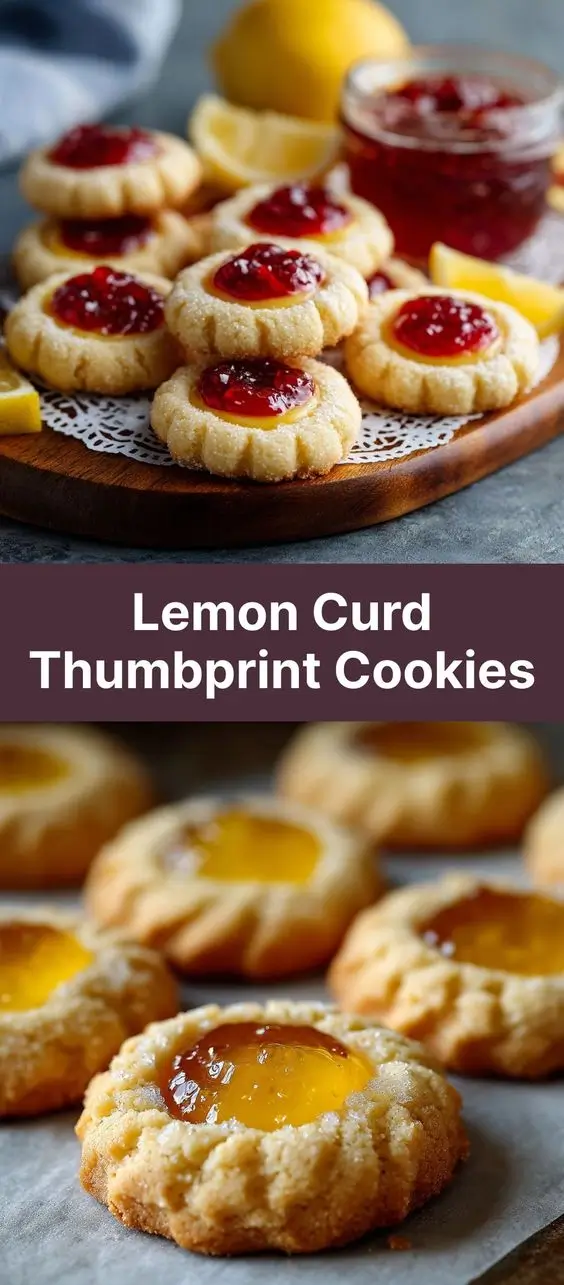
Lemon Curd Thumbprint Cookies
There’s something undeniably charming about a well-made thumbprint cookie. With their delicate, buttery shortbread base and a jewel-like center of bright lemon curd, Lemon Curd Thumbprint Cookies are the perfect balance of elegance and simplicity. These petite treats are ideal for holiday baking, afternoon tea, or as a thoughtful homemade gift. The crisp exterior gives way to a tender crumb, while the zesty lemon filling adds a refreshing tang that awakens the senses. Whether you’re a seasoned baker or trying your hand at cookies for the first time, this recipe promises delicious results with just the right amount of indulgence.
The History
Thumbprint cookies have roots that stretch back centuries across various European cultures. Known as “hallongrottor” in Sweden (which translates to “raspberry caves”), they were traditionally filled with raspberry jam and served during festive occasions like Christmas and weddings. In Germany, similar cookies called “Ausgezogene” or “Linzer Augen” feature jam-filled centers and are part of an old baking tradition. The concept traveled across borders and evolved with local ingredients and tastes.
The adaptation using lemon curd is a more modern twist, gaining popularity in the 20th century as citrus flavors became widely appreciated in Western desserts. Lemon curd, originally developed in Britain in the early 1800s as a way to preserve lemons, brought a vibrant, creamy alternative to fruit jams. Its smooth texture and tart-sweet flavor made it an ideal complement to rich, buttery cookie dough. Today, Lemon Curd Thumbprint Cookies represent a delightful fusion of Old World charm and contemporary flavor preferences, beloved by bakers worldwide for their visual appeal and exquisite taste.
Ingredients Breakdown
Creating the perfect Lemon Curd Thumbprint Cookie hinges on high-quality ingredients and understanding how each component contributes to the final product. Here’s a detailed look at what goes into these delightful treats:
- Unsalted Butter: The foundation of the cookie dough, butter provides richness, tenderness, and flakiness. Using unsalted butter allows you to control the salt content precisely. It should be softened to room temperature for easy creaming but not melted.
- Confectioners’ Sugar (Powdered Sugar): This finely ground sugar blends smoothly into the dough, contributing to a soft, melt-in-your-mouth texture. Unlike granulated sugar, it doesn’t add graininess and helps create a delicate crumb.
- Vanilla Extract: Pure vanilla extract enhances the overall flavor profile, adding warmth and depth that complements both the butter and lemon elements.
- All-Purpose Flour: Provides structure to the cookies. Measured correctly (spooned and leveled), it ensures the dough isn’t too dry or dense. Over-measuring can lead to tough cookies.
- Salt: A small pinch enhances all the other flavors, balancing sweetness and bringing out the tanginess of the lemon curd.
- Lemon Zest: Freshly grated lemon zest infuses the dough with natural citrus aroma and flavor without adding moisture. Only the outer yellow layer should be used—avoid the bitter white pith.
- Lemon Juice: Adds brightness and acidity to the dough, enhancing the lemon presence. Use freshly squeezed juice for the best flavor.
- Egg Yolk: Acts as a binder and enriches the dough, contributing to a smoother texture and golden color when baked.
- Lemon Curd: The star of the show. You can use homemade or high-quality store-bought lemon curd. It should be thick enough to hold its shape but spreadable. Avoid overly runny curds to prevent spilling during baking.
- Optional Garnishes: Edible gold dust, powdered sugar dusting, fresh berries, mint leaves, or even a dollop of whipped cream can elevate presentation and taste.
Step-by-Step Recipe
Follow these detailed steps to make flawless Lemon Curd Thumbprint Cookies from scratch:
- Prepare Your Workspace: Line two large baking sheets with parchment paper or silicone baking mats. Preheat your oven to 325°F (165°C). Ensure all ingredients are measured and at room temperature, especially the butter and egg yolk.
- Cream the Butter and Sugar: In a large mixing bowl, beat 1 cup (2 sticks / 227g) of softened unsalted butter with ½ cup (60g) confectioners’ sugar using a hand mixer or stand mixer on medium speed until light and fluffy—about 2–3 minutes. Scrape down the sides of the bowl as needed.
- Add Flavorings: Mix in 1 teaspoon pure vanilla extract, the zest of one large lemon (about 1 tablespoon), and 1 tablespoon freshly squeezed lemon juice. Beat until fully combined.
- Incorporate Egg Yolk: Add one large egg yolk and mix on low until just incorporated. Do not overmix.
- Gradually Add Dry Ingredients: In a separate bowl, whisk together 1¾ cups (220g) all-purpose flour and ¼ teaspoon salt. Slowly add the flour mixture to the wet ingredients, mixing on low speed just until the dough comes together. It will be soft and slightly sticky—this is normal.
- Chill the Dough (Optional but Recommended): Cover the dough with plastic wrap and refrigerate for 30–60 minutes. Chilling firms up the butter, making the dough easier to handle and helping the cookies retain their shape during baking.
- Shape the Cookies: Scoop out teaspoon-sized portions of dough (about 15g each) and roll them into smooth balls between your palms. Place them on the prepared baking sheets, spacing them about 2 inches apart.
- Create the Thumbprints: Use your thumb, the back of a teaspoon, or a small measuring spoon to gently press a well into the center of each ball. Press down about halfway through the dough. If desired, chill the shaped cookies for another 10–15 minutes before baking to prevent spreading.
- Fill with Lemon Curd: Spoon or pipe about ½ to ¾ teaspoon of lemon curd into each indentation. Be careful not to overfill, as the curd may bubble and spill during baking. For cleaner results, you can also fill the centers after baking while the wells are still warm.
- Bake: Bake in the preheated oven for 14–17 minutes, or until the edges are lightly golden and the centers appear set. The lemon curd should be slightly bubbled but not boiling over.
- Cool and Set: Allow the cookies to cool completely on the baking sheet for 10 minutes before transferring them to a wire rack to cool entirely. As they cool, the lemon curd will firm up slightly.
- Garnish and Serve: Once cooled, lightly dust with additional confectioners’ sugar for a classic finish, or decorate with a tiny mint leaf or berry for an elegant touch.
Tips for Success
- Use Room Temperature Ingredients: Cold butter or egg yolks won’t blend properly, leading to uneven dough. Let your butter sit out for 30–60 minutes before starting.
- Don’t Overwork the Dough: Once flour is added, mix only until combined. Overmixing develops gluten, which can make the cookies tough.
- Consistent Sizing: Use a small cookie scoop or kitchen scale to ensure uniform size. This guarantees even baking and professional appearance.
- Prevent Spreading: Chilling the dough before and after shaping helps maintain the cookie’s shape. Warm dough spreads more in the oven.
- Avoid Overbaking: Remove cookies when the edges are just turning golden. They continue to cook slightly on the hot pan after removal from the oven.
- Filling Options: If you’re worried about curd leakage, consider partially baking the shells first (par-baking), then filling and returning them to the oven for a few extra minutes to set the curd.
- Storage Tip: Store filled cookies in an airtight container with layers separated by parchment paper. They keep best at room temperature for up to 3 days or refrigerated for up to 5 days.
Variations and Customizations
While classic lemon curd is divine, there are countless ways to customize these thumbprint cookies for different tastes and occasions:
- Fruit Jam Fillings: Substitute lemon curd with raspberry, apricot, strawberry, or blackberry preserves for a traditional twist.
- Different Citrus Curds: Try lime curd, orange curd, or grapefruit curd for unique flavor profiles.
- Chocolate-Dipped: Dip half of each cooled cookie in melted white, dark, or milk chocolate for a decadent upgrade.
- Nutty Dough: Replace ¼ cup of flour with finely ground almonds or pecans for a nutty shortbread variation.
- Gluten-Free Version: Use a 1:1 gluten-free flour blend (like Bob’s Red Mill) in place of all-purpose flour. Add ¼ teaspoon xanthan gum if your blend doesn’t include it.
- Vegan Adaptation: Use vegan butter (such as Earth Balance), a flax yolk (1 tbsp ground flaxseed + 3 tbsp water, let sit for 5 mins), and vegan lemon curd (check labels or make your own).
- Spiced Version: Add a pinch of cardamom, cinnamon, or ginger to the dough for a warm, aromatic note.
- Holiday Themes: Color the lemon curd with natural food dyes (e.g., beet juice for pink, matcha for green), or top with festive sprinkles for seasonal celebrations.
- Mini Meringue Tops: After baking, pipe a small swirl of Italian meringue over the curd and lightly torch it for a luxurious finish.
- Alcohol-Infused: Add 1 tsp limoncello or Grand Marnier to the lemon curd for an adult-friendly version.
Health Considerations and Nutritional Value
While Lemon Curd Thumbprint Cookies are undeniably a treat, being mindful of ingredients can help moderate their impact on your diet:
- Butter and Fat Content: These cookies are rich due to butter and egg yolk. One serving (1 cookie) contains approximately 80–100 calories, with 5–7g of fat. Opt for reduced-fat butter sparingly, though it may affect texture.
- Sugar Levels: Confectioners’ sugar and lemon curd contribute significant sugar. Each cookie has around 8–10g of sugar. Consider reducing sugar slightly (by 1–2 tbsp) or using monk fruit-sweetened curd for lower glycemic impact.
- Eggs: The inclusion of egg yolk adds cholesterol and protein. Those with egg allergies should explore substitutes like aquafaba (chickpea brine) or commercial egg replacers, though results may vary.
- Flour Choice: Whole wheat pastry flour can replace up to half the all-purpose flour for added fiber, but expect a denser texture.
- Lemon Benefits: Lemon zest and juice provide vitamin C and antioxidants. While minimal per cookie, they do offer some nutritional upside with anti-inflammatory properties.
- Portion Control: Due to their small size, these cookies lend themselves well to moderation. Enjoying 1–2 as part of a balanced meal is reasonable.
- Storage and Food Safety: Because they contain egg-based lemon curd, avoid leaving them at room temperature for more than 4 hours. Refrigeration extends freshness and prevents spoilage.
Ingredients
- 1 cup (2 sticks / 227g) unsalted butter, softened
- ½ cup (60g) confectioners’ sugar, plus extra for dusting
- 1 teaspoon pure vanilla extract
- Zest of 1 large lemon (about 1 tablespoon)
- 1 tablespoon fresh lemon juice
- 1 large egg yolk
- 1¾ cups (220g) all-purpose flour
- ¼ teaspoon salt
- ⅓ to ½ cup (80–120g) lemon curd (homemade or high-quality store-bought)
- Optional: edible glitter, fresh berries, mint leaves for garnish
Directions
- Preheat oven to 325°F (165°C). Line baking sheets with parchment paper.
- In a large bowl, cream together softened butter and confectioners’ sugar until light and fluffy (2–3 minutes).
- Mix in vanilla extract, lemon zest, lemon juice, and egg yolk until combined.
- In a separate bowl, whisk flour and salt. Gradually add to wet ingredients, mixing on low until a soft dough forms.
- Cover and chill dough for 30–60 minutes for easier handling.
- Roll dough into 1-inch balls and place on baking sheets, spacing 2 inches apart.
- Press your thumb or the back of a spoon into the center of each ball to create a well.
- Fill each indentation with ½ to ¾ teaspoon of lemon curd.
- Bake for 14–17 minutes, until edges are lightly golden.
- Cool on baking sheet for 10 minutes, then transfer to wire rack to cool completely.
- Dust with confectioners’ sugar and garnish as desired before serving.
FAQ
Can I make these cookies ahead of time?
Yes! You can prepare the dough up to 3 days in advance and store it wrapped in plastic in the refrigerator, or freeze it for up to 3 months. Baked unfilled shells can also be frozen and filled later.
Can I use store-bought lemon curd?
Absolutely. Look for high-quality brands like Dickinson’s, Waitrose, or homemade-style jars. Avoid overly watery versions.
Why did my lemon curd leak during baking?
Overfilling, warm dough, or excessive oven temperature can cause leakage. Try par-baking the shells for 10 minutes, then filling and baking 5 more minutes.
Can I freeze Lemon Curd Thumbprint Cookies?
It’s best to freeze the unbaked dough balls or unfilled baked shells. Filled cookies don’t freeze well due to curd separation upon thawing.
How long do these cookies last?
Store in an airtight container at room temperature for up to 3 days, or refrigerate for up to 5 days. Bring to room temperature before serving for best texture.
Can I make mini versions?
Yes! Use a smaller scoop (½ teaspoon dough) and reduce baking time to 10–12 minutes. Perfect for parties or tasting platters.
Is lemon curd safe to eat raw?
Commercial lemon curd is pasteurized and safe. Homemade curd must be cooked to at least 160°F (71°C) to ensure egg safety.
Summary
Lemon Curd Thumbprint Cookies are buttery, tender shortbread delights filled with vibrant, tangy lemon curd—a perfect harmony of sweet and sour in every bite.
Elegant yet simple to make, they’re ideal for gifting, holidays, or elevating your dessert table with a burst of citrus sunshine.