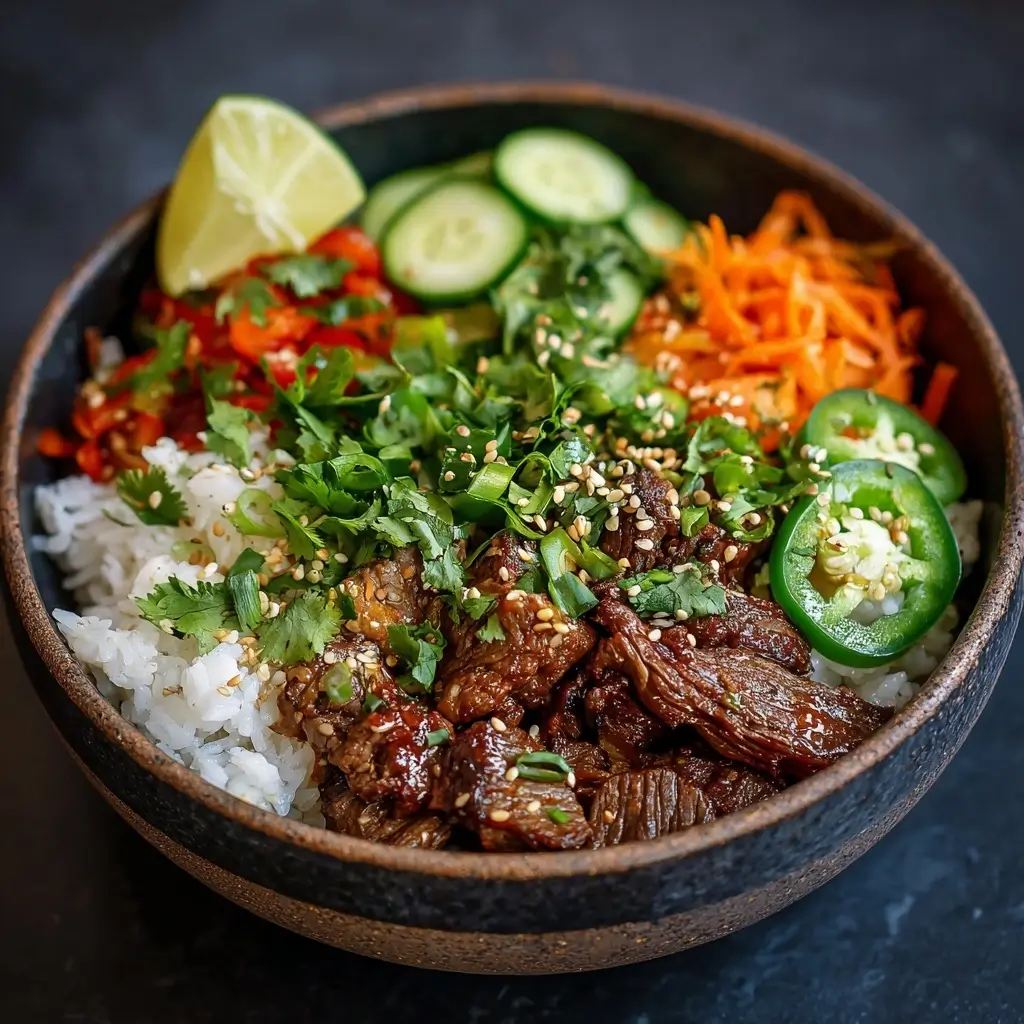
Korean Beef Bowls
Korean Beef Bowls: A Flavorful, Quick & Satisfying Meal
If you’re craving a meal that’s rich in flavor, easy to prepare, and bursting with savory-sweet umami goodness, Korean Beef Bowls are the answer. These bowls combine tender, marinated beef with a perfectly balanced sauce, served over fluffy steamed rice and topped with fresh vegetables. Loved for their quick preparation and restaurant-quality taste, Korean Beef Bowls have become a staple in home kitchens across the globe. Whether you’re cooking for one or feeding a family, this dish delivers both comfort and authenticity in every bite.
The History of Korean Beef Bowls
While the modern “Korean Beef Bowl” as it’s popularly known today may not be a traditional Korean dish passed down through centuries, its roots are deeply embedded in authentic Korean cuisine. The concept draws heavily from Bulgogi (불고기), which translates to “fire meat.” Bulgogi is one of Korea’s most iconic dishes, originating during the Goguryeo era (37 BC – 668 AD) and evolving over time into a beloved grilled delicacy made from thin slices of marinated beef.
Historically, bulgogi was prepared by marinating beef in a mixture of soy sauce, pear juice, garlic, sesame oil, and other seasonings to tenderize and flavor the meat before grilling it over an open flame. It was often reserved for special occasions due to the cost of beef. With the spread of Korean culture globally—especially through the Korean Wave (Hallyu)—and the rise of fusion cuisine, chefs and home cooks began adapting bulgogi into quicker, bowl-style meals.
The Korean Beef Bowl emerged as a convenient, deconstructed version of bulgogi, served over rice with colorful toppings, making it ideal for weeknight dinners and meal prepping. Today, variations appear on menus everywhere—from fast-casual chains like Chipotle-inspired Korean burrito bowls to gourmet interpretations in fine dining restaurants. Despite its modern format, the soul of the dish remains true to its Korean heritage: bold flavors, balanced ingredients, and harmony between sweet, salty, spicy, and umami elements.
Ingredients Breakdown: What Makes This Dish Shine
The magic of Korean Beef Bowls lies in the synergy of high-quality ingredients that create layers of flavor and texture. Below is a detailed breakdown of each component and why it matters:
- Soy Sauce (or Tamari): The backbone of the marinade, providing saltiness and depth. Use low-sodium soy sauce to control salt levels, or tamari for a gluten-free option.
- Brown Sugar or Honey: Adds sweetness that balances the salt and enhances caramelization when searing the beef.
- Sesame Oil: Imparts a nutty aroma and richness. Always use toasted sesame oil for maximum flavor.
- Fresh Garlic and Ginger: Essential aromatics that give the dish its signature pungent warmth and zing.
- Rice Vinegar or Mirin: Offers mild acidity to cut through richness and brighten the sauce.
- Beef (Ribeye, Sirloin, or Flank Steak): Thinly sliced cuts ensure quick cooking and tenderness. Marbling adds juiciness.
- Green Onions and Sesame Seeds: Used as garnishes for freshness and crunch.
- Steamed White Rice or Brown Rice: Acts as a neutral base that absorbs the flavorful sauce.
- Optional Vegetables: Carrots, cucumbers, spinach, kimchi, or roasted broccoli add color, texture, and nutrition.
- Gochujang (Korean Chili Paste): For those who love heat, this fermented red pepper paste adds complexity and spice.
Each ingredient plays a vital role, contributing to the overall balance that defines Korean cuisine—where no single flavor overpowers, but instead works in concert with others.
Step-by-Step Recipe: How to Make Perfect Korean Beef Bowls at Home
Follow these detailed steps to recreate restaurant-quality Korean Beef Bowls in your own kitchen. With minimal prep and about 30 minutes total time, you’ll have a delicious, satisfying meal ready to enjoy.
- Prepare the Beef: Choose a tender cut like ribeye or sirloin. Partially freeze the beef for 30–45 minutes to make slicing easier. Cut into very thin strips against the grain (about ¼ inch thick).
- Make the Marinade/Sauce: In a medium bowl, whisk together:
- ¼ cup low-sodium soy sauce
- 3 tablespoons brown sugar (or honey)
- 2 tablespoons water
- 1 tablespoon sesame oil
- 3 cloves garlic, minced
- 1 tablespoon fresh ginger, grated
- 1 tablespoon rice vinegar or mirin
- 1 teaspoon gochujang (optional, for heat)
- ½ teaspoon black pepper
- Marinate the Beef: Add the sliced beef to the sauce and toss well to coat. Let marinate for at least 15 minutes at room temperature, or up to 2 hours in the refrigerator for deeper flavor.
- Cook the Rice: While the beef marinates, rinse 1 cup of jasmine or short-grain white rice under cold water until the water runs clear. Cook according to package instructions (typically 1:1.5 rice-to-water ratio, simmered covered for 15–20 minutes). Alternatively, use a rice cooker.
- Prepare Toppings: Slice green onions, shred carrots, chop cucumber, blanch spinach, or prepare any additional veggies you’d like to include.
- Cook the Beef: Heat 1 tablespoon of neutral oil (like canola or vegetable oil) in a large skillet or wok over high heat. Once hot, add the beef and marinade. Stir-fry for 5–7 minutes, stirring frequently, until the beef is browned and the sauce has thickened into a glossy glaze. Avoid overcrowding the pan to ensure proper searing.
- Assemble the Bowls: Divide the cooked rice among serving bowls. Top generously with the beef and sauce. Arrange your choice of fresh vegetables around the beef. Garnish with sliced green onions and a sprinkle of toasted sesame seeds.
- Serve Immediately: Enjoy hot while the beef is tender and the rice is warm. Optionally, serve with a side of kimchi or a fried egg on top for extra richness.
Pro Tips for the Best Korean Beef Bowls
- Slice Against the Grain: This breaks up muscle fibers and ensures the beef stays tender after cooking.
- Don’t Skip the Rest: If marinating longer than 30 minutes, refrigerate the beef. Bring back to room temperature before cooking for even results.
- High Heat is Key: Use high heat when stir-frying to achieve a nice sear without stewing the meat in liquid.
- Avoid Overcooking: Beef cooks quickly—overcooking leads to toughness. Remove from heat as soon as it’s browned and glazed.
- Double the Sauce: If you prefer saucier bowls, increase the sauce by 50% and reserve some to drizzle on top before serving.
- Toast Your Sesame Seeds: Lightly toast sesame seeds in a dry pan for 1–2 minutes until golden for enhanced nuttiness.
- Add a Fried Egg: A runny yolk adds creaminess and turns your bowl into a more filling meal.
- Use a Meat Tenderizer (Optional): For extra tenderness, pound flank steak lightly before slicing, or add grated Asian pear or kiwi to the marinade (natural enzymes help break down proteins).
Variations and Customizations
One of the greatest strengths of Korean Beef Bowls is their adaptability. Here are creative ways to customize the dish to suit different tastes, diets, and occasions:
- Protein Swaps: Replace beef with thinly sliced chicken breast, pork tenderloin, ground turkey, or tofu for vegetarian/vegan versions.
- Spicy Kick: Add sriracha, chili flakes, or extra gochujang to the sauce. Top with sliced jalapeños or spicy kimchi.
- Low-Sugar Option: Substitute brown sugar with monk fruit sweetener, allulose, or reduce sugar and boost flavor with pineapple juice (which also helps tenderize).
- Grain-Free/Low-Carb: Serve over cauliflower rice, zucchini noodles, or lettuce cups for a keto-friendly alternative.
- Buddha Bowl Style: Turn it into a nourish bowl with quinoa, roasted sweet potatoes, edamame, avocado, and pickled radishes.
- Fusion Twists: Add teriyaki flair with pineapple chunks, or go Mexican-Korean with tortilla chips, cilantro, and lime wedges.
- Meal Prep Friendly: Cook a large batch and store components separately in airtight containers for up to 4 days. Reheat gently in the microwave or on the stovetop.
- Kids’ Version: Omit spices and strong flavors. Use milder marinades and serve with corn, peas, and cheese for picky eaters.
Health Considerations and Nutritional Value
Korean Beef Bowls can be both nutritious and indulgent, depending on how they’re prepared. Here’s what you need to know about their health profile:
- Protein Powerhouse: Beef is rich in high-quality protein, iron, zinc, and B vitamins, especially B12, which supports nerve and blood health.
- Fats: Ribeye contains more saturated fat, while sirloin or flank steak offers leaner options. Trimming visible fat reduces calories.
- Sodium Watch: Soy sauce is high in sodium. Using low-sodium soy sauce or coconut aminos can reduce sodium by up to 40%. Rinsing canned items and avoiding added salt helps further.
- Sugar Content: Traditional recipes use sugar for balance and caramelization. To reduce sugar, use alternatives or rely on natural sweetness from fruits like pear or apple in the marinade.
- Healthy Fats: Sesame oil contains heart-healthy monounsaturated and polyunsaturated fats, though it should be used in moderation due to calorie density.
- Vegetable Boost: Adding a variety of colorful vegetables increases fiber, antioxidants, and micronutrients, turning the bowl into a well-rounded meal.
- Digestive Benefits: Fermented ingredients like kimchi support gut health with probiotics. Ginger aids digestion and reduces inflammation.
- Portion Control: Serving the beef over brown rice or cauliflower rice increases fiber and lowers glycemic impact compared to white rice.
Nutritional Estimate (per serving, serves 4):
Calories: ~450 | Protein: 28g | Carbohydrates: 45g | Fat: 18g | Fiber: 3g | Sugar: 10g | Sodium: 800mg (varies based on ingredients)
Full Ingredient List
- 1 lb (450g) beef (ribeye, sirloin, or flank steak), thinly sliced
- ¼ cup low-sodium soy sauce (or tamari for gluten-free)
- 3 tbsp brown sugar (or honey/maple syrup)
- 1 tbsp sesame oil (toasted)
- 3 cloves garlic, minced
- 1 tbsp fresh ginger, grated
- 1 tbsp rice vinegar or mirin
- 2 tbsp water
- 1 tsp gochujang (optional, for spice)
- ½ tsp black pepper
- 1 tbsp neutral oil (for cooking)
- 2 cups cooked white rice (jasmine or short-grain), or substitute with brown rice/cauliflower rice
- 2 green onions, sliced
- 1 tbsp sesame seeds, toasted
- Optional toppings: shredded carrots, cucumber slices, steamed broccoli, spinach, kimchi, fried egg, avocado
Detailed Directions
- Prep the Beef: Place the beef in the freezer for 30–45 minutes to firm it up for easier slicing. Cut into thin strips (¼-inch thick), slicing against the grain for tenderness.
- Mix the Marinade: In a medium bowl, combine soy sauce, brown sugar, sesame oil, minced garlic, grated ginger, rice vinegar, water, gochujang (if using), and black pepper. Whisk until sugar dissolves.
- Marinate: Add beef strips to the marinade and toss to coat evenly. Let sit at room temperature for 15–30 minutes, or refrigerate for up to 2 hours.
- Cook Rice: Rinse rice under cold water. Combine with 2 cups water (for white rice) in a pot or rice cooker. Bring to a boil, then reduce to low, cover, and simmer for 15–20 minutes until water is absorbed. Remove from heat and let steam for 10 minutes.
- Prep Toppings: Wash and slice green onions, grate carrots, chop cucumber, and prepare any additional vegetables. Set aside.
- Cook the Beef: Heat 1 tablespoon of neutral oil in a large skillet or wok over high heat. When shimmering, add the beef and marinade. Cook for 5–7 minutes, stirring frequently, until beef is fully cooked and sauce has reduced into a sticky glaze.
- Assemble Bowls: Divide rice among four bowls. Top with equal portions of beef and sauce. Arrange vegetables around the edges. Garnish with green onions and sesame seeds.
- Serve: Serve immediately with optional sides like kimchi, pickled vegetables, or a fried egg. Store leftovers in separate containers for up to 4 days.
Frequently Asked Questions (FAQ)
Can I make Korean Beef Bowls ahead of time?
Yes! You can marinate the beef and cook the rice a day in advance. Store them separately in the fridge. Reheat the beef in a skillet or microwave before assembling.
Can I freeze Korean beef?
Absolutely. Cooked Korean beef freezes well for up to 3 months. Thaw overnight in the fridge and reheat gently on the stove with a splash of water to restore moisture.
What cut of beef is best?
Tender cuts like ribeye, sirloin, or filet mignon work best. Flank steak is more affordable and flavorful but requires careful slicing against the grain.
Is this recipe gluten-free?
Use tamari or a certified gluten-free soy sauce instead of regular soy sauce. Ensure all other ingredients (like gochujang) are labeled gluten-free if needed.
How do I make it spicier?
Increase gochujang, add red pepper flakes, or drizzle with sriracha or chili oil before serving.
Can I use frozen beef?
It’s best to thaw beef completely before slicing and marinating for optimal texture and flavor absorption.
Why did my sauce turn out too salty?
You may have used regular soy sauce instead of low-sodium. Balance it by adding a bit more sugar or a splash of water or pineapple juice next time.
Can I use ground beef?
Yes! Ground beef works well and cooks faster. Brown it first, then pour in the sauce and simmer for 5–7 minutes until thickened.
Are Korean Beef Bowls healthy?
They can be! Use lean beef, reduce sugar, increase veggies, and serve over brown rice or cauliflower rice for a more balanced meal.
What can I substitute for sesame oil?
There’s no perfect substitute, but you can reduce the amount or use a small quantity of walnut or almond oil for nuttiness. Avoid skipping it entirely—it’s key to authentic flavor.
Summary
Korean Beef Bowls are a harmonious blend of sweet, savory, and umami-rich flavors, featuring tender marinated beef served over steamed rice with vibrant toppings. Quick to make, endlessly customizable, and packed with bold taste, they bring the essence of Korean cuisine straight to your dinner table.