Introduction
Key Lime Cheesecake is a dazzling fusion of tropical brightness and creamy decadence — a dessert that captures the essence of sun-drenched Florida coastlines in every velvety, tangy bite. Unlike traditional New York–style cheesecakes, which lean into dense richness, Key Lime Cheesecake balances bold citrus zing with luxuriously smooth cream cheese, resulting in a refreshingly light yet deeply satisfying confection. Its signature pale yellow-green hue, delicate graham cracker crust, and airy-yet-structured filling make it an iconic summer staple, holiday centerpiece, and crowd-pleasing showstopper alike. Whether served chilled on a humid afternoon or garnished elegantly for a special occasion, this dessert delivers an unforgettable sensory experience — tart, sweet, creamy, crumbly, and cool — all at once.
The History
The origins of Key Lime Cheesecake are deeply rooted in two distinct but intertwined culinary traditions: the evolution of American cheesecake and the cultural legacy of Key lime pie. While cheesecake itself traces back over 2,000 years to ancient Greece, the modern American version emerged in the late 19th century, particularly popularized by New York delis and bakeries. Meanwhile, Key lime pie — born in the Florida Keys in the mid-to-late 1800s — was a resourceful creation born from scarcity: sailors and locals used locally abundant Key limes (smaller, more aromatic, and more acidic than Persian limes), canned sweetened condensed milk (which required no refrigeration), and egg yolks to craft a rich, no-bake custard pie. The marriage of these two traditions — the structural integrity and luxurious texture of baked cheesecake with the vibrant, floral acidity of Key lime — began gaining traction in the 1970s and 1980s as regional American desserts surged in national popularity. Early iterations appeared in Florida-based cookbooks and Sunset Magazine features, with chefs like Norman Van Aken and later, Food Network personalities such as Ina Garten and Martha Stewart, helping elevate Key Lime Cheesecake to mainstream status. By the early 2000s, it had become a fixture at beachfront resorts, boutique bakeries, and gourmet grocery chains — symbolizing both nostalgia and innovation in American dessert culture.
Ingredients Breakdown
Understanding each ingredient’s role is essential to mastering Key Lime Cheesecake — not just for flavor, but for texture, stability, and balance:
- Key Limes: True Key limes (Citrus aurantiifolia) are small (1–2 inches), yellow-green when ripe, and distinctly aromatic with higher volatile oil content than Persian limes. Their juice is tarter, more floral, and less bitter — critical for authentic flavor. Bottled Key lime juice (like Nellie & Joe’s) is widely accepted and FDA-approved for authenticity, though fresh-squeezed offers superior brightness (yielding ~1 tsp juice per lime; expect 30–40 limes for ½ cup). Never substitute regular lime juice without adjustment — its lower acidity and muted aroma will compromise the signature profile.
- Cream Cheese: Full-fat, brick-style pasteurized cream cheese (e.g., Philadelphia) is non-negotiable. Low-fat or whipped versions contain stabilizers and excess moisture that cause cracking, graininess, or poor set. It must be softened to room temperature (65–70°F) for 2–3 hours — cold cream cheese creates lumps; overheated or melted cheese breaks emulsion.
- Granulated Sugar: Provides sweetness, structure, and hygroscopic properties that help retain moisture and prevent curdling. Fine granulated (not superfine or confectioners’) ensures even dissolution without grittiness.
- Sour Cream & Heavy Cream: Sour cream adds tang, fat, and lactic acid for tenderness and subtle complexity; heavy cream (minimum 36% fat) enriches mouthfeel and improves sliceability. Both must be at room temperature to avoid shocking the batter.
- Eggs: Large, grade AA eggs at room temperature act as binders and leaveners. Overmixing after adding eggs incorporates too much air, leading to puffing and collapse. Egg yolks add richness and emulsification; whites contribute lift — but here, whole eggs are ideal for balance.
- Vanilla Extract: Pure Madagascar bourbon vanilla enhances depth without competing — it rounds out acidity and complements the lime’s floral notes. Avoid imitation vanilla, which introduces artificial bitterness.
- Sea Salt: A pinch (¼ tsp) heightens all other flavors, reduces perceived sourness, and balances sweetness — a crucial “umami” counterpoint.
- Graham Cracker Crust Ingredients: Graham crackers (honey-sweetened, not cinnamon-spiced unless desired), unsalted butter (melted, not hot), brown sugar (for caramel notes and moisture retention), and a hint of zest (optional but recommended) create a sturdy, slightly chewy, golden-brown foundation. The butter must be fully incorporated — dry crumbs won’t compress properly.
Step-by-Step Recipe
- Prepare the Crust: Preheat oven to 325°F (163°C). Pulse 1 ½ cups (150g) finely crushed honey graham crackers, 3 tbsp (38g) light brown sugar, and ¼ tsp fine sea salt in a food processor until uniform. Add 6 tbsp (85g) melted unsalted butter and pulse until mixture resembles wet sand. Press firmly into bottom and 1 inch up sides of a 9-inch springform pan using the back of a measuring cup or flat-bottomed glass. Chill uncovered for at least 30 minutes (or freeze 15 min) to set.
- Bake the Crust: Bake chilled crust at 325°F for 10 minutes. Remove, cool on wire rack while preparing filling. Reduce oven temperature to 300°F (149°C).
- Soften & Prep Cream Cheese: Ensure 24 oz (680g) full-fat cream cheese is truly softened — pliable but still cool to touch. Cut into 1-inch cubes. Beat on medium-low with paddle attachment (stand mixer) or hand mixer for 1 minute until smooth and glossy — no lumps.
- Cream Sugar & Cheese: Gradually add 1 cup (200g) granulated sugar. Beat 2–3 minutes until completely dissolved and mixture is light, fluffy, and free of grit. Scrape bowl thoroughly.
- Incorporate Dairy: Add 1 cup (240g) full-fat sour cream and ½ cup (120ml) heavy cream. Mix on low until just combined — about 30 seconds. Overmixing here causes excess air and instability.
- Add Eggs One at a Time: With mixer on low, add 4 large room-temperature eggs one at a time, beating just until yolk disappears (≈15 sec per egg). Scrape bowl after each addition. Then add 1 tsp pure vanilla extract and ¼ tsp fine sea salt — mix 10 seconds only.
- Introduce Key Lime Juice & Zest: Gently whisk together ½ cup (120ml) freshly squeezed or bottled Key lime juice and 2 tbsp (6g) finely grated Key lime zest (use a microplane). Fold into batter by hand with a silicone spatula using 10–12 gentle figure-8 strokes — just until streaks disappear. Do NOT stir vigorously or use mixer — this preserves air balance and prevents over-aeration.
- Water Bath Setup: Wrap exterior of springform pan tightly with two overlapping layers of heavy-duty aluminum foil (to prevent leaks). Place pan inside a larger roasting pan. Carefully pour hot (not boiling) water into roasting pan until it reaches halfway up springform sides (~1.5 inches).
- Bake Low & Slow: Carefully transfer roasting pan to preheated 300°F oven. Bake 1 hour 45 minutes–2 hours — cake is done when edges are set and center jiggles *just slightly* like Jell-O (not sloshes). A thermometer inserted 1 inch from edge should read 150°F; center should be ≈140°F.
- Cool Gradually (Critical!): Turn oven off. Crack door open 1 inch with wooden spoon. Let cheesecake cool in water bath for 1 hour. Remove from water bath, run thin knife around inner edge to loosen. Cool completely on wire rack (≈2 hours), then refrigerate uncovered for minimum 12 hours — ideally 24–48 hours for optimal texture, flavor melding, and clean slicing.
Tips
- Room Temperature Is Non-Negotiable: All dairy and eggs must be at true room temperature (65–70°F), not just “out of the fridge.” Cold ingredients cause separation, lumps, and uneven baking.
- No Substitutions for Key Lime Juice: Regular lime juice lacks the nuanced terroir and volatile oils. If unavailable, combine ⅓ cup Persian lime juice + 2 tbsp lemon juice + 1 tsp orange blossom water for approximation — but label honestly.
- Prevent Cracking Religiously: Avoid opening oven during first 90 minutes. Use water bath. Cool slowly — rapid temperature shifts are the #1 cause of cracks.
- Zest Before Juicing: Always zest limes before juicing — hydrated rinds yield more zest and prevent bitter pith inclusion.
- Strain Your Juice: Even with fresh limes, strain juice through a fine-mesh sieve to remove pulp and seeds — ensures silky texture.
- Springform Pan Safety: Double-wrap with foil — test for leaks by filling foil-wrapped pan with water before use. Line bottom with parchment for foolproof release.
- Chill Time Is Part of the Recipe: Under-chilled cheesecake weeps, smudges, and slices poorly. Overnight chilling allows proteins to fully set and flavors to harmonize.
- Use a Water Thermometer: For precision, monitor water bath temp — keep between 170–180°F. Too hot = curdled edges; too cool = underbaked center.
- Slicing Like a Pro: Dip knife in hot water, wipe dry, and slice with slow, steady pressure — reheat and wipe between cuts. A long, thin, non-serrated knife works best.
- Freeze for Long-Term Storage: Unfrosted, fully chilled cheesecake (without toppings) freezes beautifully for up to 3 months. Wrap tightly in plastic + foil. Thaw overnight in fridge — never at room temperature.
Variations and Customizations
Key Lime Cheesecake is remarkably adaptable — honoring tradition while inviting creative expression:
- No-Bake Version: Replace baked filling with a stabilized no-bake base: blend 24 oz cream cheese, 1 cup powdered sugar, ½ cup Key lime juice, 2 tbsp zest, 1 cup cold heavy cream (whipped to soft peaks), and 1 tsp unflavored gelatin (bloomed in 2 tbsp cold water, microwaved 5 sec). Fold gently, pour over chilled crust, and refrigerate 8+ hours.
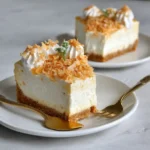
- Coconut Key Lime Cheesecake: Add ½ cup toasted unsweetened coconut flakes to crust. Fold ⅓ cup coconut milk (canned, full-fat) into filling pre-eggs. Top with coconut whipped cream and toasted coconut curls.
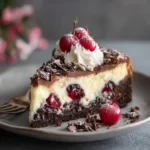
- Blackberry-Key Lime Swirl: After pouring filling, drop ¼ cup seedless blackberry purée (simmered + strained) onto surface. Drag a toothpick through in figure-8 patterns for marbling — bake as directed.
- Crust Variations: Swap graham crackers for ginger snaps (spicy contrast), vanilla wafers (subtle sweetness), shortbread (buttery elegance), or gingersnaps + toasted pecans (Southern twist). For gluten-free, use certified GF graham-style crackers or almond flour crust (1½ cups almond flour + ¼ cup coconut sugar + 6 tbsp melted butter).
- Mini Cheesecakes: Use lined muffin tin (standard or jumbo). Reduce bake time: standard = 22–26 min; jumbo = 32–38 min. Cool in pan 10 min before transferring to rack.
- Vegan Adaptation: Use soaked cashews (2 cups), coconut cream (1 cup), maple syrup (⅔ cup), Key lime juice (½ cup), lime zest (2 tbsp), cornstarch (2 tbsp), and coconut oil (3 tbsp) — blended ultra-smooth, poured into date-nut crust, and chilled 12+ hours.
- Boozy Infusion: Add 2 tbsp Key lime–infused vodka or coconut rum to batter post-eggs. Or brush cooled cake with lime-rum simple syrup (½ cup sugar + ½ cup water + 2 tbsp lime juice + 2 tbsp rum, simmered 5 min).
- White Chocolate-Key Lime: Melt and cool 4 oz high-quality white chocolate. Fold into batter after lime zest/juice step. Adds creamy sweetness and subtle vanilla-cocoa notes.
- Deconstructed Parfait: Layer crumbled crust, no-bake lime cheesecake mousse, fresh mango cubes, and lime crema in glasses. Garnish with mint and edible flowers.
- Grilled Key Lime Cheesecake: After full chill, cut into squares, lightly brush with clarified butter, and grill 60–90 sec per side over medium heat. Serve with grilled pineapple and chili-lime dust.
Health Considerations and Nutritional Value
A standard slice (1/12 of a 9-inch cheesecake, ~180g) contains approximately:
- Calories: 420–480 kcal
- Total Fat: 32–36g (18–20g saturated)
- Carbohydrates: 30–34g (24–26g sugars)
- Protein: 6–8g
- Calcium: ~12% DV (from dairy)
- Vitamin C: ~18–22mg (20–25% DV) — primarily from Key lime juice
- Folate & Antioxidants: Key limes provide flavonoids (hesperidin, naringenin), limonene, and small amounts of potassium and magnesium.
Considerations: While indulgent, Key Lime Cheesecake offers advantages over many desserts: no added citric acid (unlike many lime-flavored products), naturally occurring vitamin C, and absence of artificial dyes or preservatives when made from scratch. However, it remains high in saturated fat and added sugar — moderation is key. For health-conscious adaptations: reduce sugar by 25% (compensate with extra zest), use low-fat sour cream (though texture suffers), substitute ¼ cup Greek yogurt for part of cream cheese (adds protein), or opt for a nut-based crust to increase fiber and healthy fats. Those with lactose intolerance may tolerate small servings due to fermentation in sour cream and aging in cream cheese — but dairy-free versions are strongly advised. Gluten-free options are easily achievable without flavor sacrifice. Note: Key limes are safe for most, but those on potassium-sparing diuretics or with kidney disease should consult a dietitian regarding citrus intake.
Ingredients
For the Crust:
- 1 ½ cups (150g) honey graham cracker crumbs (about 12 full crackers)
- 3 tablespoons (38g) light brown sugar
- ¼ teaspoon fine sea salt
- 6 tablespoons (85g) unsalted butter, melted and cooled slightly
- (Optional) 1 teaspoon finely grated Key lime zest
For the Filling:
- 24 ounces (680g) full-fat brick-style cream cheese, cubed and softened to 65–70°F
- 1 cup (200g) granulated sugar
- 1 cup (240g) full-fat sour cream, room temperature
- ½ cup (120ml) heavy cream (36% fat), room temperature
- 4 large eggs, room temperature
- 1 teaspoon pure Madagascar vanilla extract
- ¼ teaspoon fine sea salt
- ½ cup (120ml) Key lime juice (freshly squeezed or bottled Nellie & Joe’s)
- 2 tablespoons (6g) finely grated Key lime zest
For Serving (Optional but Recommended):
- Whipped cream (unsweetened or lightly sweetened)
- Extra Key lime zest
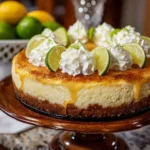
- Fresh Key lime wheels or thin slices
- Crushed graham cracker crumbs
- Thin lime curd drizzle
- Meringue kisses (torched or baked)
Directions
- Prep & Chill Pan: Center oven rack. Preheat oven to 325°F (163°C). Wrap exterior of 9-inch springform pan tightly with two overlapping sheets of heavy-duty aluminum foil. Line bottom with parchment paper round, leaving overhang for easy lift-out.
- Make Crust: In food processor, pulse graham crackers, brown sugar, and salt until fine crumbs form (~15 sec). Add melted butter and optional zest; pulse until mixture resembles damp sand. Press evenly into bottom and 1″ up sides of prepared pan. Chill 30 minutes (or freeze 15 min).
- Bake Crust: Bake chilled crust 10 minutes. Cool completely on wire rack. Reduce oven temp to 300°F (149°C).
- Beat Cream Cheese: Using stand mixer with paddle attachment (or hand mixer), beat softened cream cheese on medium-low 1 minute until smooth and lump-free.
- Cream Sugar: Gradually add sugar. Beat 2–3 minutes until light, fluffy, and completely smooth. Scrape bowl.
- Add Dairy: Add sour cream and heavy cream. Mix on low 30 seconds until just combined.
- Incorporate Eggs: Add eggs one at a time on low speed, mixing just until yolk disappears (≈15 sec each). Scrape bowl after each. Add vanilla and salt; mix 10 sec.
- Fold in Lime: In separate bowl, whisk lime juice and zest. Using silicone spatula, gently fold into batter with 10–12 figure-8 strokes until uniform. Do not overmix.
- Water Bath: Place foil-wrapped springform pan into large roasting pan. Carefully pour hot water (170–180°F) into roasting pan until halfway up springform sides.
- Bake: Carefully place roasting pan in oven. Bake 1 hour 45 minutes–2 hours, until edges are set and center jiggles slightly. Internal temp: edge ≈150°F, center ≈140°F.
- Cool Gradually: Turn oven off. Prop door open 1″. Cool cake in water bath 1 hour. Remove from water, run knife around edge. Cool completely on rack (≈2 hours).
- Chill Thoroughly: Refrigerate uncovered for minimum 12 hours — preferably 24–48 hours. Before serving, run warm knife around edge again. Release springform. Garnish and slice.
FAQ
- Can I use regular limes instead of Key limes?
- Technically yes, but flavor will differ significantly. Persian limes are less aromatic, less tart, and lack the floral-citrus complexity. For best results, use bottled Key lime juice (Nellie & Joe’s) — it’s FDA-certified and widely available. If substituting fresh, add 1 tsp lemon juice and a drop of orange blossom water to approximate depth.
- Why did my cheesecake crack?
- Cracking usually results from rapid temperature change (opening oven too soon, cooling too fast), overmixing (especially after eggs), or overbaking. Always use a water bath, cool gradually, and bake until only the center jiggles slightly — not liquid.
- Can I make this ahead?
- Absolutely — and you should! Key Lime Cheesecake improves dramatically with time. It keeps refrigerated for up to 5 days and freezes (unfrosted) for 3 months. Thaw overnight in fridge before serving.
- How do I get clean slices?
- Use a long, thin, non-serrated knife. Heat in hot water, wipe dry, slice with slow, downward pressure — no sawing. Reheat and wipe between each slice. Chilling for ≥24 hours also ensures firmness.
- Is the water bath really necessary?
- Yes — especially for Key Lime Cheesecake. The steam-rich environment prevents drying, curdling, and cracking, and promotes even, gentle cooking essential for the delicate lime-acid balance. Skip it only for no-bake versions.
- Can I omit the sour cream?
- You can replace it with an equal amount of full-fat Greek yogurt (slightly tangier) or additional heavy cream (richer, less tang). But sour cream contributes ideal pH, fat, and texture — omitting it risks denser, blander results.
- What if my filling is lumpy?
- Lumps almost always mean cream cheese wasn’t softened enough or was too cold. Next time, cube and sit at room temp 2–3 hours. If already mixed, try straining batter through a fine-mesh sieve before pouring — it works!
- Can I use a different crust?
- Yes — gingersnaps, vanilla wafers, shortbread, or toasted coconut flakes all pair beautifully. Just maintain the 1½ cup crumb + 6 tbsp butter ratio. For gluten-free, use certified GF graham-style crackers or almond-date crust.
- Why does my cheesecake taste eggy?
- Overmixing after adding eggs incorporates excess air, causing puffing and a sulfuric “eggy” note as it cools. Also, using older eggs or baking at too high a temperature intensifies this. Stick to room-temp eggs and strict 300°F baking.
- Can I add food coloring?
- Not recommended. Authentic Key Lime Cheesecake gets its pale yellow-green hue naturally from zest and juice. Artificial colors muddy flavor and suggest artificiality — trust the limes!
Summary
Key Lime Cheesecake is a masterclass in balanced indulgence — where the bright, floral acidity of authentic Key limes meets the lush, velvety richness of slow-baked cream cheese, all anchored by a buttery graham cracker crust and perfected through meticulous technique.
From its Florida Keys heritage to modern kitchen innovations, it remains a timeless dessert that rewards patience, celebrates seasonality, and delivers pure, sunlit joy — one impeccably creamy, tangy-sweet, flawlessly sliced bite at a time.