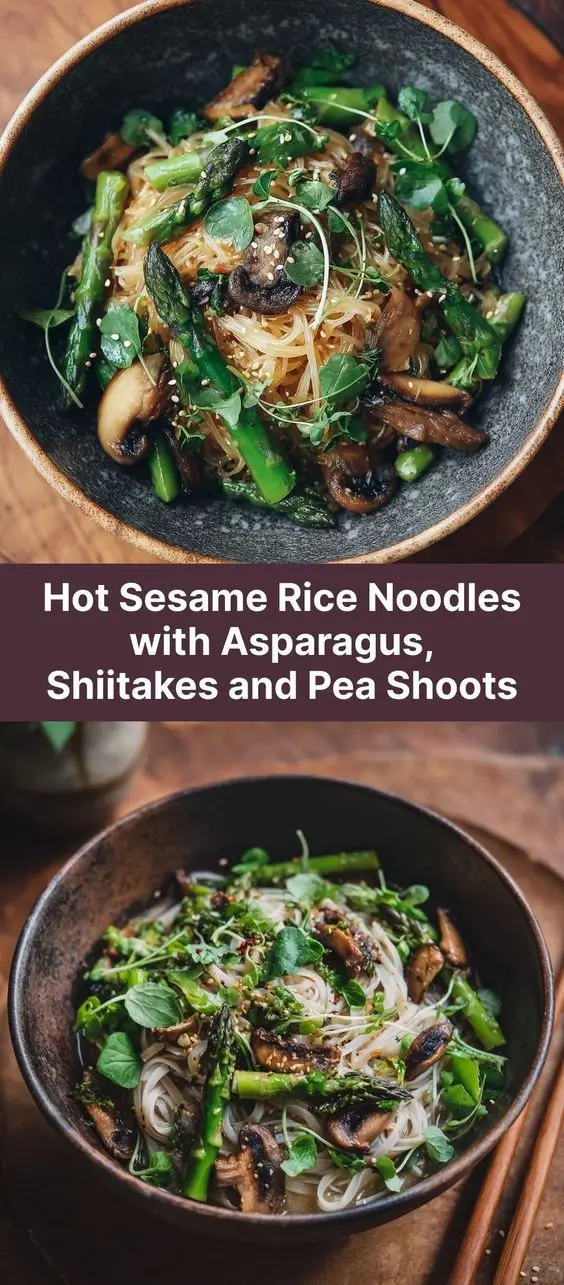
Hot Sesame Rice Noodles with Asparagus, Shiitakes and Pea Shoots
Introduction
Warm, aromatic, and bursting with umami-rich flavors, Hot Sesame Rice Noodles with Asparagus, Shiitakes, and Pea Shoots is a vibrant dish that brings together the delicate textures of fresh vegetables with the nutty depth of toasted sesame oil and the satisfying chew of rice noodles. Perfect for a weeknight dinner or an elegant plant-based lunch, this recipe balances comfort and health in every bite. Whether you’re following a vegan lifestyle, exploring Asian-inspired cuisine, or simply craving something nourishing yet flavorful, this dish delivers on all fronts.
The combination of crisp-tender asparagus, earthy shiitake mushrooms, and tender pea shoots creates a colorful medley that’s both nutritious and visually appealing. Paired with a luscious sesame-soy sauce, it’s a celebration of texture and taste. Light enough to feel wholesome but rich enough to satisfy even the most discerning palates, this recipe is a must-try for lovers of Asian fusion cooking.
The History
Rice noodles have been a staple in Asian cuisines for centuries, particularly in China, Vietnam, Thailand, and Malaysia, where they are used in soups, stir-fries, and salads. Their gluten-free nature and ability to absorb bold flavors made them ideal carriers for savory sauces and broths. The use of sesame oil in Chinese cooking dates back over 3,000 years, prized not only for its flavor but also for its medicinal properties in traditional Chinese medicine.
Stir-frying vegetables like asparagus and mushrooms became increasingly popular during the Ming Dynasty (1368–1644), when wok cooking techniques evolved to preserve nutrients and enhance natural flavors. While asparagus was originally cultivated in the Mediterranean, it found its way into East Asian markets through trade routes, eventually becoming a seasonal delicacy in high-end Chinese kitchens.
Shiitake mushrooms, native to East Asia, have long been revered in Japan and China for their immune-boosting qualities and meaty texture. They were traditionally dried and rehydrated for use in savory dishes, adding a deep umami character. Pea shoots, known as “dòu miáo” (豆苗) in Chinese, are a springtime green often featured in Cantonese cuisine, valued for their tender stems and mild, slightly sweet taste.
This modern recipe draws from these ancient traditions, combining time-honored ingredients with contemporary wellness trends—gluten-free, plant-forward, and nutrient-dense—to create a dish that honors culinary heritage while fitting seamlessly into today’s health-conscious lifestyles.
Ingredients Breakdown
- Rice Noodles: Use thin or medium-width rice vermicelli or pad Thai noodles. These gluten-free noodles cook quickly and absorb sauce beautifully without becoming mushy.
- Toasted Sesame Oil: The star of the sauce, this deeply aromatic oil adds a rich, nutty backbone. Always use cold-pressed, dark sesame oil—not refined—for maximum flavor.
- Low-Sodium Soy Sauce or Tamari: Provides saltiness and umami. Tamari is a great gluten-free alternative with a smoother, less harsh taste.
- Rice Vinegar: Adds brightness and cuts through the richness of the sesame oil. Unseasoned rice vinegar is preferred to avoid added sugars.
- Maple Syrup or Agave: A touch of sweetness helps balance the salty and sour elements. Maple syrup adds a subtle caramel note.
- Fresh Ginger: Finely grated or minced, it brings zesty warmth and aids digestion.
- Garlic: Minced fresh garlic enhances the savory depth and pairs perfectly with sesame.
- Asparagus: Choose firm, bright green spears. Trim the woody ends and cut on a diagonal for more surface area and visual appeal.
- Shiitake Mushrooms: Remove stems (which can be saved for stock) and slice caps thinly. They deliver a meaty texture and concentrated umami.
- Pea Shoots: These delicate greens add freshness and a mild legume-like flavor. Add them at the end to preserve their crunch and color.
- Green Onions: Sliced thinly for garnish, offering a mild onion punch and pop of color.
- Sesame Seeds (white or black): For sprinkling on top—adds crunch and visual elegance.
- Chili Flakes or Sriracha (optional): For those who enjoy a spicy kick.
- Vegetable Broth (optional): Can be used to deglaze the pan or loosen the sauce if needed.
Step-by-Step Recipe
- Cook the Rice Noodles: Bring a large pot of water to a boil. Add rice noodles and cook according to package instructions (usually 4–7 minutes, depending on thickness). Be careful not to overcook—they should be tender but still slightly chewy (al dente). Drain and rinse under cold water to stop the cooking process. Toss with a small drizzle of sesame oil to prevent sticking. Set aside.
- Prepare the Sauce: In a small bowl, whisk together 3 tablespoons toasted sesame oil, 3 tablespoons low-sodium soy sauce or tamari, 1 tablespoon rice vinegar, 1 teaspoon maple syrup, 1 teaspoon grated fresh ginger, and 1 minced garlic clove. Adjust sweetness or saltiness to taste. Set aside.
- Prep the Vegetables: While the noodles cook, trim and cut 1 bunch of asparagus into 2-inch pieces on a diagonal. Slice 8–10 shiitake mushroom caps (discard tough stems). Rinse 2 cups of pea shoots and set aside. Slice 2 green onions on a bias.
- Stir-Fry the Vegetables: Heat 1 tablespoon neutral oil (like avocado or grapeseed) in a large wok or skillet over medium-high heat. Add the asparagus and stir-fry for 2–3 minutes until bright green and slightly tender. Add the shiitake slices and continue to cook for another 3–4 minutes, stirring frequently, until mushrooms are browned and softened.
- Add Aromatics: Push vegetables to one side of the pan. Add a little more oil if needed, then add the minced garlic and grated ginger. Stir-fry for 30 seconds until fragrant, then mix everything together.
- Combine Noodles and Sauce: Add the cooked rice noodles to the skillet. Pour the prepared sesame sauce over the noodles and vegetables. Toss everything thoroughly using tongs or two spoons, ensuring each strand is coated. If the mixture seems dry, splash in 1–2 tablespoons of warm vegetable broth or water to loosen it.
- Incorporate Pea Shoots: Turn off the heat. Add the pea shoots and gently fold them into the hot noodles. They will wilt slightly from the residual heat, retaining their fresh texture and vibrant color.
- Final Touches: Taste and adjust seasoning—add more soy sauce for saltiness, vinegar for tang, or maple syrup for sweetness. Sprinkle with sliced green onions and sesame seeds.
- Serve Immediately: Divide among bowls and serve warm. Optionally, drizzle with extra sesame oil or chili crisp for added flair.
Tips
- Don’t Overcook Noodles: Rice noodles go from perfect to mushy quickly. Test them a minute before the suggested cooking time. Rinsing in cold water halts the cooking and prevents clumping.
- Bloom the Aromatics: Cooking ginger and garlic briefly in oil maximizes their flavor release. Don’t skip this step—it makes a noticeable difference.
- Prep Ahead: Chop all ingredients before starting. Stir-frying happens fast, so having everything ready ensures smooth execution.
- Use a Wok: A carbon steel wok provides even, high heat distribution ideal for stir-frying. A large non-stick skillet works too, but avoid overcrowding the pan.
- Boost Umami: Add a splash of vegetarian oyster sauce (mushroom-based) or a pinch of white miso paste to the sauce for deeper savoriness.
- Keep Pea Shoots Crisp: Add them at the very end—too much heat will wilt them completely, losing their fresh appeal.
- Double the Sauce: If serving leftovers or feeding a crowd, make extra sauce and store it in a jar in the fridge for up to 5 days.
- Reheating Tips: Gently rewarm leftovers in a skillet with a splash of water or broth to revive the texture. Microwaving can make noodles gummy.
Variations and Customizations
- Protein Additions: Top with pan-seared tofu, tempeh, edamame, grilled chicken, shrimp, or a soft-boiled egg for added protein.
- Vegetable Swaps: Substitute broccoli, bok choy, snap peas, carrots, or baby corn for asparagus or shiitakes based on seasonality.
- Noodle Alternatives: Try soba noodles (buckwheat), udon, or even spiralized zucchini for a lower-carb option.
- Spicy Version: Mix in sriracha, chili garlic sauce, or a spoonful of homemade chili crisp. Garnish with sliced red chilies.
- Nut-Free Option: Replace sesame oil with avocado oil and omit sesame seeds. Use sunflower seed butter thinned with water for creaminess.
- Extra Creamy: Stir in a tablespoon of peanut butter or almond butter into the sauce for a richer, silkier texture.
- Herb Boost: Add fresh cilantro, Thai basil, or mint along with the pea shoots for an aromatic lift.
- Smoky Flavor: Char the asparagus lightly under a broiler or grill before adding to the dish for a smoky complexity.
- Meal Prep Friendly: Store components separately—noodles, sauce, and pre-cut veggies—and assemble quickly when ready to eat.
Health Considerations and Nutritional Value
This dish is naturally gluten-free (when using tamari), vegan, and packed with plant-based nutrition. Let’s break down the benefits:
- Rice Noodles: Provide easily digestible carbohydrates for sustained energy. Low in fat and cholesterol-free, they’re ideal for sensitive digestive systems. However, they are low in protein and fiber compared to whole grains, so pairing with vegetables and plant proteins improves nutritional balance.
- Sesame Oil: Rich in monounsaturated and polyunsaturated fats, including omega-6 fatty acids. Contains antioxidants like sesamol and has anti-inflammatory properties. Use in moderation due to high calorie density.
- Asparagus: A powerhouse of folate, vitamins A, C, E, and K, and dietary fiber. It supports heart health, digestion, and detoxification pathways in the liver.
- Shiitake Mushrooms: Contain lentinan, a compound studied for immune-modulating effects. Also provide B vitamins, copper, selenium, and a meaty texture without saturated fat.
- Pea Shoots: One of the most nutrient-dense leafy greens, rich in beta-carotene, vitamin C, and phytonutrients linked to reduced oxidative stress.
- Ginger and Garlic: Both possess potent anti-inflammatory and antimicrobial properties. Ginger aids digestion and reduces nausea; garlic supports cardiovascular health.
A typical serving (approx. 1.5 cups) contains roughly:
- Calories: 320–380
- Carbohydrates: 45–50g
- Protein: 8–10g (more with added tofu or edamame)
- Fat: 14–18g (mostly healthy fats from sesame oil)
- Fiber: 5–7g
- Sodium: 600–800mg (reduced further with low-sodium soy sauce)
This dish scores high on the glycemic index due to refined rice noodles, so individuals managing blood sugar may opt for smaller portions paired with extra non-starchy vegetables or alternate with lentil or chickpea-based noodles.
Ingredients
- 8 oz (225g) rice noodles (vermicelli or pad Thai style)
- 3 tbsp toasted sesame oil (plus extra for drizzling)
- 3 tbsp low-sodium soy sauce or tamari
- 1 tbsp rice vinegar
- 1 tsp pure maple syrup or agave nectar
- 1 tsp fresh ginger, finely grated
- 2 cloves garlic, minced
- 1 bunch asparagus (about 12–15 spears), trimmed and cut diagonally
- 8–10 shiitake mushrooms, stems removed and caps sliced
- 2 cups fresh pea shoots
- 2 green onions, thinly sliced
- 1 tbsp sesame seeds (white or black)
- Optional: chili flakes, sriracha, or chili crisp to taste
- 1 tbsp neutral oil (avocado, grapeseed, or canola) for stir-frying
- 1–2 tbsp vegetable broth (optional, for loosening sauce)
Directions
- Cook rice noodles in boiling water according to package directions until al dente. Drain, rinse under cold water, toss with a drizzle of sesame oil, and set aside.
- In a small bowl, whisk together 3 tablespoons sesame oil, soy sauce, rice vinegar, maple syrup, grated ginger, and minced garlic. Set sauce aside.
- Heat 1 tablespoon neutral oil in a large wok or skillet over medium-high heat. Add asparagus and stir-fry for 2–3 minutes until bright green and slightly tender.
- Add sliced shiitake mushrooms and cook for another 3–4 minutes, stirring frequently, until mushrooms are golden and softened.
- Push vegetables to one side. Add a bit more oil if needed, then add remaining ginger and garlic. Stir-fry for 30 seconds until fragrant, then combine with vegetables.
- Add cooked rice noodles to the skillet. Pour sauce evenly over the noodles and vegetables.
- Toss everything together thoroughly, using tongs or spoons. Add 1–2 tablespoons of vegetable broth if the mixture feels dry.
- Remove from heat. Fold in pea shoots gently—they should wilt slightly but remain vibrant.
- Taste and adjust seasoning—add more soy sauce for saltiness, vinegar for tang, or syrup for sweetness.
- Transfer to serving bowls. Garnish with green onions, sesame seeds, and optional chili flakes.
- Serve immediately, optionally drizzled with extra sesame oil or chili crisp.
FAQ
- Can I make this dish ahead of time?
- Yes, but best assembled just before serving. Cook and oil-coat noodles in advance. Prep sauce and chop vegetables earlier in the day. Stir-fry and combine right before eating for optimal texture.
- Are rice noodles gluten-free?
- Yes, pure rice noodles are naturally gluten-free. Always check labels to ensure no cross-contamination or added wheat starch.
- Can I use dried pea shoots?
- No—pea shoots are meant to be used fresh. Dried versions lose flavor and texture. Substitute with spinach or arugula in a pinch, though the taste will differ.
- What can I use instead of shiitake mushrooms?
- Cremini, oyster, or king trumpet mushrooms work well. Each offers a unique texture and umami level.
- Is sesame oil safe for nut allergies?
- Sesame seeds are not nuts but are classified as allergens. Those with sesame allergies should avoid this recipe entirely.
- Can I freeze leftovers?
- Not recommended. Rice noodles tend to become mushy upon thawing. This dish is best enjoyed fresh or refrigerated for up to 2 days.
- How do I prevent sticky noodles?
- Rinse cooked noodles under cold water and toss with a small amount of oil. Avoid leaving them in hot water or letting them sit unattended after cooking.
- Can I make this oil-free?
- You can reduce oil by using a non-stick pan and steaming the vegetables with broth, but some oil is needed to carry the flavor of sesame and bloom aromatics. Consider using a mister for light coating.
Summary
Hot Sesame Rice Noodles with Asparagus, Shiitakes, and Pea Shoots is a harmonious blend of textures and flavors—chewy noodles, crisp-tender vegetables, and a luxuriously nutty sauce—all coming together in under 30 minutes.
Nourishing, adaptable, and deeply satisfying, this dish bridges tradition and modern wellness, making it a standout choice for everyday meals or mindful entertaining.