Hot Milk Cake: A Classic, Moist Delight That Melts in Your Mouth
The History of the Hot Milk Cake
The Hot Milk Cake, a beloved staple in American home baking, traces its origins back to the early 20th century when simplicity and resourcefulness defined kitchen traditions. As ovens became more accessible and standardized in households across the United States, bakers began experimenting with cake recipes that required minimal ingredients but delivered maximum flavor and texture. The term “hot milk cake” refers not only to the use of heated milk in the batter but also to the method that sets it apart from other cakes—using warm milk to enhance emulsification, create a tender crumb, and infuse richness without relying on excessive butter or oil.
Historically, this cake was a go-to recipe during times of scarcity, such as the Great Depression and World War II, when ingredients like eggs, sugar, and fats were rationed. By using hot milk to aerate the batter and improve volume, bakers could produce a soft, moist cake with fewer eggs and less fat than traditional sponge or pound cakes. It became a favorite among homemakers for its reliability and gentle sweetness—a perfect tea-time treat or after-dinner dessert.
The recipe evolved over decades, appearing in countless community cookbooks, church fundraisers, and women’s magazines. Its enduring popularity lies in its nostalgic charm and universal appeal. Today, the Hot Milk Cake is cherished not just for its history but for its understated elegance—simple enough for beginners yet refined enough to grace any table. It serves as a testament to the beauty of basic ingredients transformed through technique and care.
Ingredients Breakdown: Why Each Component Matters
The magic of the Hot Milk Cake lies in its simplicity and the thoughtful role each ingredient plays in creating a uniquely tender and flavorful dessert. Let’s explore them one by one:
- All-Purpose Flour: The structural backbone of the cake, providing gluten formation that supports the rise while remaining delicate. Sifted before use, it ensures a light texture and prevents lumps.
- Granulated Sugar: Adds sweetness and aids in moisture retention. It also contributes to the golden-brown crust during baking through caramelization.
- Baking Powder: A chemical leavener that reacts when combined with liquid and heat, producing carbon dioxide bubbles that help the cake rise evenly and stay fluffy.
- Salt: Enhances all other flavors, balancing sweetness and bringing depth to the overall taste profile.
- Butter (Unsalted): Provides richness, flavor, and tenderness. When creamed with sugar, it traps air, contributing to the cake’s lightness. Using unsalted butter allows control over salt content.
- Eggs (Large): Act as binders and emulsifiers, helping to stabilize the batter. They add structure and contribute to the cake’s golden color and soft elasticity.
- Vanilla Extract: A key flavor enhancer, adding warmth and complexity. Pure vanilla extract is recommended for superior aroma and depth compared to imitation versions.
- Milk: The star of the show. Heated until warm (but not boiling), the milk helps dissolve sugar more effectively, melts butter smoothly, and creates an emulsion that results in an ultra-moist crumb. Whole milk is preferred for its fat content, which enriches the texture.
This harmonious blend of pantry staples works together to yield a cake that is neither dense nor dry—instead, it boasts a melt-in-your-mouth quality reminiscent of a cross between a butter cake and a custard sponge.
Step-by-Step Recipe: How to Make the Perfect Hot Milk Cake
Follow these detailed instructions to create a flawless Hot Milk Cake every time. Precision and patience are key, especially when working with temperature-sensitive ingredients like warm milk and room-temperature eggs.
- Preheat the Oven: Set your oven to 350°F (175°C). Position the rack in the center to ensure even baking. Generously grease a 9-inch round or square baking pan with softened butter or non-stick spray, then dust lightly with flour, tapping out excess. Alternatively, line the bottom with parchment paper for easy release.
- Heat the Milk: In a small saucepan over medium-low heat, warm 1 cup of whole milk until it reaches about 110–120°F (just warm to the touch, similar to baby bottle temperature). Remove from heat immediately to avoid scalding. Stir in ¼ cup (½ stick) of unsalted butter and let it melt completely into the milk. Set aside to cool slightly while preparing the dry ingredients.
- Combine Dry Ingredients: In a medium bowl, sift together 1¾ cups all-purpose flour, 1½ teaspoons baking powder, and ½ teaspoon salt. Sifting ensures uniform distribution and removes any clumps, leading to a smoother batter. Whisk well and set aside.
- Cream Butter and Sugar: In a large mixing bowl, beat ½ cup (1 stick) of softened unsalted butter with 1 cup granulated sugar using an electric mixer on medium speed. Cream for 3–5 minutes until the mixture turns pale yellow, fluffy, and almost whipped in texture. This step incorporates air, essential for a light cake.
- Add Eggs and Vanilla: Add two large room-temperature eggs, one at a time, beating well after each addition. Scrape down the sides of the bowl as needed. Mix in 1 teaspoon of pure vanilla extract and continue beating until fully incorporated and the mixture appears smooth and glossy.
- Incorporate Warm Milk Mixture: With the mixer on low speed, slowly pour in the warm milk and butter mixture. Mix just until blended—do not overmix at this stage, as it can lead to gluten development and a tougher cake.
- Fold in Dry Ingredients: Gradually add the sifted dry ingredients to the wet mixture, folding gently with a rubber spatula or mixing on low speed. Alternate briefly between hand folding and mixer use to ensure no pockets of flour remain, but stop as soon as the batter is uniform. Overmixing leads to toughness, so handle with care.
- Pour Into Pan and Smooth Top: Transfer the batter into the prepared baking pan. Use the spatula to spread evenly and smooth the surface, ensuring consistent thickness for even rising.
- Bake Until Golden and Springy: Place the pan in the preheated oven and bake for 35–40 minutes, or until the top is golden brown and a toothpick inserted into the center comes out clean or with a few moist crumbs (no wet batter).
- Cool Properly: Allow the cake to cool in the pan for 10–15 minutes before running a knife around the edges and turning it out onto a wire rack. If you lined the pan with parchment, lift it out gently. Let cool completely before slicing or frosting.
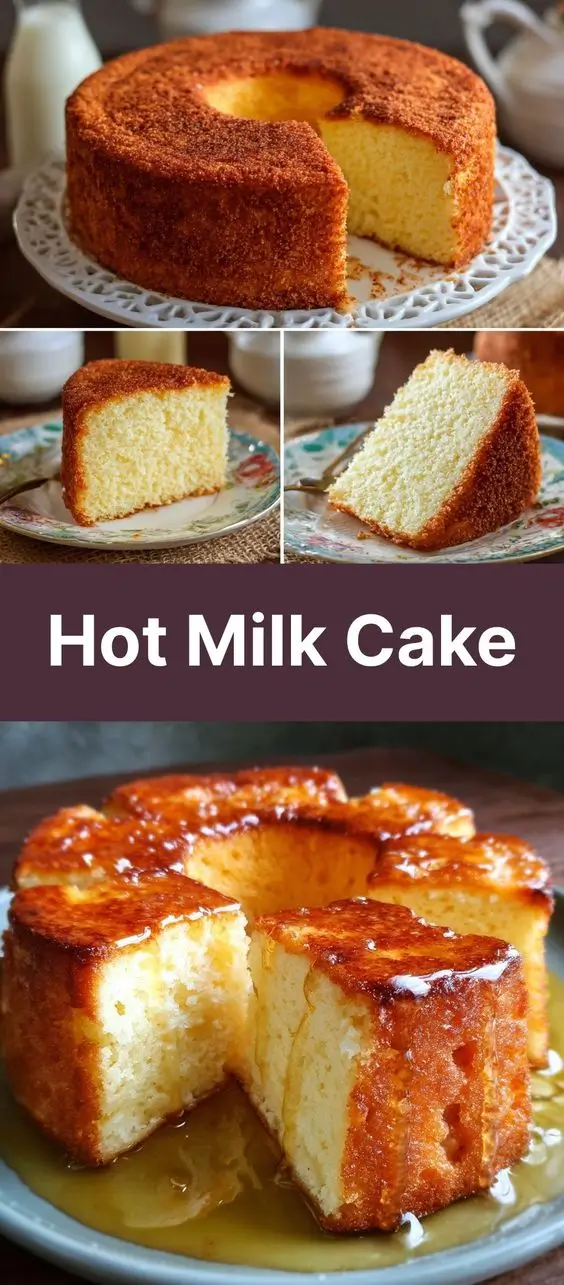
Your Hot Milk Cake should emerge with a domed top, fine crumb, and a delicate aroma of vanilla and warm dairy. Serve plain, dusted with powdered sugar, or dressed up with glaze or fresh fruit.
Tips for Baking Success
To achieve bakery-quality results at home, keep these expert tips in mind:
- Use Room-Temperature Ingredients: Cold eggs or butter won’t emulsify properly with warm milk, risking curdling and uneven texture. Take eggs and butter out 1–2 hours before baking.
- Don’t Overheat the Milk: Excessive heat can cook the eggs prematurely when mixed. Keep the milk warm—not hot—to preserve the integrity of the batter.
- Avoid Overmixing: Once flour is added, mix only until combined. Overworking develops gluten, resulting in a chewy rather than tender cake.
- Check Oven Temperature Accuracy: Use an oven thermometer to verify your oven is truly at 350°F. Many household ovens run hot or cold, affecting rise and browning.
- Rotate the Pan Midway: For even baking, rotate the cake 180 degrees halfway through the baking time, especially if your oven has hot spots.
- Test Doneness Correctly: Insert a toothpick near—but not directly in—the center. If it pulls out clean or with a few dry crumbs, it’s done. Wet batter means more time.
- Cool Before Cutting: Cutting too soon causes crumbling. Let the cake rest fully to set its structure.
- Store Properly: Wrap cooled cake tightly in plastic wrap or store in an airtight container. It keeps well at room temperature for up to 3 days or refrigerated for 5 days.
Variations and Customizations: Make It Your Own
While the classic Hot Milk Cake shines on its own, its neutral flavor profile makes it a perfect canvas for creative twists. Here are some delicious ways to personalize your cake:
- Lemon Hot Milk Cake: Add the zest of one lemon to the sugar before creaming, and substitute 2 tablespoons of milk with fresh lemon juice. Top with a lemon glaze made from powdered sugar and citrus juice.
- Almond Infusion: Replace half the vanilla extract with ½ teaspoon almond extract for a nutty, aromatic twist. Garnish with sliced almonds before baking.
- Spiced Version: Add ½ teaspoon ground cinnamon, a pinch of nutmeg, and a dash of cardamom to the dry ingredients for a warm, autumnal flair.
- Chocolate Swirl: Melt ½ cup chocolate chips with a teaspoon of butter and swirl into the batter before baking for a marbled effect.
- Fruit-Infused: Fold in 1 cup of blueberries, diced peaches, or pitted cherries (tossed in flour first) for a fruity variation.
- Dairy-Free Option: Use oat milk or full-fat coconut milk warmed gently, and substitute butter with vegan margarine. Ensure all other ingredients are plant-based.
- Gluten-Free Adaptation: Swap all-purpose flour with a high-quality 1:1 gluten-free baking blend containing xanthan gum for proper binding.
- Mini Cupcakes: Divide the batter among lined muffin tins and bake for 18–22 minutes. Perfect for parties or portion control.
- Layered Cake: Double the recipe and bake in two 8-inch pans to assemble a layered dessert filled with whipped cream, jam, or buttercream.
You can also elevate presentation by serving slices with macerated berries, a scoop of vanilla ice cream, or a drizzle of caramel sauce.
Health Considerations and Nutritional Value
Understanding the nutritional makeup of Hot Milk Cake helps you enjoy it mindfully. While not a health food, it can be part of a balanced diet when consumed in moderation.
| Nutrient | Per Serving (1/12 of cake) |
|---|---|
| Calories | 220–240 kcal |
| Total Fat | 10–12g (6g saturated) |
| Cholesterol | 55–60mg |
| Sodium | 150–180mg |
| Carbohydrates | 30–32g (including 18g sugar) |
| Protein | 4–5g |
| Fiber | 0.5–1g |
Health Notes:
- Sugar Content: The cake contains a moderate amount of sugar. To reduce it, consider decreasing granulated sugar to ¾ cup without significantly affecting texture.
- Dairy Sensitivity: Contains milk and butter. Lactose-intolerant individuals may need alternatives like lactose-free milk or plant-based substitutes.
- Egg Allergies: Eggs are essential for structure. Replace with flax eggs (1 tbsp ground flax + 3 tbsp water per egg), though texture may be denser.
- Portion Control: One slice satisfies most sweet cravings. Pair with fresh fruit to increase fiber and nutrients.
- Natural Energy Boost: Thanks to carbohydrates and fats, this cake provides quick energy—ideal post-workout or during colder months.
Ingredients
- 1¾ cups (220g) all-purpose flour, sifted
- 1 cup (200g) granulated sugar
- 1½ teaspoons baking powder
- ½ teaspoon salt
- ½ cup (1 stick / 113g) unsalted butter, softened + ¼ cup (½ stick / 57g) for milk mixture
- 2 large eggs, room temperature
- 1 teaspoon pure vanilla extract
- 1 cup (240ml) whole milk
Directions
- Preheat oven to 350°F (175°C). Grease and flour a 9-inch round or square baking pan.
- In a small saucepan, warm the milk over medium heat until warm to the touch (110–120°F). Remove from heat and stir in ¼ cup butter until melted. Set aside.
- Sift flour, baking powder, and salt into a bowl. Whisk to combine.
- In a large bowl, cream ½ cup butter and sugar until light and fluffy (3–5 minutes).
- Add eggs one at a time, beating well after each. Mix in vanilla.
- With mixer on low, slowly pour in warm milk mixture. Blend until combined.
- Gradually add dry ingredients, folding gently until just incorporated. Do not overmix.
- Pour batter into prepared pan and smooth the top.
- Bake 35–40 minutes, or until golden and a toothpick comes out clean.
- Cool in pan 10–15 minutes, then transfer to wire rack to cool completely.
- Serve plain, dusted with powdered sugar, or with desired toppings.
FAQ
Can I make Hot Milk Cake ahead of time?
Yes! Bake it a day in advance and store covered at room temperature. It often tastes better the next day as flavors meld.
Why is my cake dense?
Overmixing the batter or using cold ingredients are common culprits. Always mix gently after adding flour and ensure eggs and butter are at room temperature.
Can I freeze Hot Milk Cake?
Absolutely. Wrap cooled cake tightly in plastic wrap and aluminum foil. Freeze for up to 3 months. Thaw at room temperature before serving.
Can I use low-fat milk?
Yes, but whole milk yields the best texture and richness. Low-fat or skim milk may result in a slightly drier crumb.
Why is the milk heated?
Heating the milk helps dissolve sugar, melt butter evenly, and create a stable emulsion that produces a finer, moister crumb.
Can I add mix-ins like nuts or chocolate chips?
Yes! Fold in up to 1 cup of chopped walnuts, pecans, or chocolate chips after combining wet and dry ingredients.
What does Hot Milk Cake taste like?
It has a mild, buttery sweetness with a soft, custard-like texture. Think of a cross between a yellow cake and a financier—rich but not heavy.
Is this cake the same as a “hot milk sponge”?
Very similar. Some regional variations use slightly different ratios or include sour cream or buttermilk for tanginess.
Summary
The Hot Milk Cake is a timeless, tender dessert that celebrates simplicity, comfort, and old-fashioned baking wisdom. With its moist crumb and subtle sweetness, it remains a cherished favorite across generations.