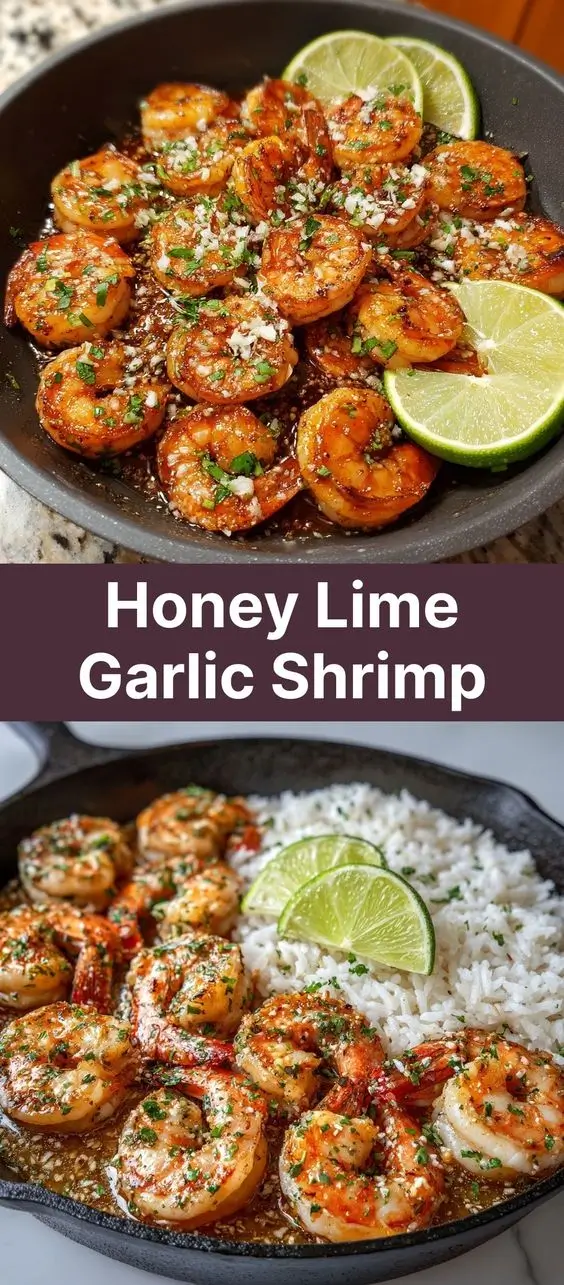
Honey Lime Garlic Shrimp
The History
The fusion of sweet, tangy, and savory flavors in Honey Lime Garlic Shrimp reflects a culinary trend that emerged from the blending of Asian and Western cooking techniques. While shrimp has long been a staple in coastal cuisines around the world—from Mediterranean to Southeast Asian—this particular recipe gained popularity in North American home kitchens during the early 2000s. It was inspired by dishes found in Thai and Chinese restaurants, where honey glazed seafood is often paired with citrus and aromatic garlic.
Chefs and home cooks alike began experimenting with balancing natural sweetness (from honey), acidity (from lime), and pungency (from fresh garlic) to create a sauce that clings beautifully to succulent shrimp. The dish became a favorite for its quick preparation time, bold flavor profile, and versatility—equally suitable as an appetizer, entrée, or protein addition to salads and grain bowls. Over time, it evolved into a modern classic, frequently featured on food blogs, cooking shows, and restaurant menus across the United States and beyond.
The use of honey as a glaze dates back centuries in various cultures; ancient Egyptians used honey not only as a sweetener but also as a preservative and basting agent for meats. Similarly, limes were historically prized in tropical regions for their ability to enhance flavor and prevent spoilage. When combined with garlic—a cornerstone of global cuisine known for both its taste and health benefits—the trio creates a timeless combination that transcends borders and generations.
Ingredients Breakdown
To make the perfect Honey Lime Garlic Shrimp, each ingredient plays a crucial role in building layers of flavor, texture, and aroma. Here’s a detailed breakdown:
- Shrimp (Peeled and Deveined): Large or jumbo shrimp work best—about 1 to 1.5 pounds. Opt for wild-caught if possible, as they tend to have a firmer texture and cleaner taste. Make sure they’re thawed completely if frozen.
- Honey: Raw, unfiltered honey adds floral notes and rich sweetness that balances the tartness of lime. Avoid highly processed honey, which can lack depth.
- Fresh Lime Juice: About 2–3 limes yield enough juice (¼ cup). Freshly squeezed is essential—bottled juice lacks brightness and may contain preservatives that alter the flavor.
- Lime Zest: Often overlooked but vital! The outer peel contains aromatic oils that intensify the citrus presence without adding extra sourness.
- Garlic (Fresh Cloves): At least 4–6 cloves, minced finely. Fresh garlic provides a sharp, spicy kick that mellows when cooked, infusing the entire dish with fragrance.
- Olive Oil or Avocado Oil: Used for sautéing. These oils have high smoke points and add a subtle fruitiness that complements the other ingredients.
- Soy Sauce or Tamari: Adds umami and saltiness. Use low-sodium soy sauce to control salt levels, or tamari for a gluten-free alternative.
- Red Pepper Flakes (Optional): A pinch introduces gentle heat that contrasts beautifully with the sweetness—adjust based on spice tolerance.
- Butter (Unsalted): Added at the end to enrich the sauce, giving it a glossy finish and creamy mouthfeel.
- Green Onions or Cilantro (for garnish): Provide freshness and color contrast. Both pair exceptionally well with citrus and seafood.
- Black Pepper (Freshly Ground): Enhances overall flavor complexity without overpowering the delicate shrimp.
Step-by-Step Recipe
- Prepare Ingredients: Peel and devein the shrimp, then pat them dry thoroughly with paper towels. Moisture prevents proper searing. Mince garlic, zest one lime, squeeze juice from 2–3 limes, chop green onions, and measure out all other ingredients. Having everything ready ensures smooth cooking.
- Make the Sauce: In a small bowl, whisk together ¼ cup honey, ¼ cup fresh lime juice, 1 tablespoon soy sauce, 1 teaspoon lime zest, ½ teaspoon red pepper flakes (optional), and 2 minced garlic cloves. Set aside.
- Preheat Pan: Place a large skillet (preferably stainless steel or cast iron) over medium-high heat. Add 2 tablespoons of olive oil and allow it to shimmer—this indicates the pan is hot enough for searing.
- Sear the Shrimp: Add shrimp in a single layer, making sure not to overcrowd the pan (work in batches if needed). Cook for about 1.5 to 2 minutes per side until pink, opaque, and slightly caramelized. Remove shrimp and set aside temporarily.
- Build the Glaze: Reduce heat to medium. Pour the prepared sauce into the same skillet. Stir continuously and let it simmer for 2–3 minutes until it reduces slightly and thickens into a syrupy consistency.
- Add Garlic and Butter: Stir in remaining minced garlic and cook for 30 seconds to release aroma without burning. Then swirl in 1–2 tablespoons of unsalted butter until fully incorporated, creating a silky sauce.
- Combine Shrimp and Sauce: Return the cooked shrimp to the skillet. Toss gently to coat every piece evenly. Let simmer together for another 1–2 minutes so flavors meld. Do not overcook, or shrimp will become rubbery.
- Garnish and Serve: Sprinkle with chopped green onions or cilantro and additional lime zest. Serve immediately while warm and fragrant.
Tips
- Dry Shrimp Thoroughly: Excess moisture causes steaming instead of searing, leading to bland, soggy results. Always pat shrimp dry before cooking.
- Don’t Overcrowd the Pan: Searing requires space between pieces to ensure even browning. Crowding lowers the pan temperature and leads to uneven cooking.
- Use Fresh Garlic: Pre-minced jarred garlic lacks potency and sometimes tastes metallic. Fresh is always superior.
- Simmer the Sauce First: Reducing the sauce before adding shrimp allows flavors to concentrate and removes raw honey taste.
- Avoid Overcooking Shrimp: Shrimp cook very quickly. Once they turn opaque and form a loose “C” shape, they’re done. Overcooked shrimp curl tightly into an “O” and become tough.
- Baste for Extra Flavor: Spoon the hot sauce over the shrimp while they finish cooking to deepen flavor absorption.
- Let It Rest Briefly: After removing from heat, let sit for a minute—the residual warmth continues gentle cooking without drying out.
- Serve Immediately: This dish shines when fresh. Sauces can separate or textures degrade upon reheating.
Variations and Customizations
The beauty of Honey Lime Garlic Shrimp lies in its adaptability. Here are some creative twists to suit different diets and preferences:
- Spicy Version: Add a diced jalapeño or serrano pepper when sautéing garlic, or stir in a dash of sriracha or chili garlic paste into the sauce.
- Coconut Twist: Replace half the lime juice with coconut milk for a creamy, tropical variation reminiscent of Thai curries.
- Grilled Option: Marinate shrimp in the sauce (minus butter), then thread onto skewers and grill for smoky charred edges. Baste frequently during grilling.
- Baked Version: Arrange coated shrimp on a lined baking sheet and bake at 400°F (200°C) for 8–10 minutes until cooked through. Great for meal prep.
- Gluten-Free: Use tamari instead of soy sauce and verify that your honey is pure (some blends contain maltodextrin derived from wheat).
- Keto-Friendly Adaptation: Substitute honey with sugar-free maple syrup or monk fruit sweetener designed for sauces. Note: this changes flavor slightly.
- Herb-Infused: Stir in fresh basil, mint, or dill at the end for an aromatic lift. Thai basil adds a licorice-like note that pairs wonderfully with citrus.
- With Vegetables: Turn it into a stir-fry by adding bell peppers, snap peas, broccoli, or zucchini. Sauté veggies first, remove, then proceed with shrimp.
- Over Grains or Greens: Serve atop quinoa, jasmine rice, cauliflower rice, or arugula salad for a complete meal.
- Pineapple Addition: Add chunks of fresh pineapple during the last minute of cooking for a sweet-tart island flair.
Health Considerations and Nutritional Value
Honey Lime Garlic Shrimp offers several nutritional benefits when prepared mindfully:
- Shrimp: Low in calories and fat, yet high in quality protein (about 20g per 3 oz serving). Rich in selenium, vitamin B12, phosphorus, and iodine. Contains omega-3 fatty acids, though less than oily fish like salmon.
- Honey: A natural sweetener with antioxidants and trace enzymes. However, it’s still a form of sugar—moderation is key, especially for those managing blood sugar levels. One tablespoon contains ~60 calories and 17g carbohydrates.
- Lime: Packed with vitamin C—an immune booster that also enhances iron absorption. Also contributes flavonoids with anti-inflammatory properties.
- Garlic: Known for cardiovascular benefits, including potential cholesterol-lowering effects and antimicrobial qualities due to allicin content.
- Olive Oil: A heart-healthy fat rich in monounsaturated fats and polyphenols, linked to reduced inflammation and improved lipid profiles.
- Soy Sauce: High in sodium—low-sodium versions help reduce salt intake. For individuals with hypertension, limit portion size or dilute with water.
Nutrition Estimate (Per Serving, serves 4):
| Nutrient | Amount |
|---|---|
| Calories | ~220 kcal |
| Protein | 24g |
| Fat | 8g |
| Saturated Fat | 1.5g |
| Carbohydrates | 13g |
| Sugars | 11g (mostly from honey) |
| Dietary Fiber | 0.5g |
| Sodium | ~450mg (varies based on soy sauce used) |
| Vitamin C | 18mg (30% DV) |
| Calcium | 80mg |
| Iron | 1.4mg |
Note: Values are approximate and depend on specific ingredients and portion sizes. Those with shellfish allergies should avoid this dish entirely, as even minimal exposure can trigger severe reactions.
Ingredients
- 1.5 lbs (680g) large or jumbo shrimp, peeled and deveined
- ¼ cup (60ml) raw honey
- ¼ cup (60ml) freshly squeezed lime juice (from 2–3 limes)
- 1 tablespoon lime zest (from about 1 lime)
- 6 cloves garlic, minced (divided)
- 2 tablespoons olive oil or avocado oil
- 1 tablespoon low-sodium soy sauce (or tamari for gluten-free)
- ½ teaspoon red pepper flakes (optional)
- 2 tablespoons unsalted butter
- 1 teaspoon freshly ground black pepper
- 3 green onions, sliced (white and green parts separated)
- Fresh cilantro, chopped (optional, for garnish)
Directions
- Pat the shrimp dry with paper towels and place in a bowl. Set aside.
- In a small mixing bowl, combine honey, lime juice, lime zest, soy sauce, red pepper flakes, half the minced garlic (3 cloves), and the white parts of the green onions. Whisk well and set aside.
- Heat olive oil in a large skillet over medium-high heat until shimmering.
- Add shrimp in a single layer and sear for 1.5–2 minutes per side until pink and just cooked through. Transfer to a plate and cover loosely.
- Reduce heat to medium. Pour the honey-lime mixture into the skillet and bring to a gentle simmer. Cook for 2–3 minutes, stirring occasionally, until the sauce begins to thicken.
- Add the remaining 3 cloves of minced garlic and cook for 30 seconds, stirring constantly to prevent burning.
- Swirl in butter, one tablespoon at a time, until fully melted and the sauce turns glossy.
- Return the shrimp and any accumulated juices to the skillet. Toss gently to coat and simmer for 1–2 more minutes to reheat and absorb flavors.
- Season with freshly ground black pepper. Taste and adjust seasoning—add more lime for acidity or honey for sweetness if desired.
- Remove from heat. Garnish with green onion tops and fresh cilantro. Serve immediately.
FAQ
Q: Can I use frozen shrimp?
A: Yes, but make sure to thaw them completely in the refrigerator overnight and pat them dry before cooking. Cooking frozen shrimp directly will result in excess moisture and poor sear.
Q: Is this recipe spicy?
A: Not inherently. The red pepper flakes add mild heat, but you can omit them entirely for a family-friendly version.
Q: Can I make this ahead of time?
A: Best served fresh. However, you can prep the sauce and mince ingredients up to a day in advance. Cook the shrimp just before serving for optimal texture.
Q: How do I store leftovers?
A: Store in an airtight container in the refrigerator for up to 2 days. Reheat gently in a skillet over low heat—microwaving may make shrimp rubbery.
Q: Can I double the recipe?
A: Yes, but cook in batches to avoid overcrowding the pan. Doubling the sauce is fine, but keep an eye on reduction time.
Q: What sides go well with this dish?
A: Excellent with steamed jasmine rice, quinoa, grilled vegetables, avocado salad, or coconut rice. A crisp white wine like Sauvignon Blanc complements the citrus notes perfectly.
Q: Why did my sauce turn bitter?
A: Likely due to burnt garlic or overheated honey. Keep the heat at medium when reducing the sauce and stir constantly. Burnt bits stick to the pan—scrape carefully and avoid charring.
Q: Can I use lemon instead of lime?
A: Yes, though the flavor profile shifts slightly. Lemon is brighter and sharper; lime brings a more tropical, rounded tartness. You can also use a mix of both!
Summary
Honey Lime Garlic Shrimp is a vibrant, fast-cooking dish that delivers a harmonious blend of sweet, tangy, and garlicky flavors with tender, juicy shrimp at its heart.
Perfect for weeknight dinners or entertaining, this versatile recipe dazzles on its own or as part of larger meals, offering both gourmet appeal and simple preparation.