Introduction
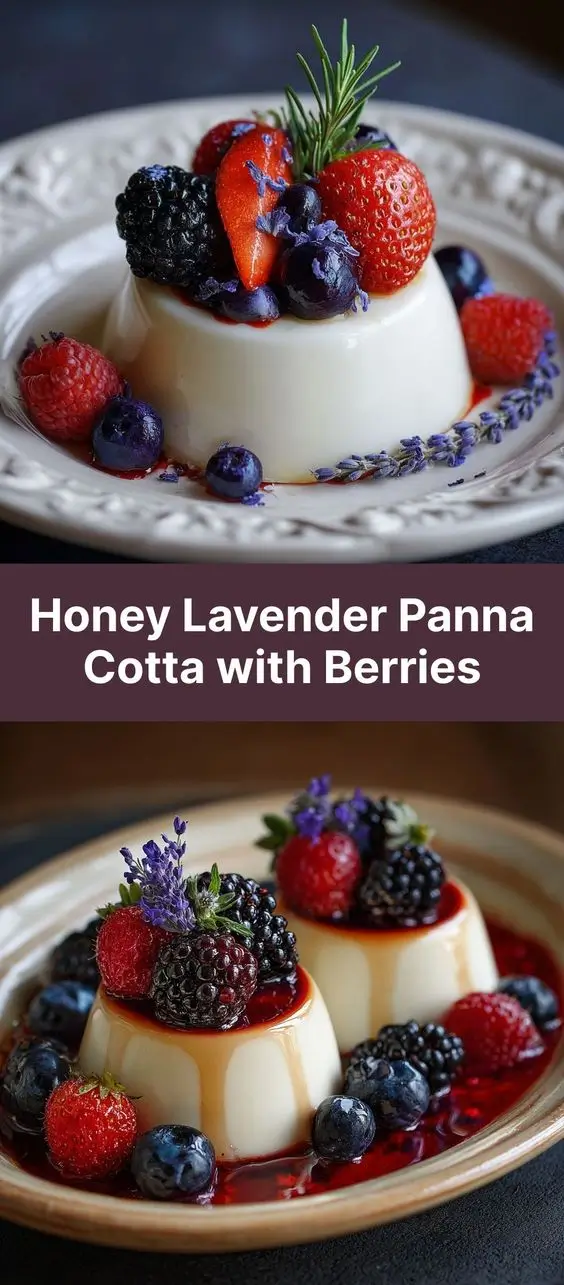
Honey Lavender Panna Cotta with Berries is a modern twist on the classic Italian dessert that marries the rich, velvety texture of traditional panna cotta with the aromatic elegance of culinary lavender and the natural sweetness of honey. This dessert is not only visually stunning but also delivers an exquisite balance of floral notes and creamy indulgence, elevated by the bright acidity of fresh berries. Perfect for dinner parties, romantic evenings, or as a luxurious treat after a long day, this panna cotta offers a refreshing departure from heavier desserts while maintaining the sophistication expected of fine cuisine.
The History
Panna cotta, which translates to “cooked cream” in Italian, originated in the Piedmont region of Northern Italy during the early 20th century. While it may seem like a centuries-old tradition, its documented history dates back to the 1960s, where it began appearing in regional cookbooks. Traditionally made with sweetened cream thickened with gelatin and often flavored with vanilla, panna cotta was prized for its smooth texture and ability to be molded into elegant shapes. Over time, chefs and home cooks alike began experimenting with flavors—infusing fruits, spices, and herbs into the base mixture. The addition of floral elements like lavender reflects both a nod to historical European herb usage in desserts and the modern farm-to-table movement emphasizing artisanal ingredients. Honey, a staple in ancient Mediterranean diets, pairs naturally with lavender—a herb historically used in perfumery, medicine, and cooking since Roman times. Combining these two creates a harmonious flavor profile that feels both timeless and contemporary, especially when topped with seasonal berries, which have been enjoyed across cultures for their taste and health benefits.
Ingredients Breakdown
- Heavy Cream (2 cups): Provides the rich, silky base essential for authentic panna cotta texture. Its high fat content ensures a luxurious mouthfeel and proper setting when chilled.
- Whole Milk (½ cup): Lightens the heaviness of the cream slightly without compromising creaminess, helping achieve a balanced consistency.
- Raw Honey (⅓ to ½ cup, depending on desired sweetness): Adds natural floral sweetness and enhances the lavender flavor. Raw honey also contains subtle nuances that processed sugars lack, contributing depth to the overall taste.
- Dried Culinary Lavender (1½ teaspoons): Must be food-grade lavender to ensure safety and optimal flavor. Imparts a delicate floral aroma; overuse can result in a soapy taste, so precision is key.
- Unflavored Gelatin (2¼ teaspoons, about 1 packet): The setting agent that transforms the liquid mixture into a soft custard-like dessert. Proper blooming and dissolution are crucial for a smooth texture without lumps.
- Cold Water (¼ cup): Used to bloom the gelatin before incorporating it into the warm cream mixture.
- Vanilla Extract (1 teaspoon, optional): Complements the honey and lavender with a warm background note, enhancing complexity without overpowering.
- Fresh Mixed Berries (1½ cups): A vibrant combination of strawberries, blueberries, raspberries, and blackberries adds color, freshness, and tartness to contrast the sweetness of the panna cotta.
- Lemon Juice (1 tablespoon): Brightens the berry compote, prevents oxidation, and balances the richness of the cream.
- Optional Honey-Lavender Syrup for Garnish: Made by simmering extra honey with a pinch of lavender and a splash of water, then straining—adds extra flair and intensifies flavor upon serving.
Step-by-Step Recipe
- Bloom the Gelatin: In a small bowl, sprinkle the gelatin over cold water. Let it sit undisturbed for 5–10 minutes until it becomes spongy and opaque. This process hydrates the gelatin granules and prevents clumping when added to the hot mixture.
- Infuse the Cream: In a medium saucepan, combine heavy cream, whole milk, and dried lavender. Heat over medium-low heat, stirring occasionally, until the mixture begins to steam and tiny bubbles form around the edges (do not boil). Remove from heat, cover, and let steep for 15–20 minutes to extract maximum flavor from the lavender.
- Strain and Reheat: Place a fine-mesh sieve over a clean bowl or large measuring cup. Strain the infused cream mixture to remove all lavender buds completely. Return the strained liquid to the saucepan and reheat gently over low heat until warm (but not boiling).
- Add Honey and Vanilla: Stir in honey and vanilla extract until fully dissolved. Taste and adjust sweetness if needed. Keep the mixture warm but not scalding.
- Incorporate Gelatin: Add the bloomed gelatin to the warm cream mixture. Whisk continuously until the gelatin has completely dissolved—this usually takes about 1–2 minutes. Do not rush this step, as undissolved gelatin can lead to uneven setting.
- Prepare Molds: Lightly grease six ramekins, glasses, or silicone molds with a neutral oil (like grapeseed) or wipe with a paper towel dipped in melted butter. This aids in clean release when unmolding.
- Pour into Containers: Carefully pour the liquid panna cotta mixture into the prepared containers. Tap each gently on the counter to release air bubbles and ensure a smooth surface.
- Chill Until Set: Cover the molds loosely with plastic wrap or place in a container with a lid to prevent absorption of fridge odors. Refrigerate for at least 4 hours, preferably overnight, until firm and jiggly like Jell-O.
- Prepare Berry Topping: While the panna cotta chills, prepare the berries. In a mixing bowl, gently toss together mixed berries, a drizzle of honey (1–2 tablespoons), and lemon juice. Allow them to macerate at room temperature for 20–30 minutes to release juices and develop flavor. For a more intense topping, lightly cook the berries with a bit more honey and cornstarch slurry to create a glossy compote, then cool.
- Serve: To serve, run a thin knife around the edge of each mold. Invert onto a chilled plate or leave in glassware for a parfait-style presentation. Top generously with the honey-kissed berries and drizzle with additional honey-lavender syrup if desired. Garnish with edible lavender buds or mint leaves for elegance.
Tips
- Use Culinary Lavender Only: Never substitute essential oils or non-food-grade lavender. Only use dried buds labeled specifically for cooking, available at specialty spice shops or reputable online retailers.
- Control Lavender Intensity: Start with 1 teaspoon of lavender if you’re unsure—you can always increase next time. Lavender has a strong presence and can easily dominate other flavors.
- Avoid Boiling the Cream: High heat can cause the cream to curdle or scorch, and excessive heat may degrade the gelatin’s effectiveness. Always use gentle heat and monitor closely.
- Ensure Complete Gelatin Dissolution: After adding bloomed gelatin, whisk thoroughly and check the bottom of the pan for any undissolved clumps. Even small bits can affect texture.
- Smooth Surface Tip: After pouring into molds, use a toothpick to pop any lingering bubbles for a flawless finish.
- Chill Time Matters: Don’t rush the chilling process. Under-set panna cotta will collapse when unmolded. Overnight setting guarantees perfect structure.
- Room Temperature Before Serving: Let the panna cotta sit at room temperature for 5–10 minutes before serving for optimal creaminess.
- Layer Creatively: For a stunning effect, layer the panna cotta with berry compote between pours or create parfaits in clear glasses.
Variations and Customizations
- Dairy-Free Version: Substitute heavy cream and milk with full-fat coconut milk and unsweetened almond or oat milk. Use agar-agar instead of gelatin for a plant-based setting agent (use 1 teaspoon agar flakes per cup of liquid, boiled briefly to activate).
- Low-Sugar Option: Replace honey with monk fruit syrup, erythritol blend, or stevia-infused honey. Note: sugar-free versions may have a slightly different texture and less gloss.
- Floral Twists: Swap lavender for rose water (½ tsp) or hibiscus tea infusion for a different floral profile. Combine with complementary fruits like lychee or mango.
- Seasonal Fruit Rotations: In spring, use rhubarb compote; summer calls for peaches or cherries; autumn works well with poached pears; winter citrus segments add brightness.
- Alcohol Infusion: Add a tablespoon of elderflower liqueur (St-Germain), champagne, or prosecco to the cream mixture for an adult version. Reduce cooking time slightly to preserve alcohol notes.
- Chocolate-Lavender Fusion: Add 2 oz of chopped dark chocolate to the warm cream mixture before adding gelatin for a decadent twist.
- Herbal Variants: Infuse with fresh rosemary or thyme along with honey for a savory-sweet experience, pairing beautifully with stone fruit toppings.
- Kid-Friendly Presentation: Serve in colorful shot glasses with graham cracker crumbs on the side for dipping or fun-shaped molds for parties.
Health Considerations and Nutritional Value
While Honey Lavender Panna Cotta with Berries is a dessert best enjoyed in moderation, it offers some nutritional advantages over traditional sweets. The inclusion of raw honey provides trace enzymes, antioxidants, and antimicrobial properties absent in refined sugar. Berries contribute fiber, vitamin C, and polyphenols—powerful antioxidants linked to reduced inflammation and improved heart health. However, due to the high fat content from heavy cream, portion control is advised, especially for individuals managing cholesterol or calorie intake. Each serving (one-sixth of the recipe) contains approximately:
- Calories: ~320–360 kcal
- Fat: ~25–28g (mostly saturated from dairy)
- Carbohydrates: ~20–25g (primarily from honey and natural fruit sugars)
- Protein: ~4–5g
- Fiber: ~2–3g (from berries)
- Calcium: ~10% of daily value
- Vitamin C: ~25–30% of daily value (depending on berry mix)
For those with dietary restrictions:
- Lactose Intolerant: Use lactose-free cream and milk alternatives fortified with calcium.
- Gelatin-Free/Vegan: Agar-agar provides a firmer set and is derived from seaweed, suitable for plant-based diets.
- Diabetic-Friendly Modifications: Use low-glycemic sweeteners and emphasize high-fiber berries to minimize blood sugar spikes.
Note: Excessive consumption of lavender, even culinary grade, may have hormonal effects due to phytoestrogens—pregnant women or those with hormone-sensitive conditions should consult a healthcare provider before consuming regularly.
Ingredients
- 2 cups heavy cream
- ½ cup whole milk
- ⅓ to ½ cup raw honey (adjust to taste)
- 1½ teaspoons dried culinary lavender buds
- 2¼ teaspoons unflavored gelatin (1 standard packet)
- ¼ cup cold water
- 1 teaspoon pure vanilla extract (optional)
- 1½ cups mixed fresh berries (strawberries, blueberries, raspberries, blackberries)
- 1 tablespoon fresh lemon juice
- 1–2 tablespoons additional honey (for berry mixture)
- Edible lavender buds or mint leaves (for garnish, optional)
Directions
- Sprinkle gelatin over cold water in a small bowl. Let bloom for 5–10 minutes.
- In a saucepan, heat heavy cream, milk, and lavender over medium-low heat until steaming (not boiling). Remove from heat, cover, and steep for 15–20 minutes.
- Strain mixture through a fine-mesh sieve into a clean bowl to remove lavender buds. Return liquid to saucepan.
- Reheat gently, then stir in honey and vanilla until fully dissolved.
- Add bloomed gelatin to warm cream mixture. Whisk until completely dissolved (about 1–2 minutes).
- Lightly grease six serving molds or ramekins.
- Pour mixture evenly into molds. Tap gently to remove air bubbles.
- Cover and refrigerate for at least 4 hours, or overnight, until fully set.
- In a separate bowl, combine berries, lemon juice, and 1–2 tablespoons honey. Let macerate for 20–30 minutes.
- To serve, run a knife around the edge of each mold and invert onto plates, or serve directly in glassware.
- Top with macerated berries, extra drizzle of honey, and optional lavender syrup. Garnish and enjoy chilled.
FAQ
Can I make this ahead of time?
Yes! Panna cotta can be made up to 3 days in advance. Keep covered in the refrigerator. Add berries just before serving to maintain freshness.
Why did my panna cotta not set?
This usually happens if the gelatin wasn’t properly bloomed or dissolved. Ensure your gelatin sits in cold water first and is fully melted into warm (not hot) liquid. Also, avoid using expired gelatin.
Can I freeze panna cotta?
Not recommended. Freezing alters the creamy texture, causing separation and graininess upon thawing.
Is there a substitute for gelatin?
Yes. Use agar-agar (1 teaspoon per cup of liquid) for a vegan option. Note: agar requires brief boiling to activate and sets faster and firmer than gelatin.
Can I use fresh lavender?
Fresh lavender has higher moisture content and milder flavor. If using, double the amount (3 teaspoons) and ensure it’s pesticide-free and thoroughly washed.
How do I prevent a skin from forming on top?
Always cover the molds with plastic wrap or store in a sealed container while chilling.
Can I double the recipe?
Absolutely. This recipe scales well for larger gatherings. Just use larger molds or multiple trays.
What glassware works best?
Clear stemmed glasses, mason jars, coupe glasses, or martini glasses showcase the layers beautifully. For elegant plating, use wide-rimmed dessert bowls.
Summary
Honey Lavender Panna Cotta with Berries blends the velvety richness of Italian tradition with the fragrant allure of floral honey and fresh seasonal fruit. Elegant, customizable, and delicately balanced, it’s a show-stopping dessert that delights the senses and elevates any occasion.