Introduction
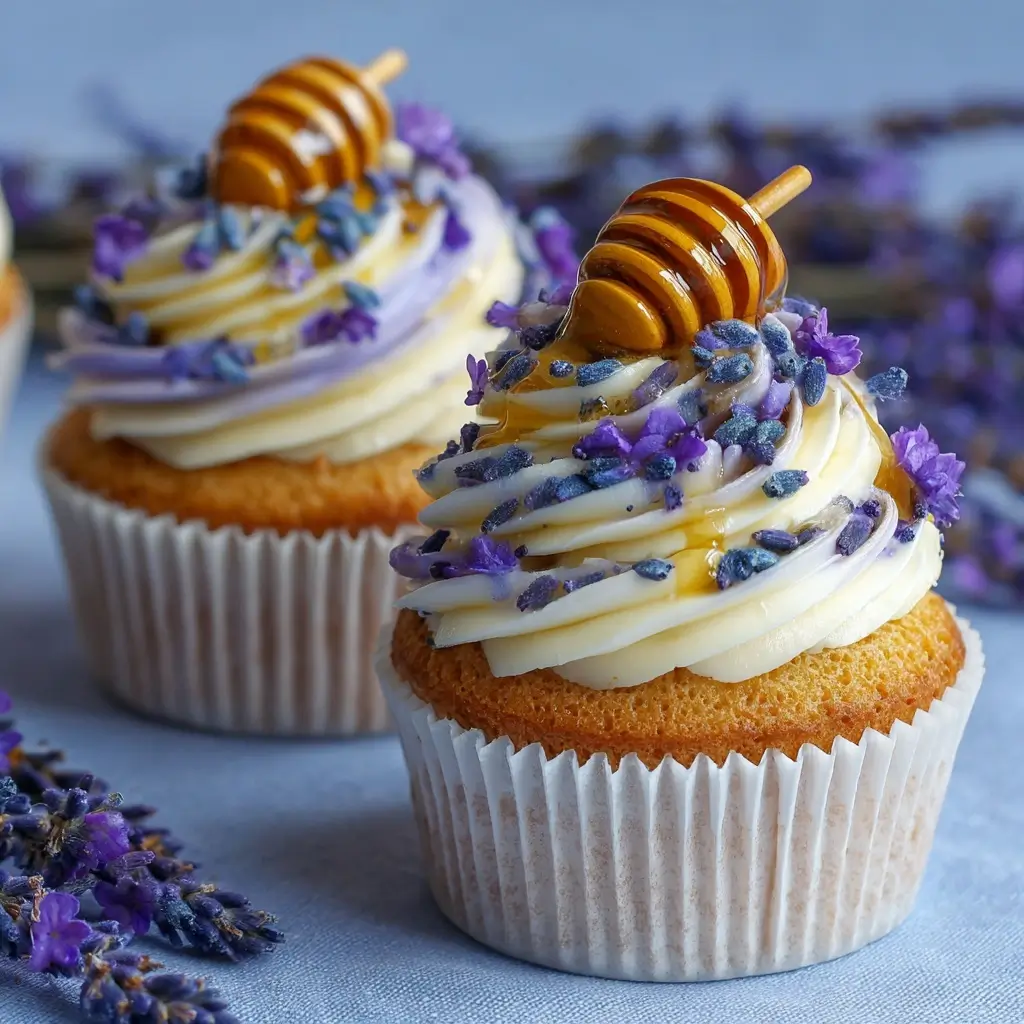
Imagine biting into a delicate, cloud-soft cupcake that whispers elegance with every crumb—fragrant lavender blooms dancing harmoniously with golden, velvety honey, all wrapped in a tender vanilla-infused crumb and crowned with a luxuriously smooth honey-lavender buttercream. Honey Lavender Cupcakes are more than a dessert; they’re an aromatic experience, a celebration of botanical sophistication and timeless sweetness. Revered for their subtle floral nuance and natural warmth, these cupcakes strike the perfect balance between refined and approachable—ideal for bridal showers, garden parties, afternoon tea service, or simply elevating an ordinary Tuesday into something quietly extraordinary. Unlike overly perfumed or cloyingly sweet confections, authentic Honey Lavender Cupcakes honor restraint: lavender is used not as a dominant flavor but as a gentle, herbaceous accent—like sunlight filtering through lilac branches—while raw, local honey lends depth, complexity, and a nuanced floral terroir unique to its nectar source.
The History
The union of honey and lavender in culinary traditions stretches back millennia—long before the modern cupcake existed. Ancient Egyptians revered both ingredients: honey was used as a sacred offering, preservative, and medicinal sweetener, while lavender (known then as *nardus* or *spikenard*) appeared in perfumes, embalming oils, and healing balms. In medieval Europe, monastic apothecaries combined dried lavender flowers with honey to create soothing syrups for sore throats and digestive complaints—a practice documented in 12th-century texts by Hildegard von Bingen. As baking evolved, lavender began appearing in English “syrup cakes” and French *madeleines* during the Renaissance, though often paired with lemon or rosewater. The modern iteration of the Honey Lavender Cupcake emerged gradually in the early 2000s, gaining momentum alongside the farm-to-table movement and renewed interest in edible florals. Pioneering pastry chefs—including Alice Medrich (who explored floral infusions in her 2003 book *Cookies and Brownies*) and Dominique Ansel (whose Parisian patisseries featured lavender-honey financiers)—helped legitimize lavender as a serious, nuanced ingredient—not just a novelty. By 2012, food media outlets like *Bon Appétit*, *Food & Wine*, and *Epicurious* featured honey-lavender desserts prominently, cementing their status as a signature flavor pairing in artisanal bakeries from Portland to Provence. Today, these cupcakes symbolize mindful indulgence: honoring tradition while embracing seasonality, terroir, and botanical integrity.
Ingredients Breakdown
Every ingredient in this recipe serves a precise functional and sensory purpose—no filler, no afterthought. Understanding *why* each component is included deepens both technique and appreciation:
- Unbleached All-Purpose Flour: Provides essential gluten structure without overwhelming density. Bleached flour is avoided because its chemical treatment dulls flavor absorption and can mute the delicate lavender notes.
- Baking Powder & Baking Soda: A dual-leavening system ensures optimal rise and tenderness. Baking powder delivers consistent lift, while baking soda (activated by the acidity in honey and buttermilk) enhances browning, tenderness, and subtle caramelization.
- Fine Sea Salt: Not merely for seasoning—it sharpens sweetness, balances floral bitterness, and amplifies aroma volatility, making lavender’s volatile oils more perceptible on the palate.
- Raw, Unfiltered Local Honey: The heart of the recipe. Raw honey retains live enzymes, pollen granules, and complex flavor compounds (including traces of thyme, sage, or wildflower nectar) that impart depth far beyond generic clover honey. Its natural acidity also contributes to leavening and crumb tenderness. Crucially: never substitute pasteurized or “honey-flavored syrup”—these lack enzymatic activity and contain stabilizers that interfere with emulsification and texture.
- Full-Fat Buttermilk: Adds tang, moisture, and tenderness via lactic acid, which gently relaxes gluten. Its thickness helps suspend lavender particles evenly and prevents pooling or sedimentation in the batter.
- Pure Vanilla Extract (Grade B Madagascar Bourbon): Chosen for its rich, creamy, slightly woody profile—which complements rather than competes with lavender. Avoid imitation vanillin, which reads as artificial and harsh against floral notes.
- Large Eggs (room temperature): Act as emulsifiers, binders, and leaveners. Room temperature eggs incorporate air more efficiently during creaming and blend seamlessly into the batter, preventing curdling when added to warm honey-butter mixtures.
- Unsalted Butter (European-style, 82–84% fat): Higher fat content yields a richer, more tender crumb and superior mouthfeel. European-style butter also contains less water, reducing steam pockets and yielding finer, more uniform texture. Salt is omitted here to allow precise control over salinity—especially important when balancing honey’s natural minerals.
- Edible Dried Culinary Lavender Buds (food-grade, organic, *Lavandula angustifolia*): Only true English lavender is recommended—other varieties (like *L. x intermedia* or spike lavender) contain higher camphor levels, resulting in medicinal or soapy off-notes. Buds must be organically grown, pesticide-free, and explicitly labeled “culinary grade.” Never use craft-store or aromatherapy lavender—these may contain heavy metals or synthetic fragrances. The buds are steeped—not blended—to extract aroma gently, avoiding bitterness from bruised stems or over-extraction.
- Heavy Cream (for buttercream): Used sparingly to adjust consistency without diluting flavor. Its high fat content integrates smoothly into buttercream, preserving sheen and stability better than milk or half-and-half.
- Pinch of Culinary Lavender (additional, finely ground): Added to the buttercream separately for layered aroma—steeping in the honey creates base fragrance, while a whisper of freshly ground bud adds top-note brightness.
This formulation intentionally omits vegetable oil, shortening, cake flour, or stabilizers—each substitution would compromise crumb integrity, flavor clarity, or textural harmony.
Step-by-Step Recipe
- Infuse the Honey-Lavender Base (Minimum 4 hours, ideally overnight): In a small, non-reactive saucepan (stainless steel or enameled cast iron), combine ¾ cup raw local honey and 1 tablespoon whole culinary lavender buds. Warm over the lowest possible heat (do not exceed 110°F / 43°C) for 5 minutes—just until the honey thins slightly and becomes aromatic. Remove from heat, cover tightly, and steep at room temperature for a minimum of 4 hours—or up to 12 hours for deeper, rounder flavor. Strain through a fine-mesh chinois lined with cheesecloth, pressing gently on solids to extract all infused honey. Discard spent buds. Let infused honey cool completely to room temperature (68–72°F) before using—warm honey will melt butter and scramble eggs.
- Prepare Lavender-Buttermilk Mixture: While honey steeps, whisk together 1 cup full-fat buttermilk and 1 teaspoon finely ground culinary lavender in a liquid measuring cup. Cover and refrigerate. This cold infusion ensures even dispersion and prevents premature blooming of lavender oils during mixing.
- Cream Butter & Sugars: In the bowl of a stand mixer fitted with the paddle attachment, beat 1 cup (2 sticks / 227g) unsalted European-style butter on medium speed until creamy and pale (about 2 minutes). Add 1 cup granulated sugar and ¼ cup light brown sugar (packed). Beat on medium-high for 4–5 minutes until light, fluffy, and nearly doubled in volume. Scrape bowl thoroughly.
- Incorporate Eggs & Vanilla: Add eggs one at a time, beating on medium speed for 45 seconds after each addition until fully emulsified and glossy. Add 2 teaspoons pure Madagascar bourbon vanilla extract and beat 30 seconds more. Batter should be homogenous, thick, and ribbon-like.
- Combine Dry Ingredients: In a separate bowl, whisk together 2 ½ cups unbleached all-purpose flour, 2 teaspoons aluminum-free baking powder, ½ teaspoon baking soda, and 1 teaspoon fine sea salt. Sift twice to aerate and ensure even distribution of leaveners.
- Alternate Incorporation (The Critical Step): Reduce mixer speed to low. Add one-third of dry ingredients; mix just until incorporated (5–8 seconds). Add half of cooled lavender-buttermilk mixture; mix 5 seconds. Repeat: dry → wet → dry, ending with dry. Do *not* overmix—batter should be smooth but may have a few tiny flour streaks. Overmixing develops excess gluten, resulting in tough, tunnelled cupcakes.
- Fold in Infused Honey: With a silicone spatula, gently fold in the entire quantity of cooled lavender-infused honey in two additions, rotating the bowl 180° between folds. Fold just until streaks disappear—approximately 12–15 strokes. Over-folding deflates air bubbles critical for rise.
- Portion & Bake: Line a standard 12-cup muffin tin with premium unbleached paper liners (avoid wax-coated or printed liners, which can leach chemicals at high heat). Fill each liner ⅔ full (≈ 3.5 oz / 100g batter per cup). Tap pan sharply twice on countertop to release trapped air bubbles. Bake in a fully preheated oven at 350°F (177°C) on the center rack for 19–22 minutes—rotating pan front-to-back at 12 minutes. Cupcakes are done when a toothpick inserted in the center emerges with *moist crumbs* (not wet batter, not completely clean). Overbaking dries out delicate crumb and dulls floral notes.
- Cool Strategically: Let cupcakes cool in pan for exactly 8 minutes—this sets the crumb and prevents collapse. Then transfer to a wire rack, removing liners immediately to prevent steam-induced sogginess. Cool completely (minimum 90 minutes) before frosting. Warm cupcakes will melt buttercream and cause bleeding.
Tips
- Lavender Precision: Use a digital kitchen scale for lavender measurements—even 0.1g overage can tip into soapiness. When grinding, pulse 3–4 times in a clean spice grinder; do not mill to powder. Coarse grind releases aroma without releasing bitter tannins from stems.
- Honey Temperature Control: If infused honey crystallizes during cooling, place sealed jar in warm (not hot) water bath (≤110°F) for 10 minutes. Never microwave—heat degrades volatile floral compounds.
- Altitude Adjustments: At elevations above 3,000 ft: decrease sugar by 1 tbsp, increase buttermilk by 1 tbsp, add ½ tsp extra baking powder, and reduce oven temp to 345°F. Check doneness 2 minutes earlier.
- Humidity Protocol: On days >65% relative humidity: reduce buttermilk by 1 tbsp and add 1 tsp cornstarch to dry ingredients to absorb ambient moisture and preserve crumb integrity.
- Perfect Liner Adhesion: Lightly spray inside of paper liners with neutral oil (grapeseed or avocado) before filling—prevents peeling and ensures clean removal after cooling.
- Oven Thermometer Mandate: Use a calibrated oven thermometer. Many ovens run 25°F+ hot or cold—critical for delicate batters. Place thermometer in center of middle rack.
- Resting Is Ritual: Let batter rest 20 minutes at room temperature before portioning. This allows gluten to relax and starches to hydrate fully, yielding more even rise and velvety crumb.
- Freezing for Freshness: Unfrosted, fully cooled cupcakes freeze beautifully for up to 3 months. Wrap individually in parchment + double-layered freezer-safe zip-top bags. Thaw overnight in refrigerator, then bring to room temperature before frosting.
Variations and Customizations
While the classic formulation honors purity and balance, thoughtful adaptations expand accessibility and creativity—without sacrificing integrity:
- Gluten-Free Adaptation: Substitute 2 ½ cups King Arthur Gluten-Free Measure-for-Measure Flour (contains xanthan gum). Add 1 extra large egg yolk and replace buttermilk with GF oat milk + 1 tsp apple cider vinegar (let sit 5 min). Expect 1–2 minutes longer bake time.
- Vegan Version: Replace butter with 1 cup cold Miyoko’s Vegan Butter; eggs with flax eggs (3 Tbsp ground flax + 9 Tbsp warm water, rested 15 min); buttermilk with almond milk + 1 Tbsp lemon juice; and honey with ¾ cup date paste (blended Medjool dates + warm water, strained). Infuse lavender in date paste instead of honey. Note: crumb will be denser; best served same-day.
- Lavender-Honey Lemon Zest: Add 1 Tbsp finely grated organic lemon zest to dry ingredients. Brightens profile and cuts richness—ideal for spring brunches.
- Blackberry-Lavender Swirl: Fold ⅓ cup seedless blackberry compote (simmered 5 min with 1 tsp lemon juice) into batter in final fold. Creates elegant marbling and tart-sweet contrast.
- Earl Grey Infusion: Steep 2 Earl Grey tea bags in warm buttermilk (instead of lavender) for 10 min, then chill and strain. Replace lavender in honey infusion with 1 tsp loose-leaf bergamot oil-infused sugar. Yields sophisticated tea-house elegance.
- Champagne Honey Buttercream: Replace 2 Tbsp heavy cream in frosting with chilled, dry brut champagne. Adds effervescence and subtle yeast notes—best for celebratory occasions.
- Edible Flower Garnish Tier: Top frosted cupcakes with single, pesticide-free crystallized violets, borage blossoms, or fresh lavender sprigs (cut 24 hours prior, stored upright in water). Never use florist flowers—they are not food-safe.
- Mini Cupcake Conversion: Fill mini muffin tins ½ full. Bake at 350°F for 11–13 minutes. Yield: ~36 minis. Ideal for weddings or tasting menus.
Health Considerations and Nutritional Value
While Honey Lavender Cupcakes are inherently a treat—not a health food—their ingredients offer meaningful nutritional distinctions versus conventional bakery cupcakes:
- Raw Honey Benefits: Contains naturally occurring antioxidants (phenolic acids, flavonoids), prebiotic oligosaccharides that feed beneficial gut bacteria (*Bifidobacterium*), and trace enzymes (diastase, invertase) supporting digestion. Local raw honey may support seasonal allergy resilience via oral immunotherapy mechanisms (though clinical evidence remains emerging).
- Lavender’s Calming Compounds: Contains linalool and linalyl acetate—monoterpenes studied for mild anxiolytic and sedative effects when ingested in culinary doses. Also rich in rosmarinic acid, a polyphenol with anti-inflammatory properties.
- Buttermilk Advantage: Naturally lower in lactose than regular milk due to bacterial fermentation; rich in calcium, potassium, and bioavailable B12. Contains probiotic strains (*Lactococcus*, *Leuconostoc*) when unpasteurized—but even pasteurized buttermilk retains beneficial metabolites.
- Nutrient Density vs. Refinement: Using whole-food sweeteners (honey, brown sugar), unbleached flour, and real dairy avoids nutrient-stripped white flour, high-fructose corn syrup, artificial emulsifiers, and trans fats common in commercial versions.
Nutritional Profile (per standard cupcake, unfrosted):
Calories: 228 | Total Fat: 9.4g (5.8g saturated) | Carbohydrates: 33.2g (24.1g sugars, including 17.3g natural honey sugars) | Fiber: 0.4g | Protein: 2.9g | Sodium: 192mg | Calcium: 78mg | Iron: 1.1mg
Dietary Notes: Contains dairy, eggs, gluten, and honey (not suitable for infants under 1 year or strict vegans). Naturally free from soy, nuts, and artificial colors/flavors. For refined sugar–free versions, consult a registered dietitian—substitutions significantly impact texture, shelf life, and glycemic response.
Ingredients
For the Cupcakes:
- 2 ½ cups (300g) unbleached all-purpose flour
- 2 tsp aluminum-free baking powder
- ½ tsp baking soda
- 1 tsp fine sea salt
- ¾ cup (255g) raw, unfiltered local honey
- 1 tbsp whole culinary-grade dried lavender buds (Lavandula angustifolia)
- 1 cup (240ml) full-fat buttermilk
- 1 tsp culinary-grade dried lavender buds, finely ground
- 1 cup (227g / 2 sticks) unsalted European-style butter, softened to 68°F
- 1 cup (200g) granulated cane sugar
- ¼ cup (55g) light brown sugar, packed
- 3 large eggs, room temperature
- 2 tsp pure Madagascar bourbon vanilla extract
For the Honey-Lavender Buttercream:
- 1 ½ cups (340g / 3 sticks) unsalted European-style butter, room temperature
- 4 cups (480g) confectioners’ sugar, sifted
- ¼ cup (85g) lavender-infused honey (reserved from cupcake batch)
- 2–3 tbsp heavy cream or half-and-half
- 1 tsp pure vanilla extract
- ¼ tsp fine sea salt
- ¼ tsp finely ground culinary lavender
- 1–2 drops natural violet food coloring (optional, for hue)
For Garnish (Optional):
- Edible lavender buds
- Candied violets
- Organic lemon zest
Directions
Making the Cupcakes:
- Prepare lavender-infused honey as described in Step-by-Step Recipe (Step 1). Strain and cool completely.
- In a liquid measuring cup, whisk buttermilk and 1 tsp ground lavender. Refrigerate.
- In stand mixer, cream butter, granulated sugar, and brown sugar on medium-high until pale and fluffy (~4–5 min).
- Add eggs one at a time, beating 45 sec after each. Add vanilla; mix 30 sec.
- In separate bowl, whisk flour, baking powder, baking soda, and salt. Sift twice.
- On low speed, alternate dry ingredients and buttermilk mixture: ⅓ dry → ½ wet → ⅓ dry → ½ wet → ⅓ dry. Mix only until incorporated.
- Gently fold in cooled lavender-honey in two additions until just combined.
- Line muffin tin with premium liners. Fill ⅔ full. Tap pan firmly twice.
- Bake at 350°F (177°C) for 19–22 min, rotating at 12 min. Test with toothpick.
- Cool in pan 8 min, then transfer to wire rack. Cool completely (≥90 min) before frosting.
Making the Buttercream:
- In stand mixer with paddle attachment, beat butter on medium until creamy and shiny (~2 min).
- Reduce speed to low. Gradually add sifted confectioners’ sugar, ½ cup at a time, beating 20 sec between additions.
- Add lavender-infused honey, vanilla, salt, and ground lavender. Beat 1 min on medium.
- Add heavy cream 1 tbsp at a time until desired pipeable consistency is reached (should hold stiff peaks but be smooth and glossy).
- If color is desired, add violet food coloring drop by drop until hue is soft and natural.
- Frost cooled cupcakes using a star tip (Wilton 1M) or offset spatula. Garnish immediately.
FAQ
- Can I use dried lavender from my garden?
- Only if you can positively identify it as *Lavandula angustifolia*, have grown it organically without pesticides, fungicides, or roadside pollutants, and have dried it in complete darkness at ≤75°F to preserve volatile oils. When in doubt, purchase certified culinary lavender from trusted sources like Mountain Rose Herbs or Starwest Botanicals.
- Why did my cupcakes taste soapy or bitter?
- Almost always caused by: (a) using non-culinary lavender (camphor-rich varieties), (b) over-steeping honey (>12 hours), (c) grinding lavender too finely or using stems/leaves instead of flower buds, or (d) substituting lavender essential oil (toxic and overpowering—never ingest).
- Can I make these ahead for an event?
- Absolutely. Bake cupcakes 1–2 days ahead; store uncovered at room temperature in a single layer in airtight container. Frost day-of. Buttercream can be made 5 days ahead—refrigerate in airtight container; rewhip 3 min on medium before piping. Assembled cupcakes keep 2 days refrigerated (bring to room temp 1 hour before serving).
- My batter looked curdled—did I ruin it?
- No. Curdling occurs when cold eggs or buttermilk hit warm butter-sugar mixture. It’s harmless and resolves during baking. To prevent: ensure all refrigerated ingredients are truly room temperature (68–72°F), and add them slowly while mixing.
- Is there a substitute for buttermilk?
- Yes—but avoid “milk + vinegar” shortcuts for this recipe. Instead, use plain whole-milk kefir (fermented 18–24 hrs) or cultured buttermilk from a reputable dairy. These provide the necessary acidity, viscosity, and microbial complexity that DIY versions lack.
- Can I use lavender extract instead of buds?
- Not recommended. Most commercial lavender extracts contain alcohol carriers and synthetic isolates that produce harsh, medicinal notes. Whole-bud infusion provides balanced, rounded, and natural flavor.
- How do I store frosted cupcakes?
- In a single layer in an airtight container, refrigerated for up to 48 hours. Place parchment between layers if stacking. Always bring to room temperature for 60–90 minutes before serving—cold buttercream masks aroma and hardens crumb.
- Can kids eat these?
- Yes—culinary lavender is recognized as GRAS (Generally Recognized As Safe) by the FDA in normal food amounts. The quantity used (≈0.03g per cupcake) is well below any concern threshold. However, avoid giving to infants under 12 months due to honey.
Summary
Honey Lavender Cupcakes are a masterclass in botanical balance—where ethically sourced raw honey and culinary-grade English lavender converge with artisanal technique to yield impossibly tender, aromatic, and deeply satisfying treats rooted in centuries of apothecary wisdom and modern baking science.
They honor seasonality, terroir, and restraint—proving that elegance need not be complicated, and that the most memorable desserts are those that engage not just the palate, but memory, place, and quiet wonder.