Introduction
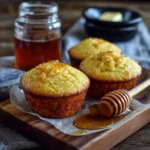
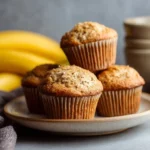
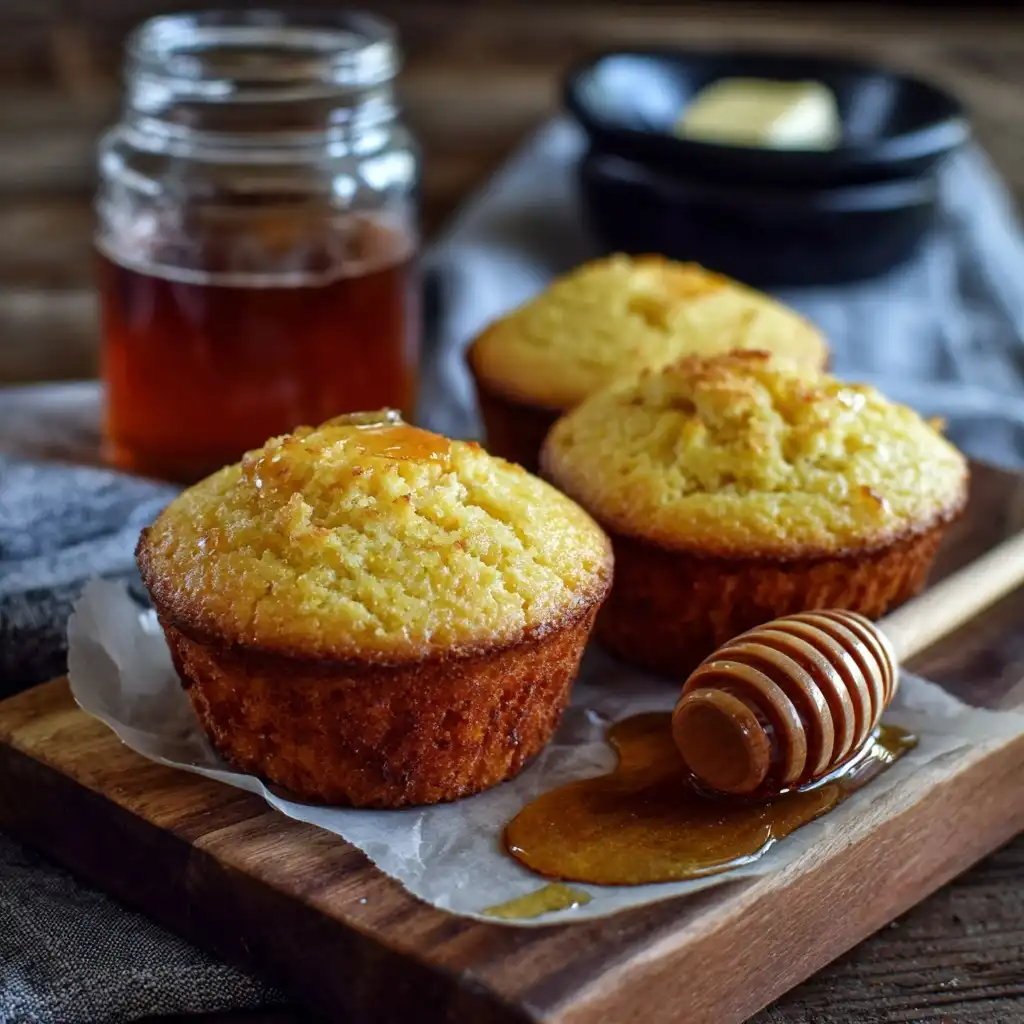
Warm, golden, and irresistibly fragrant—Honey Butter Cornbread Muffins are the soul-soothing intersection of Southern tradition and modern comfort baking. These tender, slightly craggy-topped muffins deliver a harmonious balance of sweet, savory, and earthy notes: rich melted butter, floral honey, creamy buttermilk, and stone-ground cornmeal that imparts a gentle grit and unmistakable corn-forward depth. Unlike standard cornbread, which often skews dry or overly dense, these muffins boast a delicate crumb—moist without sogginess, sturdy enough to hold their shape yet soft enough to melt on the tongue. They’re equally at home beside a bowl of chili on a rainy Tuesday, served warm with a pat of honey-butter at Sunday brunch, or packed into lunchboxes as a wholesome, naturally sweetened treat. Whether you’re a seasoned baker revisiting a beloved classic or a novice seeking an approachable, forgiving recipe with foolproof results, Honey Butter Cornbread Muffins offer warmth, nostalgia, and just the right amount of golden sweetness in every bite.
The History
Cornbread’s roots run deep across the Americas—long before European colonization, Indigenous peoples of North America cultivated maize (corn) and developed sophisticated methods of preparing it, including grinding dried kernels into meal and baking flatbreads on hot stones or griddles. When English settlers arrived in the 17th century, they adopted corn as a vital staple crop due to its hardiness and high yield—and adapted their wheat-based baking traditions to this new grain. Early colonial cornbread was typically unleavened, baked in cast-iron skillets over open fires, and often made with just cornmeal, water, salt, and sometimes ash (as a primitive leavening agent). As baking powder was invented in the mid-19th century and dairy farming expanded across the South, buttermilk and butter became common enrichments, transforming cornbread from a rustic, dense loaf into something richer and more tender. The addition of honey—a pre-colonial sweetener used by Native tribes and later embraced by Appalachian and Ozark communities where cane sugar was scarce or expensive—gave rise to regional variations like “honey cornbread,” especially popular in Tennessee, Kentucky, and the Carolinas. The muffin format emerged later, likely in the early-to-mid 20th century, as home bakers sought portion-controlled, portable versions ideal for school lunches, church suppers, and roadside diners. Honey Butter Cornbread Muffins, as we know them today, represent a loving evolution: honoring ancestral grain wisdom while embracing pantry-friendly ingredients, modern leaveners, and the universal appeal of butter-and-honey luxury—elevating humble cornmeal into a celebration of simplicity, sustainability, and shared sustenance.
Ingredients Breakdown
Every ingredient in this recipe plays a deliberate, functional, and flavorful role—no filler, no afterthoughts. Understanding *why* each is included deepens both your technique and appreciation:
- Yellow Cornmeal (medium-grind, stone-ground preferred): The heart and soul. Stone-ground retains the germ and bran, delivering superior flavor, aroma, and nutrition—but requires buttermilk’s acidity and proper resting time to hydrate fully and avoid grittiness. Avoid finely milled “degerminated” cornmeal (often labeled “for cornbread mix”)—it lacks depth and can produce a pasty texture.
- All-Purpose Flour: Adds gluten structure and tenderness. Too much flour masks corn flavor; too little yields crumbly muffins. A 2:1 cornmeal-to-flour ratio strikes the ideal balance—robust corn character with reliable lift and crumb integrity.
- Granulated Sugar: Not just for sweetness—it aids browning (Maillard reaction), tenderizes gluten, and balances cornmeal’s natural bitterness. Reducing it below ¼ cup may dull flavor complexity and compromise crust formation.
- Baking Powder & Baking Soda: A dual-leavening system for maximum rise and even crumb. Baking powder provides primary lift; baking soda neutralizes buttermilk’s acidity *and* reacts with honey’s trace acids, ensuring full activation and preventing metallic aftertaste. Freshness is non-negotiable—test baking powder by dropping ½ tsp in hot water (should fizz vigorously); replace if >6 months old.
- Buttermilk (full-fat, cultured): The secret weapon. Its lactic acid tenderizes gluten, activates baking soda, and adds tangy brightness that cuts through richness. It also contributes moisture and fat for unparalleled tenderness. Never substitute with milk + vinegar unless absolutely necessary—the cultured version contains enzymes and bacteria that enhance flavor development and crumb structure.
- Unsalted Butter (melted & cooled): Provides luxurious mouthfeel, flakiness in the crust, and rich flavor. Melting ensures even distribution; cooling prevents cooking the eggs. Salted butter can be used, but adjust added salt accordingly.
- Honey (raw, local, or mild amber): Adds floral sweetness, moisture retention, and subtle acidity. Raw honey contains natural enzymes that aid browning and contribute nuanced complexity. Avoid ultra-light clover honey if you prefer deeper notes—try tupelo, orange blossom, or wildflower for dimension. Do not use honey substitutes (agave, maple syrup, etc.)—they lack the same pH profile and caramelization behavior.
- Eggs (large, room temperature): Bind ingredients, add structure via proteins, and contribute emulsification and leavening (trapped air expands in heat). Room temperature ensures uniform mixing and prevents re-solidification of melted butter.
- Vanilla Extract (pure, not imitation): An aromatic bridge—enhancing honey’s florals and rounding out butter’s richness without tasting “vanilla-forward.” Mexican or Tahitian vanilla adds intriguing spice or fruit notes.
- Fine Sea Salt: Essential for flavor amplification. It doesn’t make the muffins taste salty—it makes the honey sweeter, the corn nuttier, and the butter richer. Kosher salt is acceptable, but fine sea salt dissolves more evenly in dry ingredients.
- Optional Add-Ins: See Variations section—but note that fresh or frozen corn kernels, roasted jalapeños, cheddar, or scallions should be patted *very* dry to prevent excess moisture and uneven baking.
Step-by-Step Recipe
- Preheat & Prep: Position oven rack in the center. Preheat oven to 400°F (204°C). Line a standard 12-cup muffin tin with parchment paper liners (or grease cups generously with butter or non-stick spray). Parchment liners ensure easy removal and prevent sticking far better than paper alone—especially important for tender, honey-glazed tops.
- Mix Dry Ingredients: In a large bowl, whisk together 1 cup (130g) medium-grind yellow cornmeal, ½ cup (63g) all-purpose flour, ⅓ cup (67g) granulated sugar, 1½ tsp aluminum-free baking powder, ½ tsp baking soda, and ¾ tsp fine sea salt. Whisk for at least 30 seconds—this aerates, evenly distributes leaveners, and breaks up any cornmeal clumps. Set aside.
- Mix Wet Ingredients: In a separate medium bowl, whisk 1 cup (240ml) full-fat cultured buttermilk, ⅓ cup (75g) unsalted butter (melted and cooled to lukewarm—about 100°F/38°C), ¼ cup (85g) raw honey, 2 large eggs (room temperature), and 1 tsp pure vanilla extract until *just combined*. Do not overmix—small streaks of butter are fine; vigorous whisking incorporates excess air, which can lead to peaked, cracked tops or tunnels.
- Combine Batter: Pour wet ingredients into dry ingredients. Using a silicone spatula or wooden spoon, fold gently *just until no dry streaks remain*. Batter will be thick, slightly lumpy, and shaggy—this is perfect. Overmixing develops gluten, resulting in tough, rubbery muffins. Fold for no more than 15–20 strokes. If using optional add-ins (e.g., corn kernels, cheese), fold them in during the last 3–4 strokes.
- Rest the Batter: Let batter rest undisturbed for 10 minutes at room temperature. This critical step allows cornmeal to fully hydrate, starches to swell, and gluten to relax—yielding a more tender, evenly textured crumb and preventing gritty mouthfeel. Do not skip.
- Fill Muffin Cups: Use a large cookie scoop (about ¼ cup / 60ml) or measuring cup to portion batter evenly into prepared cups, filling each about ¾ full (≈¾ inch below rim). Smooth tops lightly with damp fingers or the back of a spoon for uniform doming. For bakery-style tall muffins, chill filled tin in freezer for 15 minutes before baking—this slows initial rise, encouraging upward expansion instead of sideways spread.
- Bake: Place tin in preheated oven. Bake for 16–19 minutes, rotating halfway through for even browning. Muffins are done when tops are deeply golden, spring back lightly when touched, and a toothpick inserted into the center comes out with *moist crumbs* (not wet batter, but not completely clean—this ensures moistness). Avoid overbaking, which dries out cornmeal’s delicate texture.
- Cool Strategically: Remove tin from oven. Let muffins cool in the pan for exactly 5 minutes—this sets the structure. Then, carefully lift each muffin by its liner and transfer to a wire rack. Cool for at least 15 minutes before serving. Why? Cornbread muffins continue to steam and set internally during this carryover cooking phase; cutting or eating too soon releases trapped moisture, yielding gummy centers.
- Serve Warm: Best enjoyed within 2 hours of baking, ideally split open and slathered with extra honey butter (see Tips). Their aroma peaks at 90–120°F—serve while fragrant and tender.
Tips
- Measure Cornmeal Correctly: Spoon cornmeal lightly into a dry measuring cup and level with a straight edge—do not scoop directly from the bag (compacts it, adding up to 20% extra) or tap the cup (settles grains). Accuracy prevents dry, crumbly muffins.
- Butter Temperature Matters: Melted butter must be cooled—not hot, not cold. Hot butter will cook eggs; cold butter will re-solidify and create greasy pockets. Test by dipping a clean finger—if it feels warm but not hot, it’s ready.
- Room-Temperature Eggs: Cold eggs slow emulsification and can cause batter to seize. To warm quickly: place eggs in a bowl of warm (not hot) tap water for 5 minutes.
- Don’t Skip the Rest: That 10-minute rest isn’t passive—it’s active hydration. Skipping it risks a coarse, sandy texture and uneven rise.
- Rotate & Monitor: Ovens have hot spots. Rotating the tin at the 9-minute mark ensures even browning. Start checking at 16 minutes—even 30 seconds over can dry them out.
- Honey Butter Upgrade: Whip 4 tbsp softened unsalted butter with 2 tbsp honey, ¼ tsp cinnamon, and a pinch of flaky sea salt until light and fluffy. Store in fridge for up to 1 week. Spread generously on warm muffins—the heat melts it into a glossy, fragrant glaze.
- Freeze for Freshness: Cool completely, then freeze unfrosted muffins in a single layer on a baking sheet. Once solid, transfer to an airtight freezer bag for up to 3 months. Thaw at room temperature or reheat in a 350°F oven for 8–10 minutes—crisp exterior, tender interior restored.
- Revive Stale Muffins: Wrap individually in damp paper towel and microwave for 15–20 seconds. Or slice, toast until golden, and drizzle with honey and a pinch of smoked paprika.
- Pan Size Note: For jumbo muffins (6-cup tin), increase bake time to 22–26 minutes and fill cups ⅔ full. For mini muffins (24-cup tin), reduce time to 10–12 minutes and watch closely—they bake fast!
Variations and Customizations
This foundational recipe is endlessly adaptable—each variation honors the core texture and flavor while inviting creativity. Always maintain the base wet/dry ratios and resting time for structural integrity:
- Spiced Honey Butter Cornbread: Add 1 tsp ground cinnamon, ¼ tsp ground nutmeg, and ⅛ tsp ground cloves to dry ingredients. Optional: stir 2 tbsp chopped toasted pecans into batter.
- Cheddar-Jalapeño Cornbread Muffins: Fold in ¾ cup (85g) shredded sharp cheddar and 2–3 tbsp finely diced pickled or fresh jalapeños (seeds removed for mild heat). Add 1 tbsp finely minced red onion for brightness.
- Herb & Honey Cornbread: Stir 2 tbsp finely chopped fresh chives, 1 tbsp chopped thyme, and 1 tsp lemon zest into wet ingredients. Excellent with grilled meats or soups.
- Maple-Brown Butter Variation: Replace honey with ¼ cup pure maple syrup and brown ⅓ cup butter (cook until golden-brown and nutty, then cool) before mixing. Add 1 tbsp toasted walnuts.
- Whole-Grain Boost: Substitute ¼ cup (30g) of the all-purpose flour with whole wheat pastry flour or oat flour for added fiber and nuttiness—no additional liquid needed.
- Gluten-Free Version: Replace all-purpose flour with ½ cup (60g) certified GF all-purpose blend (with xanthan gum) + 1 tbsp almond flour. Ensure cornmeal is GF-certified. Increase buttermilk by 1 tbsp for moisture balance.
- Vegan Adaptation: Use 1 cup unsweetened soy or oat milk + 1 tbsp apple cider vinegar (let sit 5 min = “buttermilk”), ⅓ cup refined coconut oil (melted & cooled), 2 flax eggs (2 tbsp ground flax + 5 tbsp water, rested 10 min), and maple syrup instead of honey. Texture will be slightly denser but still delicious.
- Blueberry-Honey Cornbread: Gently fold in 1 cup fresh or frozen (unthawed) blueberries tossed in 1 tsp cornstarch to prevent bleeding. Add ½ tsp lemon zest to brighten.
- Black Pepper & Honey Cornbread: Infuse melted butter with 1 tsp coarsely ground black pepper (simmer 2 min, strain), then proceed. Finish baked muffins with a crack of fresh pepper and flaky salt.
- Breakfast Muffin Style: Add 2 tbsp hemp hearts, 1 tbsp chia seeds, and ¼ cup diced dried apples (soaked in warm apple cider for 10 min, drained). Reduce sugar to 2 tbsp.
Health Considerations and Nutritional Value
Honey Butter Cornbread Muffins occupy a thoughtful middle ground between indulgence and nourishment. While not low-calorie, they offer meaningful nutritional advantages over many commercial baked goods—especially when made with whole, minimally processed ingredients:
- Cornmeal Benefits: Naturally gluten-free and rich in magnesium, iron, B vitamins (especially thiamin and folate), and antioxidants like zeaxanthin and lutein—critical for eye health. Stone-ground varieties retain the nutrient-dense germ and bran, offering more fiber (2g per ¼ cup) and healthy fats than degerminated versions.
- Honey’s Edge: Contains trace enzymes, polyphenols, and prebiotics that support gut health. Its lower glycemic index (GI ≈ 58) vs. granulated sugar (GI ≈ 65) means slower blood sugar elevation—especially beneficial when paired with fiber-rich cornmeal and protein from eggs/butter.
- Buttermilk Advantages: Cultured buttermilk is lower in lactose, easier to digest for many, and rich in probiotics (live cultures), calcium, potassium, and vitamin B12. Its acidity enhances mineral absorption (e.g., iron from cornmeal).
- Caloric Context: One standard muffin (approx. 85g) contains ~220–250 calories, 9–11g fat (mostly unsaturated from cornmeal and butter), 32–36g carbs (of which 18–22g are naturally occurring sugars from honey and buttermilk), 3–4g protein, and 1–1.5g fiber. For comparison, a store-bought blueberry muffin averages 420+ calories, 20g+ sugar, and <1g fiber.
- Dietary Notes: Naturally cholesterol-free if veganized; low-FODMAP in small servings (1 muffin) if using lactose-free buttermilk and maple syrup; suitable for vegetarian diets. To reduce saturated fat, substitute half the butter with avocado oil—but note flavor and browning changes.
- Portion Mindfulness: Serve as part of a balanced meal—pair with a protein-rich soup (lentil, black bean), leafy green salad, or Greek yogurt. Avoid pairing with other highly refined carbs (e.g., white toast or sugary jam) to moderate overall glycemic load.
- For Diabetics: Consult your healthcare team, but this recipe’s fiber, fat, and protein content help mitigate glucose spikes. Consider reducing honey to 2 tbsp and adding 1 tbsp ground flaxseed for extra fiber and omega-3s.
Ingredients
- 1 cup (130g) medium-grind yellow cornmeal (stone-ground preferred)
- ½ cup (63g) all-purpose flour
- ⅓ cup (67g) granulated sugar
- 1½ tsp aluminum-free baking powder
- ½ tsp baking soda
- ¾ tsp fine sea salt
- 1 cup (240ml) full-fat cultured buttermilk, room temperature
- ⅓ cup (75g) unsalted butter, melted and cooled to lukewarm (~100°F/38°C)
- ¼ cup (85g) raw honey
- 2 large eggs, room temperature
- 1 tsp pure vanilla extract
Directions
- Preheat oven to 400°F (204°C). Line a 12-cup muffin tin with parchment paper liners or grease thoroughly.
- In a large bowl, whisk together cornmeal, flour, sugar, baking powder, baking soda, and salt until fully combined and lump-free.
- Pour wet ingredients into dry ingredients. Gently fold with a spatula until *just* combined and no dry streaks remain—about 15–20 strokes. Batter will be thick and slightly lumpy.
- Let batter rest for 10 minutes at room temperature—do not skip.
- Portion batter evenly into prepared muffin cups, filling each ~¾ full (about ¼ cup per muffin). Smooth tops lightly.
- Bake for 16–19 minutes, rotating tin halfway, until tops are deep golden and a toothpick inserted comes out with moist crumbs.
- Cool in pan for 5 minutes, then transfer to a wire rack. Cool at least 15 minutes before serving.
FAQ
- Can I make this batter ahead of time?
- Yes! Prepare batter (through the 10-minute rest), cover tightly, and refrigerate for up to 12 hours. Let sit at room temperature for 20 minutes before scooping and baking—cold batter may bake unevenly.
- Why did my muffins sink in the middle?
- Most commonly: expired leaveners, underbaking (toothpick came out too clean), opening oven door too early, or overmixing batter. Also check oven temperature with an oven thermometer—many run hot or cold.
- Can I use self-rising cornmeal?
- No. Self-rising cornmeal already contains leaveners and salt—using it alongside our measured baking powder/soda will cause over-leavening, bitter taste, and collapsed structure.
- My batter seems too thick/thin—what do I do?
- First, verify measurements (especially cornmeal—spooned, not scooped). If truly too thick, add buttermilk 1 tsp at a time. If too thin, add 1 tsp cornmeal at a time—never flour, as it alters ratio. But properly measured, it should be thick and shaggy.
- Are these muffins dairy-free?
- No—they contain butter and buttermilk. For dairy-free, see Vegan Variation above using plant-based milk + vinegar and refined coconut oil.
- Can I bake these in a skillet instead?
- Absolutely! Pour rested batter into a well-greased 10-inch cast-iron skillet. Bake at 400°F for 20–24 minutes until edges are crisp and center is set. Cut into wedges—ideal for sharing.
- How do I prevent muffins from sticking to liners?
- Use high-quality parchment liners (not thin paper). Alternatively, grease liners with butter or non-stick spray *before* filling. Never use wax paper—it’s not oven-safe.
- Can I double the recipe?
- Yes, but mix in two separate batches to ensure even leavening and consistent texture. Doubling leaveners in one large batch risks uneven distribution and inconsistent rise.
- What’s the best honey to use?
- Raw, unfiltered local honey offers the most complex flavor and enzymatic benefits. Mild amber or clover works well for first-time bakers; for adventurous palates, try buckwheat (earthy), sourwood (floral), or leatherwood (citrusy).
- Why does my cornbread taste bland?
- Common causes: old or low-quality cornmeal (stale, rancid, or overly refined), insufficient salt, skipping the honey butter finish, or using skim or low-fat buttermilk (fat carries flavor). Toasting cornmeal in a dry skillet for 3–4 minutes before mixing deepens nuttiness.
Summary
Honey Butter Cornbread Muffins are a masterclass in humble elegance—where ancient grain wisdom meets modern kitchen science to deliver golden, tender, honey-kissed perfection in every bite. With careful attention to ingredient quality, precise ratios, and mindful technique, they transform simple pantry staples into soul-warming, nutritionally thoughtful treats that honor history while delighting today’s palate.