Introduction
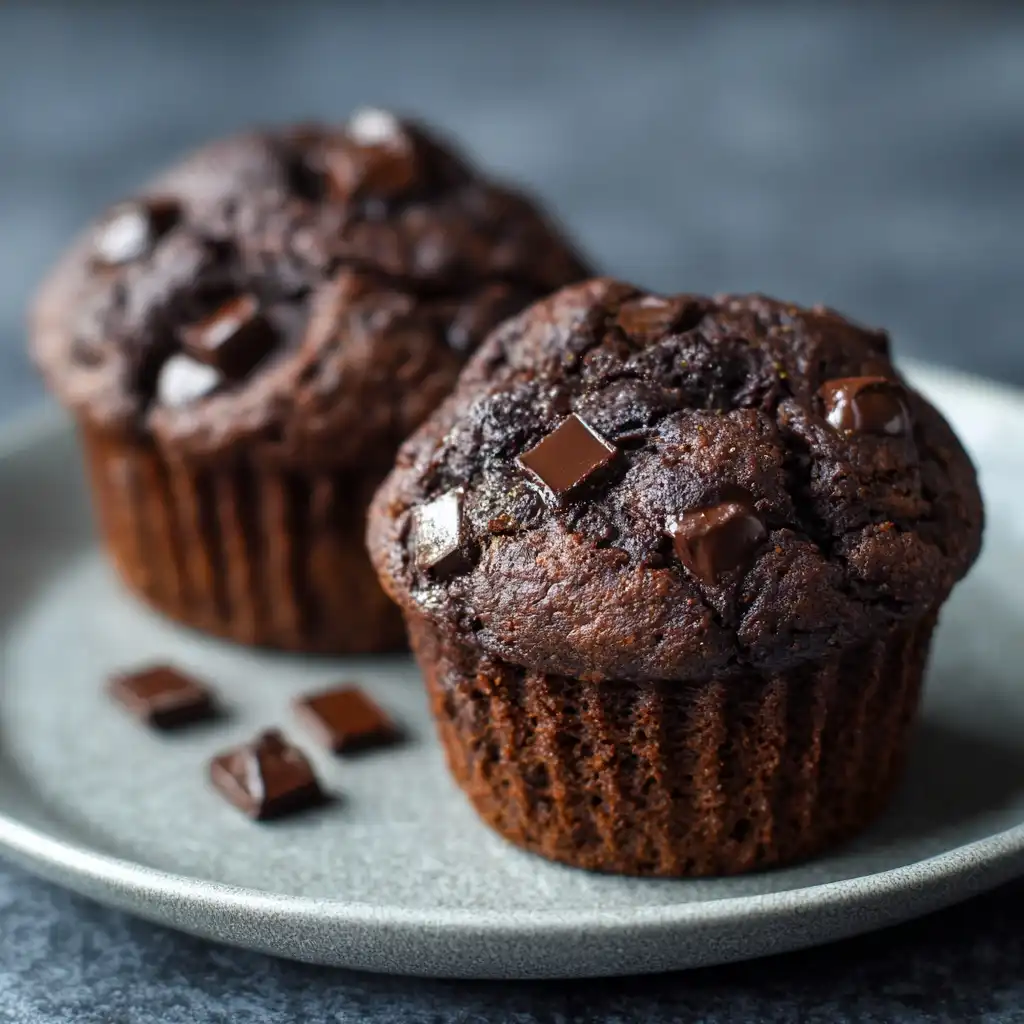
Gluten-Free Double Chocolate Muffins are a decadent, moist, and deeply satisfying treat that proves dietary restrictions don’t mean sacrificing flavor—or texture. Designed specifically for those following a gluten-free lifestyle—whether due to celiac disease, non-celiac gluten sensitivity, wheat allergy, or personal wellness goals—these muffins deliver rich cocoa intensity, melty chocolate chip pockets, and a tender crumb that rivals any traditional wheat-based version. Unlike many gluten-free baked goods that suffer from grittiness, dryness, or gummy density, this meticulously tested recipe leverages a synergistic blend of flours, smart hydration techniques, and precise leavening to achieve bakery-quality results straight from your home oven. Whether you’re meal-prepping breakfasts, packing school-safe snacks, hosting guests with diverse dietary needs, or simply indulging in guilt-free chocolate bliss, these muffins rise above expectations—literally and figuratively.
The History
The evolution of the gluten-free double chocolate muffin is a quiet but powerful chapter in the broader narrative of inclusive baking. Prior to the late 20th century, gluten-free baking was largely relegated to institutional or medical settings—characterized by heavy, dense loaves made from refined rice or potato flours, often lacking both structure and soul. The 1990s saw increased diagnosis of celiac disease and growing public awareness, catalyzing innovation in alternative flour milling and xanthan gum stabilization. Pioneering brands like Bob’s Red Mill and King Arthur Flour began offering certified gluten-free all-purpose blends, while food scientists explored hydrocolloids, enzymatic modifications, and starch optimization to mimic gluten’s viscoelastic network. Simultaneously, the “double chocolate” trend surged in mainstream American bakeries—first popularized in the 1980s with cocoa powder + chocolate chips—and naturally merged with GF adaptations as consumer demand soared. By the mid-2010s, blogs, dietitians, and specialty bakeries began publishing rigorously tested GF muffin formulas emphasizing moisture retention (via sour cream, applesauce, or yogurt), balanced protein-to-starch ratios, and careful pH management for optimal cocoa bloom. Today’s gluten-free double chocolate muffin stands as a triumph of culinary science, empathy-driven development, and joyful inclusivity—where every bite affirms that safety and indulgence can coexist seamlessly.
Ingredients Breakdown
Every ingredient in this recipe has been selected not only for its functional role—but also for its synergy within a gluten-free matrix. Below is a detailed analysis of why each component matters:
- Gluten-Free All-Purpose Flour Blend (300g / 2 ½ cups): Use a *certified gluten-free* 1:1 blend containing brown rice flour, white rice flour, tapioca starch, and potato starch—ideally with added xanthan gum (e.g., King Arthur Measure for Measure, Bob’s Red Mill 1-to-1, or Pamela’s Artisan Blend). Avoid single-flour substitutions (like almond or coconut alone) unless using the full alternate flour system provided in Variations—these lack the structural balance needed for lift and tenderness.
- Unsweetened Natural Cocoa Powder (60g / ¾ cup): Opt for *natural* (non-alkalized) cocoa—not Dutch-process—for optimal acid-reactivity with baking soda. This ensures proper leavening and intensifies chocolate flavor without bitterness. Sift thoroughly to prevent clumping and ensure even dispersion.
- Granulated Sugar (200g / 1 cup): Provides sweetness, tenderness, and crust formation. Organic cane sugar is recommended for purity and consistent dissolving. For refined sugar–free options, see Health Considerations.
- Brown Sugar (50g / ¼ cup, packed): Adds molasses-derived moisture, subtle caramel notes, and acidity to activate leaveners. Light or dark both work; dark yields deeper flavor and slightly chewier texture.
- Baking Powder (2 tsp, aluminum-free): Primary leavener—provides initial lift during oven spring. Aluminum-free ensures no metallic aftertaste and cleaner flavor release.
- Baking Soda (½ tsp): Reacts with the natural cocoa’s acidity and brown sugar’s molasses to create carbon dioxide bubbles *and* enhance browning via Maillard reactions—critical for that glossy, crackly muffin top.
- Salt (1 tsp fine sea salt or kosher salt): Balances sweetness, amplifies chocolate complexity, and strengthens starch gelatinization for improved crumb integrity.
- Large Eggs (2, room temperature): Act as emulsifiers, binders, and moisture reservoirs. Room temperature ensures uniform batter integration and optimal air incorporation during mixing.
- Whole Milk (180ml / ¾ cup, room temperature): Adds lactose for browning, proteins for structure, and fat for richness. For dairy-free, use unsweetened oat or soy milk (see Variations).
- Neutral Oil (80ml / ⅓ cup): Canola, grapeseed, or light olive oil—provides superior moisture retention over butter (which solidifies when cooled, leading to dryness in GF muffins). Oil remains fluid at room temp, yielding consistently soft, shelf-stable muffins.
- Pure Vanilla Extract (2 tsp): Alcohol-based, high-quality extract enhances aromatic depth and rounds out cocoa’s astringency. Avoid imitation versions—they introduce artificial off-notes.
- Gluten-Free Semi-Sweet Chocolate Chips (200g / 1 ¼ cups): Must be certified GF—many mainstream chips contain barley grass or shared equipment risks. Enjoy Life, Pascha, or Hu Kitchen are trusted brands. Chop larger bars if preferred for irregular, artisanal melt pools.
- Optional Additions: 1 tsp espresso powder (enhances chocolate without adding coffee flavor), 1 tbsp apple cider vinegar (boosts rise and tenderness), or 1 tsp ground flaxseed (for fiber and binding support).
Step-by-Step Recipe
- Preheat & Prep: Position oven rack in center position. Preheat oven to 375°F (190°C). Line a standard 12-cup muffin tin with parchment paper liners (or grease thoroughly with oil + dust with GF flour)—do *not* skip lining; GF batters adhere more readily.
- Dry Whisk: In a large bowl, whisk together GF flour blend, cocoa powder, granulated sugar, brown sugar, baking powder, baking soda, and salt until fully homogenized and aerated—about 45 seconds. Sifting is optional but recommended for lump-free cocoa integration.
- Wet Mix: In a separate medium bowl, vigorously whisk eggs until frothy (~30 sec). Whisk in milk, oil, and vanilla until emulsified and uniform—no streaks or separation. If using espresso powder or vinegar, add here.
- Combine Gently: Pour wet mixture into dry ingredients. Using a silicone spatula or wooden spoon, fold *just until no dry streaks remain*. Do *not* overmix—gluten-free batters lack gluten’s forgiving elasticity; overmixing causes tunneling, toughness, and collapsed tops. Batter will be thick, glossy, and slightly lumpy—this is ideal.
- Chocolate Fold-In: Sprinkle chocolate chips over batter. Fold in gently with 6–8 strokes—just enough to distribute, preserving pockets of unmixed batter that become moist centers. Over-folding melts chips prematurely and dulls visual appeal.
- Portion & Rest: Divide batter evenly among 12 lined cups (a 2-tbsp scoop works perfectly—each should hold ~75g). Tap pan firmly on counter 3x to release air bubbles and level tops. Let batter rest 15 minutes at room temperature—this allows flours to hydrate fully, starches to swell, and leaveners to pre-activate, resulting in taller, more even rise.
- Bake Strategically: Place pan in preheated oven. Bake 18 minutes—then rotate pan front-to-back. Continue baking 2–4 more minutes, until a toothpick inserted into the center of a center muffin comes out with *moist crumbs* (not wet batter, not completely clean). Total bake time: 20–22 minutes. Avoid opening oven before 17 minutes—GF batters are sensitive to heat loss.
- Cool Completely: Remove pan from oven. Let muffins cool in pan for 8 minutes—this sets structure and prevents collapse. Then transfer to a wire rack. Cool *at least 30 minutes* before serving. GF muffins continue to set as they cool; cutting too soon yields gummy interiors.
Tips
- Room Temperature Is Non-Negotiable: Cold eggs or milk cause premature fat solidification and uneven emulsion—leading to dense, greasy muffins. Take ingredients out 60+ minutes ahead.
- Weigh Your Flours: Volume measurements of GF blends vary wildly by brand and scoop method. A kitchen scale ensures reproducible texture—especially critical for gluten-free success.
- Don’t Skip the Rest: That 15-minute bench rest isn’t passive—it’s where magic happens: xanthan gum fully hydrates, starches absorb liquid, and batter viscosity optimizes for oven spring.
- Rotate Mid-Bake: Home ovens have hot spots. Rotating guarantees even browning and prevents lopsided domes or underbaked sides.
- Underbake Slightly: Pull muffins when toothpick shows *damp crumbs*, not dryness. They carryover-cook on the rack—overbaking is the #1 cause of dry GF muffins.
- Cool on a Rack—Not a Towel: Trapped steam beneath a towel reintroduces moisture to the base, creating sogginess. Airflow is essential.
- Freeze for Freshness: Once fully cooled, store in an airtight container with parchment between layers. Freeze up to 3 months. Thaw at room temp or reheat 10 seconds in microwave for “fresh-baked” warmth and gooey chips.
- Batch Consistency Tip: Make double batches and freeze unbaked batter scoops (on parchment-lined tray, then bagged)—bake straight from frozen (+3–4 min bake time). Ideal for weekday mornings.
Variations and Customizations
This foundational recipe is incredibly adaptable—without compromising gluten-free integrity. Here’s how to personalize it:
- Dairy-Free: Substitute whole milk with unsweetened, unflavored oat milk (highest beta-glucan content for creaminess) or soy milk. Ensure chocolate chips are dairy-free (Enjoy Life Mini Chips).
- Refined Sugar–Free: Replace granulated and brown sugars with 225g (1 cup) coconut sugar + 2 tbsp pure maple syrup (reduce milk by 1 tbsp). Note: Coconut sugar yields denser, earthier muffins—add ½ tsp extra baking powder for lift.
- High-Protein: Add 30g (¼ cup) certified GF whey isolate or pea protein powder—reduce flour by 20g. Increase milk by 1 tbsp to compensate for absorption.
- Flour System Swaps:
- Almond Flour Base: Replace GF blend with 200g blanched almond flour + 100g tapioca starch + 1 tsp xanthan gum. Reduce oil to 60ml; add 1 extra egg white for structure.
- Oat Flour Version: Use 240g certified GF oat flour + 60g tapioca starch + 1 tsp xanthan gum. Soak oat flour in milk for 10 minutes before mixing to soften grittiness.
- Seed-Based (Nut-Free School Safe): 180g sunflower seed flour + 120g sorghum flour + 1 tsp xanthan gum. Toast seed flour first for depth and reduced bitterness.
- Flavor Infusions: Add 1 tsp orange zest (brightens cocoa), ½ tsp cinnamon + pinch cayenne (Mexican chocolate twist), or 1 tbsp instant coffee dissolved in 1 tsp hot water (intensifies richness).
- Texture Twists: Fold in 60g chopped walnuts or pecans (toasted), 30g freeze-dried raspberries (tart contrast), or 2 tbsp chia seeds (soaked in 3 tbsp milk for 5 min first).
- Mini Muffins: Fill 24 mini muffin cups. Bake at 375°F for 11–13 minutes. Perfect for portion control, kids’ lunches, or appetizers.
- Muffin Tops Only: Fill oversized liners ¾ full and bake 14–16 minutes—creates dramatic, crisp-edged, cakey tops with minimal bottom crust.
Health Considerations and Nutritional Value
While inherently indulgent, this recipe prioritizes thoughtful nutrition within a gluten-free framework:
- Gut-Friendly Focus: Certified GF flours eliminate gluten-triggered inflammation for celiac and sensitive individuals. Xanthan gum is generally well-tolerated at this dosage (≤1g per muffin); for extreme sensitivity, substitute ½ tsp psyllium husk powder (soaked in 1 tbsp water).
- Reduced Refined Carbs Option: Substituting half the sugar with monk fruit–erythritol blend (e.g., Lakanto Golden) maintains volume and browning—though texture becomes slightly drier. Best paired with added 1 tbsp Greek yogurt.
- Fiber Boost: Stirring in 2 tbsp ground flax or chia adds 4g fiber/muffin—supports satiety and microbiome health. Soak first to avoid gritty texture.
- Antioxidant-Rich: Natural cocoa provides flavanols linked to cardiovascular and cognitive benefits. Choose high-polyphenol, low-alkali cocoa for maximum impact.
- Nutritional Profile (per standard muffin, approx.): Calories: 245 | Fat: 11g (2g sat) | Carbs: 34g (20g sugars) | Fiber: 2g | Protein: 3g | Iron: 12% DV | Magnesium: 15% DV. Values shift with substitutions—see Variations for macros.
- Allergen Notes: Naturally nut-free *if* using a nut-free GF blend (e.g., King Arthur GF). Always verify chocolate chip allergen statements—even “dairy-free” may contain soy lecithin (usually safe) or tree nuts. For top-9 allergen safety, use Enjoy Life products.
- For Diabetics: While not low-carb, pairing one muffin with 10g almonds or full-fat Greek yogurt lowers glycemic load. Monitor individual response—cocoa and fiber help moderate glucose spikes.
Ingredients
- 300g (2 ½ cups) certified gluten-free 1:1 all-purpose flour blend (with xanthan gum)
- 60g (¾ cup) unsweetened natural cocoa powder, sifted
- 200g (1 cup) granulated sugar
- 50g (¼ cup, packed) light or dark brown sugar
- 2 tsp aluminum-free baking powder
- ½ tsp baking soda
- 1 tsp fine sea salt
- 2 large eggs, room temperature
- 180ml (¾ cup) whole milk, room temperature
- 80ml (⅓ cup) neutral oil (canola, grapeseed, or light olive)
- 2 tsp pure vanilla extract
- 200g (1 ¼ cups) certified gluten-free semi-sweet chocolate chips
Directions
- Preheat oven to 375°F (190°C). Line a 12-cup muffin tin with parchment liners or grease and flour.
- In a large bowl, whisk together GF flour, cocoa, granulated sugar, brown sugar, baking powder, baking soda, and salt until uniform.
- Pour wet ingredients into dry. Fold with a spatula until *just combined*—no dry patches, but do not overmix. Batter will be thick and slightly lumpy.
- Gently fold in chocolate chips with 6–8 strokes—distribute without melting.
- Divide evenly among 12 muffin cups (~75g each). Tap pan firmly on counter 3 times. Rest batter 15 minutes.
- Bake 18 minutes, rotate pan, then bake 2–4 more minutes until toothpick shows moist crumbs.
- Cool in pan 8 minutes, then transfer to wire rack. Cool completely (≥30 min) before serving.
FAQ
- Why did my muffins sink in the middle?
- Likely causes: overmixing (develops starch gels excessively), opening oven too early, underbaking, or expired leaveners. Always test with toothpick and verify baking powder/soda freshness (drop ½ tsp baking soda into ¼ cup vinegar—if no vigorous fizz, replace).
- Can I make these vegan?
- Yes—with adjustments: replace eggs with 2 “flax eggs” (2 tbsp ground flax + 6 tbsp water, rested 10 min), use plant-based milk + oil, and certified vegan GF chocolate. Expect slightly denser crumb—add ½ tsp extra baking powder and reduce bake time by 1 minute.
- My batter seems too thick/thin—what’s wrong?
- Humidity, flour brand, and scoop method affect hydration. If too thick, add milk 1 tsp at a time. If too thin, add GF flour 1 tbsp at a time. Never adjust beyond ±2 tbsp—major changes disrupt starch-protein balance.
- Can I use Dutch-process cocoa?
- You can—but reduce baking soda to ¼ tsp and increase baking powder to 2¼ tsp. Dutch-process lacks acidity, so leavening must shift entirely to baking powder. Flavor will be milder, less vibrant.
- How do I store them to stay fresh?
- At room temperature in an airtight container with parchment between layers: 3 days. Refrigerate for up to 1 week (may dry slightly—refresh 5 sec in microwave). Freeze unfrosted muffins up to 3 months—thaw sealed at room temp.
- Why are my muffin tops flat?
- Common culprits: batter rested too long (>20 min), oven not fully preheated, or insufficient leavening. Ensure oven is at true 375°F (use oven thermometer), and don’t skip the 15-min rest—it’s for hydration, not activation.
- Can I add protein powder?
- Yes—but limit to 30g (¼ cup) unflavored or chocolate GF protein powder. Reduce GF flour by 20g and increase milk by 1 tbsp. Overdoing protein yields chalky, dry muffins.
- Are these safe for severe celiac disease?
- Absolutely—if *every* ingredient is certified gluten-free (look for GFCO or NSF logos) and prepared in a dedicated GF space (no shared scoops, bowls, or utensils with wheat). Oats must be certified GF—not just “gluten-free labeled.”
Summary
These Gluten-Free Double Chocolate Muffins deliver restaurant-worthy texture, intense chocolate depth, and foolproof reliability—thanks to precision ingredient ratios, strategic resting, and science-backed technique tailored for gluten-free flours.
Whether you’re new to GF baking or a seasoned pro, this recipe empowers consistent, joyful results—moist, tender, beautifully domed, and endlessly customizable—proving that dietary safety and decadent pleasure belong in the same bite, every time.