Introduction
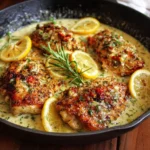
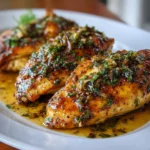
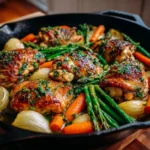
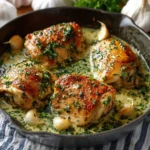
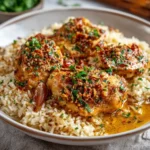
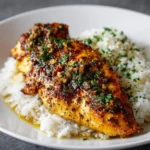
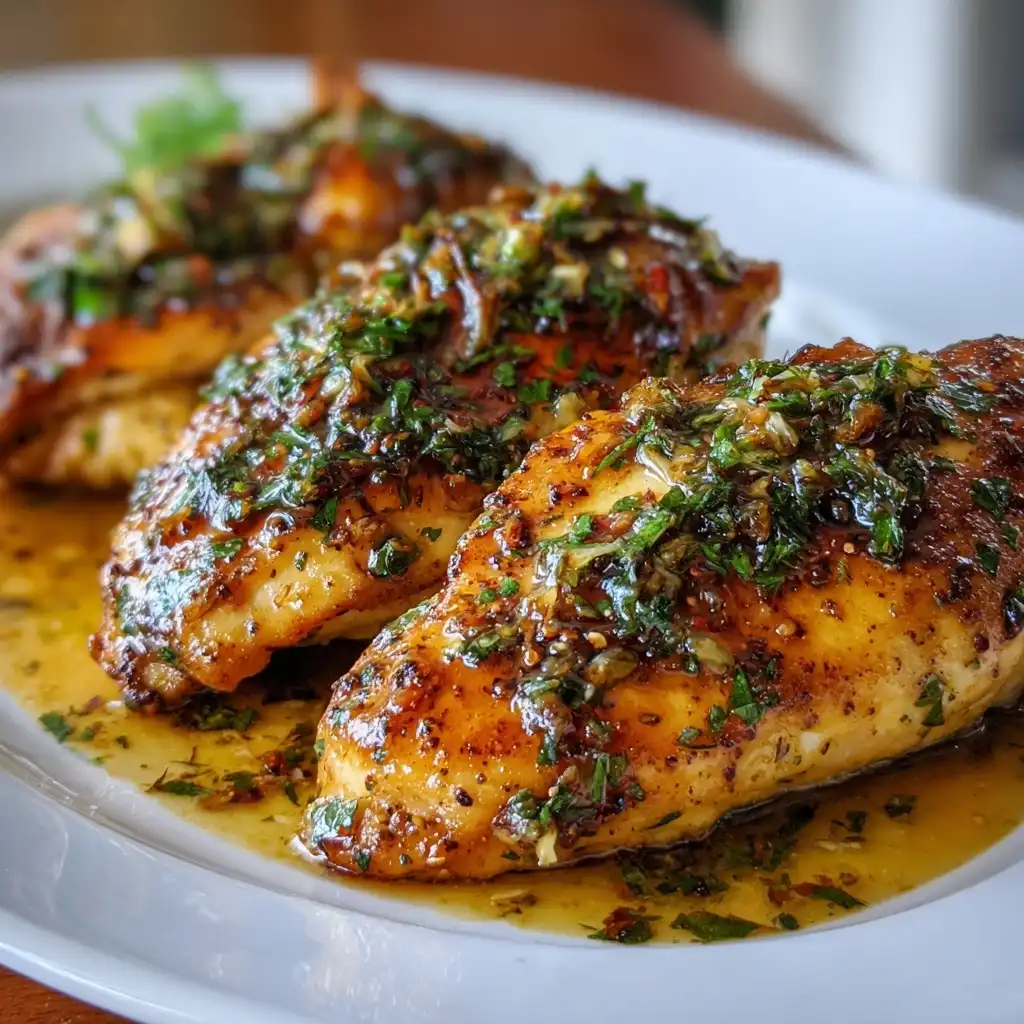
Garlic Butter Chicken with Garlic Butter Reduction is a restaurant-worthy, deeply flavorful, and luxuriously aromatic dish that transforms simple pantry staples into an unforgettable culinary experience. At its heart lies tender, pan-seared chicken breasts or thighs enveloped in a rich, velvety, golden-brown garlic butter sauce—intensified by a slow-simmered reduction that concentrates the essence of roasted garlic, fresh herbs, white wine, and umami-rich pan drippings. This dish strikes the perfect balance between rustic comfort and refined elegance: it’s approachable enough for weeknight cooking yet impressive enough to serve at dinner parties, date nights, or holiday gatherings. The magic lies not only in the bold interplay of garlic and butter but in the technique—searing for caramelized depth, deglazing for complexity, and reducing for silkiness and intensity. Whether you’re a seasoned home cook seeking to master foundational pan sauces or a beginner eager to build confidence with high-impact flavor, this recipe delivers consistent, stunning results every time.
The History
The origins of Garlic Butter Chicken trace back centuries through the intertwined culinary traditions of Mediterranean, French, and American home cooking—each contributing layers of technique and philosophy. Garlic has been revered since ancient Egypt for both medicinal and culinary purposes, while butter became central to European gastronomy, especially in Normandy and Brittany, where rich dairy met delicate seafood and poultry. The concept of “butter sauces” evolved significantly in 19th-century French cuisine, notably through Auguste Escoffier’s codification of *fond* (base) and *reduction* techniques in *Le Guide Culinaire*. His principles—building flavor through fond, deglazing with acid, and reducing to concentrate—form the backbone of today’s Garlic Butter Reduction. In mid-20th-century America, garlic butter gained mainstream popularity via steakhouse menus and retro supper clubs, often served as a finishing flourish over grilled meats or shrimp. However, it wasn’t until the 2010s—fueled by food blogs, YouTube tutorials, and viral social media recipes—that Garlic Butter Chicken exploded as a standalone star, elevated by the “reduction” twist: chefs and home cooks alike began simmering the sauce longer, adding shallots, white wine, lemon zest, and fresh herbs to transform a simple topping into a complex, glossy, plate-coating masterpiece. Today, it represents the global convergence of simplicity and sophistication—a timeless preparation made modern through mindful technique and ingredient integrity.
Ingredients Breakdown
Every element in this recipe serves a precise sensory and functional role—no filler, no afterthought. Let’s explore each component in detail:
- Chicken Breasts (or Thighs): Boneless, skinless chicken breasts are favored for their lean texture and clean canvas—but they demand careful handling to avoid dryness. Opt for “air-chilled” or “pasture-raised” breasts for superior moisture retention and flavor depth. Alternatively, boneless, skinless chicken thighs offer higher fat content, forgiving sear times, and richer mouthfeel—ideal for extended simmering in the sauce. Always pat dry thoroughly; residual moisture inhibits Maillard browning.
- Unsalted Butter: High-fat (82–84%), European-style unsalted butter is non-negotiable. Its higher smoke point (vs. standard American butter), lower water content, and pronounced nutty sweetness allow for deeper browning without burning. Salted butter introduces unpredictable salinity and masks subtle herb notes—always season separately for full control.
- Fresh Garlic: Use whole, plump cloves—not pre-minced or jarred. Crushing and lightly smashing cloves before mincing releases allicin (the compound responsible for pungent aroma and health benefits) and ensures even dispersion. For layered depth, reserve 2 cloves to roast whole in olive oil while prepping other ingredients—then mash into the finished sauce.
- Dry White Wine (e.g., Sauvignon Blanc or Pinot Grigio): Adds bright acidity, fruit-forward nuance, and alcohol-soluble flavor compounds. Avoid “cooking wine”—its added salt and preservatives dull complexity. The alcohol evaporates during reduction, leaving only aromatic esters and tartaric structure that balances butter’s richness.
- Chicken Stock (Low-Sodium, Homemade Preferred): Provides savory *umami*, body, and gelatinous silkiness when reduced. Homemade stock—simmered 8+ hours with bones, mirepoix, and herbs—yields collagen-rich liquid that emulsifies seamlessly with butter. Store-bought? Choose brands with <200mg sodium per serving and check for natural gelatin (it should jell slightly when chilled).
- Shallots: Milder and sweeter than onions, shallots dissolve almost completely when sautéed, lending aromatic sweetness and subtle allium complexity without harsh bite. Finely minced—they caramelize quickly and form the aromatic base of the reduction.
- Fresh Herbs (Parsley, Thyme, Chives): Flat-leaf parsley adds grassy brightness and visual contrast; fresh thyme sprigs infuse earthy, floral notes during simmering (remove stems before serving); chives contribute mild onion essence and delicate texture as garnish. Dried herbs lack volatile oils—never substitute unless absolutely necessary (and then use ⅓ the amount).
- Lemon Juice & Zest: Juice provides essential acidity to cut through fat; zest contributes aromatic citrus oils—bright, floral, and complex. Add juice at the end to preserve freshness; zest goes in during reduction to infuse gently.
- Heavy Cream (Optional but Recommended): A tablespoon stirred in *off heat* post-reduction lends luxurious body, stabilizes the emulsion, and rounds sharp edges—without making the sauce heavy. Ultra-pasteurized cream works best for heat stability.
- Finishing Touches: Flaky sea salt (Maldon or Fleur de Sel) for textural pop and mineral finish; freshly cracked black pepper (Tellicherry preferred for floral heat); microgreens or edible flowers for haute presentation.
Step-by-Step Recipe
- Prep & Temper: Remove chicken from fridge 30 minutes prior. Pat *extremely* dry with paper towels—every drop matters. Season generously on both sides with kosher salt and black pepper. Mince 4 garlic cloves finely; slice 2 shallots thinly; pick thyme leaves from 2 sprigs; chop ¼ cup parsley (reserving some for garnish); zest ½ lemon; juice entire lemon.
- Roast Garlic (Optional but Highly Recommended): In a small oven-safe dish, toss 2 whole unpeeled garlic cloves with 1 tsp olive oil. Roast at 400°F (200°C) for 20–25 minutes until soft and golden-brown. Cool, peel, and mash into a paste.
- Sear Chicken to Perfection: Heat 1 tbsp high-smoke-point oil (avocado or grapeseed) in a heavy-bottomed stainless steel or cast-iron skillet over medium-high heat until shimmering. Place chicken in pan without crowding—work in batches if needed. Press gently with spatula for full contact. Sear undisturbed 5–6 minutes until deep golden crust forms. Flip, reduce heat to medium, and cook 4–5 more minutes until internal temp reaches 155°F (68°C) for breasts (carryover will bring to 165°F). Transfer to wire rack; tent loosely with foil. Rest 8 minutes—this allows juices to reabsorb.
- Build the Fond & Aromatics: Discard excess oil, leaving ~1 tsp. Reduce heat to medium-low. Add shallots and sauté 2 minutes until translucent. Add minced garlic; stir constantly 60 seconds until fragrant—do not brown. Deglaze immediately with ½ cup white wine, scraping vigorously with wooden spoon to lift every bit of browned fond. Simmer 2 minutes until wine reduces by half.
- Simmer & Reduce: Pour in ¾ cup low-sodium chicken stock. Add thyme sprigs and roasted garlic paste. Bring to gentle simmer. Cook uncovered 8–10 minutes, stirring occasionally, until liquid reduces by ⅔ and coats the back of a spoon (approx. ¼ cup remains). Skim any foam or fat with a spoon.
- Emulsify the Butter: Remove pan from heat. Whisk in cold butter, 1 tbsp at a time, waiting until each is fully incorporated before adding the next. This creates a stable, glossy emulsion. Stir in lemon zest, then lemon juice, heavy cream (if using), and a pinch of white pepper. Taste and adjust: more salt? A touch more acid? A whisper of honey for balance?
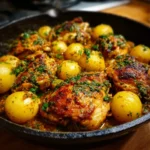
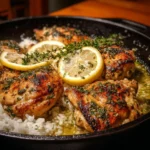
- Finish & Plate: Return rested chicken to pan, spooning sauce over top. Warm gently 60 seconds—do not boil (butter may break). Garnish lavishly: parsley, chives, lemon zest ribbons, flaky salt, and microgreens. Serve immediately—ideally over buttered egg noodles, creamy polenta, roasted fingerling potatoes, or crusty sourdough for sauce-mopping.
Tips
- Dry Chicken = Golden Crust: Moisture is the enemy of searing. Pat chicken with *clean* paper towels—not cloth (lint risk)—until no dampness remains. For ultra-dry surfaces, refrigerate uncovered 1 hour pre-seasoning.
- Thermometer Non-Negotiable: Visual cues mislead. Invest in an instant-read thermometer: pull chicken at 155°F for breasts (rests to 165°F); 165°F for thighs (no rest needed). Overcooking guarantees dryness.
- Butter Temperature Matters: Cut butter into uniform ½-inch cubes and chill until ready. Cold butter melts gradually, allowing proper emulsification. Warm butter causes separation.
- Scrape the Fond Religiously: That dark, sticky layer stuck to your pan? That’s concentrated flavor gold—*fond*. Use the corner of a wooden spoon to dislodge every speck during deglazing. It’s the soul of your reduction.
- Reduce Low & Slow: Rushing reduction leads to scorching or thin sauce. Maintain a gentle bubble—not a rapid boil—and stir frequently near the end. When a spoon drawn across the bottom leaves a clear trail for 2 seconds, it’s ready.
- Acid Last, Always: Adding lemon juice too early cooks off volatile aromatics. Stir in *off heat*, just before serving, to preserve brightness and prevent curdling.
- Rest Chicken on a Rack: Prevents steaming on the bottom—keeping the crust crisp while juices redistribute. Never rest directly on plate or paper towel.
- Sauce Consistency Fix: Too thin? Simmer 1–2 more minutes. Too thick? Whisk in 1 tsp warm stock or cream. Broken sauce? Start fresh with 1 tsp cold water in blender, slowly drizzle in broken sauce while blending.
- Make-Ahead Strategy: Prep components ahead: mince garlic/shallots, make roasted garlic paste, portion herbs, measure liquids. Sauce base (pre-butter) can be refrigerated 3 days or frozen 2 months—reheat gently, then whisk in butter.
Variations and Customizations
- Herb-Infused: Swap thyme for rosemary (use ½ tsp chopped fresh—rosemary is potent) or tarragon (add with lemon juice for classic French flair). Stir in 1 tsp fresh dill at the end for Scandinavian brightness.
- Spiced & Smoky: Add ¼ tsp smoked paprika with shallots, or a pinch of cayenne with garlic. Finish with crumbled crispy pancetta for salty crunch.
- Umami Bomb: Stir in 1 tsp white miso paste or ½ tsp fish sauce (yes, really!) with the stock—it deepens savoriness without detectable flavor.
- Citrus Twist: Replace lemon with yuzu juice and zest, or add 1 tsp orange marmalade for bittersweet complexity.
- Vegetarian/Vegan Adaptation: Use extra-firm pressed tofu or king oyster mushrooms (sliced thick, marinated in soy-tamari-ginger, then seared). Substitute vegan butter (Miyoko’s or Naturli’), vegetable stock, and nutritional yeast for umami. Add 1 tsp Dijon mustard for emulsion stability.
- Seafood Fusion: Replace chicken with large shrimp (peeled, deveined, tails on) or scallops. Sear 1–2 minutes per side—don’t overcook. Reduce simmer time to 5 minutes max.
- Grill Version: Grill chicken over medium coals for smoky char. Make sauce separately on stovetop, then brush generously before serving.
- Pasta Integration: Toss hot fettuccine or pappardelle directly in the finished sauce with chicken. Add 2 tbsp pasta water to loosen and help cling.
- Meal-Prep Friendly: Double sauce, store separately. Reheat chicken gently in air fryer (375°F/5 min) for crispness; warm sauce on stove with splash of stock.
Health Considerations and Nutritional Value
This dish harmonizes indulgence with mindful nutrition—when prepared with intention. A standard serving (1 breast + ⅓ cup sauce) contains approximately 420–480 calories, with 38g protein, 28g fat (17g saturated), and under 5g net carbs—making it naturally keto and low-carb friendly. The high-quality protein supports muscle synthesis and satiety, while garlic delivers allicin (linked to cardiovascular support, anti-inflammatory effects, and immune modulation). Butter contributes butyrate—a short-chain fatty acid shown to nourish gut lining—and fat-soluble vitamins A, D, E, and K2 (especially in grass-fed varieties). To optimize health impact: choose organic, pasture-raised chicken for higher omega-3s and vitamin E; use grass-fed butter for increased CLA (conjugated linoleic acid); limit added salt by relying on herb/lemon seasoning; and boost fiber by serving over roasted cauliflower rice or sautéed kale. Note: Those with lactose sensitivity may tolerate clarified butter (ghee) better—the milk solids are removed. For sodium-conscious diets, omit added salt and rely on herbs, lemon, and umami-rich ingredients like roasted garlic and mushroom stock. While rich, this dish avoids refined sugars, processed thickeners, or inflammatory seed oils—prioritizing whole, single-ingredient components for clean, functional nourishment.
Ingredients
- 2 (6–8 oz) boneless, skinless chicken breasts (or 4 thighs), pounded to ½-inch thickness
- 1½ tsp kosher salt, divided
- 1 tsp freshly ground black pepper, divided
- 1 tbsp avocado or grapeseed oil
- 4 large garlic cloves, minced (plus 2 cloves roasted—see Step-by-Step)
- 2 medium shallots, finely sliced
- ½ cup dry white wine (Sauvignon Blanc or Pinot Grigio)
- ¾ cup low-sodium chicken stock (preferably homemade)
- 2 sprigs fresh thyme (about 1 tsp leaves)
- 6 tbsp unsalted European-style butter, cold, cubed
- Zest of ½ lemon
- 2 tbsp fresh lemon juice
- 1 tbsp heavy cream (optional but recommended)
- ¼ cup fresh flat-leaf parsley, finely chopped
- 1 tbsp fresh chives, snipped
- Flaky sea salt (e.g., Maldon), for finishing
- Microgreens or edible flowers, for garnish (optional)
Directions
- Bring chicken to room temperature. Pat *extremely* dry. Season both sides with 1 tsp salt and ½ tsp pepper.
- Heat oil in large skillet over medium-high heat until shimmering. Sear chicken 5–6 minutes per side until golden and internal temp reaches 155°F (breasts) or 165°F (thighs). Transfer to wire rack; tent with foil. Rest 8 minutes.
- In same skillet, reduce heat to medium-low. Add shallots; sauté 2 minutes. Add minced garlic; stir 60 seconds.
- Deglaze with wine, scraping up all browned bits. Simmer 2 minutes until reduced by half.
- Add stock, thyme, and roasted garlic paste. Simmer uncovered 8–10 minutes until reduced to ~¼ cup.
- Remove from heat. Whisk in butter, 1 tbsp at a time, until smooth and glossy.
- Stir in lemon zest, lemon juice, cream (if using), and remaining ½ tsp salt and ½ tsp pepper.
- Return chicken to pan. Spoon sauce over top. Warm gently 60 seconds.
- Garnish with parsley, chives, lemon zest, flaky salt, and microgreens. Serve immediately.
FAQ
- Can I use frozen chicken?
- Yes—but thaw completely in fridge overnight, then pat *extra* dry. Frozen chicken releases more water, hindering crust formation. Never cook from frozen for this recipe.
- Why does my sauce break or look greasy?
- Most commonly: butter was too warm, added too fast, or sauce boiled after butter was incorporated. Fix: Whisk 1 tsp cold water in bowl, slowly drizzle broken sauce into it while whisking vigorously. Or blend with 1 tsp Dijon mustard.
- Can I make this dairy-free?
- Absolutely. Use high-quality vegan butter (Miyoko’s), full-fat coconut milk (not “light”) instead of cream, and ensure stock is vegan. Emulsify carefully over low heat.
- How do I store leftovers?
- Store chicken and sauce separately in airtight containers. Refrigerate up to 3 days. Reheat chicken in air fryer (375°F/5 min) or oven (350°F/10 min). Warm sauce on stove with 1 tsp stock, whisking constantly.
- Can I freeze the sauce?
- Yes—freeze *before* adding butter and lemon. Cool completely, portion into ice cube trays, freeze solid, then transfer to bag. Thaw, reheat gently, then whisk in cold butter and fresh lemon juice.
- What’s the best side dish?
- Buttered wide egg noodles absorb sauce beautifully. Also excellent: creamy polenta, roasted root vegetables, garlic mashed potatoes, sautéed spinach, or a crisp arugula salad with lemon vinaigrette.
- Can I use garlic powder instead of fresh?
- Not recommended. Powder lacks enzymatic complexity, burns easily, and yields flat, one-dimensional flavor. Fresh garlic is essential for authenticity and depth.
- Is this gluten-free?
- Yes—naturally! Just verify your stock and wine are certified gluten-free (most are, but some flavored stocks contain malt vinegar).
- Why rest the chicken?
- Resting allows muscle fibers to relax and reabsorb juices. Skipping this step causes up to 30% moisture loss when sliced.
- Can I make this in an Instant Pot?
- You can pressure-cook chicken, but the reduction and emulsification *must* be done on the stovetop for proper control, texture, and flavor development. The IP won’t replicate the fond or achieve true reduction.
Summary
Garlic Butter Chicken with Garlic Butter Reduction is a masterclass in foundational French technique—transforming humble ingredients through precise searing, intelligent deglazing, and patient reduction into a sauce of profound depth, velvety texture, and aromatic brilliance. Every element, from roasted garlic paste to cold-butter emulsification, exists to elevate the chicken while honoring the integrity of real, whole-food flavors.
Whether you’re seeking weeknight ease or weekend elegance, this recipe rewards attention to detail with restaurant-caliber results—delivering succulent, golden-brown chicken draped in a luminous, garlicky, lemon-kissed butter sauce that lingers on the palate and invites seconds.