Introduction
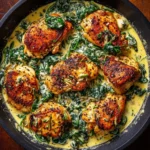
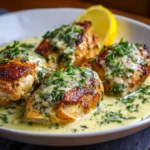
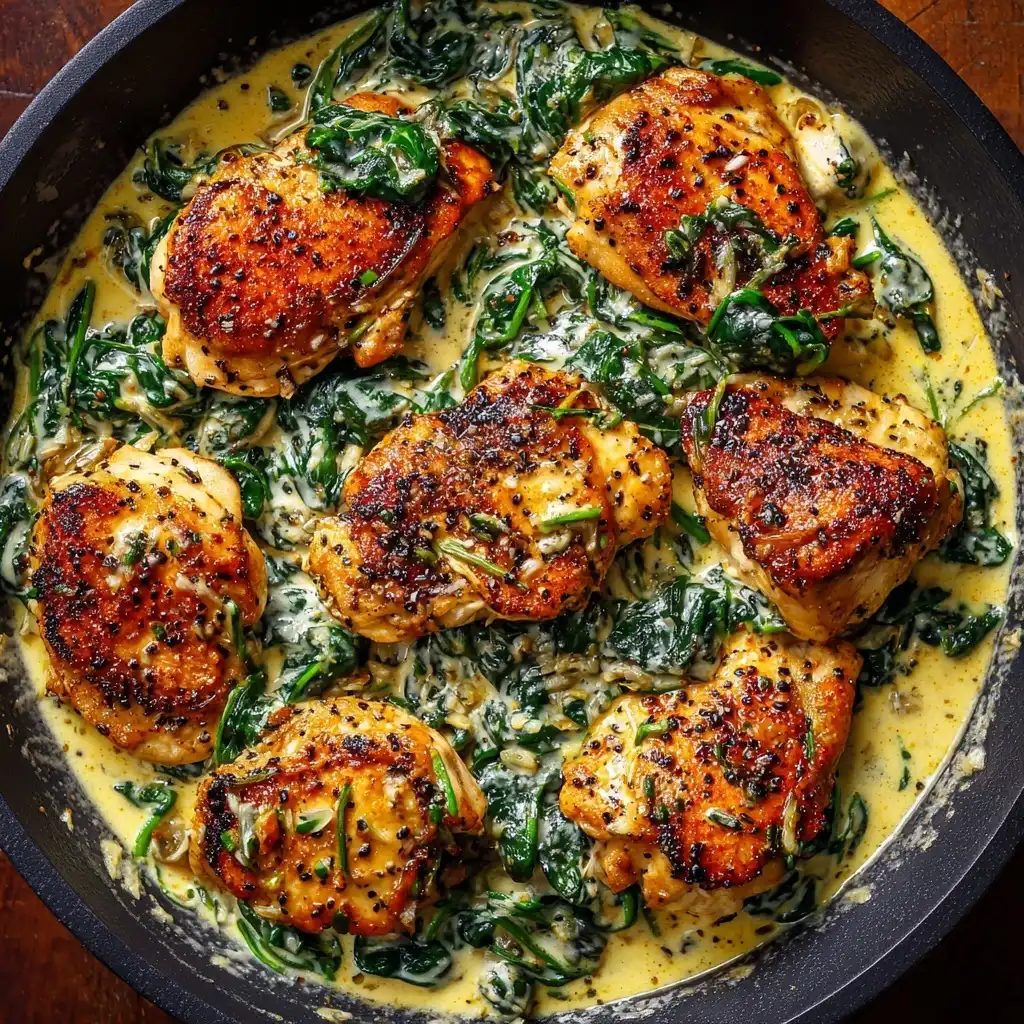
Garlic Butter Chicken with Creamy Spinach is a restaurant-worthy, weeknight-elevating dish that marries tender pan-seared chicken breasts with a luxuriously rich, herb-flecked sauce and vibrant, nutrient-dense spinach—all in under 30 minutes. This recipe strikes the perfect balance between indulgence and wholesome comfort: the savory depth of slow-simmered garlic and browned butter harmonizes with the earthy sweetness of wilted spinach, while a touch of cream adds velvety silkiness without overwhelming heaviness. Whether you’re cooking for a cozy family dinner, impressing guests with minimal effort, or simply craving something deeply flavorful yet nourishing, this dish delivers on every front—offering layers of aroma, texture, and satisfaction in every bite.
The History
While no single documented origin exists for “Garlic Butter Chicken with Creamy Spinach,” its roots trace back to a confluence of culinary traditions. Garlic butter sauces have long been staples in French cuisine—think beurre blanc and beurre noisette—where clarified butter and aromatic alliums form the foundation of elegant pan sauces. In Italian cooking, pollo al burro e aglio (chicken with butter and garlic) appears across regional home kitchens, often finished with lemon or parsley. The addition of spinach nods to Mediterranean and Middle Eastern influences, where leafy greens are frequently sautéed with garlic and olive oil—a technique popularized globally through health-conscious adaptations in the late 20th century. The creamy element likely emerged from American bistro culture in the 1980s–90s, as chefs began blending European techniques with accessible dairy like heavy cream or crème fraîche to create approachable, crowd-pleasing finishes. Over time, food bloggers, meal-prep influencers, and dietitians reimagined the dish with leaner proteins and lighter cream alternatives—solidifying its place as a modern classic that honors tradition while embracing flexibility and wellness.
Ingredients Breakdown
Each component in this dish serves a distinct sensory and functional role—no ingredient is arbitrary. Let’s explore them in detail:
- Chicken Breasts (boneless, skinless): The protein anchor—lean, versatile, and ideal for quick cooking. Opt for air-chilled, antibiotic-free breasts when possible for superior texture and flavor absorption. Pounding to an even ½-inch thickness ensures uniform doneness and maximizes surface area for browning.
- Unsalted Butter: Provides richness, mouthfeel, and nutty complexity when browned. Unsalted allows full control over sodium levels. High-fat European-style butter (82–86% fat) yields deeper flavor and better emulsification.
- Fresh Garlic (minced or pressed): The aromatic heart of the dish. Fresh cloves contain allicin—the compound responsible for garlic’s pungent aroma and health benefits—which activates upon crushing and mellows beautifully when cooked gently in butter.
- Heavy Cream (or full-fat coconut milk for dairy-free): Adds luxurious body and balances acidity. Its high fat content stabilizes the sauce, preventing curdling and enabling smooth reduction. Lower-fat alternatives (half-and-half, whole milk) may thin the sauce or cause separation if overheated.
- Fresh Spinach (baby or mature): Chosen for its delicate tenderness and mild, slightly sweet flavor. Baby spinach wilts quickly and retains bright green color; mature spinach offers more robust texture and iron density. Organic varieties minimize pesticide residue, especially important for leafy greens.
- Grated Parmesan (or nutritional yeast for vegan option): Adds umami depth and subtle saltiness. Authentic Parmigiano-Reggiano contributes glutamic acid and calcium-rich complexity—never substitute pre-grated shakers, which contain anti-caking agents that hinder melting and flavor release.
- Dry White Wine (e.g., Sauvignon Blanc or Pinot Grigio): Optional but highly recommended—it deglazes the fond (caramelized bits), adds brightness, and cuts richness. Alcohol evaporates during simmering, leaving only nuanced acidity and fruit notes.
- Fresh Herbs (parsley, thyme, optional dill): Parsley brings grassy freshness and visual contrast; thyme contributes woodsy, floral undertones that complement garlic and butter. Always add delicate herbs at the end to preserve volatile oils.
- Lemon Zest & Juice: A finishing flourish that lifts the entire dish—zest imparts aromatic citrus oils, while juice adds clean acidity to cut through fat and enhance perception of other flavors.
- Sea Salt & Freshly Ground Black Pepper: Not mere seasonings—they’re flavor amplifiers. Salt draws out natural juices and enhances savory perception; coarse black pepper adds gentle heat and aromatic terpenes that bloom when cracked.
Step-by-Step Recipe
- Prep & Pound: Place chicken breasts between two sheets of parchment paper or plastic wrap. Using a meat mallet or heavy skillet, gently pound to ½-inch uniform thickness. Pat *very* dry with paper towels—this is critical for proper browning. Season both sides generously with salt and pepper.
- Sear the Chicken: Heat 1 tbsp butter and 1 tbsp olive oil in a large stainless steel or cast-iron skillet over medium-high heat until shimmering. Add chicken and cook undisturbed for 5–6 minutes, until deeply golden and easily releases from pan. Flip and cook 4–5 more minutes until internal temperature reaches 160°F (it will rise to 165°F while resting). Transfer to a plate, tent loosely with foil, and rest 5 minutes.
- Build the Aromatic Base: Reduce heat to medium-low. In same skillet, melt remaining 3 tbsp butter. Add minced garlic and a pinch of red pepper flakes (optional). Cook 60–90 seconds—just until fragrant and edges begin to turn golden—but do *not* let garlic brown or burn, or it turns bitter.
- Deglaze & Reduce: Pour in ¼ cup white wine (or low-sodium chicken broth if avoiding alcohol). Scrape vigorously with a wooden spoon to lift all browned bits (fond) from the pan bottom—this is pure flavor gold. Simmer 2–3 minutes until liquid reduces by half and smells intensely aromatic.
- Incorporate Cream & Cheese: Whisk in heavy cream and bring to a gentle simmer. Reduce heat to low. Stir in grated Parmesan gradually, whisking constantly until fully melted and smooth. Simmer 2 more minutes to thicken slightly—sauce should coat the back of a spoon.
- Wilt the Spinach: Increase heat to medium. Add spinach in batches, stirring continuously until each addition wilts (about 30 seconds per batch). Avoid overcrowding—this prevents steaming and preserves vibrancy. Once all spinach is incorporated and just tender (still bright green), remove from heat.
- Final Assembly: Slice rested chicken into ½-inch medallions. Gently fold chicken pieces into the creamy spinach sauce. Adjust seasoning with additional salt, pepper, lemon zest, and a squeeze of fresh lemon juice. Finish with a generous sprinkle of chopped fresh parsley and extra Parmesan.
- Rest & Serve: Let sit off heat for 2 minutes to allow flavors to marry and sauce to settle. Serve immediately while hot and glossy.
Tips
- Dry Chicken = Golden Chicken: Moisture is the enemy of browning. Pat chicken *thoroughly* before seasoning—even residual dampness creates steam instead of sear.
- Control Garlic Heat: Garlic burns in under 30 seconds at high heat. Keep butter at medium-low, stir constantly, and remove from heat the *instant* it becomes fragrant—not when it starts browning.
- Don’t Skip the Rest: Allowing chicken to rest redistributes juices inward. Cutting too soon releases moisture into the sauce, diluting flavor and making the chicken dry.
- Spinach Hack: If using frozen spinach, thaw completely and *squeeze out every drop of water* using cheesecloth or a clean kitchen towel—excess liquid will make your sauce watery and bland.
- Sauce Consistency Rescue: Too thin? Simmer 1–2 minutes longer. Too thick? Whisk in 1 tsp warm cream or broth at a time until desired consistency returns.
- Pan Choice Matters: Stainless steel or cast iron provides superior browning and fond development. Nonstick pans inhibit fond formation—essential for deep flavor—and can’t withstand high heat needed for proper searing.
- Make-Ahead Magic: Sauce base (garlic butter + cream + cheese) can be made 2 days ahead and refrigerated. Reheat gently over low heat, whisking constantly, then fold in freshly cooked chicken and spinach.
- Freeze-Friendly? Not recommended for the full dish—cream-based sauces may separate upon thawing. However, cooked chicken and spinach components freeze well individually for up to 3 months.
Variations and Customizations
This recipe is inherently adaptable—here’s how to tailor it to dietary needs, pantry constraints, or global inspirations:
- Dairy-Free Version: Replace butter with vegan butter (Miyoko’s or Earth Balance), heavy cream with full-fat canned coconut milk (shake well first), and Parmesan with 2 tbsp nutritional yeast + ¼ tsp white miso paste for umami depth.
- Low-Carb/Keto-Friendly: Already naturally low-carb! Boost healthy fats by adding 1 tbsp toasted pine nuts or slivered almonds at the end. Swap white wine for dry vermouth or omit entirely.
- Gluten-Free: Naturally GF—just verify all broth and wine labels for hidden gluten (some wines use gluten-based fining agents).
- Spicy Southwest Twist: Add 1 tsp chipotle powder with garlic, stir in ¼ cup roasted corn and black beans, and top with crumbled queso fresco and avocado slices.
- Mediterranean Style: Replace Parmesan with feta, add ¼ cup kalamata olives and 2 tbsp chopped sun-dried tomatoes, and finish with oregano and lemon.
- Creamy Mushroom Spinach Upgrade: Sauté 8 oz sliced cremini mushrooms in 1 tbsp butter before adding garlic—cook until deeply caramelized for intense umami.
- Sheet-Pan Baked Version: Toss pounded chicken and spinach with olive oil, garlic, lemon zest, and herbs. Roast at 425°F for 18–20 minutes. Whisk butter, cream, and cheese separately, then pour over hot sheet pan and toss to coat.
- Meal-Prep Friendly: Cook chicken and sauce separately. Portion chicken + sauce into containers; store spinach separately. Reheat chicken/sauce, then stir in fresh raw spinach—it wilts instantly from residual heat.
- Kid-Friendly Mild Version: Omit garlic (or reduce to 1 clove), skip red pepper flakes, use mild provolone instead of Parmesan, and stir in 2 tbsp cream cheese for extra creaminess and neutral flavor.
- Vegan “Chicken” Option: Use pressed, baked tofu or seitan cutlets. Marinate in soy sauce, garlic powder, and smoked paprika before pan-searing. Proceed with sauce as directed.
Health Considerations and Nutritional Value
A single serving (1 chicken breast + 1.5 cups creamy spinach) contains approximately:
- Calories: ~520–580 kcal (varies with butter/cream amounts)
- Protein: 42–48g (excellent complete protein source supporting muscle repair and satiety)
- Fat: 32–38g (primarily unsaturated from olive oil and butter; includes beneficial short-chain fatty acids and fat-soluble vitamins A, D, E, K)
- Carbohydrates: 6–9g (mostly from spinach’s natural sugars and fiber)
- Fiber: 4–5g (supports gut health, blood sugar regulation, and cholesterol management)
- Iron: ~3.5mg (non-heme iron from spinach—enhanced by vitamin C from lemon juice for optimal absorption)
- Calcium: ~220mg (from Parmesan and fortified cream—supports bone density)
- Vitamin K: >500mcg (spinach is among the richest dietary sources—critical for blood clotting and bone metabolism)
- Antioxidants: Lutein, zeaxanthin, beta-carotene, and allicin—linked to reduced oxidative stress and eye health protection.
Key Health Notes:
- Balancing Saturated Fat: While butter and cream contribute saturated fat, recent research emphasizes context—when consumed as part of a whole-food, plant-forward diet (like this one!), moderate saturated fat intake does not inherently increase cardiovascular risk. For lower saturated fat, substitute half the butter with olive oil and use half-and-half instead of heavy cream.
- Sodium Awareness: Most sodium comes from added salt and Parmesan. To reduce: use low-sodium broth instead of wine, skip added salt on chicken, and rely on herbs, lemon, and garlic for flavor. One serving contains ~480–620mg sodium—well within daily limits (<2,300mg) for most adults.
- Oxalate Consideration: Spinach contains oxalates, which may contribute to kidney stones in susceptible individuals. Rotating with low-oxalate greens (kale, Swiss chard, arugula) is advised for those with recurrent stones.
- Food Safety Reminder: Chicken must reach 165°F internally. Use a reliable instant-read thermometer—color alone is not an accurate indicator of doneness.
Ingredients
- 2 (6–7 oz) boneless, skinless chicken breasts, pounded to ½-inch thickness
- 4 tbsp unsalted butter, divided
- 1 tbsp extra-virgin olive oil
- 4 large garlic cloves, finely minced (about 1½ tbsp)
- ¼ tsp red pepper flakes (optional)
- ¼ cup dry white wine (e.g., Sauvignon Blanc) or low-sodium chicken broth
- ½ cup heavy cream (or full-fat coconut milk)
- ⅓ cup freshly grated Parmesan cheese (plus extra for garnish)
- 10 oz fresh baby spinach (about 10–12 cups loosely packed)
- 1 tsp lemon zest + 1 tbsp fresh lemon juice
- ¼ cup finely chopped fresh flat-leaf parsley
- 1 tsp fresh thyme leaves (or ½ tsp dried)
- Kosher salt and freshly ground black pepper, to taste
Directions
- Prepare chicken: Place chicken between parchment or plastic wrap. Pound gently to even ½-inch thickness using a meat mallet or rolling pin. Pat *extremely* dry with paper towels. Season both sides generously with salt and pepper.
- Heat 1 tbsp butter and 1 tbsp olive oil in a large skillet over medium-high heat until shimmering. Add chicken and cook undisturbed 5–6 minutes until deeply golden and releases easily. Flip and cook 4–5 more minutes until internal temperature reaches 160°F. Transfer to plate, tent with foil, and rest 5 minutes.
- Reduce heat to medium-low. Melt remaining 3 tbsp butter. Add garlic and red pepper flakes; cook 60–90 seconds until fragrant—do not brown.
- Pour in wine (or broth). Scrape pan vigorously to lift fond. Simmer 2–3 minutes until reduced by half.
- Whisk in heavy cream. Bring to gentle simmer, then reduce heat to low. Gradually whisk in Parmesan until smooth. Simmer 2 minutes until slightly thickened.
- Increase heat to medium. Add spinach in 3 batches, stirring until each wilts (30 sec/batch). Do not overcrowd.
- Slice rested chicken. Gently fold into creamy spinach sauce. Stir in lemon zest, lemon juice, parsley, and thyme. Adjust salt and pepper.
- Let rest off heat 2 minutes. Serve immediately, garnished with extra Parmesan and parsley.
FAQ
- Can I use chicken thighs instead of breasts?
- Absolutely—and they’re even more forgiving! Boneless, skinless thighs stay juicier and offer richer flavor. Sear 6–7 minutes per side, or until internal temp reaches 175°F. They also absorb sauce beautifully.
- Why does my sauce break or look greasy?
- Most often due to overheating the cream or adding cold cream to very hot butter. Always warm cream slightly before adding, and keep heat low during incorporation. Whisk constantly. If broken, remove from heat, let cool 1 minute, then whisk in 1 tsp cold cream or lemon juice to re-emulsify.
- Can I make this in advance?
- Yes—with caveats. Cook chicken and sauce separately up to 2 days ahead. Store chilled. Reheat sauce gently, then combine with freshly warmed chicken and *raw* spinach—its residual heat wilts the greens perfectly without overcooking.
- What sides pair best?
- This dish shines with simple, textural contrasts: fluffy basmati rice, creamy mashed potatoes, crusty artisan bread for sopping, or a crisp green salad with lemon vinaigrette. Avoid heavy starches that compete with the sauce’s richness.
- Is there a way to lighten it without sacrificing flavor?
- Yes! Use 2 tbsp butter + 2 tbsp olive oil instead of 4 tbsp butter; swap heavy cream for half-and-half or evaporated milk; increase garlic and lemon for brightness; and double the spinach volume for volume and fiber without extra calories.
- Can I freeze leftovers?
- Not ideal—the cream sauce may separate upon thawing and reheating. However, chicken and spinach components freeze well individually for up to 3 months. Thaw overnight, reheat gently, and remake the sauce fresh.
- My garlic tasted bitter—what went wrong?
- Burning garlic is the culprit. Garlic burns at just 300°F. Keep heat low, stir constantly, and remove from heat the moment it becomes fragrant (usually 60–90 seconds). If unsure, add garlic after reducing wine—it cooks more gently in liquid.
- Can I use frozen spinach?
- Yes—but you *must* fully thaw and squeeze out *all* excess water using cheesecloth or a clean towel. Otherwise, it will dilute your sauce and mute flavors. Expect about 10 oz frozen = 1.5 cups drained.
- How do I prevent the chicken from drying out?
- Three keys: (1) Pound evenly for consistent thickness, (2) Don’t overcook—pull at 160°F and rest, and (3) Never skip the resting step—juices redistribute, ensuring tenderness.
- Is this dish safe for pregnant women or young children?
- Yes—provided chicken is cooked to 165°F and wine is fully simmered (alcohol evaporates at 172°F; our 2–3 minute simmer ensures near-complete removal). For absolute caution, substitute broth.
Summary
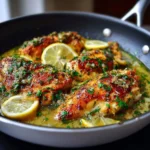
Garlic Butter Chicken with Creamy Spinach is a masterclass in balancing bold flavor, elegant simplicity, and nutritional intelligence—transforming humble pantry staples into a restaurant-caliber meal in under 30 minutes.
With its golden-seared chicken, velvety garlicky-butter sauce, and vibrant, iron-rich spinach, it satisfies cravings while supporting wellness—proving that truly delicious food can be both deeply comforting and thoughtfully nourishing.