Introduction
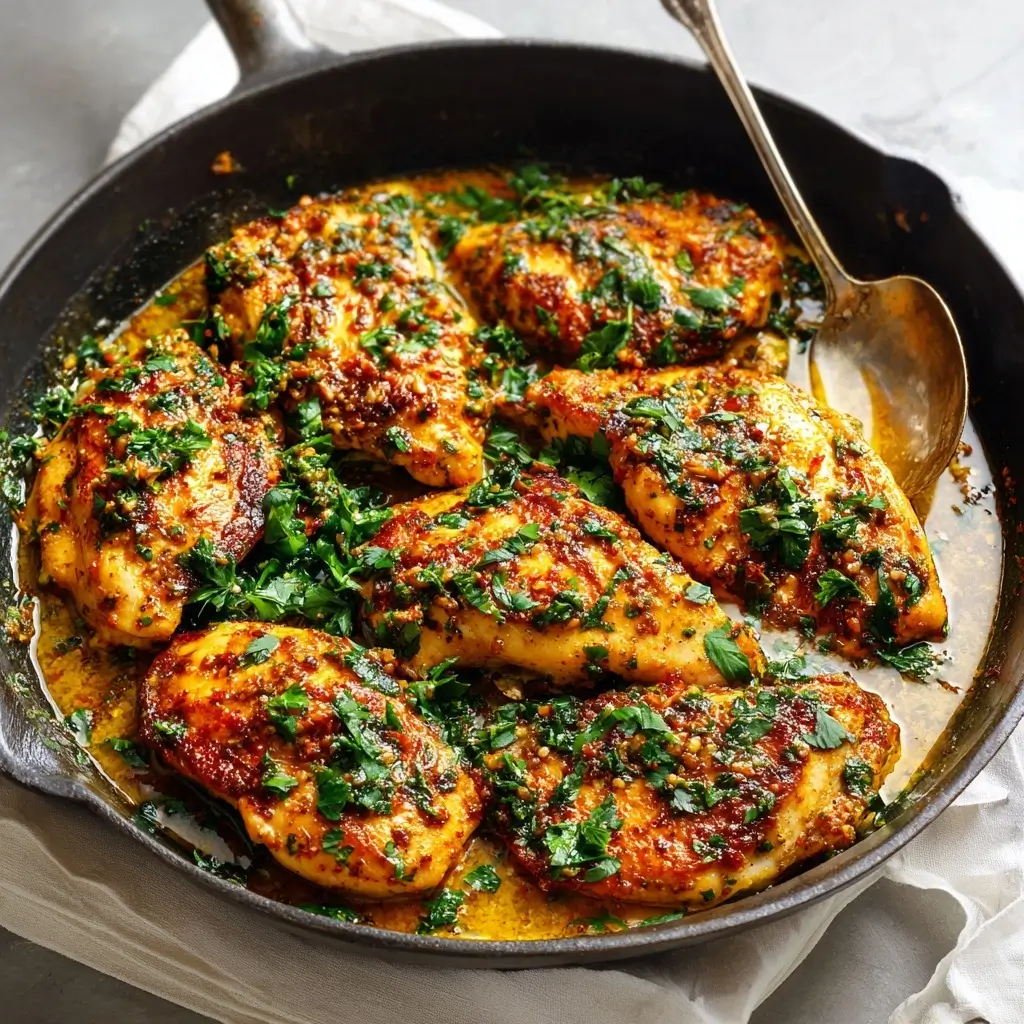
Garlic Butter Chicken Skillet is a beloved weeknight staple that marries simplicity with extraordinary flavor—crisp-edged, golden-brown chicken breasts or thighs nestled in a luxuriously aromatic pan sauce infused with melted butter, fresh garlic, herbs, and a touch of brightness from lemon or white wine. This one-pan wonder delivers restaurant-quality depth without requiring gourmet skills or hours of prep. Its magic lies in the Maillard reaction searing the chicken to savory perfection, followed by deglazing the flavorful browned bits (fond) to build a rich, velvety sauce—all in the same skillet. Whether you’re feeding a busy family, impressing guests with minimal effort, or craving comfort food with elegance, this dish rises to the occasion with warmth, aroma, and undeniable satisfaction. It’s not just dinner—it’s a sensory experience centered around humble ingredients transformed through technique, timing, and love.
The History
While no single origin story defines Garlic Butter Chicken Skillet, its roots stretch across culinary traditions where butter, garlic, and poultry converge. In classical French cuisine, chicken à la provençale and coq au vin laid early groundwork for pan-seared poultry enriched with aromatic vegetables and fortified liquids—principles echoed in today’s skillet method. Meanwhile, Italian pollo al burro e aglio emphasized the sacred duo of garlic and butter long before it became a viral kitchen trend. The modern “skillet” iteration gained massive traction in the 2010s alongside the rise of food blogs, YouTube cooking channels, and Pinterest-driven meal prep culture—where visual appeal, speed, and minimal cleanup were paramount. Influenced by American home cooking pragmatism and elevated by global pantry staples (like smoked paprika, fresh thyme, or Calabrian chiles), the dish evolved into a canvas for regional expression: from creamy herb-infused versions popularized by Midwest supper clubs to spicy-sweet Korean-inspired adaptations featuring gochujang and sesame oil. Its enduring popularity reflects a broader cultural shift toward mindful indulgence—choosing quality ingredients, embracing technique over complexity, and honoring the ritual of shared, soul-nourishing meals.
Ingredients Breakdown
Every exceptional Garlic Butter Chicken Skillet begins with intentionality—not just in selection, but in understanding *why* each ingredient matters:
- Chicken: Boneless, skinless chicken breasts offer lean tenderness, while thighs provide superior juiciness and forgiving texture due to higher fat content. For best results, opt for air-chilled, antibiotic-free poultry with visible marbling. Patting dry ensures maximum sear; pounding to even thickness (½ inch) guarantees uniform cooking.
- Unsalted Butter: The soul of the sauce. European-style (82–84% butterfat) yields richer mouthfeel and better emulsification. Salted butter can be used—but adjust added salt carefully. Clarified butter raises the smoke point for high-heat searing without burning.
- Fresh Garlic: Non-negotiable. Pre-minced or jarred garlic lacks enzymatic pungency and introduces off-flavors when browned. Crush cloves first to release allicin, then finely mince—or use a microplane for ultra-fine, evenly distributed flavor without bitter edges.
- Aromatics: Yellow onions (for sweetness), shallots (for nuance), or leeks (for delicacy) build foundational depth. Sautéed low and slow until translucent unlocks natural sugars; rushed browning leads to acridness.
- Liquid Deglaizer: Dry white wine (Sauvignon Blanc or Pinot Grigio) adds acidity and complexity, while low-sodium chicken broth contributes umami and body. Lemon juice (added *off-heat*) preserves volatile citrus oils and lifts richness. Avoid pre-made “cooking wine”—its salt and preservatives dull flavor.
- Herbs: Fresh thyme and parsley are classic—thyme withstands heat, parsley adds freshness at the end. Rosemary works beautifully with thighs; tarragon imparts subtle anise notes ideal for wine-based versions. Dried herbs require rehydration or earlier addition to bloom their oils.
- Finishing Touches: A splash of heavy cream creates silkiness; grated Parmesan adds savory depth; capers lend briny pop; toasted pine nuts contribute crunch. These aren’t garnishes—they’re structural elements that balance fat, acid, salt, and texture.
Step-by-Step Recipe
- Prep & Temper: Remove chicken from fridge 20 minutes prior. Pat *extremely* dry with paper towels—moisture is the enemy of crust. Season generously with kosher salt and freshly ground black pepper on all sides. Mince garlic, chop herbs, measure liquids and butter—mise en place is essential.
- Heat & Sear: Place a heavy-bottomed stainless steel or cast-iron skillet over medium-high heat for 2 minutes. Add 1 tbsp neutral oil (avocado or grapeseed). When shimmering—not smoking—add chicken without crowding. Press gently with a spatula for full contact. Cook undisturbed 5–6 minutes until deeply golden and easily releases. Flip; cook 4–5 more minutes until internal temp reaches 155°F (it will carry over to 165°F). Transfer to a wire rack—*do not cover*—to retain crispness.
- Build the Fond: Reduce heat to medium. Discard excess oil if pooling; leave ~1 tsp. Add minced garlic and aromatics. Sauté 60–90 seconds until fragrant but *not browned*—garlic burns fast. Stir constantly.
- Deglaze with Purpose: Pour in wine (or broth), scraping vigorously with a wooden spoon to lift every bit of caramelized fond. Simmer 2–3 minutes until reduced by half and alcohol evaporates (you’ll smell sharpness fade).
- Emulsify the Sauce: Reduce heat to low. Whisk in cold butter, 1 tbsp at a time, allowing each to melt and incorporate fully before adding the next. This creates a stable, glossy emulsion—not greasy separation. If sauce breaks, whisk in 1 tsp cold water or broth to re-bind.
- Finish & Fold: Return chicken to skillet, spooning sauce over top. Simmer gently 1 minute to warm through. Off heat, stir in lemon zest, fresh herbs, and a final knob of cold butter for sheen. Adjust seasoning with flaky sea salt and cracked pepper.
- Rest & Serve: Let rest 3–5 minutes—this allows juices to redistribute. Spoon sauce generously over chicken and alongside roasted potatoes, crusty bread, or buttered noodles.
Tips
- Don’t Skip the Rest: Allowing chicken to rest after searing prevents steam explosion when sliced—and preserves the golden crust.
- Control Garlic Burn: Add garlic *after* aromatics soften, and keep heat low. Burnt garlic turns acrid and ruins the entire sauce.
- Butter Temperature Matters: Cold butter emulsifies better than room-temp. Cut into small cubes and chill until ready to whisk in.
- Sauce Consistency Hack: Too thin? Simmer 30 seconds longer. Too thick? Splash in warm broth, 1 tsp at a time, whisking until silky.
- Sear Surface Science: Stainless steel skillets need proper preheating—test with water droplets that skitter like mercury. Cast iron holds heat longer but requires thorough drying to prevent rust.
- No-Stick Caution: Non-stick pans won’t develop adequate fond for deglazing. Reserve them for delicate tasks—not foundational browning.
- Acid Timing: Lemon juice added *during* cooking loses vibrancy. Always stir in *off-heat*, with zest for amplified citrus perfume.
- Herb Wisdom: Delicate herbs (parsley, chives, dill) go in last. Hardy herbs (rosemary, thyme, oregano) can infuse during simmering.
- Carryover Cooking: Pull chicken at 155°F—not 165°F—to avoid dryness. Residual heat safely brings it to target temp while resting.
- Leftover Magic: Refrigerate sauce separately. Reheat gently with a splash of broth to prevent splitting—then pour over reheated chicken or use as pasta toss base.
Variations and Customizations
This recipe is gloriously adaptable—here are 12 thoughtfully crafted variations, each with distinct flavor profiles, cultural inspirations, and dietary accommodations:
- Lemon-Herb Classic: Double lemon zest + juice, add 2 tbsp chopped fresh dill and 1 tsp dried oregano. Finish with feta crumbles.
- Smoky Paprika Thighs: Rub chicken with 1 tsp smoked paprika, ½ tsp cumin, and ¼ tsp chipotle powder before searing. Use sherry vinegar instead of wine.
- Creamy Mushroom & Thyme: Sauté 8 oz sliced cremini mushrooms until golden before garlic. Stir in ¼ cup heavy cream and 1 tbsp Dijon mustard with butter.
- Spicy Calabrian: Infuse butter with 2 chopped Calabrian chiles + 1 tsp honey. Top with crushed red pepper and lemon-thyme oil.
- Asian-Inspired Umami: Replace wine with dry sherry; swap butter for toasted sesame oil + 1 tbsp miso paste whisked in at the end. Garnish with scallions and sesame seeds.
- Mediterranean Olive & Capers: Add ¼ cup Kalamata olives and 1 tbsp rinsed capers with garlic. Finish with oregano and crumbled goat cheese.
- Low-Carb Zoodle Version: Serve over spiralized zucchini noodles sautéed 90 seconds in olive oil—no boiling, which makes them watery.
- Dairy-Free Adaptation: Use ghee (clarified butter) or high-oleic sunflower oil + 2 tbsp cashew cream blended with nutritional yeast for richness.
- Keto-Friendly Richness: Add 2 tbsp grated Pecorino Romano and 1 tbsp MCT oil to the finished sauce for sustained energy and satiety.
- Meal-Prep Friendly Batch: Double the recipe; portion chicken + sauce separately. Sauce freezes beautifully for up to 3 months—reheat with broth to refresh.
- Gluten-Free Assurance: Verify broth and wine labels—many contain hidden gluten derivatives. Use certified GF tamari if adding soy notes.
- Vegetarian “Chicken” Option: Substitute thick-cut king oyster mushroom “scallopini” or pressed, marinated tofu steaks—sear same way, adjust cook time to 2–3 mins per side.
Health Considerations and Nutritional Value
A 6-oz serving of Garlic Butter Chicken Skillet (made with breast meat, 3 tbsp butter, ½ cup broth, 1 tbsp lemon juice, and herbs) delivers approximately:
- Calories: ~420 kcal
- Protein: 42g (complete amino acid profile; supports muscle synthesis and satiety)
- Fat: 26g (mostly unsaturated from butter and olive oil; includes conjugated linoleic acid [CLA] linked to metabolic health)
- Carbohydrates: 2g (negligible net carbs; ideal for low-carb/keto diets)
- Vitamin B12: 100% DV (essential for nerve function and red blood cell formation)
- Selenium: 70% DV (powerful antioxidant supporting thyroid and immune health)
- Vitamin D: 15% DV (naturally occurring in pasture-raised chicken fat and egg-enriched butter)
Health Highlights:
- Garlic’s Bioactive Power: Allicin—activated when crushed and exposed to air—exhibits antimicrobial, anti-inflammatory, and cardiovascular-supportive properties. Cooking reduces but doesn’t eliminate benefits; pairing with healthy fats enhances absorption.
- Butter Beyond Saturated Fat: Grass-fed butter contains butyrate (a short-chain fatty acid shown to reduce gut inflammation), vitamin K2 (critical for calcium metabolism and arterial health), and omega-3s in balanced ratios.
- Lemon’s Synergy: Vitamin C boosts non-heme iron absorption from plant sides (like spinach or lentils served alongside) and regenerates vitamin E antioxidants in the butter.
- Dietary Flexibility: Naturally gluten-free, grain-free, and low-FODMAP when using garlic-infused oil instead of raw garlic for sensitive individuals.
- Mindful Modifications: Reduce butter to 1.5 tbsp and supplement with 1 tbsp extra-virgin olive oil for heart-healthy monounsaturated fats. Use bone-in, skin-on thighs for collagen-rich gelatin when simmered longer.
Considerations: Those managing hypertension should monitor sodium—opt for low-sodium broth and limit added salt, relying on herbs, lemon, and umami-rich ingredients for flavor. Individuals with lactose sensitivity often tolerate clarified butter (ghee) well, as milk solids are removed.
Ingredients
- 1.5 lbs boneless, skinless chicken breasts or thighs, evenly pounded to ½-inch thickness
- 1½ tsp kosher salt, divided (¾ tsp for chicken, ¾ tsp for sauce)
- 1 tsp freshly ground black pepper, divided
- 1 tbsp avocado oil or high-heat neutral oil
- 6 large cloves garlic, finely minced (about 2 tbsp)
- 1 small yellow onion, finely diced (about ½ cup)
- ½ cup dry white wine (e.g., Sauvignon Blanc) OR low-sodium chicken broth
- 6 tbsp unsalted butter, chilled and cubed (¾ stick)
- 2 tbsp fresh lemon juice (from ~1 lemon)
- 1 tbsp lemon zest
- 2 tsp fresh thyme leaves (or 1 tsp dried)
- ¼ cup fresh flat-leaf parsley, finely chopped
- Optional: 2 tbsp heavy cream, 2 tbsp grated Parmesan, 1 tbsp capers, or ¼ cup sliced mushrooms
Directions
- Pat chicken completely dry with paper towels. Season both sides with ¾ tsp salt and ½ tsp pepper.
- Heat a 12-inch heavy-bottomed skillet over medium-high heat for 2 minutes. Add oil; swirl to coat. When oil shimmers, add chicken without crowding. Press gently. Cook undisturbed 5–6 minutes until deep golden. Flip; cook 4–5 minutes until internal temperature reads 155°F. Transfer to a wire rack; tent loosely with foil.
- Reduce heat to medium. Discard excess oil, leaving ~1 tsp. Add onion; sauté 3 minutes until soft. Add garlic; stir 60 seconds until fragrant.
- Pour in wine (or broth), scraping bottom vigorously with wooden spoon to loosen fond. Simmer 2–3 minutes until reduced by half.
- Reduce heat to low. Whisk in cold butter, 1 tbsp at a time, waiting until fully melted and glossy before adding next. Sauce should thicken slightly and emulsify.
- Off heat, stir in lemon juice, lemon zest, thyme, remaining ¾ tsp salt, and ½ tsp pepper. Taste and adjust.
- Return chicken to skillet, spooning sauce over top. Let warm gently 1 minute—do not boil.
- Stir in parsley (and optional cream, Parmesan, or capers if using). Serve immediately, drizzling extra sauce over chicken.
FAQ
- Can I use frozen chicken?
- Yes—but thaw completely in the refrigerator overnight. Cooking from frozen leads to uneven sear, excess moisture, and rubbery texture. Never thaw at room temperature for food safety.
- Why does my sauce break or look greasy?
- Breaking occurs when butter separates—usually from overheating, adding butter too quickly, or using warm (not cold) butter. Fix it by whisking in 1 tsp warm broth or water while off heat. Next time, ensure low heat and gradual incorporation.
- Can I make this ahead of time?
- Absolutely. Cook chicken and sauce separately. Store refrigerated up to 4 days. Reheat chicken in oven at 325°F until warmed through; gently reheat sauce on stove with broth to restore emulsion.
- What’s the best side dish?
- Crusty artisan bread for sauce-mopping, creamy mashed potatoes, buttered egg noodles, roasted seasonal vegetables (asparagus, broccoli, carrots), or a simple arugula salad with lemon vinaigrette.
- Is there a dairy-free version that still tastes rich?
- Yes! Use ghee (clarified butter) or refined coconut oil for searing. For the sauce, blend ¼ cup raw cashews (soaked 4 hours) with ¼ cup warm broth, 1 tsp nutritional yeast, and lemon juice. Whisk into reduced pan liquid.
- Can I air-fry the chicken instead of pan-searing?
- You can—but you’ll lose the fond essential for the signature sauce. Air-fry chicken separately (400°F for 12–15 mins), then build sauce in a skillet using broth and a splash of the air-fryer drip pan juices.
- How do I store leftovers safely?
- Cool within 2 hours. Store chicken and sauce in separate airtight containers. Refrigerate up to 4 days or freeze sauce alone for up to 3 months. Reheat sauce gently—avoid boiling.
- What wine pairs best with this dish?
- A crisp, mineral-driven white like Chablis, Vermentino, or unoaked Chardonnay complements the butter and garlic. For red lovers, choose a light-bodied, low-tannin option like Pinot Noir or Gamay.
- My garlic tastes bitter—what went wrong?
- Bitterness signals burnt garlic. Always add it *after* aromatics soften, reduce heat to medium-low, and stir constantly. Using garlic-infused oil instead of raw garlic eliminates risk entirely.
- Can children eat this?
- Yes—garlic butter chicken is naturally kid-friendly. Reduce garlic to 2 cloves if sensitive, omit pepper, and serve with mild sides like buttered peas or rice. The gentle richness appeals to developing palates.
Summary
Garlic Butter Chicken Skillet is a masterclass in minimalist elegance—transforming pantry staples into a deeply flavorful, restaurant-worthy meal in under 30 minutes with just one pan and zero compromise on taste or texture.
From its cross-cultural roots to its endlessly adaptable nature, this dish celebrates technique, ingredient integrity, and the quiet joy of nourishing others—with every golden sear, fragrant clove, and velvety spoonful telling a story of care, craft, and culinary confidence.