Introduction
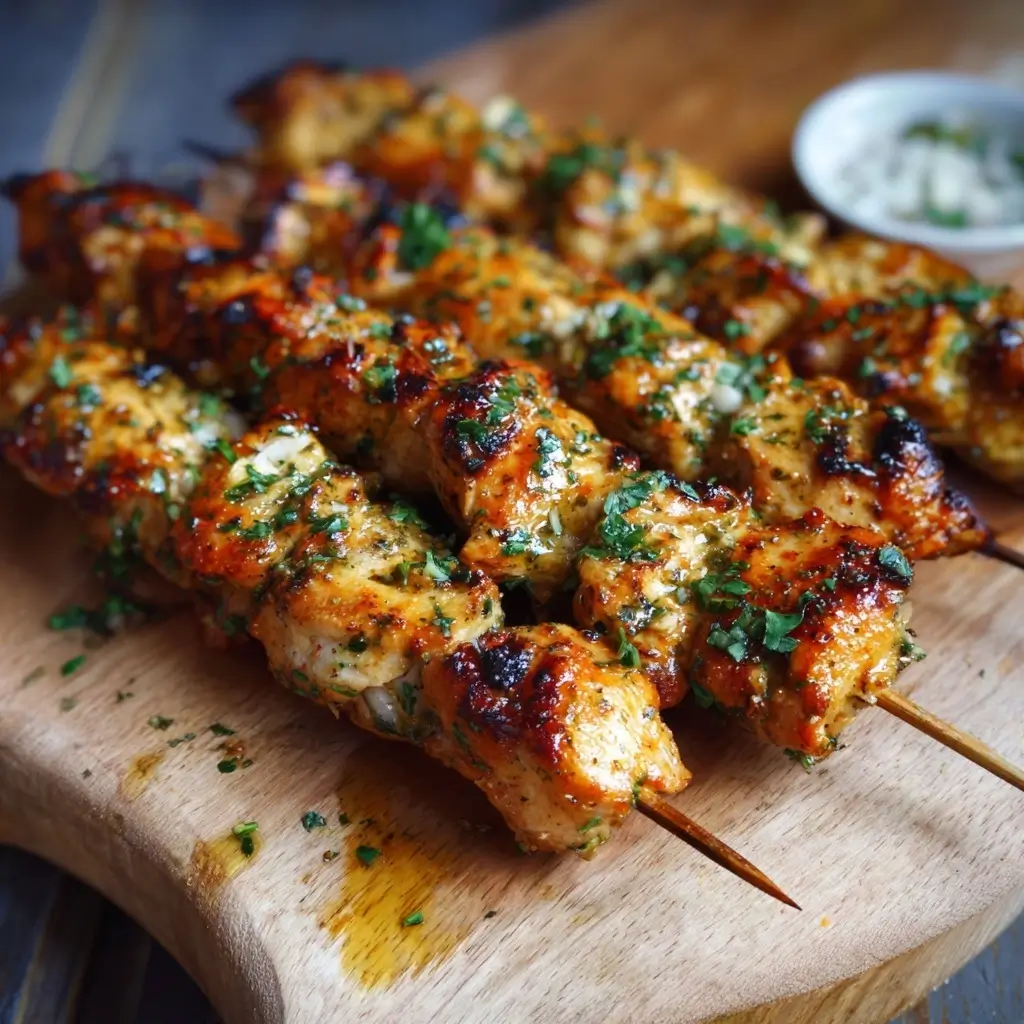
Garlic Butter Chicken Skewers are a vibrant, crowd-pleasing dish that effortlessly bridges the gap between casual weeknight dinner and impressive backyard entertaining. With tender, marinated chicken pieces threaded onto skewers and grilled (or baked) to golden perfection, then finished with a rich, aromatic garlic-butter glaze, this recipe delivers bold flavor, irresistible aroma, and satisfying texture in every bite. Whether served as an appetizer at a summer cookout, a protein-packed main course alongside roasted vegetables or grain bowls, or even as a flavorful addition to meal prep containers, these skewers offer versatility without compromise. Their simplicity belies their depth—thanks to layers of savory umami, sweet caramelization, pungent garlic, and creamy richness—all harmonized by fresh herbs and a hint of citrus brightness.
The History
While skewered meats have ancient roots—tracing back to Mesopotamian clay tablets describing “shish” (meaning “sword” in Turkish) over 3,000 years ago—the modern Garlic Butter Chicken Skewer is a delicious fusion born from global culinary cross-pollination. Traditional Middle Eastern and Mediterranean shish kebabs emphasized lamb or beef with spices like cumin, coriander, and sumac. In contrast, Southeast Asian satay uses peanut-based marinades and turmeric for color and earthiness. The garlic butter iteration emerged prominently in mid-20th-century American home cooking, influenced by post-war European immigration (particularly Italian and French techniques emphasizing butter, garlic, and fresh herbs) and the rise of backyard grilling culture in the 1950s–60s. As refrigeration improved and boneless, skinless chicken breasts became widely available and affordable, home cooks began experimenting with quick-cooking poultry on skewers—marrying classic French beurre blanc-inspired sauces with accessible, pantry-friendly ingredients. Today, Garlic Butter Chicken Skewers reflect a truly global palate: the structure of Turkish kebabs, the aromatic profile of Mediterranean herb gardens, the richness of European dairy traditions, and the convenience-driven innovation of modern American kitchens—all united on a single bamboo or metal stick.
Ingredients Breakdown
Understanding each ingredient’s role unlocks the full potential of this dish—not just for flavor, but for texture, tenderness, and food safety:
- Chicken Breast (or Thigh): Boneless, skinless chicken breast offers lean protein and clean flavor—but can dry out quickly if overcooked. Chicken thighs (boneless, skinless) are a superb alternative: higher in natural fat, they remain juicier during grilling and absorb marinade more deeply due to their slightly looser muscle structure. For optimal skewering, cut into uniform 1½-inch cubes—too small, and they’ll overcook or fall off; too large, and the center may remain undercooked before the exterior chars.
- Unsalted Butter: Used both in the marinade and the finishing glaze, unsalted butter gives precise control over sodium levels and delivers luxurious mouthfeel and browning capacity. Clarified butter (ghee) can be substituted for higher smoke point if grilling over direct high heat, though it sacrifices some of the milky sweetness of whole butter.
- Fresh Garlic: Raw garlic provides sharp, pungent heat; lightly cooked garlic becomes sweet, mellow, and nutty. For best results, mince or press garlic finely to maximize surface area and infusion—avoid pre-minced jarred garlic, which lacks vibrancy and often contains preservatives that dull flavor.
- Lemon Juice & Zest: Freshly squeezed lemon juice adds essential acidity to balance the fat and sweetness, while lemon zest contributes bright, floral top notes from the citrus oils. Bottled juice lacks enzymatic complexity and oxidizes rapidly—always use fresh.
- Dijon Mustard: A small amount acts as an emulsifier—helping oil and water-based components (like lemon juice and vinegar) bind smoothly with butter—and adds subtle tang and depth. Its mild heat enhances garlic without overpowering.
- Honey or Pure Maple Syrup: Adds gentle sweetness that promotes caramelization on the grill and counterbalances garlic’s intensity. Honey also has natural tenderizing enzymes (glucose oxidase) that mildly break down proteins for enhanced succulence.
- Fresh Herbs (Parsley, Thyme, Oregano): Flat-leaf parsley brings grassy freshness and visual pop; dried oregano and thyme contribute earthy, slightly floral backbone notes. Add delicate herbs like parsley *after* cooking to preserve volatile oils—dried herbs can withstand marinating and grilling.
- Smoked Paprika (Sweet or Hot): Not strictly traditional, but increasingly popular for its deep red hue and smoky-sweet complexity—adds dimension without heat unless hot variety is used. Provides visual appeal and mimics the charred nuance of wood-fired grilling.
- Olive Oil (Extra Virgin): Used in the marinade for its fruity, peppery notes and ability to carry fat-soluble flavors (like garlic compounds and paprika). Choose a high-quality, cold-pressed EVOO with low acidity (<0.3%) for best results.
- Sea Salt & Black Pepper: Kosher salt is preferred for even distribution and gentler salting power than table salt. Freshly cracked black pepper adds warm, floral heat—pre-ground loses potency within weeks.
Step-by-Step Recipe
- Prep the Chicken: Place 1.5 lbs boneless, skinless chicken breast or thighs on a clean cutting board. Pat *extremely* dry with paper towels—moisture inhibits browning and dilutes marinade absorption. Cut into evenly sized 1½-inch cubes. Discard any excess connective tissue or fat.
- Make the Marinade: In a medium bowl, whisk together ¼ cup extra virgin olive oil, ¼ cup unsalted butter (melted and slightly cooled), 4 large cloves garlic (minced fine), 2 tbsp fresh lemon juice, 1 tbsp lemon zest, 1 tbsp Dijon mustard, 1 tbsp honey or pure maple syrup, 1 tsp smoked paprika, 1 tsp dried oregano, 1 tsp dried thyme, 1½ tsp kosher salt, and 1 tsp freshly cracked black pepper. Whisk vigorously for 30 seconds until fully emulsified—no visible separation.
- Marinate: Add chicken cubes to marinade. Use hands or tongs to coat thoroughly. Cover bowl tightly with plastic wrap or transfer to a resealable gallon-sized bag, pressing out excess air. Refrigerate for *minimum 30 minutes*, but ideally 2–4 hours. Avoid marinating longer than 8 hours—acidic components (lemon juice, mustard) can begin to “cook” the surface, leading to mushy texture.
- Prepare Skewers: If using wooden or bamboo skewers, soak them in cold water for *at least 30 minutes* (preferably 1–2 hours) to prevent burning on the grill. Metal skewers require no soaking. Thread marinated chicken onto skewers, leaving ¼-inch space between pieces for even heat circulation. Do not overcrowd—4–5 pieces per 12-inch skewer is ideal.
- Preheat Grill or Oven: For grill: Preheat gas or charcoal grill to medium-high (400–450°F). Clean grates thoroughly and oil generously with high-smoke-point oil (e.g., avocado or grapeseed) using tongs and a folded paper towel. For oven: Preheat broiler on HIGH with rack positioned 6 inches from heating element. Line a baking sheet with foil and place a wire rack on top; spray rack with non-stick oil.
- Grill or Broil: Place skewers directly on hot, oiled grates (or on prepared wire rack). Cook undisturbed for 4–5 minutes per side—resisting the urge to move them ensures proper sear and prevents sticking. Rotate skewers 90° halfway through each side for attractive crosshatch grill marks. Total cook time: 12–16 minutes. Chicken is done when internal temperature reaches 165°F in the thickest piece (use an instant-read thermometer inserted sideways into the center).
- Prepare Finishing Glaze: While skewers cook, melt 3 tbsp unsalted butter in a small saucepan over low heat. Add 2 minced garlic cloves and sauté gently for 1 minute—do not brown. Stir in 1 tbsp lemon juice, 1 tsp honey, 1 tbsp chopped fresh parsley, and a pinch of flaky sea salt. Keep warm.
- Glaze & Serve: Remove skewers from heat. Immediately brush generously with warm garlic butter glaze. Let rest for 3 minutes—this allows juices to redistribute. Garnish with additional fresh parsley, lemon wedges, and a final sprinkle of flaky salt. Serve hot.
Tips
- Temperature Control is Non-Negotiable: Invest in an instant-read digital thermometer. Visual cues (color, firmness) are unreliable for chicken. Undercooked chicken risks salmonella; overcooked chicken becomes dry and stringy. Aim for 165°F—not 170°F or higher.
- Uniformity Prevents Disaster: Cut all chicken pieces to identical size and shape. Irregular pieces result in uneven cooking—some burnt, some raw. Use a ruler or guide template for precision.
- Pat Dry—Then Pat Again: Moisture is the enemy of caramelization. After marinating, remove chicken from liquid and blot *thoroughly* with fresh paper towels before skewering. Wet chicken steams instead of sears.
- Don’t Skip the Rest: Allowing skewers to rest 2–3 minutes after cooking lets muscle fibers relax and reabsorb juices. Cutting or serving immediately causes precious moisture to pool on the plate.
- Skewer Smart: Alternate chicken with quick-cooking vegetables (cherry tomatoes, zucchini coins, red onion wedges) only if grilling for <12 minutes. Dense veggies like potatoes or carrots need pre-roasting first. Never mix raw chicken and vegetables on same skewer unless vegetables are pre-cooked—cross-contamination risk is high.
- Butter Timing Matters: Adding cold butter to hot skewers causes splattering and uneven coating. Warm your finishing glaze gently—it should be fluid but not boiling. Melted butter solidifies on contact with cool surfaces.
- Char Without Carbon: If grill flames flare up, move skewers to a cooler part of the grill temporarily. Charring is desirable; blackened, acrid carbon is not—and poses health concerns (polycyclic aromatic hydrocarbons).
- Double-Marinate for Depth: For next-level flavor, reserve ¼ cup of marinade *before* adding raw chicken (never reuse marinade that contacted raw poultry). Simmer reserved portion for 3 minutes to kill bacteria, then use as a drizzle or dipping sauce.
- Freeze for Future Ease: Marinate chicken, thread onto soaked wooden skewers, and freeze flat on a parchment-lined tray. Once solid, transfer to freezer bags. Cook from frozen—add 2–3 minutes per side. No thawing required.
- Leftover Magic: Shred leftover cooked chicken and toss with warm garlic butter, lemon zest, and arugula for a 5-minute salad—or fold into warm tortillas with feta and cucumber for gyros-style wraps.
Variations and Customizations
This recipe is a masterclass in adaptability—here’s how to tailor it to dietary needs, seasonal produce, global inspirations, or pantry constraints:
Dietary Adaptations
- Keto/Low-Carb: Replace honey with ½ tsp pure monk fruit extract or 1 tsp sugar-free maple syrup. Increase healthy fats: add 1 tbsp grated Parmesan to marinade and finish with crumbled feta.
- Paleo/Whole30: Omit honey and butter—substitute with 2 tbsp avocado oil + 2 tbsp coconut aminos + 1 tbsp date paste (blended smooth). Use ghee instead of butter for finishing glaze.
- Dairy-Free: Swap butter for refined coconut oil (neutral flavor) or vegan butter. Ensure mustard is dairy-free (most Dijon is, but verify labels).
- Gluten-Free: Naturally gluten-free—just verify Dijon mustard and soy sauce (if using tamari variation) are certified GF.
Global Flavor Twists
- Mediterranean Lemon-Oregano: Double oregano, add ½ tsp crushed dried rosemary and 2 tbsp crumbled feta post-grill.
- Asian-Inspired Umami: Replace lemon with rice vinegar, swap honey for 1 tbsp mirin, add 1 tbsp tamari, 1 tsp grated ginger, and finish with toasted sesame oil and scallions.
- Spicy Cajun: Add 1 tsp smoked paprika, ½ tsp cayenne, 1 tsp garlic powder, and 1 tsp onion powder to marinade. Finish with pickled jalapeño slices.
- Indian Tandoori-Inspired: Add 1 tbsp plain yogurt (for tenderizing), 1 tsp ground coriander, 1 tsp garam masala, ½ tsp turmeric, and 1 tbsp minced fresh cilantro to marinade. Serve with mint-cilantro chutney.
Ingredient Swaps & Substitutions
- Protein Alternatives: Firm tofu (pressed & cubed), shrimp (marinate only 15 mins—cook 2–3 mins/side), swordfish steak (cut into cubes), or tempeh (steamed 10 mins first).
- Herb Flexibility: Basil (Italian), dill (Eastern European), cilantro (Mexican/Asian), or tarragon (French) all work beautifully—adjust quantity to taste.
- Citrus Variations: Lime (Mexican/Central American), orange (Moroccan), yuzu (Japanese), or grapefruit (bitter-sweet complexity) for unique acid profiles.
- Smoke Options: Add ¼ tsp liquid smoke to marinade, use smoked sea salt, or grill over applewood or cherrywood chips for authentic woodfire nuance.
Health Considerations and Nutritional Value
A 4-skewer serving (approx. 1.25 lbs raw chicken, yields ~14 oz cooked) provides approximately:
- Calories: 420–480 kcal (varies by butter/honey amount)
- Protein: 52–58g (excellent complete protein source—contains all 9 essential amino acids)
- Fat: 20–24g (mostly unsaturated from olive oil and chicken thigh fat; saturated fat ~8–10g from butter)
- Carbohydrates: 5–7g (primarily from honey and lemon juice)
- Sodium: 580–650mg (well within daily limits of 2,300mg; reduce salt by ¼ tsp if hypertension is a concern)
- Vitamins & Minerals: Rich in selenium (supports thyroid and antioxidant function), niacin (B3—cellular energy), vitamin B6 (neurotransmitter synthesis), zinc (immune support), and choline (brain health). Garlic contributes allicin—a compound studied for cardiovascular and antimicrobial benefits—best preserved when added raw or minimally heated.
Key Health Notes:
- Grilling Safety: Avoid charring or blackening meat excessively—high-heat charring produces heterocyclic amines (HCAs) and polycyclic aromatic hydrocarbons (PAHs), linked to increased cancer risk in animal studies. Mitigate by marinating (antioxidants in herbs/oil reduce HCA formation by up to 90%), flipping frequently, and trimming excess fat to reduce flare-ups.
- Butter vs. Oil: While butter adds unmatched flavor, substituting half the butter with heart-healthy olive oil reduces saturated fat without sacrificing richness.
- Sodium Awareness: Most sodium comes from added salt—not naturally occurring in chicken. Using potassium-rich lemon juice and herbs allows for flavorful reduction without blandness.
- Food Safety First: Always marinate in refrigerator (not on countertop), discard used marinade, and ensure internal temp hits 165°F. Chicken is safe only when pathogens like Salmonella and Campylobacter are destroyed by sufficient heat.
- Balanced Meal Pairing: Serve with fiber-rich sides—quinoa tabbouleh, roasted Brussels sprouts, or a kale-apple salad—to slow glucose absorption and enhance satiety.
Ingredients
Makes 8 skewers (serves 4)
- 1.5 lbs boneless, skinless chicken breast or thighs, cut into 1½-inch cubes
- ¼ cup extra virgin olive oil
- ¼ cup unsalted butter, melted and slightly cooled
- 4 large garlic cloves, finely minced
- 2 tbsp fresh lemon juice (about 1 lemon)
- 1 tbsp lemon zest
- 1 tbsp Dijon mustard
- 1 tbsp honey or pure maple syrup
- 1 tsp smoked paprika (sweet or hot)
- 1 tsp dried oregano
- 1 tsp dried thyme
- 1½ tsp kosher salt
- 1 tsp freshly cracked black pepper
- 8 (12-inch) wooden or metal skewers
- For Finishing Glaze:
- 3 tbsp unsalted butter
- 2 garlic cloves, finely minced
- 1 tbsp fresh lemon juice
- 1 tsp honey
- 2 tbsp fresh flat-leaf parsley, finely chopped
- ¼ tsp flaky sea salt (e.g., Maldon)
- Lemon wedges, for serving
Directions
- Prep Chicken: Pat chicken cubes *very* dry with paper towels. Place in a large bowl.
- Make Marinade: In a separate bowl, whisk together olive oil, melted butter, 4 garlic cloves, lemon juice, lemon zest, Dijon, honey, smoked paprika, oregano, thyme, salt, and pepper until smooth and emulsified.
- Marinate: Pour marinade over chicken. Toss to coat evenly. Cover and refrigerate 2–4 hours (no longer than 8).
- Soak Skewers: If using wooden skewers, submerge in cold water for 1–2 hours.
- Thread Skewers: Drain chicken (discard marinade). Thread 4–5 pieces per skewer, leaving small gaps between.
- Preheat: Heat grill to medium-high (400–450°F) or broiler to HIGH with rack 6″ from element.
- Grill/Broil: Grill skewers 4–5 min per side (12–16 min total), rotating 90° halfway. Broil 5–6 min per side, flipping once. Cook until internal temp reaches 165°F.
- Make Glaze: While cooking, melt 3 tbsp butter in small pan. Sauté 2 garlic cloves 1 min. Stir in lemon juice, honey, parsley, and flaky salt.
- Finish: Brush hot skewers generously with glaze. Rest 3 min. Garnish with extra parsley and lemon wedges.
FAQ
- Can I make these ahead of time?
- Absolutely. Marinate chicken up to 24 hours in advance (though 2–4 hours is ideal for texture). Thread onto skewers up to 8 hours before cooking—cover and refrigerate. For freezer prep: marinate, thread, freeze solid on tray, then bag. Cook from frozen—add 2–3 minutes per side.
- Why did my chicken stick to the grill?
- Three likely culprits: (1) Grates weren’t hot enough—preheat 10+ minutes; (2) Grates weren’t clean and oiled—scrape, wipe, then oil with high-smoke oil; (3) You moved skewers too soon—let them sear undisturbed for full 4+ minutes before attempting to lift.
- Can I bake these instead of grilling?
- Yes! Preheat oven to 425°F. Place skewers on wire rack over foil-lined sheet. Bake 18–22 minutes, flipping halfway, until 165°F. For crispier edges, broil 1–2 minutes per side at end.
- Is there a substitute for butter if I’m dairy-free?
- Refined coconut oil (neutral flavor) or high-quality vegan butter work well in both marinade and glaze. Avoid unrefined coconut oil—it imparts strong coconut taste.
- How do I prevent vegetables from burning if I add them?
- Only add quick-cooking veggies: cherry tomatoes, bell pepper strips, red onion, zucchini coins. Parboil denser veggies like potatoes or carrots first. Or better—serve grilled veggies on a separate skewer or platter.
- Can I use bottled lemon juice?
- It works in a pinch, but fresh juice and zest provide irreplaceable volatile citrus oils and brighter acidity. Bottled juice often contains preservatives (sodium benzoate) that mute garlic’s complexity.
- What’s the best way to store leftovers?
- Cool completely, then store in airtight container for up to 4 days. Reheat gently in skillet with splash of broth or lemon water to restore moisture—microwaving dries them out.
- Are wooden skewers safe? Won’t they catch fire?
- Soaked wooden skewers won’t ignite—they steam rather than burn. Soak minimum 30 minutes; 2 hours is safer for long grilling sessions. For foolproof ease, use flat metal skewers—they grip chicken better and conduct heat for faster cooking.
- Can I double this recipe?
- Easily! Just ensure your grill or broiler has enough space for airflow—don’t overcrowd skewers. Cook in batches if needed. Double all ingredients except salt—add salt incrementally to avoid over-seasoning.
- Why does my garlic taste bitter?
- Burning garlic destroys its sugars and creates acrid compounds. Always sauté minced garlic gently over low heat for ≤60 seconds—or add raw garlic to marinade and rely on residual heat during grilling for mellowing.
Summary
Garlic Butter Chicken Skewers are a brilliantly simple yet profoundly flavorful dish—melding tender, perfectly grilled chicken with a luxurious, aromatic garlic-butter glaze infused with lemon, herbs, and subtle smoke. They’re endlessly adaptable, nutritionally balanced, and equally suited to weeknight efficiency or weekend entertaining.
With meticulous attention to marinating time, temperature control, and finishing technique, this recipe transforms humble ingredients into a restaurant-worthy experience—proving that extraordinary taste doesn’t require complexity, just intention, quality, and care.