Introduction
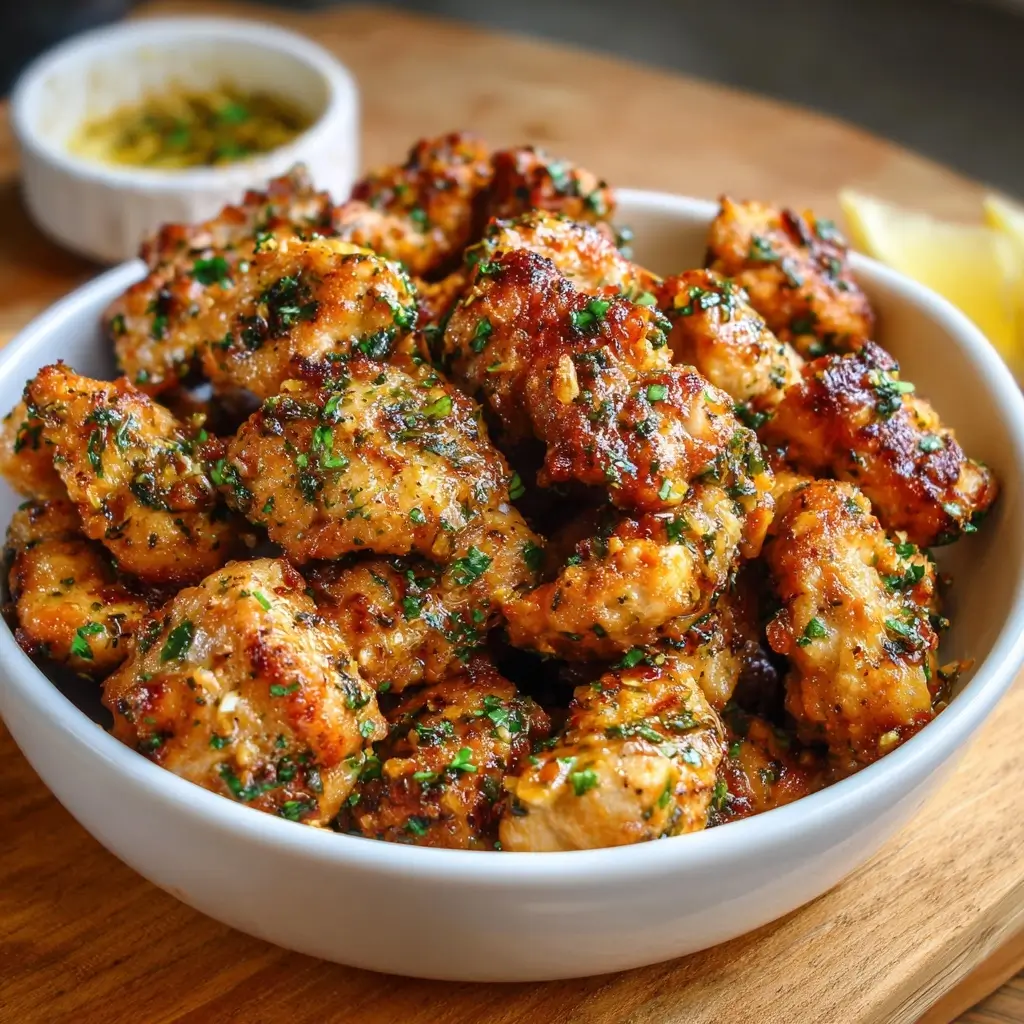
Garlic Butter Chicken Bites are a beloved, crowd-pleasing dish that marries tender, juicy chicken with the rich, aromatic depth of garlic-infused butter. Whether served as an appetizer at a lively gathering, a protein-packed weeknight dinner, or a meal-prep favorite for busy professionals, these golden-brown morsels deliver bold flavor in every bite. Their simplicity—requiring minimal ingredients and straightforward techniques—makes them accessible to cooks of all skill levels, while their versatility invites endless creativity in seasoning, sauce pairings, and presentation. More than just comfort food, Garlic Butter Chicken Bites represent the perfect balance of rustic charm and refined taste: crispy on the outside, succulent within, and luxuriously coated in a glossy, herb-flecked butter sauce that clings lovingly to each piece. This guide dives deep into every dimension of the dish—from its cultural roots and scientific cooking principles to nuanced nutritional insights and chef-level customizations—ensuring you don’t just make Garlic Butter Chicken Bites—you master them.
The History
While no single origin story defines Garlic Butter Chicken Bites, their lineage traces across centuries and continents through the evolution of two foundational culinary traditions: pan-searing and compound butter. The technique of quickly cooking small cuts of protein in hot fat dates back to medieval European kitchens, where resourceful cooks transformed less-tender poultry pieces into flavorful morsels using high-heat methods. Garlic, revered since ancient Egyptian times for both medicinal and culinary uses, became a staple in Mediterranean and later French cuisine—particularly after the 17th-century popularization of beurre composé (compound butter), where softened butter was blended with herbs, aromatics, and spices to elevate roasted or sautéed meats. In mid-20th-century America, the rise of frozen convenience foods and TV dinners introduced “chicken bites” as bite-sized, easy-to-serve proteins—but it wasn’t until the 2010s, amid the explosion of food blogging, YouTube cooking channels, and social media-driven “viral recipes,” that Garlic Butter Chicken Bites emerged as a distinct, shareable phenomenon. Influenced by Korean garlic sauces, Italian aglio e olio preparations, and Cajun-inspired spice blends, modern iterations reflect a global palate—often appearing on restaurant menus as “Garlic Parmesan Chicken Lollipops,” “Brown Butter Chicken Skewers,” or “Herb-Butter Chicken Cubes.” Today, the dish stands as a testament to culinary democratization: humble ingredients, elevated through technique and intention.
Ingredients Breakdown
Understanding each ingredient—not just its role, but its chemistry and sourcing impact—is essential to unlocking superior flavor and texture:
- Chicken Breast (or Thigh): Boneless, skinless chicken breast is most commonly used for its lean profile and clean flavor, but chicken thighs offer superior moisture retention and richer taste due to higher intramuscular fat (up to 9% vs. 3% in breast). For optimal tenderness, look for air-chilled, antibiotic-free poultry; avoid pre-brined or “enhanced” chicken, which can lead to sogginess and uneven browning.
- Unsalted Butter: Crucial for control over sodium levels and purity of flavor. European-style butter (82–86% fat) yields a silkier, more stable emulsion and deeper nuttiness when browned. Avoid margarine or plant-based spreads—they contain water and emulsifiers that inhibit proper browning and cause splattering.
- Fresh Garlic: Far superior to jarred or powdered versions. Fresh cloves contain allicin, a sulfur compound activated upon crushing or mincing that delivers pungent aroma and antimicrobial benefits. For balanced heat, finely mince (not press) and add in two stages—half early for base flavor, half at the end for bright, volatile top notes.
- Dry White Wine (optional but recommended): A splash (¼ cup) of Sauvignon Blanc or Pinot Grigio deglazes the pan, dissolving fond (caramelized bits) and adding subtle acidity and fruitiness that cuts through butter’s richness. Alcohol fully evaporates during simmering, leaving only complexity.
- Lemon Juice & Zest: Fresh-squeezed lemon juice adds brightness and balances fat, while grated zest contributes aromatic citrus oils that perfume the entire dish without added liquid.
- Fresh Herbs: Parsley is classic for its clean, grassy finish—but tarragon adds licorice nuance, chives lend mild onion sweetness, and thyme brings earthy resilience. Always add delicate herbs like parsley and chives at the very end to preserve volatile oils.
- High-Heat Cooking Oil: Avocado, grapeseed, or refined coconut oil (smoke point >450°F/232°C) ensures safe, even searing without bitter smoke. Olive oil (especially extra virgin) should be avoided for initial searing—it degrades above 375°F.
- Seasonings: Fine sea salt enhances natural flavors and aids in moisture retention via osmosis; freshly ground black pepper provides spicy terpenes (like limonene and pinene); smoked paprika adds depth without heat; a pinch of cayenne or red pepper flakes introduces controlled capsaicin warmth.
Step-by-Step Recipe
- Prep the Chicken: Pat 1.5 lbs boneless, skinless chicken breast or thighs *extremely dry* with paper towels—moisture is the enemy of browning. Cut into uniform 1–1.25 inch cubes. Place in a bowl and season generously with 1 tsp fine sea salt, ½ tsp freshly ground black pepper, ½ tsp smoked paprika, and ¼ tsp garlic powder (for baseline flavor). Toss well and let sit uncovered at room temperature for 15–20 minutes.
- Heat the Pan: Place a heavy-bottomed stainless steel or cast-iron skillet over medium-high heat for 2 minutes. Add 2 tbsp high-heat oil and swirl to coat. Heat until oil shimmers faintly (≈400°F)—a breadcrumb dropped in should sizzle vigorously but not blacken instantly.
- Sear the Chicken: Working in batches (do NOT overcrowd), add chicken in a single layer. Resist stirring for 90 seconds to allow a deep golden crust to form. Flip with tongs and sear opposite side for 75–90 seconds. Transfer to a wire rack set over a baking sheet—this prevents steaming and keeps crust crisp. Repeat with remaining chicken.
- Build the Garlic Butter Sauce: Reduce heat to medium-low. Add 6 tbsp unsalted butter, cut into cubes. Once melted, add 4 minced garlic cloves and 1 small shallot (finely diced). Sauté gently for 1 minute—do not brown garlic yet. Stir in ¼ cup dry white wine, scraping up all browned bits with a wooden spoon. Simmer 2–3 minutes until reduced by half.
- Finish & Emulsify: Return chicken to pan. Add juice of ½ lemon (≈1 tbsp), 1 tsp lemon zest, and ¼ cup low-sodium chicken broth (or water). Simmer gently for 3–4 minutes, spooning sauce over chicken. Remove from heat. Whisk in remaining 2 tbsp cold butter, one cube at a time, until sauce thickens into a velvety, cohesive emulsion. Stir in 3 tbsp finely chopped fresh parsley and 1 tbsp chives.
- Rest & Serve: Let rest 2 minutes—this allows juices to redistribute and sauce to settle. Taste and adjust: a pinch more salt brightens; a drop of lemon juice lifts; a grind of black pepper adds bite. Garnish with extra parsley, lemon wedges, and flaky Maldon salt.
Tips
- Uniformity is non-negotiable: Use a ruler or kitchen scale to ensure all chicken cubes are identical in size—this guarantees even cooking. A 1-inch cube takes ~3 minutes total cook time; a 1.5-inch cube may need 4.5 minutes, risking dryness.
- Temperature trumps time: Invest in an instant-read thermometer. Chicken is safely cooked at 165°F (74°C) *internally*, but for peak juiciness, remove at 160°F—the residual heat will carry it to 165°F in 2–3 minutes of resting.
- Butter browning science: To achieve *beurre noisette* (brown butter), cook butter past the foaming stage until milk solids turn golden amber and smell nutty (~5–6 minutes). For Garlic Butter Chicken Bites, stop *just before* browning—garlic burns easily at 300°F, so keep butter at 250–280°F for maximum flavor without bitterness.
- The “cold butter finish”: Adding chilled butter off-heat creates a stable emulsion by rapidly cooling the sauce and allowing fat globules to re-form around water particles—a technique borrowed from French sauce-making (e.g., hollandaise). This prevents greasy separation and gives luxurious mouthfeel.
- Acid timing matters: Lemon juice added too early can partially “cook” proteins and toughen surfaces. Always introduce citrus *after* chicken is cooked and sauce is nearly complete—its volatile compounds shine brightest when preserved.
- Pan selection impacts results: Stainless steel offers superior fond development and control; nonstick prevents sticking but inhibits crust formation. Cast iron retains heat beautifully but requires careful temp management to avoid garlic scorching.
- Batch cooking = better browning: Overcrowding drops pan temperature drastically, causing chicken to steam instead of sear. Fill the pan no more than ⅔ full—even if it means four small batches. Wipe the pan between batches if residue builds.
Variations and Customizations
This recipe serves as a dynamic canvas—here’s how to adapt it across cuisines, diets, and occasions:
- Asian-Inspired Umami Bomb: Replace butter with 3 tbsp toasted sesame oil + 2 tbsp neutral oil. Add 1 tbsp grated fresh ginger, 2 tbsp low-sodium tamari, 1 tbsp rice vinegar, 1 tsp honey or maple syrup, and a ½-inch knob of daikon radish (julienned). Finish with scallions, toasted sesame seeds, and micro cilantro.
- Mediterranean Herb Garden: Swap parsley for 2 tbsp each of chopped oregano and mint. Add ¼ cup crumbled feta, 2 tbsp Kalamata olives (pitted and halved), and 1 tsp lemon-thyme-infused olive oil. Serve over warm orzo or grilled pita.
- Spicy Cajun Kick: Rub chicken with 1 tbsp Cajun seasoning (paprika, cayenne, garlic/onion powder, thyme, oregano, black/white pepper). Deglaze with ¼ cup brewed strong coffee instead of wine. Finish with sliced pickled jalapeños and a drizzle of chipotle aioli.
- Creamy Dijon Version: After reducing wine, whisk in 2 tbsp Dijon mustard and ⅓ cup full-fat coconut milk or heavy cream. Simmer 2 minutes until slightly thickened. Stir in 2 tbsp capers and fresh dill.
- Low-Carb/Keto Adaptation: Skip flour dredge (if used), double butter to 12 tbsp, add ¼ cup grated aged Gouda or Parmigiano-Reggiano at the end, and serve over zucchini noodles or cauliflower rice. Track net carbs: ~2g per serving.
- Meal-Prep Friendly Batch: Cook chicken through step 3 (seared only), cool completely, and store in airtight containers for up to 4 days. Reheat gently in skillet, then prepare fresh garlic butter sauce to toss just before serving—preserves texture and vibrancy.
- Grill or Air Fryer Option: For smoky depth, thread chicken onto skewers and grill over medium coals 3–4 minutes per side. Or air fry at 400°F for 10–12 minutes, shaking halfway. Finish with sauce in a warmed bowl.
- Kid-Friendly Mild: Omit garlic powder and reduce fresh garlic to 2 cloves. Add 1 tbsp apple butter and ½ tsp ground cinnamon to sauce. Serve with honey-dipped whole grain toast sticks for dipping.
Health Considerations and Nutritional Value
A 4-ounce (113g) serving of Garlic Butter Chicken Bites (made with breast meat, 6 tbsp butter, no added starches or sugars) provides approximately:
- Calories: 320–360 kcal
- Protein: 34–37g (68–74% DV) — complete, high-biological-value protein supporting muscle synthesis and satiety
- Total Fat: 20–23g (mostly unsaturated; 12–14g saturated from butter)
- Carbohydrates: 0.5–1g (negligible; naturally occurring glycogen only)
- Sodium: 420–580mg (18–25% DV) — highly modifiable based on salt added
- Vitamin B6: 55% DV — vital for neurotransmitter production and immune function
- Selenium: 45% DV — potent antioxidant supporting thyroid health
- Vitamin A (from butter): 20% DV — supports vision and epithelial integrity
- Allicin (bioactive from garlic): Up to 5–8mg per clove — shown in studies to support cardiovascular health, reduce inflammation, and exhibit antimicrobial activity
Dietary Notes: Naturally gluten-free (verify broth/wine labels), dairy-intolerant? Substitute ghee (clarified butter, lactose-free) or vegan butter with added lecithin for emulsion stability. Low-FODMAP? Use garlic-infused oil (garlic solids removed) and omit shallots. Heart-health conscious? Reduce butter to 3 tbsp and supplement with 1 tbsp extra-virgin olive oil; increase garlic to 6 cloves for polyphenol benefits. Note: Butter’s saturated fat is not inherently harmful in moderation—current research emphasizes overall dietary pattern over isolated nutrients.
Ingredients
- 1.5 lbs boneless, skinless chicken breast or thighs, trimmed and cut into 1–1.25 inch cubes
- 2 tbsp high-smoke-point oil (avocado, grapeseed, or refined coconut)
- 6 tbsp unsalted butter, divided (4 tbsp for sauce, 2 tbsp cold for finishing)
- 4 cloves garlic, finely minced (divided: 2 cloves for early sauté, 2 for finish)
- 1 small shallot, finely diced (about ¼ cup)
- ¼ cup dry white wine (Sauvignon Blanc or Pinot Grigio)
- ¼ cup low-sodium chicken broth (or water)
- Juice and zest of ½ medium lemon (≈1 tbsp juice, 1 tsp zest)
- 3 tbsp fresh flat-leaf parsley, finely chopped
- 1 tbsp fresh chives, snipped
- 1 tsp fine sea salt (adjust to taste)
- ½ tsp freshly ground black pepper
- ½ tsp smoked paprika
- ¼ tsp garlic powder (optional, for background depth)
- Flaky sea salt (Maldon or similar) for garnish
- Lemon wedges for serving
Directions
- Pat chicken cubes extremely dry with paper towels. In a medium bowl, combine chicken, salt, pepper, smoked paprika, and garlic powder. Toss to coat evenly. Let sit at room temperature 15–20 minutes.
- Heat a 12-inch stainless steel or cast-iron skillet over medium-high heat for 2 minutes. Add 2 tbsp high-heat oil and swirl. When oil shimmers (≈400°F), add half the chicken in a single layer. Sear undisturbed 90 seconds, then flip and sear 75–90 seconds more until deeply golden. Transfer to a wire rack. Repeat with remaining chicken. Wipe skillet clean if needed.
- Reduce heat to medium-low. Add 4 tbsp butter and melt. Stir in shallot and 2 minced garlic cloves. Sauté 1 minute until fragrant but not browned.
- Pour in white wine, scraping bottom thoroughly with a wooden spoon to lift all browned bits. Simmer 2–3 minutes until reduced by half.
- Add chicken broth, lemon juice, and lemon zest. Return seared chicken to pan. Simmer gently 3–4 minutes, turning occasionally and spooning sauce over pieces.
- Remove pan from heat. Whisk in remaining 2 tbsp cold butter, one cube at a time, until fully incorporated and sauce is glossy and thickened.
- Stir in remaining 2 minced garlic cloves, parsley, and chives. Taste and adjust seasoning—add more salt, lemon, or pepper as desired.
- Let rest 2 minutes. Transfer to serving platter. Garnish with flaky salt, extra parsley, chives, and lemon wedges. Serve immediately with crusty bread, rice, roasted vegetables, or a simple arugula salad.
FAQ
- Can I use frozen chicken?
- Yes—but thaw completely in the refrigerator overnight, then pat *extremely* dry. Never cook frozen chicken directly for this recipe—it will steam rather than sear, resulting in gray, rubbery bites and broken sauce.
- Why does my garlic butter sauce break or separate?
- Sauce separation occurs when emulsion fails—usually from overheating (causing fat to separate), adding cold butter too quickly, or introducing water-based liquids too rapidly. Fix it by removing from heat, whisking in 1 tsp cold water or broth, then slowly drizzling in remaining cold butter while whisking vigorously.
- Can I make this ahead of time?
- The seared chicken holds well refrigerated for up to 4 days. However, the garlic butter sauce is best made fresh—its volatile aromatics and delicate emulsion degrade upon reheating. Prep components separately and combine just before serving.
- What’s the best side dish pairing?
- For contrast: creamy mashed potatoes, buttered egg noodles, or polenta absorb sauce luxuriously. For freshness: lemon-dressed kale salad, blistered cherry tomatoes, or shaved fennel slaw. For crunch: toasted baguette slices, pita chips, or roasted chickpeas.
- Can I bake these instead of pan-searing?
- Baking yields decent results but sacrifices crust and fond. For best outcome: preheat oven to 425°F. Toss chicken in 1 tbsp oil, salt, and pepper. Roast on parchment-lined sheet 15–18 minutes, flipping halfway, until 160°F internal. Then finish in skillet with sauce.
- Is there a dairy-free version?
- Absolutely. Use high-quality vegan butter with lecithin (e.g., Miyoko’s or Earth Balance Vegan Buttery Sticks). Add 1 tsp nutritional yeast for umami depth. Ensure broth and wine are certified vegan.
- How do I prevent the garlic from burning?
- Use medium-low heat, add garlic *after* shallots soften (1 minute), stir constantly, and never walk away. If pan feels hot, lift it briefly off heat. Remember: garlic burns in under 30 seconds at high temps.
- Can I double this recipe?
- Yes—but use two skillets or prepare in multiple batches. Doubling ingredients in one pan causes overcrowding, temperature drop, and inconsistent results. Sauce can be safely doubled in one pan if you maintain gentle heat.
- What wine substitutions work if I don’t cook with alcohol?
- Use ¼ cup unsweetened apple juice + 1 tsp white wine vinegar, or ¼ cup low-sodium chicken broth + ½ tsp lemon juice. Both mimic acidity and fruitiness without ethanol.
- My chicken turned out dry—what went wrong?
- Most common causes: overcooking (check temp!), using pre-brined chicken (retains excess water that steams out), skipping the room-temp rest (cold chicken lowers pan temp drastically), or cutting pieces too small (<¾ inch). Also, chicken breast dries faster than thigh—consider swapping next time.
Summary
Garlic Butter Chicken Bites are a masterclass in minimalist elegance—transforming humble chicken, butter, and garlic into a deeply flavorful, texturally captivating dish through precise technique, thoughtful ingredient selection, and intentional layering of aromatics and acid. With its adaptable foundation, global inspiration, and nutritionally robust profile, this recipe empowers home cooks to create restaurant-worthy results with confidence, creativity, and joy—every single time.