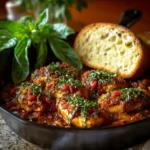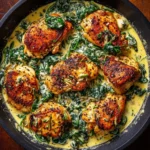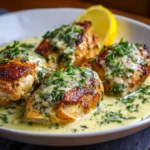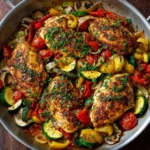
Introduction
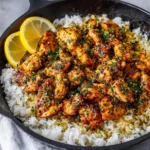
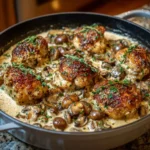
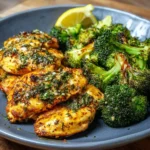
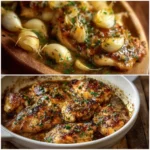
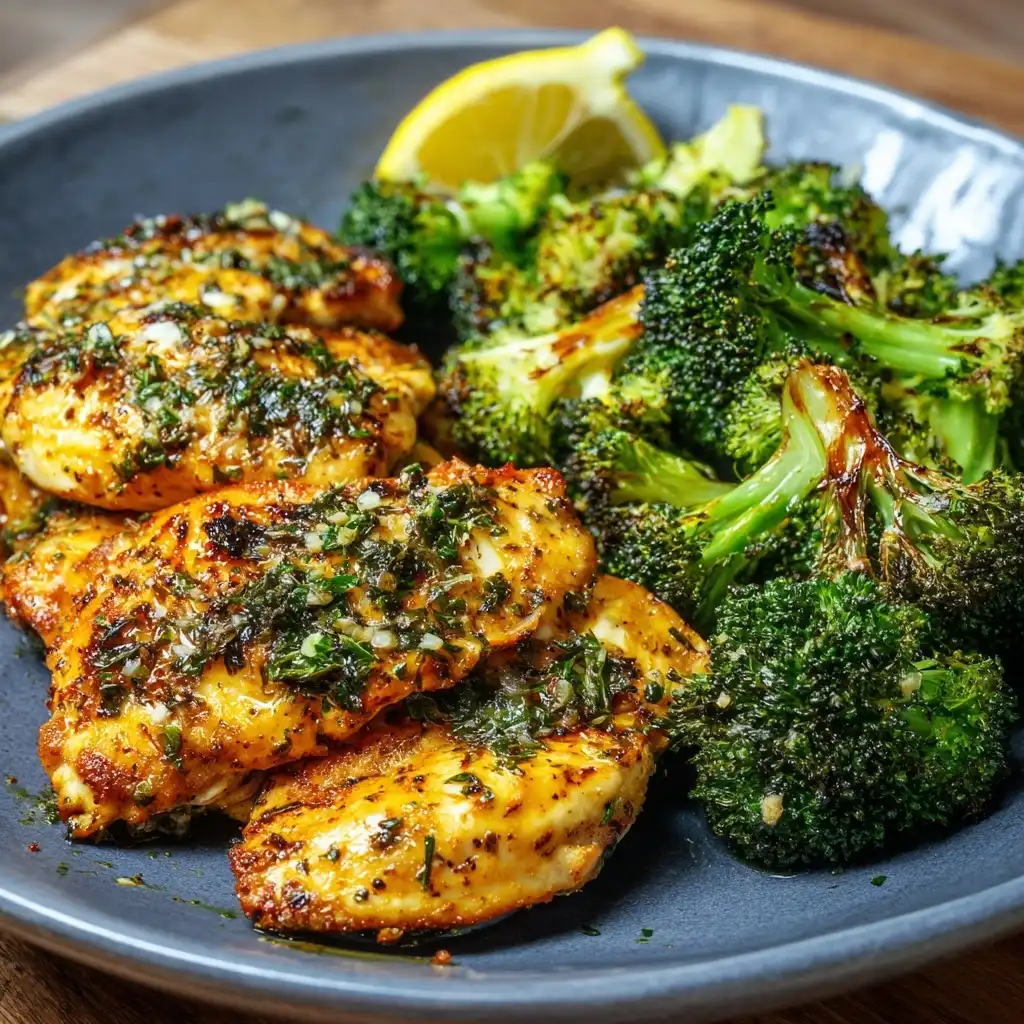
Garlic Butter Chicken and Roasted Broccoli is a timeless, restaurant-quality weeknight dinner that effortlessly balances rich, savory depth with vibrant, earthy freshness. This beloved one-pan (or two-pan) meal marries tender, golden-brown chicken breasts or thighs—infused with aromatic garlic, silky melted butter, and a hint of lemon—with crisp-tender, caramelized broccoli florets kissed by olive oil, sea salt, and roasted to nutty perfection. Simple enough for beginner cooks yet elegant enough to serve guests, it’s the epitome of wholesome comfort food: deeply flavorful without being heavy, nutritionally balanced without sacrificing satisfaction, and endlessly adaptable to dietary preferences and pantry availability. Whether you’re meal prepping for the week, feeding a busy family, or treating yourself to a nourishing solo dinner, this dish delivers consistent excellence—every single time.
The History
While no single chef or region can claim exclusive authorship of Garlic Butter Chicken, its roots trace back to centuries-old culinary traditions where butter, garlic, and poultry converged across European and Mediterranean kitchens. In 19th-century France, poulet à la crème and poulet rôti à l’ail laid early groundwork—roasting chicken with garlic cloves and enriching pan drippings with dairy. Italian pollo al burro e aglio further refined the technique, emphasizing browned butter and fresh herbs. The modern American iteration gained momentum in the mid-20th century, buoyed by the post-war rise of accessible refrigerated butter, mass-produced garlic powder (though fresh garlic remained preferred), and the popularity of “butter-basted” proteins on cooking shows and in women’s magazines. Roasted broccoli, once relegated to steamed side-dish status, experienced a renaissance in the 2000s alongside the whole-foods movement and the viral success of high-heat roasting—championed by chefs like Thomas Keller (who famously elevated broccoli by roasting it at 450°F with olive oil and Maldon salt) and home-cooking influencers who demonstrated how proper roasting transforms broccoli from bland to bold, with sweet, charred edges and deep umami notes. Together, Garlic Butter Chicken and Roasted Broccoli coalesced into a signature duo—a harmonious plate where protein and vegetable share complementary fat profiles, Maillard-driven complexity, and herbaceous brightness—becoming a staple in meal-planning blogs, dietitian-recommended menus, and even hospital wellness cafeterias.
Ingredients Breakdown
For the Garlic Butter Chicken:
• Chicken: Boneless, skinless chicken breasts (for lean tenderness) or thighs (for juicier, more forgiving texture and higher collagen content). Breasts should be pounded to ½-inch uniform thickness to ensure even cooking; thighs benefit from slightly longer roasting but yield richer flavor.
• Unsalted Butter: High-fat (82%+), European-style butter preferred for superior browning and nutty aroma when cooked. Salted butter may be used—but adjust added salt accordingly.
• Fresh Garlic: 6–8 large cloves, finely minced or pressed—never powdered or jarred—for pungent, floral heat that mellows and sweetens as it cooks. Roasted garlic paste may be substituted for a deeper, caramelized nuance.
• Dry White Wine (optional but recommended): ¼ cup Sauvignon Blanc or Pinot Grigio adds acidity and deglazes the pan, lifting fond and building a glossy, complex sauce.
• Lemon: Zest (for aromatic oils) and juice (for bright acidity that cuts through richness)—both essential for balance.
• Fresh Herbs: Flat-leaf parsley (stems reserved for stock, leaves finely chopped), plus optional thyme sprigs or rosemary needles for woodsy undertones.
• High-Heat Oil: Avocado, grapeseed, or light olive oil—high smoke point ensures golden sear without burning.
• Seasonings: Fine sea salt (like Diamond Crystal), freshly ground black pepper, and a whisper of smoked paprika or onion powder for layered warmth.
For the Roasted Broccoli:
• Broccoli: 1–1.5 lbs of fresh, dark green crowns with tight, compact florets and firm stalks. Stems are edible—peel fibrous outer layer and slice thinly for roasting or reserve for slaws/soups.
• Olive Oil: Extra-virgin, cold-pressed for optimal flavor—coats evenly and promotes caramelization without overpowering.
• Acid Finish: A splash of apple cider vinegar, lemon juice, or sherry vinegar tossed post-roast enhances brightness and preserves vibrant green hue.
• Umami Boosters: Nutritional yeast (vegan “cheesy” note), grated Parmigiano-Reggiano (added in final 2 minutes), or toasted sesame seeds for nuttiness and crunch.
• Spice & Heat: Crushed red pepper flakes, Aleppo pepper, or a pinch of cayenne for gentle warmth; optional harissa paste for North African flair.
• Aromatics: Minced shallots or red onion wedges roasted alongside broccoli for sweetness and complexity.
Step-by-Step Recipe
- Prep & Marinate (15 minutes): Pat chicken dry with paper towels—critical for browning. Pound breasts to ½-inch thickness using a meat mallet or rolling pin. Season both sides generously with salt, pepper, and smoked paprika. Let rest at room temperature 10 minutes. Meanwhile, trim broccoli: cut florets into even 1.5-inch pieces; peel and slice stems diagonally into ¼-inch rounds. Toss broccoli with 3 tbsp olive oil, 1 tsp salt, ½ tsp black pepper, and optional red pepper flakes. Spread in a single layer on a parchment-lined half-sheet pan.
- Roast the Broccoli (20–25 minutes): Preheat oven to 425°F (220°C). Place broccoli pan in oven’s upper third rack. Roast 12 minutes, then rotate pan front-to-back. Continue roasting 8–13 minutes until edges are deeply golden, undersides are crisp, and stems pierce easily with a fork but retain bite. Remove and tent loosely with foil. Increase oven temp to 450°F for chicken sear.
- Sear the Chicken (6–8 minutes): Heat 1.5 tbsp high-heat oil in a heavy, oven-safe stainless steel or cast-iron skillet over medium-high heat until shimmering. Add chicken smooth-side down; press gently with spatula. Sear undisturbed 4–5 minutes until deeply golden and release easily. Flip and sear second side 2–3 minutes until just cooked through (160°F internal temp for breasts; 175°F for thighs). Transfer to a clean plate; tent with foil. Rest 5 minutes—this allows juices to redistribute.
- Build the Garlic Butter Sauce (5 minutes): Reduce heat to medium-low. Pour off excess oil, leaving ~1 tsp. Add minced garlic and sauté 30 seconds until fragrant—do not brown. Pour in white wine, scraping vigorously with wooden spoon to lift all browned bits (fond). Simmer 1–2 minutes until reduced by half. Whisk in cold butter, 1 tbsp at a time, allowing each addition to emulsify before adding next. Stir in lemon zest, juice, and half the parsley. Optional: swirl in 1 tsp Dijon mustard for extra body and tang.
- Finish & Plate (3 minutes): Return rested chicken to skillet, spooning sauce over top. Cook 1 minute to warm through. Arrange roasted broccoli alongside or beneath chicken. Drizzle with remaining sauce, garnish with remaining parsley, lemon wedges, and flaky sea salt. Serve immediately.
Tips
- Never skip the dry patting: Moisture is the enemy of browning—wet chicken steams instead of sears. Use multiple paper towels and press firmly.
- Pound with purpose: Place chicken between two sheets of plastic wrap or parchment. Start from center and move outward in even strokes—avoid thinning edges excessively.
- Control garlic burn: Garlic burns at 300°F. Always add it after fond is lifted and wine has mostly evaporated—or cook it separately in butter over low heat first, then combine.
- Butter emulsion science: Cold butter + warm (not hot) liquid + constant whisking = stable, velvety sauce. If sauce breaks, remove from heat and whisk in 1 tsp cold water or lemon juice.
- Roast broccoli on the hottest shelf: Upper rack positioning maximizes convection and crisping—lower racks produce steam and sogginess.
- Don’t crowd the pan: Overcrowding drops oven temp and causes steaming. Use two pans if needed—or roast broccoli in batches.
- Rest chicken before saucing: Skipping rest leads to dry meat as juices leak out when sliced. Resting locks in moisture for succulent results.
- Acid is non-negotiable: Lemon juice or vinegar added *after* roasting—not before—preserves brightness and prevents oxidation of green pigments.
- Save the scraps: Broccoli stems, herb stems, and chicken trimmings make exceptional vegetable stock—simmer 1 hour with onion, carrot, celery, peppercorns, and bay leaf.
- Reheat smartly: To revive leftovers: warm chicken gently in skillet with 1 tsp broth or water; re-crisp broccoli on air fryer at 375°F for 4 minutes.
Variations and Customizations
Dietary Adaptations:
• Gluten-Free: Naturally compliant—just verify wine and broth (if used) are GF-certified.
• Dairy-Free: Substitute butter with high-quality vegan butter (Miyoko’s or Forager) or ghee (clarified butter, lactose-free). Add 1 tsp nutritional yeast to sauce for depth.
• Keto/Low-Carb: Already ideal—broccoli is only 3.6g net carbs per cup. Boost fat with extra butter or a dollop of sour cream.
• Paleo/Whole30: Replace butter with ghee or avocado oil; omit wine (use chicken broth + 1 tsp apple cider vinegar) and skip cheese garnishes.
• Vegan Option: Swap chicken for king oyster mushrooms (sliced thick, marinated in tamari, garlic, and maple) or pressed, baked tofu. Use vegan butter and miso paste for umami richness.
Flavor Twists:
• Mediterranean: Add sun-dried tomatoes, kalamata olives, crumbled feta, and oregano to sauce.
• Asian-Inspired: Replace lemon with yuzu or rice vinegar; use ginger-garlic paste, tamari instead of salt, and finish with scallions and toasted sesame oil.
• Herbes de Provence: Infuse butter with dried lavender, thyme, rosemary, and savory; garnish with lemon thyme.
• Spicy Harissa: Whisk 1 tbsp harissa into melted butter before adding to pan; top with preserved lemon and cilantro.
• Creamy Dijon: Stir in 1 tbsp whole-grain Dijon and 2 tbsp crème fraîche at the end for luxurious tang.
Protein Swaps:
• Chicken thighs (bone-in or boneless), turkey cutlets, pork tenderloin medallions, salmon fillets (sear skin-side down first), or shrimp (add in last 2 minutes of sauce).
Veggie Alternatives:
• Cauliflower florets, asparagus spears, Brussels sprouts (halved), zucchini ribbons, or rainbow carrots—adjust roasting times accordingly (carrots need 30+ mins; asparagus only 12–15).
Health Considerations and Nutritional Value
This dish exemplifies nutrient-dense, balanced eating—combining high-quality lean protein, fiber-rich cruciferous vegetables, heart-healthy monounsaturated fats, and bioactive phytochemicals. A standard serving (1 breast + 1.25 cups broccoli) provides approximately:
• Calories: 420–480 kcal
• Protein: 42–48g (supporting muscle synthesis, satiety, and metabolic health)
• Fat: 24–28g (primarily unsaturated; butter contributes beneficial CLA and butyrate—especially in grass-fed varieties)
• Carbohydrates: 12–15g (with 6–8g dietary fiber from broccoli—nearly 30% of daily needs)
• Vitamins & Minerals: Exceptional levels of Vitamin C (180% DV), Vitamin K (320% DV), folate (45% DV), potassium (25% DV), and sulforaphane—a potent anti-inflammatory and detox-supportive compound activated when broccoli is chopped and lightly cooked.
• Low Sodium: At ~480mg per serving (without added table salt), well within AHA guidelines (<2,300mg/day).
• Glycemic Impact: Low glycemic load (GL ≈ 4), making it ideal for blood sugar management.
Considerations:
• Those with lactose intolerance may tolerate small amounts of butter (low-lactose), but ghee or dairy-free alternatives are safer options.
• Individuals managing cholesterol should enjoy butter in moderation—prioritize grass-fed sources and pair with fiber-rich broccoli to support bile acid excretion.
• For hypertension, emphasize potassium-rich broccoli and limit added sodium—rely on herbs, citrus, and umami spices instead.
• Sulforaphane bioavailability increases when broccoli is chopped 40 minutes before cooking—allowing myrosinase enzyme activation—and paired with a small amount of mustard seed powder (a myrosinase source) if boiled or microwaved.
Ingredients
For the Garlic Butter Chicken:
• 2 (6–8 oz) boneless, skinless chicken breasts, pounded to ½-inch thickness
• 3 tbsp unsalted butter, cold and cubed
• 6–8 garlic cloves, finely minced (about 2 tbsp)
• ¼ cup dry white wine (e.g., Sauvignon Blanc)
• 1 tbsp fresh lemon juice (from ~½ lemon)
• 1 tsp lemon zest
• 2 tbsp finely chopped fresh flat-leaf parsley, plus extra for garnish
• 1½ tbsp high-heat oil (avocado or grapeseed)
• 1 tsp fine sea salt, plus more to taste
• ½ tsp freshly ground black pepper
• Optional: ¼ tsp smoked paprika, 1 tsp Dijon mustard
For the Roasted Broccoli:
• 1.25 lbs fresh broccoli, florets and peeled stems cut into even pieces
• 3 tbsp extra-virgin olive oil
• 1 tsp fine sea salt
• ½ tsp freshly ground black pepper
• ¼ tsp crushed red pepper flakes (optional)
• 1 tbsp fresh lemon juice or apple cider vinegar (for finishing)
• Flaky sea salt and grated Parmigiano-Reggiano for serving (optional)
Directions
- Preheat oven to 425°F (220°C). Line a large rimmed baking sheet with parchment paper.
- In a large bowl, toss broccoli with 3 tbsp olive oil, 1 tsp salt, ½ tsp black pepper, and red pepper flakes (if using) until evenly coated. Spread in a single layer on prepared sheet. Roast for 12 minutes.
- Meanwhile, heat 1½ tbsp high-heat oil in a large oven-safe skillet over medium-high heat. Season chicken with salt, pepper, and smoked paprika. When oil shimmers, place chicken in skillet smooth-side down. Press gently and sear 4–5 minutes until deeply golden. Flip and sear 2–3 minutes more until cooked through (160°F internal). Transfer to plate; tent with foil. Rest 5 minutes.
- Rotate broccoli pan front-to-back and continue roasting 8–13 minutes until crisp-edged and tender-crisp. Remove from oven; tent with foil.
- Reduce skillet heat to medium-low. Pour off excess oil, leaving ~1 tsp. Add minced garlic; sauté 30 seconds until fragrant. Pour in wine, scraping up browned bits. Simmer 1–2 minutes until reduced by half.
- Whisk in cold butter, one cube at a time, until fully melted and sauce is glossy. Stir in lemon zest, lemon juice, and 2 tbsp parsley. Optional: whisk in Dijon.
- Return rested chicken to skillet, spooning sauce over top. Warm 1 minute.
- Arrange roasted broccoli on a serving platter or individual plates. Top with chicken, drizzle with remaining sauce, and garnish with lemon wedges, flaky salt, remaining parsley, and Parmigiano-Reggiano if desired. Serve immediately.
FAQ
- Can I use frozen broccoli?
- Yes—but thaw completely and pat *extremely* dry. Frozen broccoli contains excess water, which inhibits caramelization and yields steamed, mushy results. Fresh is strongly recommended for texture and nutrient retention.
- Why does my garlic butter sauce break or look greasy?
- Most commonly due to overheating the butter or adding it too quickly. Ensure the wine reduction is warm—not boiling—and whisk constantly while incorporating cold butter cubes one at a time. If broken, remove from heat and whisk in 1 tsp cold water or lemon juice to re-emulsify.
- Can I make this ahead of time?
- Absolutely. Roast broccoli and sear chicken up to 2 days ahead; store separately in airtight containers in the fridge. Reheat broccoli in air fryer or oven; warm chicken in skillet with 1 tsp broth, then prepare fresh garlic butter sauce to finish.
- Is there a way to make this in one pan for true minimal cleanup?
- Yes! After searing chicken, remove it and roast broccoli directly in the same skillet (if oven-safe to 450°F). Then return chicken, pour in wine, and build sauce—all in one vessel. Just ensure your skillet is heavy-duty and handles are heat-resistant.
- What’s the best wine substitute if I don’t cook with alcohol?
- Use ¼ cup low-sodium chicken broth + 1 tsp apple cider vinegar or white wine vinegar. The acidity mimics wine’s role in balancing richness and deglazing.
- My chicken always dries out—how do I prevent that?
- Three keys: (1) Pound to uniform thickness; (2) Pull chicken at 160°F (it rises to 165°F while resting); (3) Rest 5–7 minutes before slicing. Brining (30 min in 1 qt water + 2 tbsp salt) also adds moisture security.
- Can I air fry the broccoli instead of roasting?
- Yes! Toss broccoli as directed, then air fry at 400°F for 12–15 minutes, shaking basket every 4 minutes. It will be even crispier—but watch closely to avoid burning.
- How do I store and reheat leftovers safely?
- Store in separate airtight containers for up to 4 days. Reheat chicken gently in skillet with splash of broth. Re-crisp broccoli separately in oven (400°F, 8 min) or air fryer (375°F, 4–5 min). Do not microwave broccoli—it turns rubbery.
- Is broccoli better raw or roasted for nutrition?
- Both offer unique benefits. Raw broccoli retains more myrosinase (enzyme needed to activate sulforaphane), while roasting boosts antioxidant capacity (quercetin, kaempferol) and improves absorption of fat-soluble vitamins (A, E, K). For maximum benefit, chop raw broccoli and let sit 40 minutes before roasting—or serve a mix of raw florets on the side.
- Can I freeze this dish?
- Chicken freezes well for up to 3 months (cool completely before freezing). Broccoli does *not* freeze well—texture becomes grainy and watery upon thawing. Freeze chicken only, and roast fresh broccoli when reheating.
Summary
Garlic Butter Chicken and Roasted Broccoli is a masterclass in simple, soul-satisfying cooking—where golden, herb-kissed chicken bathed in luxuriously aromatic garlic butter meets deeply caramelized, vibrant broccoli with crackling edges and tender-crisp stems. It’s nutritionally brilliant, endlessly customizable, and built for real life: weeknight efficiency, gourmet appeal, and the kind of comforting flavor that lingers long after the last bite.
Whether you’re nourishing your family, impressing guests, or simply honoring your own well-being with honest, whole-food ingredients, this dish delivers on every promise—taste, texture, health, and joy—without compromise or complication.