Introduction
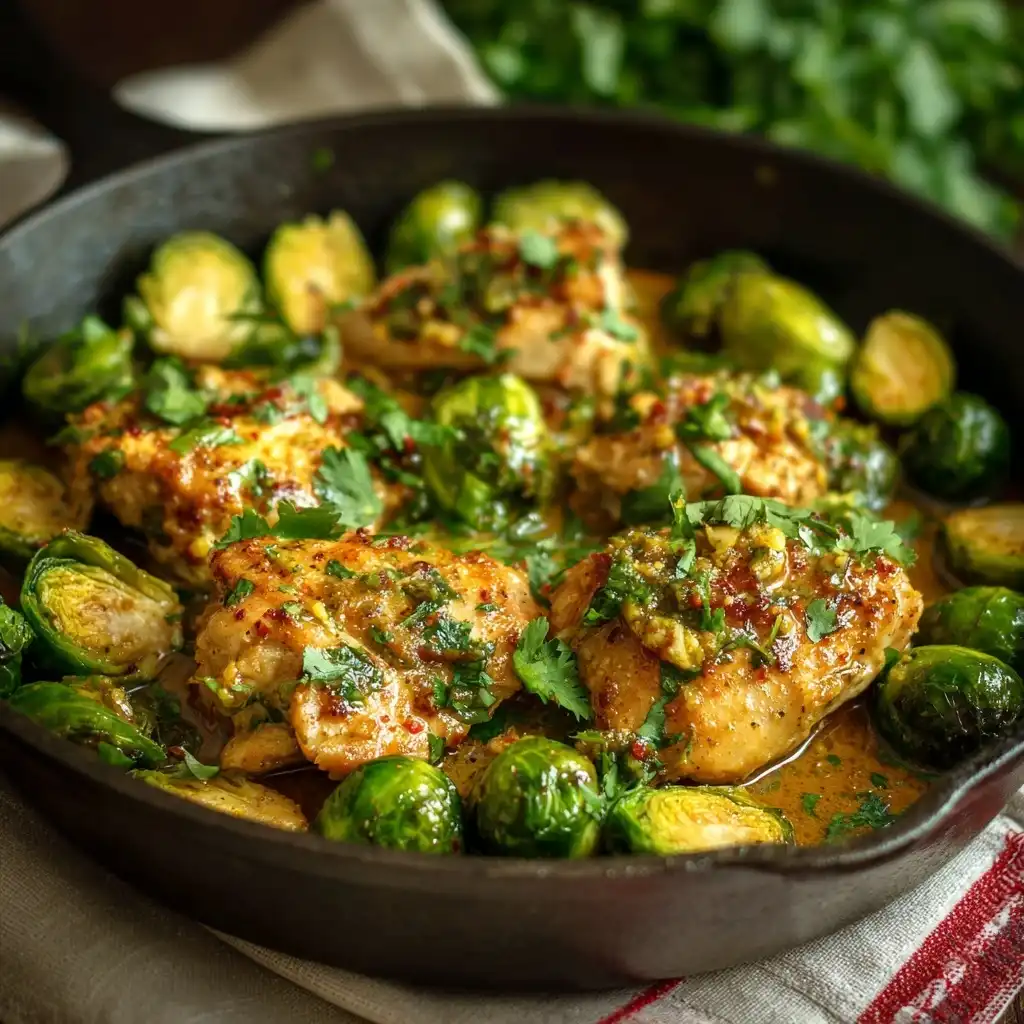
Garlic Butter Chicken and Brussels Sprouts is a harmonious, restaurant-worthy one-pan dinner that delivers bold flavor, satisfying texture, and effortless elegance—all in under 40 minutes. This dish marries tender, golden-brown chicken breasts (or thighs) with caramelized, crispy-edged Brussels sprouts, all luxuriously coated in a rich, aromatic garlic butter sauce infused with fresh herbs, lemon zest, and a subtle depth of umami. It’s the kind of meal that feels indulgent yet nourishing—perfect for weeknight dinners, Sunday suppers, or impressing guests without stress. Whether you’re a seasoned home cook or just beginning your culinary journey, this recipe is approachable, adaptable, and deeply rewarding. Its balance of savory, sweet, tangy, and earthy notes makes it a standout favorite that consistently earns second helpings—and requests for the recipe.
The History
While no single “inventor” claims Garlic Butter Chicken and Brussels Sprouts as a formal culinary milestone, its roots trace across multiple food traditions that converged in modern American home kitchens during the late 20th and early 21st centuries. Garlic butter—a classic French beurre composé—has long been used to finish proteins and vegetables, notably in dishes like poulet à l’ail and haricots verts à la française. Brussels sprouts, native to Belgium and cultivated since the 13th century, were historically polarizing in North America due to overcooking and bitterness—but their renaissance began in the 2000s, fueled by improved cultivars (like ‘Jade Cross’ and ‘Long Island Improved’), widespread adoption of high-heat roasting techniques, and chef-driven reinventions on menus from Portland to Brooklyn. Meanwhile, the rise of sheet-pan and skillet-to-table cooking—popularized by food blogs, TV personalities like Ina Garten and Ree Drummond, and viral social media content—created the perfect ecosystem for this dish to flourish. Its synergy of timing (chicken and sprouts share ideal roasting temps), flavor layering (garlic + butter + acid + herb), and visual appeal (golden crust, vibrant green spears, glossy sheen) made it a staple in meal-prep guides, keto and paleo communities, and even dietitian-recommended balanced eating plans. Today, it stands not just as a recipe—but as a cultural signifier of mindful, flavorful, unfussy home cooking.
Ingredients Breakdown
Every element in this dish serves a precise purpose—no filler, no afterthoughts. Here’s why each ingredient matters:
- Chicken breasts (or boneless, skinless thighs): Lean, quick-cooking, and protein-rich. Breasts offer mild flavor and firm texture; thighs bring juiciness and deeper savoriness—ideal for longer roasting or meal prep. Pounding to even thickness ensures uniform cooking and prevents dryness.
- Brussels sprouts: Choose firm, compact, bright green heads with tightly furled leaves and minimal yellowing or loose outer leaves. Smaller sprouts (1–1.5 inches in diameter) caramelize more evenly and have less fibrous cores. Trimming the stem end and halving exposes more surface area for browning and allows heat to penetrate the dense center.
- Unsalted butter: Provides richness, mouthfeel, and emulsifying power. Unsalted gives full control over sodium levels—critical when pairing with salty ingredients like Parmesan or soy sauce (in variations). Brown butter adds nutty complexity; clarified butter raises the smoke point for higher-heat searing.
- Fresh garlic: Far superior to jarred or powdered—its volatile sulfur compounds (allicin) deliver pungent aroma and health-promoting properties. Minced finely (not pasted) ensures even distribution without burning. Roasting mellows its sharpness into sweetness.
- Extra-virgin olive oil: Used primarily for initial searing and roasting—its polyphenols enhance antioxidant capacity and contribute peppery fruit notes. Opt for a mid-range EVOO (not ultra-premium for high-heat use) with a smoke point around 375–410°F.
- Fresh thyme and/or rosemary: Earthy, piney, and subtly floral—these hardy herbs stand up to roasting and complement both poultry and cruciferous vegetables. Stems add aroma during cooking; leaves garnish at the end for freshness.
- Lemon juice and zest: Juice adds brightness and cuts through fat; zest contributes essential oils with intense citrus fragrance—both heighten perception of other flavors and balance richness.
- Grated Parmesan cheese (optional but recommended): Adds umami depth, saltiness, and a delicate crystalline crunch. Use authentic Parmigiano-Reggiano for best flavor and texture—avoid pre-grated versions with anti-caking agents.
- Kosher salt and freshly ground black pepper: Kosher salt adheres better and seasons more evenly than fine table salt; freshly cracked pepper delivers volatile aromatic compounds lost in pre-ground versions.
Step-by-Step Recipe
- Prep & Preheat: Position oven rack in the upper third. Preheat oven to 425°F (220°C). Line a large rimmed baking sheet with parchment paper or foil (for easy cleanup); lightly grease with olive oil or butter.
- Prepare the Chicken: Pat chicken breasts *very* dry with paper towels—this is non-negotiable for proper searing. Place between two sheets of parchment and gently pound to ½-inch uniform thickness using a meat mallet or heavy skillet. Season both sides generously with ¾ tsp kosher salt and ¼ tsp black pepper.
- Prep the Brussels Sprouts: Trim stem ends, remove any discolored or loose outer leaves, and cut each sprout in half lengthwise. Rinse well and spin dry (excess water causes steaming, not roasting). Toss in a large bowl with 1½ tbsp olive oil, ½ tsp salt, ¼ tsp pepper, and 1 tsp chopped fresh thyme leaves.
- Initial Roast (Sprouts First): Spread Brussels sprouts in a single layer on the prepared sheet pan, cut-side down for maximum caramelization. Roast for 15 minutes—this jumpstarts browning while the chicken preps.
- Sear the Chicken: While sprouts roast, heat 1 tbsp olive oil in a large stainless steel or cast-iron skillet over medium-high heat until shimmering. Add chicken and cook undisturbed for 4–5 minutes until deeply golden and easily releases from the pan. Flip and cook 3–4 minutes more until internal temperature reaches 155°F (68°C) at the thickest part (carryover cooking will bring it to 165°F). Transfer to a clean plate and tent loosely with foil.
- Combine & Finish Roasting: Remove sprouts from oven. Push them to the outer edges of the pan, creating space in the center. Nestle seared chicken into the center. Return pan to oven and roast together for 8–10 minutes—until chicken hits 165°F and sprouts are deeply caramelized at the edges with tender-but-not-mushy centers.
- Make the Garlic Butter Sauce: In the same skillet used for chicken (off heat), melt 4 tbsp unsalted butter over low heat. Add 4 minced garlic cloves and cook gently for 1 minute—do not brown. Stir in 1 tbsp fresh lemon juice, 1 tsp lemon zest, 1 tbsp chopped fresh parsley, and optional 2 tbsp grated Parmesan. Swirl until glossy and fragrant.
- Glaze & Serve: Remove pan from oven. Spoon garlic butter sauce evenly over chicken and sprouts, using a spoon or brush to coat thoroughly. Let rest 3–5 minutes—this allows juices to redistribute and sauce to settle. Garnish with extra parsley, flaky sea salt, and a final twist of lemon if desired.
Tips
- Dry chicken = golden crust. Moisture is the enemy of Maillard reaction. Pat chicken *twice*: once before pounding, once after.
- Don’t crowd the pan. Overlapping sprouts steam instead of roast. Use two pans if needed—or roast sprouts first, then add chicken to avoid overcrowding.
- Use an instant-read thermometer. Visual cues alone are unreliable. Pull chicken at 155°F—it will rise to safe 165°F while resting.
- Minimize garlic burn. Garlic burns at ~300°F. Always add it to butter *off direct heat* or after reducing stove temp to low.
- Boost browning with cornstarch. For ultra-crispy chicken: toss pounded breasts in 1 tsp cornstarch + ¼ tsp salt before searing—creates a delicate, golden crust.
- Roast sprouts cut-side down. This maximizes contact with hot pan surface, yielding deep caramelization and creamy interiors.
- Reserve lemon juice until the end. Adding acid too early can toughen proteins and dull herb flavors. Brightness belongs at service.
- Let it rest. Skipping the 3–5 minute rest sacrifices juiciness. Those precious juices stay in the meat—not in the pan.
- Scrape the pan fond. After searing chicken, deglaze the skillet with 1 tbsp white wine or broth before making the garlic butter—adds incredible depth.
- Double the garlic butter sauce. Make extra—it’s phenomenal on crusty bread, roasted potatoes, grilled shrimp, or drizzled over grain bowls.
Variations and Customizations
This recipe is a canvas—adaptable to dietary needs, seasonal produce, pantry staples, and global flavor profiles:
- Low-Carb/Keto: Keep as-is—it’s naturally low in carbs (<5g net per serving). Boost healthy fats with 1 tbsp toasted pine nuts or sliced almonds tossed in at the end.
- Paleo/Whole30: Swap butter for ghee or avocado oil. Replace Parmesan with nutritional yeast (1 tbsp) for cheesy umami. Ensure all seasonings are compliant (e.g., no sugar in spice blends).
- Vegetarian/Vegan: Substitute chicken with large portobello caps (marinated in balsamic + tamari + garlic), extra-firm tofu cubes (pressed & air-fried first), or seitan strips. Use vegan butter and nutritional yeast; add 1 tsp miso paste to sauce for depth.
- Spicy Kick: Add ¼ tsp red pepper flakes to the sprout toss, or stir 1 tsp harissa or sriracha into the garlic butter sauce.
- Mediterranean Twist: Add ¼ cup kalamata olives, 2 tbsp crumbled feta, and 1 tsp dried oregano. Finish with a drizzle of good-quality Greek olive oil.
- Asian-Inspired: Replace lemon with rice vinegar + lime juice; swap thyme for 1 tsp grated ginger + 1 scallion (thinly sliced). Add 1 tbsp low-sodium tamari and 1 tsp sesame oil to the sauce. Top with toasted sesame seeds.
- Herb Garden Edition: Use equal parts chopped basil, chives, dill, and parsley. Add 1 tbsp capers for briny brightness.
- Meal Prep Friendly: Roast components separately (chicken at 375°F for 20–25 min; sprouts at 425°F for 25 min). Store chilled for up to 4 days. Reheat in skillet with a splash of broth and fresh garlic butter.
- Sheet-Pan Only (No Skillet): Sear chicken directly on the preheated sheet pan under the broiler for 3–4 minutes per side before roasting with sprouts—requires careful monitoring but eliminates dishwashing.
- Breakfast-for-Dinner Version: Top finished dish with a 6-minute poached egg—the runny yolk becomes part of the sauce.
Health Considerations and Nutritional Value
Per standard serving (1 boneless, skinless chicken breast ~6 oz + 1 cup roasted Brussels sprouts + 2 tbsp garlic butter sauce), this dish delivers exceptional macro- and micronutrient density:
- Protein Powerhouse: ~42g high-quality complete protein supports muscle synthesis, satiety, and metabolic health. Chicken provides B6, niacin, and selenium—critical for energy metabolism and antioxidant defense.
- Fiber & Phytonutrients: Brussels sprouts supply ~4g fiber (20% DV), plus glucosinolates (sulforaphane precursors) linked to reduced inflammation and cellular detox support. They’re also rich in vitamins C (137% DV), K (195% DV), and folate.
- Heart-Healthy Fats: Butter contains conjugated linoleic acid (CLA) and butyrate—anti-inflammatory short-chain fatty acids. Olive oil contributes monounsaturated fats and polyphenols shown to improve endothelial function and LDL oxidation resistance.
- Antioxidant Synergy: Garlic enhances nitric oxide production (supporting blood flow); lemon bioflavonoids boost vitamin C absorption; rosemary contains carnosic acid—a potent neuroprotective antioxidant.
- Sodium Awareness: Total sodium hovers around 480mg/serving (without added Parmesan)—well within AHA guidelines (<2,300mg/day). Reduce further by omitting added salt and relying on herb/lemon seasoning.
- Glycemic Impact: Low glycemic load (<5)—ideal for blood sugar management. Pair with quinoa or farro for balanced macros if seeking complex carbs.
- Cautions: Those with IBS may wish to limit raw garlic or increase cooking time to reduce FODMAPs. Butter-sensitive individuals can use ghee or high-oleic sunflower oil. Always choose organic, pasture-raised chicken when possible to minimize antibiotic/hormone exposure.
Nutritionally, this dish exemplifies the “whole-food, plant-forward with lean protein” model endorsed by the Harvard Healthy Eating Plate and Mediterranean Diet principles—proving that flavor and wellness need never compromise.
Ingredients
- 2 (6–7 oz) boneless, skinless chicken breasts (or 3 thighs), pounded to ½-inch thickness
- 1 lb (about 4 cups) fresh Brussels sprouts, trimmed and halved
- 3 tbsp extra-virgin olive oil, divided
- 1¼ tsp kosher salt, divided
- ½ tsp freshly ground black pepper, divided
- 4 tbsp unsalted butter
- 4 garlic cloves, finely minced
- 1 tbsp fresh lemon juice (from ~½ lemon)
- 1 tsp lemon zest
- 1 tbsp fresh thyme leaves (or 1 tsp dried)
- 2 tbsp fresh flat-leaf parsley, finely chopped
- ¼ cup grated Parmesan cheese (optional but highly recommended)
- Flaky sea salt and extra lemon wedges, for serving
Directions
- Preheat oven to 425°F (220°C). Line a large rimmed baking sheet with parchment paper; lightly grease.
- Pat chicken very dry. Pound to even ½-inch thickness. Season both sides with ¾ tsp salt and ¼ tsp pepper.
- In a large bowl, toss Brussels sprouts with 1½ tbsp olive oil, ½ tsp salt, ¼ tsp pepper, and thyme.
- Spread sprouts in single layer on sheet pan, cut-side down. Roast 15 minutes.
- Meanwhile, heat 1 tbsp olive oil in large skillet over medium-high heat. Sear chicken 4–5 minutes per side until golden and internal temp reaches 155°F. Transfer to plate; tent with foil.
- Remove sprouts from oven. Push to edges of pan; place chicken in center. Return to oven 8–10 minutes until chicken hits 165°F and sprouts are deeply caramelized.
- In same skillet (off heat), melt butter. Add garlic; cook 1 minute on low. Stir in lemon juice, zest, parsley, and Parmesan.
- Spoon sauce over chicken and sprouts. Rest 3–5 minutes. Garnish with flaky salt, extra parsley, and lemon wedges.
FAQ
- Can I use frozen Brussels sprouts?
- No—frozen sprouts contain excess moisture and become mushy when roasted. Fresh is essential for texture and flavor. If pressed, thaw *and fully dry* frozen sprouts, then increase roasting time by 5–7 minutes—but results won’t match fresh.
- Why do my Brussels sprouts taste bitter?
- Bitterness comes from overcooking or using old, oversized sprouts. Roast at high heat (425°F+) to caramelize natural sugars and break down glucosinolates. Always trim stems and halve to expose the core—this promotes even cooking and reduces sulfur compounds.
- Can I make this ahead?
- Absolutely. Roast sprouts and chicken separately up to 3 days ahead. Store chilled in airtight containers. Reheat in a skillet with 1 tsp broth and fresh garlic butter—never in the microwave (makes sprouts soggy).
- What’s the best substitute for butter if dairy-free?
- High-quality vegan butter (like Miyoko’s or Earth Balance) works best for flavor and texture. Refined coconut oil lacks richness; ghee is dairy-free but not vegan.
- Can I grill this instead of roast?
- Yes! Grill chicken over medium heat (5–6 min per side). Toss sprouts in oil and roast in a cast-iron grill pan or skewer them. Finish with garlic butter brushed on hot off the grill.
- Is it safe to eat chicken at 155°F?
- Yes—per USDA, chicken held at 155°F for ≥47 seconds is safe. Since we rest it 3–5 minutes, internal temp rises to 165°F with carryover heat—ensuring safety *and* juiciness.
- How do I prevent garlic from burning in the sauce?
- Always add minced garlic to melted butter *off the stove* or over the lowest possible heat. Stir constantly. If butter foams or garlic sizzles aggressively, remove from heat immediately.
- Can I use other greens?
- Yes—substitute with broccoli florets, asparagus (cut into 2-inch pieces), green beans, or even thinly sliced cabbage. Adjust roasting times accordingly (asparagus cooks in ~12 min; broccoli in ~20 min).
- Why isn’t my chicken getting crispy?
- Three culprits: 1) Not dry enough before searing, 2) Pan not hot enough (oil should shimmer, not smoke), 3) Moving chicken too soon—wait until it releases naturally. Try cornstarch dredge for foolproof crispness.
- Can I double this for a crowd?
- Yes—but use two sheet pans to avoid crowding. Rotate pans top-to-bottom and front-to-back halfway through roasting. Increase oven time by 2–3 minutes and check doneness with a thermometer.
Summary
Garlic Butter Chicken and Brussels Sprouts is a masterclass in balanced, vibrant, one-pan cooking—melding juicy, herb-kissed poultry with deeply caramelized, nutrient-dense crucifers in a luxurious, lemon-flecked garlic butter sauce that elevates every bite.
Effortless to prepare, endlessly customizable, nutritionally robust, and beloved across generations, it’s not just a recipe—it’s a reliable cornerstone of joyful, intentional home cooking that transforms humble ingredients into unforgettable meals.