Fruit-Filled Danish Pastry (Fruit & Custard): A Delectable Breakfast Delight
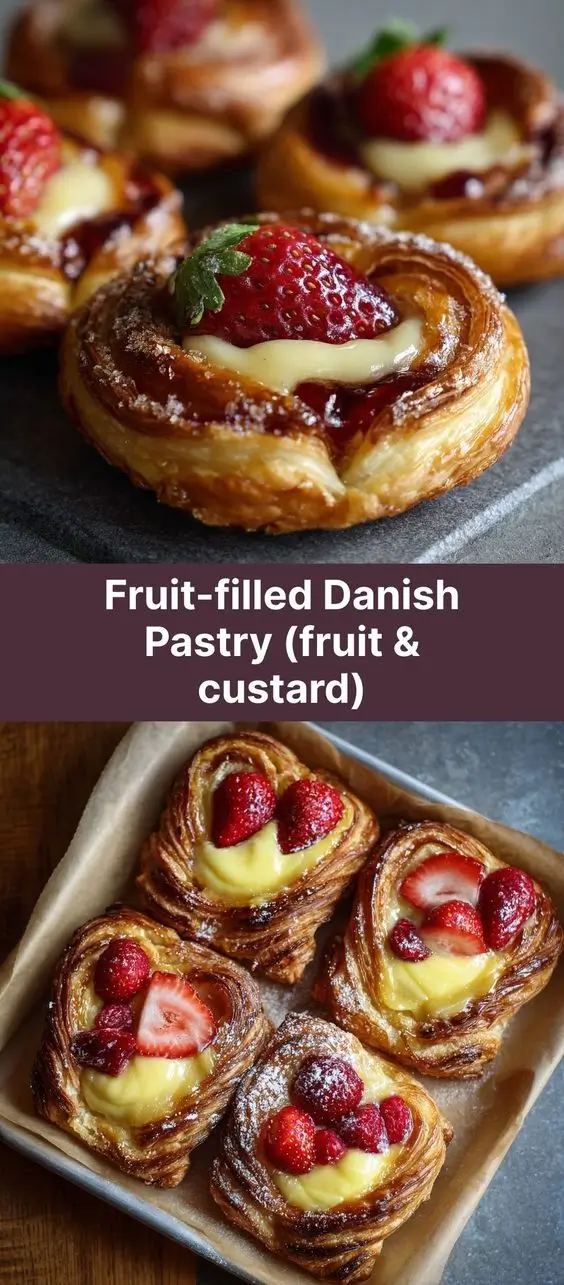
The fruit-filled Danish pastry, especially when layered with rich custard and crowned with fresh or preserved fruit, is one of the most beloved pastries in both European cafés and American bakeries. With its flaky, buttery layers, soft custard filling, and vibrant burst of fruit flavor, this pastry strikes the perfect balance between indulgence and elegance. Whether enjoyed with a morning coffee or served as a dessert after an evening meal, the fruit and custard Danish is a timeless treat that continues to captivate taste buds around the world.
Introduction
A fruit-filled Danish pastry with custard is more than just a breakfast item—it’s a celebration of texture and taste. The delicate interplay between the crisp, golden exterior, the creamy custard center, and the juicy fruit topping makes each bite a sensory delight. Originating from Denmark but refined through Austrian and French baking techniques, this pastry has evolved into countless variations across continents. In modern times, it’s a staple in brunch menus, patisseries, and home kitchens alike, admired for both its visual appeal and comforting flavors.
The History
The history of the Danish pastry traces back to the 19th century, during a labor dispute among Danish bakers in Copenhagen. In need of skilled workers, bakery owners brought in Austrian bakers who were renowned for their mastery of laminated doughs—particularly puff pastry. The Austrians introduced a technique involving folding butter into dough multiple times to create light, airy layers. The Danish bakers adopted and adapted this method, enriching the dough with eggs, cardamom, and more butter, creating what became known as “wienerbrød” (Viennese bread) in Denmark.
Over time, regional variations emerged. Fillings such as marzipan, whipped cream, cheese, and fruit preserves were added. By the early 20th century, Danishes had spread throughout Scandinavia and into Northern Europe. American immigrants brought the tradition to the United States, where local tastes led to even more creative adaptations—including custard fillings and fresh fruit toppings. Today’s fruit and custard Danish is a fusion of old-world craftsmanship and modern culinary innovation.
Ingredients Breakdown
The magic of a fruit-filled Danish pastry lies in its carefully balanced ingredients. Each component plays a crucial role in achieving the perfect harmony of flavor, texture, and appearance.
Dough Ingredients:
- All-Purpose Flour – Provides structure; medium protein content ensures tenderness without toughness.
- Unsalted Butter – Cold, high-fat butter creates steam during baking, resulting in flaky layers. It also imparts richness and flavor.
- Granulated Sugar – Adds sweetness and aids in browning the crust.
- Salt – Enhances overall flavor and controls yeast activity.
- Active Dry Yeast or Instant Yeast – Leavens the dough, giving it a soft, slightly risen texture.
- Warm Milk – Activates the yeast and adds moisture, contributing to a tender crumb.
- Egg – Binds the dough, adds color, and contributes to a richer texture.
- Vanilla Extract – Enhances aroma and complements sweet fillings.
- Cardamom (optional) – A traditional Scandinavian spice that adds warmth and complexity.
Custard Filling Ingredients:
- Egg Yolks – Thicken the custard and give it a velvety texture.
- Granulated Sugar – Sweetens the custard and helps stabilize it.
- Whole Milk or Heavy Cream – Creates a rich base; cream yields a denser custard.
- Cornstarch – Acts as a thickening agent to prevent curdling and ensure sliceability.
- Vanilla Bean or Extract – Imparts classic vanilla flavor.
- Lemon Zest (optional) – Brightens the custard and cuts through richness.
Fruit Topping Options:
- Fresh Berries – Raspberries, blueberries, strawberries, blackberries add freshness and tartness.
- Sliced Stone Fruits – Peaches, nectarines, plums work beautifully when in season.
- Apple or Pear Slices – Can be lightly sautéed with cinnamon for a warm flavor profile.
- Preserved Fruit Compote – Such as apricot, cherry, or rhubarb, adds concentrated flavor and shine.
- Apricot Glaze (warmed jam + water) – Brushed over the fruit to add luster and seal in moisture.
Optional Additions:
- Almond Paste Layer – Often placed beneath the custard for nutty depth.
- Whipped Cream or Crème Fraîche – For serving alongside or on top.
- Toasted Almonds or Sliced Almonds – Sprinkled on before or after baking for crunch.
Step-by-Step Recipe
Making the Danish Dough (Laminated Enriched Dough)
- Activate the Yeast: In a small bowl, combine 1/4 cup warm milk (105–110°F), 1 tsp sugar, and 2 1/4 tsp active dry yeast. Let sit for 5–10 minutes until foamy.
- Prepare the Dough: In a large mixing bowl or stand mixer with a dough hook, combine 3 1/2 cups all-purpose flour, 1/4 cup sugar, 1 tsp salt, and 1/2 tsp cardamom (if using). Add the yeast mixture, 1 beaten egg, 1/4 cup additional warm milk, and 1/2 cup (1 stick) softened unsalted butter. Mix on low until a shaggy dough forms, then increase speed and knead for 5–7 minutes until smooth and elastic. Cover and refrigerate for 1 hour.
- Prepare the Butter Block: While the dough chills, flatten 1 cup (2 sticks) cold unsalted butter between two sheets of parchment paper into an 8×5-inch rectangle. Chill until firm but pliable.
- Laminate the Dough: Roll the chilled dough into a 16×10-inch rectangle. Place the butter block in the center and fold the dough over like a letter—top third down, bottom third up. Seal edges gently. Rotate 90 degrees and roll out again into a long rectangle. Perform a second and third turn using the same folding method, chilling the dough for 30 minutes between turns.
- Final Chill: After the third turn, wrap the dough tightly and refrigerate for at least 4 hours or overnight. This allows gluten relaxation and prevents butter from melting too quickly during baking.
Preparing the Custard Filling
- In a medium saucepan, heat 2 cups whole milk or heavy cream with 1 split vanilla bean (or 1 tbsp extract) and lemon zest (optional) until steaming.
- In a separate bowl, whisk together 4 egg yolks, 1/2 cup sugar, and 3 tbsp cornstarch until pale and thick.
- Gradually temper the yolks by pouring a small amount of hot milk into them while whisking constantly. Then pour everything back into the saucepan.
- Cook over medium heat, stirring continuously, until the mixture thickens and bubbles appear on the surface (about 2–3 minutes).
- Remove from heat, stir in 1 tbsp butter for shine, and press plastic wrap directly onto the surface. Chill completely before use.
Shaping and Assembling the Pastries
- Preheat oven to 375°F (190°C). Line baking sheets with parchment paper.
- Roll the chilled Danish dough to 1/4-inch thickness. Cut into 4×4-inch squares or circles using a cutter.
- For square danishes: Use a small knife to cut slits along the edges, leaving a 1-inch square in the center. Gently lift and twist corners to form a border.
- Place a spoonful (about 1–2 tbsp) of custard into the center. Optionally, spread a thin layer of almond paste first.
- Add fruit on top—either fresh slices arranged neatly or a dollop of compote.
- Brush exposed dough with egg wash (1 egg + 1 tbsp water) for a golden finish.
- Bake for 18–22 minutes, until puffed and golden brown.
- Cool slightly, then glaze with warmed apricot jam thinned with water for shine.
Tips for Success
- Keep Everything Cold: Warm butter will absorb into the dough instead of creating layers. Work quickly and chill as needed.
- Don’t Skip the Rests: Chilling between folds relaxes gluten and prevents shrinkage during baking.
- Use High-Quality Butter: European-style butter with higher fat content (like Kerrygold or Plugrá) gives superior flakiness.
- Don’t Overfill: Too much custard or fruit can cause spillage and sogginess.
- Rotate Pans Halfway: Ensure even browning in home ovens with hot spots.
- Glaze While Warm: Applying the apricot glaze right after baking seals in moisture and adds professional shine.
- Work Efficiently: Once shaped, bake promptly to prevent butter from melting prematurely.
Variations and Customizations
The beauty of the fruit and custard Danish lies in its versatility. Here are some delicious twists you can try:
- Seasonal Fruit Rotations: Use strawberries and rhubarb in spring, peaches and cherries in summer, apples and pears in fall, and preserved citrus in winter.
- Tropical Twist: Replace custard with coconut pastry cream and top with mango, kiwi, and toasted coconut flakes.
- Berry Medley: Combine raspberries, blueberries, and blackberries for a colorful, antioxidant-rich topping.
- Lemon-Curd Variation: Swap custard for homemade lemon curd and top with blueberries for a tangy contrast.
- Chocolate-Dipped: Dip cooled danishes halfway in melted dark chocolate for a decadent touch.
- Savory-Sweet Option: Add a thin layer of mascarpone cheese beneath the custard for extra creaminess.
- Mini Danishes: Make bite-sized versions using muffin tins for elegant party appetizers or brunch trays.
- Vegan Adaptation: Use plant-based butter, oat milk, agar-agar instead of eggs, and tofu-based custard alternatives.
- Gluten-Free Version: Substitute with a gluten-free flour blend designed for pastry, though lamination may be less effective.
Health Considerations and Nutritional Value
While undeniably delicious, fruit-filled Danish pastries are rich in calories, fat, and sugar due to their buttery dough and custard filling. However, they can be enjoyed in moderation as part of a balanced diet.
Nutritional Breakdown (Per Average Danish Pastry):
- Calories: ~350–450 kcal
- Total Fat: 20–28g (mostly saturated from butter)
- Carbohydrates: 40–50g
- Sugars: 20–30g (varies with fruit and glaze)
- Protein: 6–8g (from eggs, milk, and flour)
- Cholesterol: ~100mg (mainly from egg yolks and butter)
- Sodium: 200–300mg
Healthier Modifications:
- Reduce Sugar: Cut sugar in both dough and custard by 25–30% without sacrificing structure.
- Lower-Fat Custard: Use skim milk and reduce egg yolks (replace with cornstarch or arrowroot).
- Whole Grain Option: Substitute up to 1 cup of all-purpose flour with whole wheat pastry flour for added fiber.
- Fresh Fruit Focus: Emphasize fresh, un-sugared fruits to boost vitamins, antioxidants, and natural sweetness.
- Portion Control: Serve smaller portions or share larger ones to manage calorie intake.
- Baked, Not Fried: Always bake rather than fry—this keeps fat content lower compared to other pastries.
Ingredients
Danish Dough:
- 3 1/2 cups (420g) all-purpose flour
- 1/4 cup (50g) granulated sugar
- 1 tsp salt
- 1/2 tsp ground cardamom (optional)
- 2 1/4 tsp (7g) active dry yeast
- 1/4 cup + 1/4 cup warm milk (divided, 105–110°F)
- 1 large egg, room temperature
- 1/2 cup (1 stick) unsalted butter, softened
- 1 cup (2 sticks) unsalted butter, cold, for lamination
Custard Filling:
- 4 large egg yolks
- 1/2 cup (100g) granulated sugar
- 3 tbsp (24g) cornstarch
- 2 cups (480ml) whole milk or heavy cream
- 1 tsp vanilla extract or 1/2 vanilla bean
- Zest of 1/2 lemon (optional)
- 1 tbsp unsalted butter (for finish)
Fruit & Finishing:
- 2 cups fresh or cooked fruit (strawberries, raspberries, peaches, etc.)
- 1/4 cup apricot jam + 1 tbsp water (for glaze)
- 1 egg + 1 tbsp water (for egg wash)
- Optional: 1/2 cup almond paste, sliced almonds
Directions
- Make the Dough: Activate yeast in 1/4 cup warm milk and 1 tsp sugar. In a stand mixer, combine flour, sugar, salt, cardamom, remaining warm milk, egg, softened butter, and yeast mixture. Knead until smooth. Cover and chill 1 hour.
- Create Butter Block: Flatten 1 cup cold butter into an 8×5-inch rectangle between parchment. Chill.
- First Fold: Roll dough into 16×10-inch rectangle. Center butter block, fold dough over, seal edges. Roll out, perform envelope fold. Chill 30 min. Repeat twice more, chilling between folds.
- Final Chill: Wrap dough and refrigerate at least 4 hours or overnight.
- Make Custard: Heat milk with vanilla and lemon zest. Whisk yolks, sugar, and cornstarch. Temper yolks with hot milk, return to pan, cook until thick. Cool with plastic wrap on surface.
- Shape Pastries: Preheat oven to 375°F. Roll dough to 1/4-inch thick. Cut into 4-inch squares. Create borders by cutting slits and twisting corners.
- Fill: Pipe or spoon custard into center. Add fruit on top. Optional: spread almond paste before custard.
- Bake: Brush with egg wash. Bake 18–22 minutes until golden. Cool 5 minutes.
- Glaze: Warm apricot jam with water. Brush over fruit and edges.
- Serve: Enjoy warm or at room temperature. Store leftovers covered for up to 2 days (best fresh).
FAQ
Can I make Danish dough ahead of time?
Yes! You can prepare the laminated dough up to 3 days in advance and keep it refrigerated, or freeze it for up to 1 month. Thaw in the fridge before using.
Can I use store-bought puff pastry?
Absolutely. For a shortcut, use high-quality puff pastry sheets. Add custard and fruit, then bake. It won’t have the same richness as traditional Danish dough, but it’s a great time-saver.
Why did my pastry not rise or get flaky?
This usually happens if the butter melted into the dough. Ensure your butter stays cold, and don’t skip the chilling steps.
Can I freeze unbaked danishes?
Yes. Shape them, place on a tray, freeze solid, then transfer to a bag. Bake from frozen, adding 3–5 minutes to baking time.
How do I prevent a soggy bottom?
Pre-bake the dough for 5 minutes before adding custard and fruit, or brush the center with a thin layer of melted white chocolate or almond paste as a moisture barrier.
What fruits work best?
Berries, stone fruits, apples, and pears are excellent. Avoid very watery fruits like watermelon. If using canned fruit, drain thoroughly.
Can I make the custard ahead?
Yes, custard can be made 2–3 days in advance and stored in the fridge. Stir well before using.
Are Danish pastries vegan?
Traditional recipes are not, but vegan versions exist using plant-based butter, milk, and egg substitutes like flax or commercial replacers.
Summary
A fruit-filled Danish pastry with custard combines buttery, flaky layers with a creamy vanilla custard and vibrant fruit topping, creating an irresistible balance of textures and flavors. Rooted in Danish-Austrian baking traditions, it remains a cherished treat for breakfast, brunch, or dessert.