Creamy Tuscan Chickpeas: A Rich, Comforting Plant-Based Delight
Introduction
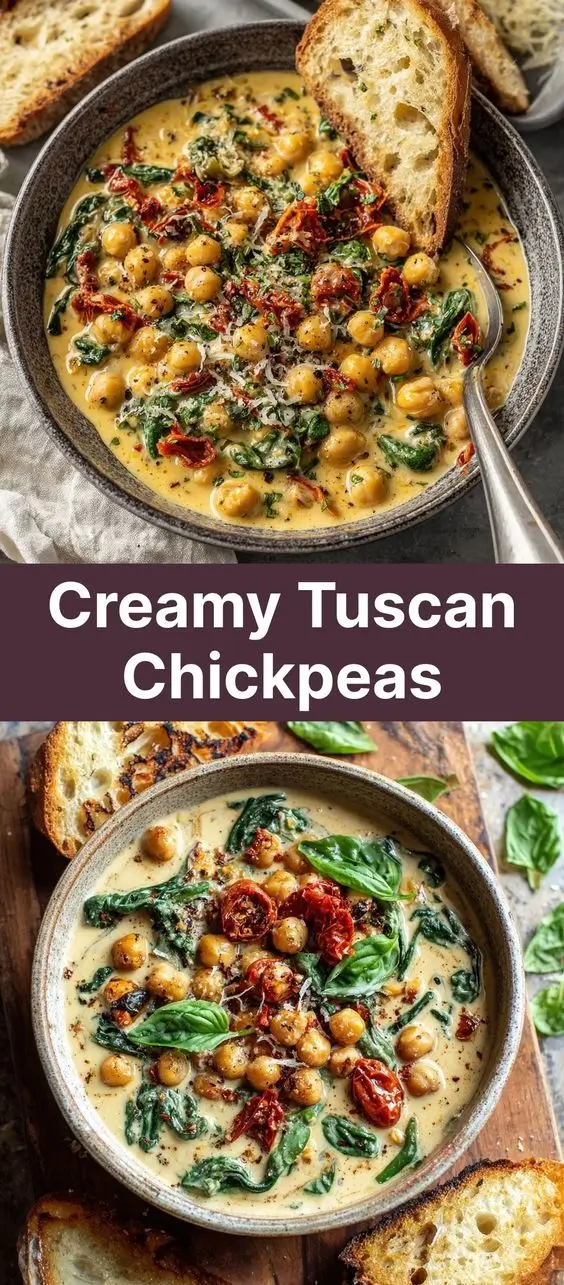
Creamy Tuscan Chickpeas is a luscious, hearty plant-based dish that brings together the rustic charm of Italian cuisine with modern, health-conscious cooking. Inspired by traditional Tuscan flavors—think garlic, rosemary, sun-dried tomatoes, and creamy spinach—this recipe transforms humble chickpeas into a velvety, satisfying meal perfect for any season. Whether you’re following a vegan or vegetarian diet, seeking comfort food without dairy overload, or simply want to explore Mediterranean-inspired meals, Creamy Tuscan Chickpeas deliver on taste, texture, and nutrition.
This dish stands out not only for its bold flavor profile but also for its versatility—it can be served over pasta, rice, quinoa, or even as a standalone stew with crusty bread for dipping. With layers of savory herbs, umami-rich ingredients, and a luxuriously creamy sauce achieved without heavy cream, it’s no wonder this recipe has become a favorite among home cooks and food bloggers alike.
The History
While “Creamy Tuscan Chickpeas” as we know it today may not be a centuries-old Italian classic, it draws deep inspiration from the culinary traditions of Tuscany, a region in central Italy renowned for its simple yet flavorful peasant food. Tuscan cuisine emphasizes seasonal vegetables, legumes, olive oil, garlic, and aromatic herbs—all staples that form the backbone of this dish.
Chickpeas have long been a dietary staple across the Mediterranean, especially in regions like Tuscany where meat was historically scarce and expensive. Dishes such as cecina (a chickpea flour pancake) and zuppa di ceci (chickpea soup) showcase how resourceful Italian cooks turned legumes into nourishing meals. The modern twist—adding creaminess through coconut milk or cashew cream, incorporating sun-dried tomatoes and fresh spinach—reflects contemporary global influences and dietary trends, particularly the rise of dairy-free and plant-forward eating.
Creamy Tuscan Chickpeas gained popularity in the 2010s through food blogs and social media platforms, often presented as a vegan alternative to the well-known “Tuscan Chicken” — a creamy pan-seared chicken dish made with sun-dried tomatoes, mushrooms, and Parmesan. By replacing animal proteins with protein-packed chickpeas and using plant-based thickeners, chefs reimagined the concept into an inclusive, compassionate version that maintains all the richness of its predecessor.
Ingredients Breakdown
Understanding each ingredient helps elevate your cooking experience and allows for informed substitutions based on availability or dietary needs. Here’s a detailed look at what goes into Creamy Tuscan Chickpeas:
- Chickpeas (Garbanzo Beans): The star of the dish, packed with fiber, protein, and complex carbohydrates. Canned chickpeas are convenient, but cooked-from-dry offer superior texture and reduced sodium.
- Olive Oil: Used for sautéing, extra virgin olive oil adds richness and heart-healthy monounsaturated fats. It enhances flavor while supporting anti-inflammatory benefits.
- Garlic: Freshly minced garlic provides a pungent, aromatic base essential to Mediterranean dishes.
- Shallot or Onion: Adds sweetness and depth when caramelized slightly during cooking.
- Sun-Dried Tomatoes: Typically oil-packed for tenderness, these bring concentrated tomato flavor and chewy texture, contributing both acidity and umami.
- Fresh Spinach: Tender baby spinach wilts easily into the sauce, boosting iron, folate, and vibrant color.
- Vegetable Broth: Forms the liquid foundation, enhancing savoriness without overpowering other elements.
- Coconut Milk (Full-Fat): Provides natural creaminess and body. Its subtle sweetness balances acidic components. Light coconut milk can be used for a thinner consistency.
- Lemon Juice: Brightens the entire dish, cutting through the richness and elevating other flavors.
- Nutritional Yeast: Often added for a cheesy, nutty flavor—especially popular in vegan versions to mimic Parmesan.
- Dried Herbs: Typically include oregano, basil, and especially rosemary, which is iconic in Tuscan cooking.
- Red Pepper Flakes (optional): For a touch of heat, adjustable to preference.
- Salt & Black Pepper: To taste, crucial for balancing all components.
Step-by-Step Recipe
Follow this easy-to-follow guide to create restaurant-quality Creamy Tuscan Chickpeas right in your kitchen:
- Prep Ingredients: Drain and rinse the canned chickpeas. Mince garlic, dice shallot or onion, chop sun-dried tomatoes, and measure out all spices and liquids.
- Sauté Aromatics: Heat 2–3 tablespoons of olive oil in a large skillet or Dutch oven over medium heat. Add chopped shallot and sauté for 3–4 minutes until translucent. Stir in minced garlic and cook for another 30 seconds until fragrant—do not let it brown.
- Add Sun-Dried Tomatoes & Spices: Toss in chopped sun-dried tomatoes, dried rosemary, oregano, basil, and red pepper flakes. Cook for 1 minute to release their essential oils and intensify flavor.
- Incorporate Chickpeas: Add drained chickpeas to the pan and stir well to coat them in the seasoned oil mixture. Let them toast lightly for 2–3 minutes—this builds deeper flavor.
- Pour in Liquids: Add 1 cup of vegetable broth and stir, scraping up any browned bits from the bottom of the pan. Then pour in ¾ to 1 cup of full-fat coconut milk, depending on desired creaminess.
- Simmer Gently: Reduce heat to low and let the mixture simmer uncovered for 15–20 minutes, stirring occasionally. This allows flavors to meld and the sauce to thicken slightly.
- Wilt in Spinach: Stir in 2–3 large handfuls of fresh spinach, a little at a time, letting each batch wilt before adding more. Cook just until fully incorporated—about 2–3 minutes total.
- Finish with Brightness: Remove from heat. Stir in 1–2 tablespoons of freshly squeezed lemon juice and 2–3 tablespoons of nutritional yeast (if using). Taste and adjust seasoning with salt, pepper, or more lemon as needed.
- Serve Immediately: Spoon generously over cooked pasta (like fettuccine or penne), mashed potatoes, polenta, or serve alongside warm sourdough bread.
Tips
- Toast the Spices: Briefly toasting dried herbs in oil unlocks their full aroma and prevents a raw, dusty taste.
- Use Oil-Packed Sun-Dried Tomatoes: They’re softer, juicier, and more flavorful than dry ones. Reserve a tablespoon of the oil and use it in place of some olive oil for extra depth.
- Don’t Overcook Spinach: Adding it late preserves nutrients and keeps the color bright green rather than dull.
- Adjust Creaminess: Prefer a thicker sauce? Simmer longer. Want it thinner? Add more broth gradually until desired consistency.
- Boost Umami: Add a splash of tamari, miso paste (½ tsp dissolved in broth), or a few chopped kalamata olives for extra savory complexity.
- Blend for Extra Creaminess: For a silkier texture, blend half the chickpea mixture and stir it back in.
- Rest Before Serving: Letting the dish sit for 5–10 minutes after cooking allows flavors to deepen further.
Variations and Customizations
Creamy Tuscan Chickpeas are incredibly adaptable. Try these creative twists to suit different tastes and occasions:
- Add Mushrooms: Sliced cremini or shiitake mushrooms sautéed with the onions add meaty texture and earthy flavor, mimicking the original Tuscan Chicken profile.
- Include White Beans: Mix in cannellini or Great Northern beans for additional creaminess and protein variation.
- Make it Cheesy (Non-Vegan): Stir in grated Parmesan, Pecorino Romano, or crumbled goat cheese at the end for a decadent finish.
- Gluten-Free Version: Ensure all ingredients (especially broth and sun-dried tomatoes) are certified gluten-free. Serve over quinoa, rice, or GF pasta.
- Keto-Friendly Adaptation: Replace chickpeas with cauliflower florets and use avocado cream instead of coconut milk. Skip high-carb accompaniments.
- Protein Boost: Top with grilled tofu, tempeh strips, or seitan cubes for a higher-protein meal.
- Herb Variations: Swap rosemary for fresh thyme or marjoram. Add parsley at the end for freshness.
- Spicy Arrabbiata Style: Increase red pepper flakes and add a dash of smoked paprika for a bolder kick.
- Tomato Paste Addition: For richer color and deeper tomato flavor, stir in 1 tablespoon of tomato paste with the aromatics.
- Roasted Garlic Twist: Use roasted garlic cloves instead of raw for a sweeter, mellower base.
Health Considerations and Nutritional Value
Creamy Tuscan Chickpeas aren’t just delicious—they’re a powerhouse of nutrition when prepared thoughtfully. Here’s a breakdown of the health benefits and considerations:
Nutritional Highlights (per serving, approx. 1.5 cups):
- Calories: ~300–380 (depending on coconut milk amount and oil usage)
- Protein: ~10–12g (from chickpeas and nutritional yeast)
- Fiber: ~9–11g (supports digestion and satiety)
- Healthy Fats: Primarily from olive oil and coconut milk—includes monounsaturated and medium-chain triglycerides (MCTs)
- Iron: ~3–4mg (enhanced absorption when paired with vitamin C from lemon)
- Folate, Magnesium, Phosphorus: Abundant in chickpeas, important for cellular function and bone health
- Low Saturated Fat (if moderated): Especially when light coconut milk is used and minimal oil is applied
Health Benefits:
- Plant-Based Protein Source: Ideal for vegans and vegetarians looking to meet daily protein needs without animal products.
- Heart Health: Olive oil and fiber contribute to healthy cholesterol levels and cardiovascular wellness.
- Blood Sugar Regulation: High fiber content slows glucose absorption, making this dish suitable for diabetics when portion-controlled.
- Anti-Inflammatory Properties: Garlic, olive oil, leafy greens, and herbs contain compounds known to reduce inflammation.
- Digestive Support: Chickpeas promote gut health due to prebiotic fiber feeding beneficial bacteria.
Considerations:
- Coconut Milk Fat Content: While nutritious, full-fat coconut milk is calorie-dense. Those managing weight may opt for light versions or dilute with extra broth.
- Sodium Levels: Canned chickpeas and store-bought broths can be high in sodium. Choose low-sodium options or cook chickpeas from dry.
- Gas and Bloating: Some individuals may experience digestive discomfort from legumes. Rinsing canned chickpeas thoroughly or soaking dry ones properly can help.
- Allergies: Coconut is classified as a tree nut by the FDA; those allergic should substitute with cashew cream or blended silken tofu.
Ingredients
- 2 tablespoons extra virgin olive oil
- 1 medium shallot or yellow onion, finely diced
- 4 cloves garlic, minced
- ⅓ cup oil-packed sun-dried tomatoes, sliced or chopped
- 2 (15 oz) cans chickpeas, drained and rinsed
- 1 teaspoon dried rosemary (or 1 tbsp fresh, chopped)
- 1 teaspoon dried oregano
- ½ teaspoon dried basil
- ¼–½ teaspoon red pepper flakes (adjust to spice preference)
- 1 cup vegetable broth (low-sodium preferred)
- ¾–1 cup full-fat coconut milk (canned)
- 3–4 cups fresh baby spinach (packed)
- 2–3 tablespoons nutritional yeast
- 1–2 tablespoons fresh lemon juice (about ½ lemon)
- Salt and freshly ground black pepper, to taste
- Optional garnishes: chopped parsley, vegan Parmesan, chili flakes, lemon zest
Directions
- Heat olive oil in a large skillet or shallow pot over medium heat.
- Add diced shallot and sauté for 3–4 minutes until soft and translucent.
- Stir in minced garlic and cook for 30 seconds until fragrant.
- Add sun-dried tomatoes, rosemary, oregano, basil, and red pepper flakes. Cook for 1 minute, stirring constantly.
- Add chickpeas and stir to combine, allowing them to absorb flavors for 2–3 minutes.
- Pour in vegetable broth and coconut milk. Stir well, scraping the bottom of the pan.
- Bring to a gentle simmer, then reduce heat to low. Cook uncovered for 15–20 minutes, stirring occasionally, until sauce thickens slightly.
- Gradually add spinach, a handful at a time, stirring until wilted—about 2–3 minutes.
- Remove from heat. Stir in nutritional yeast and lemon juice. Season generously with salt and pepper.
- Taste and adjust: add more lemon for brightness, more herbs for depth, or broth if too thick.
- Serve hot over pasta, grains, or with crusty bread. Garnish as desired.
FAQ
Can I make Creamy Tuscan Chickpeas ahead of time?
Yes! This dish reheats beautifully. Store in an airtight container in the fridge for up to 5 days. Reheat gently on the stove with a splash of broth to restore creaminess.
Can I freeze this recipe?
Absolutely. Freeze in portioned containers for up to 3 months. Thaw overnight in the refrigerator and reheat slowly on the stovetop. Note: coconut milk may separate slightly upon freezing—whisk while reheating to re-emulsify.
Is this recipe gluten-free?
Yes, provided all ingredients used are certified gluten-free (especially broth and sun-dried tomatoes). Always double-check labels when in doubt.
What can I use instead of coconut milk?
Cashew cream (blend soaked cashews with water), unsweetened almond yogurt, or silken tofu blended with broth work well. Avoid dairy milk—it won’t provide the same thickness.
Why are my chickpeas mushy?
Overcooking or using older canned beans can cause mushiness. For firmer texture, reduce simmer time or try cooking dried chickpeas yourself to control doneness.
Can I use dried chickpeas?
Yes. Soak 1 cup dried chickpeas overnight, then boil until tender (60–90 minutes). Use about 3 cups cooked chickpeas in place of canned.
How do I make it spicier?
Increase red pepper flakes, add a pinch of cayenne, or stir in harissa paste for North African flair.
Is this dish kid-friendly?
Many children enjoy the creamy texture and mild sweetness from sun-dried tomatoes. You can reduce or omit red pepper flakes and serve over fun-shaped pasta to make it more appealing.
Summary
Creamy Tuscan Chickpeas combine tender legumes, aromatic herbs, and a luscious dairy-free sauce into a comforting, nutrient-dense meal inspired by Italian countryside cooking. Easy to customize, rich in flavor, and perfect for weeknights or meal prep, this dish proves plant-based eating can be both indulgent and wholesome.