Introduction
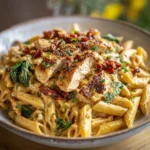
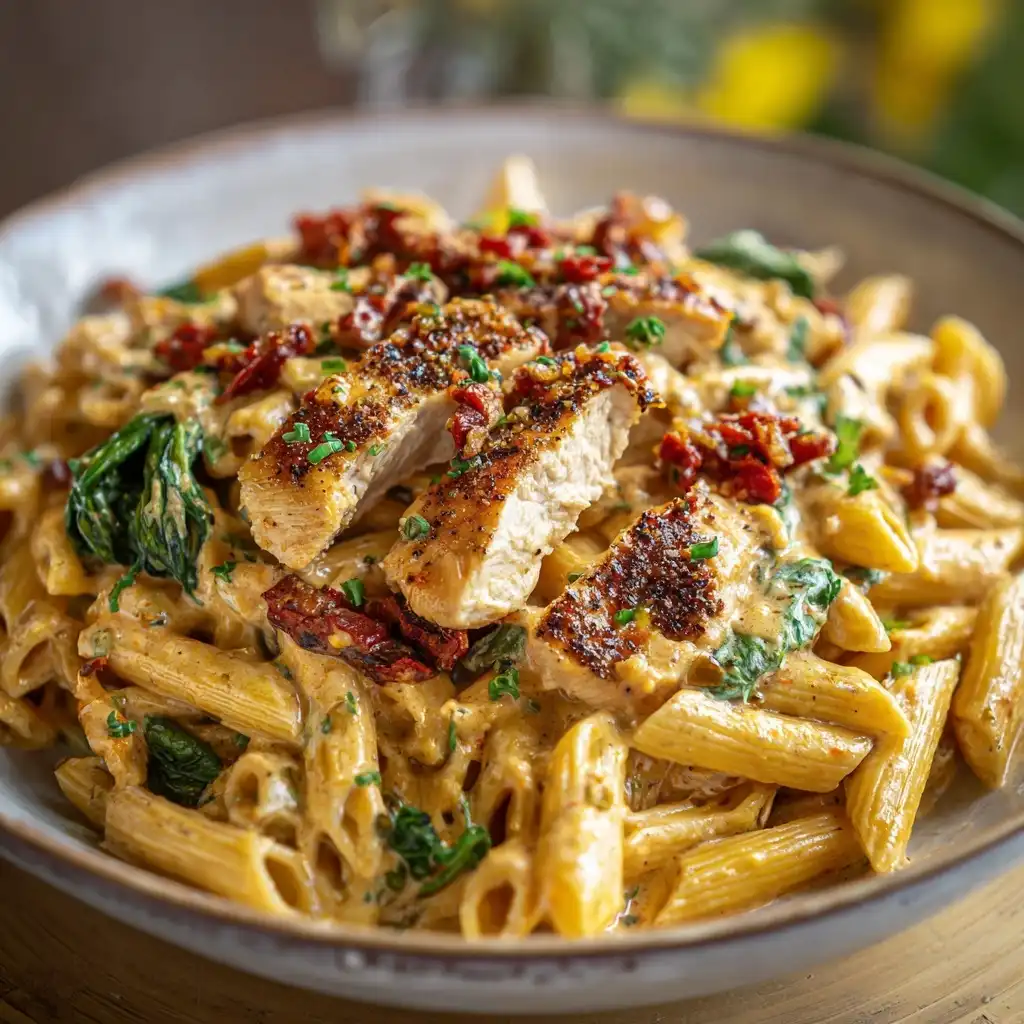
Creamy Tuscan Chicken Pasta is a beloved, restaurant-worthy dish that brings the rustic elegance of Tuscany straight to your dinner table. With its velvety Parmesan-herb sauce, tender pan-seared chicken, and al dente pasta kissed with sun-dried tomatoes, garlic, spinach, and a whisper of white wine, this meal strikes the perfect balance between comforting richness and bright, Mediterranean-inspired freshness. It’s versatile enough for weeknight dinners yet sophisticated enough to impress guests—requiring no special equipment, just attentive cooking and quality ingredients. Whether you’re seeking a cozy family supper, a date-night centerpiece, or a make-ahead meal that reheats beautifully, Creamy Tuscan Chicken Pasta delivers depth, texture, and soul-satisfying flavor in every forkful.
The History
While “Tuscan Chicken Pasta” as we know it today is a modern American-Italian fusion creation—and not a traditional dish from Tuscany itself—it draws deep inspiration from the culinary traditions of Italy’s central region. Tuscany has long championed simplicity, seasonality, and ingredient integrity: think ribollita (a hearty bread-and-vegetable soup), pappa al pomodoro (tomato and stale-bread stew), and bistecca alla fiorentina (grilled Florentine steak). The use of olive oil over butter, abundant fresh herbs like rosemary and sage, and minimal dairy reflect Tuscan restraint. However, the creamy, indulgent version popularized in the U.S. likely emerged in the late 20th century alongside the rise of Italian-American bistro culture and accessible imported cheeses like Parmigiano-Reggiano. Chefs and home cooks alike began blending Old World techniques—such as deglazing pans with dry white wine and building sauces from scratch—with New World preferences for luxurious textures and bold, approachable flavors. Sun-dried tomatoes, a pantry staple since their commercial proliferation in the 1980s, added concentrated sweetness and umami; baby spinach brought color and nutrition without overwhelming the palate; and heavy cream—though nontraditional in authentic Tuscan cooking—became the unifying element that transformed rustic elements into an elegant, cohesive dish. Today, Creamy Tuscan Chicken Pasta stands as a delicious testament to culinary evolution: rooted in regional authenticity but joyfully adapted for global palates and modern kitchens.
Ingredients Breakdown
Every exceptional Creamy Tuscan Chicken Pasta begins with thoughtfully selected, high-quality components—each playing a distinct role in building layers of flavor, texture, and aroma. Below is a detailed breakdown of each key ingredient and why it matters:
- Chicken Breast or Thighs: Boneless, skinless chicken breasts offer lean tenderness, while thighs provide richer flavor and greater moisture retention—ideal if you’re concerned about overcooking. Uniform thickness ensures even cooking; consider pounding thicker cuts to ½-inch for consistent results.
- Pasta: Linguine, fettuccine, or casarecce are ideal shapes—their surface area grips the creamy sauce beautifully. Whole wheat or gluten-free options work well when substituted mindfully (adjust cook time and reserve extra starchy water for emulsification).
- Heavy Cream (or Full-Fat Coconut Milk for Dairy-Free): Provides lush mouthfeel and stabilizes the sauce. Ultra-pasteurized cream may curdle more easily; opt for pasteurized (not ultra-pasteurized) if possible. Never boil after adding cream—gentle simmer only.
- Parmigiano-Reggiano (Freshly Grated): Not pre-grated “Parmesan-style” cheese. Real Parmigiano-Reggiano contains natural enzymes that melt smoothly and add nutty, salty complexity. Its granular texture helps thicken the sauce while contributing umami depth.
- Garlic & Shallots: Shallots lend subtle sweetness and aromatic finesse compared to onions; garlic adds pungent warmth. Mince finely and sauté gently—never brown—to preserve brightness and avoid bitterness.
- Sun-Dried Tomatoes (Oil-Packed, Chopped): Concentrated tomato sweetness balances acidity and richness. Reserve 1–2 tbsp of the flavorful oil for sautéing—it adds fruity depth and prevents sticking.
- Fresh Spinach (Baby or Mature): Adds vibrant color, mild earthiness, and essential nutrients. Wilted at the very end preserves its texture and bright green hue—overcooking turns it mushy and dull.
- Dry White Wine (e.g., Pinot Grigio, Sauvignon Blanc, or Unoaked Chardonnay): Deglazes the fond (those delicious caramelized bits stuck to the pan), lifts flavor, and adds acidity to cut through the cream. Choose something you’d happily drink—avoid “cooking wine” with salt or preservatives.
- Fresh Herbs (Oregano, Basil, and/or Thyme): Dried oregano offers earthy backbone, while fresh basil added at the end imparts sweet, peppery perfume. Thyme contributes floral-woodsy notes—especially lovely with chicken. Rosemary can be used sparingly (½ tsp dried or 1 small sprig fresh) for aromatic intensity.
- Extra-Virgin Olive Oil & Unsalted Butter: A combination yields the best of both worlds: EVOO for fruitiness and heart-healthy monounsaturates; butter for richness and Maillard browning. Clarified butter (ghee) is an excellent alternative for higher smoke point and nuttier flavor.
- Chicken Broth (Low-Sodium, Homemade Preferred): Enhances savory depth without oversalting. Homemade broth adds collagen and body; low-sodium store-bought allows precise seasoning control.
- Lemon Zest and Juice (Optional but Highly Recommended): A microplane of zest stirred in at the end lifts the entire dish with citrus perfume; a splash of juice brightens and balances—especially important if the sauce tastes overly heavy or flat.
Additional enhancements include a pinch of red pepper flakes for gentle heat, toasted pine nuts or slivered almonds for crunch, and a final drizzle of high-quality truffle oil or aged balsamic glaze for gourmet flair.
Step-by-Step Recipe
- Prep & Marinate (10 minutes): Slice chicken into uniform ½-inch strips or cubes. Pat *very* dry with paper towels. Season generously with kosher salt, freshly ground black pepper, garlic powder, and dried oregano. Let sit 5–10 minutes at room temperature while you prep other ingredients (mise en place is critical here).
- Cook Pasta Al Dente (10–12 minutes): Bring 4–6 quarts of well-salted water (2 tbsp Diamond Crystal or 1 tbsp Morton kosher salt per gallon) to a rolling boil. Add pasta and stir immediately. Cook 1–2 minutes *less* than package directions—pasta will finish cooking in the sauce. Reserve 1 cup of starchy pasta water before draining. Do *not* rinse.
- Sear Chicken (6–8 minutes): Heat 1½ tbsp olive oil and 1 tbsp butter in a large, heavy-bottomed skillet or Dutch oven over medium-high heat until shimmering. Add chicken in a single layer—do not overcrowd. Sear undisturbed 3–4 minutes until deeply golden on one side, then flip and cook 2–3 more minutes until just cooked through (165°F internal temp). Transfer to a clean plate and tent loosely with foil.
- Sauté Aromatics (3–4 minutes): Reduce heat to medium. In same skillet, add remaining ½ tbsp olive oil and 1 tbsp butter. Add finely minced shallots and garlic; sauté 1 minute until fragrant—not browned. Stir in chopped sun-dried tomatoes and red pepper flakes; cook 30 seconds to bloom spices and release oils.
- Build the Sauce Base (5 minutes): Pour in ½ cup dry white wine. Use a wooden spoon to vigorously scrape up all browned bits (fond) from the pan bottom—this is pure flavor gold. Simmer 2–3 minutes until wine reduces by half and alcohol evaporates. Stir in 1 cup low-sodium chicken broth and simmer 2 more minutes to concentrate.
- Incorporate Cream & Cheese (4–5 minutes): Reduce heat to low. Whisk in 1 cup heavy cream gradually, ensuring no lumps form. Simmer gently—do not boil—for 2 minutes. Gradually whisk in ¾ cup freshly grated Parmigiano-Reggiano, a small handful at a time, allowing each addition to melt fully before adding more. Sauce should thicken slightly and coat the back of a spoon.
- Combine & Finish (3 minutes): Return chicken (and any accumulated juices) to the pan. Add drained pasta and ½ cup reserved pasta water. Toss vigorously over low heat for 1–2 minutes, allowing starches to emulsify with cream and cheese for silkiness. Add 3–4 cups fresh spinach and toss until just wilted (30–60 seconds). Stir in 1 tsp lemon zest and 1 tbsp lemon juice. Taste and adjust seasoning—add flaky sea salt, more black pepper, or a pinch of sugar if tomatoes taste sharp.
- Rest & Serve (2 minutes): Remove from heat. Let rest 1–2 minutes—this allows sauce to settle and cling luxuriously. Garnish generously with extra grated Parmigiano-Reggiano, freshly cracked black pepper, chopped fresh basil or parsley, and optional toasted pine nuts. Serve immediately in warm bowls.
Tips
- Dry Your Chicken Thoroughly: Excess moisture prevents proper searing and causes steaming instead of browning. Use paper towels—not cloth—to pat every surface dry.
- Don’t Skip the Fond Scraping: That caramelized crust on the pan (fond) is packed with savory glutamates. Deglazing with wine or broth unlocks immeasurable depth—never wash it away prematurely.
- Reserve Pasta Water *Before* Draining: Starchy water is liquid gold—it helps bind fat and liquid into a cohesive, glossy sauce. Start with ½ cup and add more as needed.
- Grate Cheese Yourself: Pre-grated cheeses contain anti-caking agents (like cellulose) that prevent smooth melting and can make sauces grainy or greasy.
- Control the Heat on Cream: Once cream is added, keep heat at low-to-medium-low. Boiling causes separation and curdling—gentle simmering only.
- Add Greens at the Very End: Spinach, arugula, or kale should wilt *in the hot sauce*, not cook in boiling water first—this preserves color, texture, and nutrients.
- Taste Before Final Seasoning: Parmigiano-Reggiano is salty; broth may be seasoned; wine varies in acidity. Always taste *after* adding cheese and *before* final salting.
- Use a Wide, Heavy Pan: Ensures even heat distribution and ample surface area for evaporation and sauce reduction—thin pans scorch easily and hinder fond development.
- Let Chicken Rest Briefly: Allows juices to reabsorb, keeping meat succulent when stirred back into the sauce.
- Double the Recipe? Scale Gradually: When doubling, increase aromatics and liquids proportionally—but add cheese and cream in batches to avoid clumping or uneven thickening.
Variations and Customizations
This recipe is wonderfully adaptable—whether accommodating dietary needs, seasonal produce, pantry constraints, or personal taste preferences. Here are inspired, tested variations:
Protein Swaps
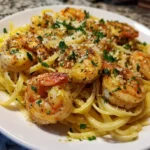
- Shrimp Tuscan Pasta: Replace chicken with 1 lb peeled, deveined large shrimp. Sear 1–2 minutes per side until pink and curled—remove before adding sauce and return at the end.
- Mushroom & White Bean (Vegan): Omit chicken and dairy. Sauté 2 cups sliced cremini mushrooms + 1 cup diced zucchini until golden. Add 1 (15-oz) can rinsed white beans (cannellini or Great Northern) and proceed with sauce using full-fat coconut milk and nutritional yeast instead of cheese.
- Sausage Tuscan Pasta: Use 12 oz sweet or spicy Italian sausage (casings removed). Brown crumbles thoroughly before proceeding—rendered fat enhances flavor.
Pasta Alternatives
- Gluten-Free: Brown rice pasta, chickpea pasta, or lentil pasta—all hold up well. Cook according to package, but undercook by 2 minutes and rely on pasta water for final texture.
- Zoodle or Spiralized Veggie Option: Swap 12 oz pasta for 3–4 medium zucchinis spiralized. Sauté zoodles separately for 1–2 minutes until just tender; fold in at the end to avoid excess water.
- Orzo or Farro: For a heartier, chewier bite—cook separately, drain well, and stir in during finishing step.
Sauce & Flavor Twists
- Roasted Garlic Cream: Roast 1 whole head of garlic (drizzled with olive oil, wrapped in foil, baked at 400°F for 40 min) and mash cloves into cream before adding cheese.
- Truffle Infusion: Stir in ½ tsp white truffle oil or 1 tsp truffle paste at the end—or shave fresh black truffle over finished dish.
- Lemon-Herb Brightness: Double lemon zest, add 2 tbsp chopped fresh dill + 1 tbsp chives, and finish with lemon wedges on the side.
- Smoky Depth: Add ½ tsp smoked paprika with garlic, or finish with a light dusting of chipotle powder.
- Tomato-Rich Version: Stir in ¼ cup roasted tomato purée or 2 tbsp tomato paste (cooked 1 minute with aromatics) before adding wine.
Vegetable Add-Ins (Seasonal & Creative)
- Spring: Asparagus tips, peas, fava beans, artichoke hearts (marinated or grilled)
- Summer: Cherry tomatoes (halved & blistered), zucchini ribbons, grilled corn kernels
- Fall: Roasted butternut squash cubes, caramelized leeks, sautéed wild mushrooms
- Winter: Kale ribbons (massaged with lemon juice first), roasted Brussels sprouts, caramelized onions
Dietary Modifications
- Dairy-Free: Use full-fat canned coconut milk (well-stirred), cashew cream (soaked raw cashews blended with water), or oat cream. Nutritional yeast (3–4 tbsp) + 1 tsp miso paste mimics umami and saltiness of Parmesan.
- Lower-Carb/Keto: Replace pasta with shirataki noodles (rinsed and dry-sautéed), spaghetti squash, or cauliflower “rice” (squeezed dry). Increase healthy fats (extra olive oil, avocado slices, pine nuts).
- Higher-Protein: Add ½ cup crumbled feta or ricotta salata at the end, or stir in 1 cup cooked lentils or edamame.
- Lighter Version: Substitute half the cream with whole milk or evaporated milk; use Greek yogurt (stirred in off-heat at the end) for tang and thickness—add slowly to prevent splitting.
Health Considerations and Nutritional Value
A single 1½-cup serving (made with 8 oz chicken breast, 8 oz linguine, ¾ cup heavy cream, ½ cup grated Parmigiano-Reggiano, and full vegetable additions) provides approximately:
- Calories: ~680–750 kcal
- Protein: 42–48 g (excellent source—supports muscle maintenance, satiety, and metabolic health)
- Total Fat: 28–32 g (predominantly unsaturated from olive oil, nuts, and cheese; includes ~16 g saturated fat—moderation advised for cardiovascular health)
- Carbohydrates: 62–68 g (mostly complex carbs from pasta; fiber ~4–5 g from spinach, sun-dried tomatoes, and optional veggies)
- Sodium: ~650–850 mg (highly dependent on broth and cheese salt content—using low-sodium broth and mindful cheese portions keeps it within daily limits)
- Vitamins & Minerals: Rich in vitamin A (spinach, sun-dried tomatoes), vitamin K (leafy greens), calcium (cheese, fortified pasta), iron (chicken, spinach), and B vitamins (chicken, whole grains). Contains lycopene (from sun-dried tomatoes) and antioxidants (garlic, herbs, olive oil).
Health Notes & Smart Swaps:
- Cream Moderation: While heavy cream contributes richness, substituting half with evaporated milk or silken tofu purée maintains creaminess with less saturated fat and calories.
- Whole Grain Benefit: Using 100% whole wheat or legume-based pasta increases fiber (to ~8–10 g/serving), supports gut health, and improves glycemic response.
- Portion Awareness: Restaurant servings often exceed 2 cups—measuring helps manage calorie intake. Pair with a large mixed green salad dressed lightly with lemon-tahini or balsamic vinaigrette for volume and micronutrient density.
- Sodium Savvy: Avoid adding salt early—rely on naturally salty ingredients (cheese, sun-dried tomatoes, broth) and finish with flaky sea salt for maximum impact with less quantity.
- Heart-Healthy Fats: Olive oil provides monounsaturated fats linked to reduced LDL cholesterol and inflammation. Extra-virgin grade offers highest polyphenol content.
- Not Low-Carb or Keto-Friendly As-Is: But easily adapted (see Variations section above) without sacrificing satisfaction or flavor integrity.
- Allergen Alert: Contains dairy (cream, cheese), gluten (pasta), and potential egg (if pasta is egg-based). Always verify labels for hidden allergens in broth, wine, or pre-chopped ingredients.
Overall, Creamy Tuscan Chicken Pasta can be part of a balanced, nutrient-dense diet when prepared mindfully—emphasizing whole foods, controlling portions, and prioritizing vegetables and lean protein.
Ingredients
- 1½ lbs boneless, skinless chicken breasts or thighs, cut into ½-inch strips or cubes
- 12 oz linguine, fettuccine, or casarecce pasta (whole wheat or gluten-free as desired)
- 2 tbsp extra-virgin olive oil, divided
- 2 tbsp unsalted butter, divided
- 1 large shallot (about ½ cup), finely minced
- 4 cloves garlic, finely minced
- ⅓ cup oil-packed sun-dried tomatoes, drained and chopped (reserve 1 tbsp oil)
- ½ tsp red pepper flakes (optional)
- ½ cup dry white wine (Pinot Grigio, Sauvignon Blanc, or unoaked Chardonnay)
- 1 cup low-sodium chicken broth
- 1 cup heavy cream (pasturized, not ultra-pasteurized)
- ¾ cup freshly grated Parmigiano-Reggiano cheese, plus extra for garnish
- 4 cups fresh baby spinach (or mature spinach, stems removed)
- 1 tsp lemon zest (from 1 organic lemon)
- 1 tbsp fresh lemon juice
- Kosher salt and freshly ground black pepper, to taste
- Flaky sea salt (like Maldon), for finishing
- Fresh basil or flat-leaf parsley, chopped, for garnish
- Optional: Toasted pine nuts, slivered almonds, or a drizzle of truffle oil
Directions
- Pat chicken very dry with paper towels. Season generously with 1 tsp kosher salt, ½ tsp black pepper, ½ tsp garlic powder, and ½ tsp dried oregano. Let sit at room temperature 5–10 minutes while prepping other ingredients.
- Bring 5–6 quarts water to a rolling boil. Add 2 tbsp kosher salt. Cook pasta 1–2 minutes less than package directions. Reserve 1 cup starchy pasta water, then drain pasta—do not rinse.
- Heat 1½ tbsp olive oil and 1 tbsp butter in a large heavy skillet or Dutch oven over medium-high heat until shimmering. Add chicken in a single layer; sear 3–4 minutes undisturbed, then flip and cook 2–3 more minutes until golden and cooked through (165°F). Transfer to a plate; tent with foil.
- Reduce heat to medium. Add remaining ½ tbsp olive oil and 1 tbsp butter. Stir in shallots and garlic; sauté 1 minute until fragrant. Add sun-dried tomatoes and red pepper flakes; cook 30 seconds.
- Pour in wine. Scrape pan vigorously with a wooden spoon to lift all browned bits. Simmer 2–3 minutes until reduced by half. Stir in broth; simmer 2 minutes more.
- Reduce heat to low. Whisk in cream gradually. Simmer gently 2 minutes (do not boil). Whisk in Parmigiano-Reggiano a small handful at a time until fully melted and smooth.
- Return chicken and any juices to pan. Add drained pasta and ½ cup reserved pasta water. Toss over low heat 1–2 minutes until sauce coats pasta. Add spinach and toss until just wilted (30–60 sec).
- Remove from heat. Stir in lemon zest and juice. Taste and adjust seasoning—add flaky salt, more pepper, or a pinch of sugar if needed.
- Let rest 1–2 minutes. Garnish with extra Parmigiano-Reggiano, black pepper, fresh herbs, and optional toasted nuts or truffle oil. Serve immediately.
FAQ
- Can I make this ahead of time?
- Yes—with caveats. Fully assembled pasta thickens upon cooling due to starch retrogradation and cream absorption. For best results, prepare sauce and chicken separately up to 3 days ahead; store chilled. Cook pasta fresh and combine just before serving. Reheat gently with extra broth or pasta water to restore silkiness.
- Why does my sauce break or look greasy?
- Common causes: boiling after adding cream, using ultra-pasteurized cream, adding cold cheese to hot sauce, or insufficient emulsification. Fix it by removing from heat, whisking in 1–2 tbsp cold pasta water or broth, and stirring vigorously. Next time, add cheese gradually off-heat or at lowest simmer.
- Can I freeze Creamy Tuscan Chicken Pasta?
- Freezing is not recommended—the cream and cheese tend to separate and become grainy upon thawing and reheating. However, the sauce base (without cream, cheese, or pasta) freezes well for up to 3 months. Thaw overnight, reheat gently, then add fresh cream, cheese, cooked pasta, and greens.
- What’s the best wine to cook with?
- Choose a dry, crisp white you’d enjoy drinking—avoid “cooking wine.” Pinot Grigio offers neutral acidity; Sauvignon Blanc adds herbal brightness; unoaked Chardonnay lends roundness. Never use sweet wines—they’ll make the dish cloying.
- My sauce is too thin—how do I thicken it?
- Simmer uncovered 2–3 minutes longer to reduce. Or make a slurry: whisk 1 tsp cornstarch with 1 tbsp cold water, then stir into sauce and simmer 1 minute. For a more natural thickener, stir in an extra 2 tbsp grated cheese or 1 tbsp mascarpone.
- My sauce is too thick—how do I thin it?
- Gradually whisk in warm pasta water, broth, or a splash of milk—1 tbsp at a time—until desired consistency. Avoid cold liquids, which can cause separation.
- Can I use pre-shredded cheese?
- Not recommended. Pre-shredded cheeses contain cellulose and potato starch to prevent clumping—these interfere with smooth melting and create a gritty, oily sauce. Always grate fresh Parmigiano-Reggiano or Pecorino Romano.
- Is there a way to make it lower in calories?
- Absolutely. Use ½ cup cream + ½ cup whole milk or evaporated milk; substitute Greek yogurt (stirred in off-heat); choose lean chicken breast; increase spinach to 6 cups; use whole grain pasta; and skip optional nuts/oil garnishes. Saves ~150–200 kcal per serving.
- Can I cook this in an Instant Pot or slow cooker?
- Stovetop is ideal for texture control—but yes, adaptations exist. For Instant Pot: Sauté chicken and aromatics using Sauté mode, then pressure cook broth/wine mixture 0 minutes (quick release), then stir in cream/cheese manually. Slow cooker versions require careful timing—add dairy and pasta only in last 15 minutes on Warm setting to prevent mushiness.