Introduction
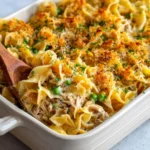
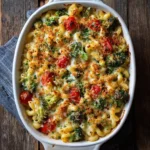
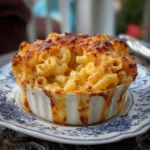
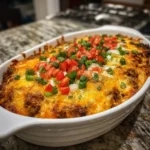
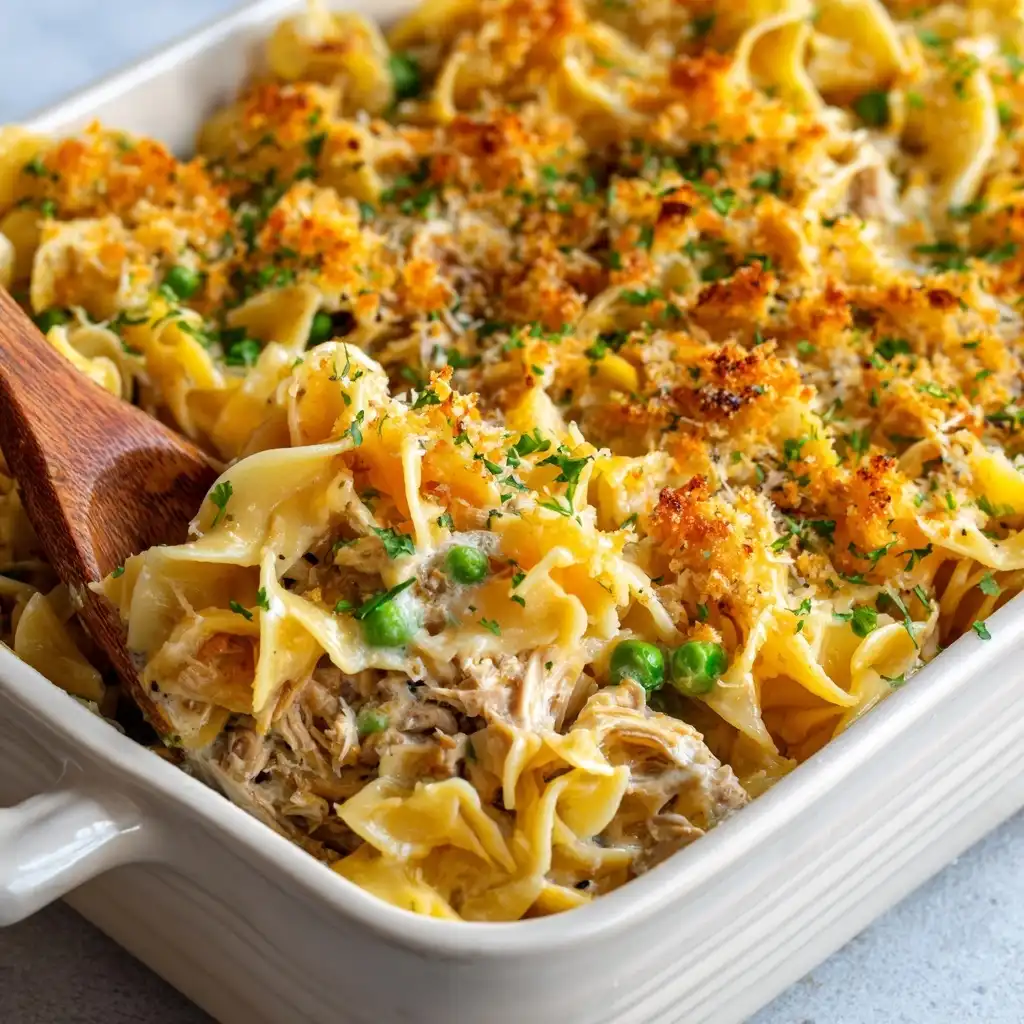
Creamy Tuna Noodle Casserole is the quintessential American comfort food—a soul-warming, pantry-friendly baked dish that bridges generations, evokes nostalgia, and delivers hearty satisfaction with minimal effort. With its golden-brown crust, tender noodles, savory tuna, and luxuriously creamy sauce studded with vegetables and herbs, it’s more than just dinner—it’s a culinary embrace. Whether served at potlucks, weeknight family meals, or holiday buffets, this casserole embodies simplicity, adaptability, and timeless appeal. Its enduring popularity lies in its forgiving nature: it welcomes substitutions, thrives on leftovers, and transforms humble ingredients into something deeply satisfying and deeply memorable.
The History
The origins of Creamy Tuna Noodle Casserole trace back to the early-to-mid 20th century in the United States, emerging during the Great Depression and flourishing post-World War II as part of the “casserole craze” that defined mid-century American home cooking. Canned tuna—introduced commercially in the U.S. in the 1900s and widely popularized by brands like Chicken of the Sea (1914) and Starkist (1917)—became an affordable, shelf-stable source of protein amid rationing and economic hardship. Simultaneously, the rise of convenience foods—including canned cream soups (Campbell’s Cream of Mushroom launched in 1934), boxed pasta, and processed cheese—made one-dish baking not only practical but aspirational. By the 1950s, tuna casserole appeared in women’s magazines, church cookbooks, and Betty Crocker publications, often styled with peas, pimiento, and buttered potato chips or cracker crumbs on top. It became synonymous with “housewife efficiency,” “budget-conscious cooking,” and “company-worthy simplicity.” Though briefly eclipsed by low-carb trends in the 2000s, the dish has enjoyed a robust resurgence—reimagined with artisanal ingredients, global spices, and health-conscious upgrades—proving its cultural staying power and emotional resonance across decades.
Ingredients Breakdown
Understanding each component of Creamy Tuna Noodle Casserole reveals why it works so harmoniously—and how to elevate it thoughtfully:
- Pasta: Egg noodles are traditional for their rich flavor and sturdy, slightly chewy texture that holds up to baking without turning mushy. Wide or extra-wide varieties are preferred for maximum sauce adhesion. Alternatives include fusilli, penne, or even gluten-free brown rice or chickpea pasta—each bringing distinct mouthfeel and nutritional profiles.
- Tuna: Solid white albacore offers firm texture and mild flavor; light tuna (skipjack or yellowfin) is more economical and slightly stronger in taste. Always drain thoroughly—excess liquid dilutes the sauce and leads to sogginess. For premium depth, consider wild-caught, MSC-certified tuna packed in olive oil (drained well) or sustainably sourced pouch tuna.
- Creamy Base: A roux-thickened béchamel-style sauce provides richness, control over consistency, and clean flavor—far superior to relying solely on canned soup. Key elements include butter (for nutty depth), all-purpose flour (as thickener), whole milk or half-and-half (for silkiness), and optional cream cheese or Gruyère for tang and body. Canned soups serve as a time-saving shortcut—but reduce sodium and add fresh aromatics to compensate.
- Aromatics & Vegetables: Sautéed onions, celery, and garlic build foundational umami and sweetness. Frozen peas add pop, color, and freshness; carrots (grated or diced), mushrooms (sautéed until golden), and bell peppers bring earthiness and complexity. Blanching or sautéing veggies first prevents excess moisture and ensures optimal texture after baking.
- Herbs & Seasonings: Fresh dill and parsley brighten the dish; dried thyme or tarragon add subtle sophistication. Lemon zest or a splash of juice lifts heaviness. Black pepper, white pepper (for heat without visual specks), onion powder, and a pinch of smoked paprika deepen dimension. Avoid over-salting—tuna, cheese, and soup already contribute sodium.
- Topping: The crown of the casserole transforms texture and visual appeal. Buttered panko breadcrumbs yield crisp, airy crunch; crushed butter crackers (Ritz, Club, or saltines) offer nostalgic saltiness; grated Parmesan or sharp cheddar adds savory umami; and a final drizzle of melted butter ensures browning and cohesion. For gluten-free versions, use certified GF oats or almond flour–based crumbs.
Step-by-Step Recipe
- Preheat & Prep: Preheat oven to 375°F (190°C). Grease a 9×13-inch (or 3-quart) baking dish with butter or nonstick spray. Set aside.
- Cook the Pasta: Bring a large pot of generously salted water to a rolling boil. Add 12 oz (about 340g) wide egg noodles and cook 1–2 minutes *less* than package directions for al dente texture—noodles will finish cooking in the oven. Drain thoroughly in a colander, rinse briefly under cool water to halt cooking (optional but recommended for no-stick results), then toss with 1 tbsp neutral oil to prevent clumping. Set aside.
- Sauté the Aromatics: In a large skillet or Dutch oven over medium heat, melt 3 tbsp unsalted butter. Add 1 finely diced yellow onion, 1 cup finely diced celery, and ½ cup finely diced carrots. Sauté 6–8 minutes until softened and translucent. Stir in 2 minced garlic cloves and cook 1 minute until fragrant—do not brown.
- Build the Sauce: Sprinkle ¼ cup all-purpose flour over vegetables and stir constantly for 1–2 minutes to cook out raw flour taste. Gradually whisk in 2 cups whole milk (or half-and-half for extra richness), ensuring no lumps form. Bring to a gentle simmer, stirring continuously, until thickened to a velvety coating consistency (about 5–7 minutes). Reduce heat to low and stir in 4 oz (½ cup) full-fat cream cheese (cubed), 1 cup shredded sharp cheddar or Gruyère, ½ tsp Dijon mustard, 1 tsp lemon zest, 1 tbsp fresh dill (or 1 tsp dried), 2 tbsp fresh parsley, ½ tsp black pepper, ¼ tsp white pepper, and a pinch of freshly grated nutmeg. Taste and adjust seasoning—remember tuna and cheese add salt.
- Combine Components: In a very large mixing bowl, combine drained noodles, sauce, 2 (5-oz) cans high-quality tuna (drained well and gently flaked), 1½ cups frozen peas (no need to thaw), and ½ cup frozen corn (optional). Fold gently with a silicone spatula until evenly coated—avoid overmixing to preserve noodle integrity.
- Transfer & Top: Pour mixture into prepared baking dish and spread evenly. In a small bowl, combine 1 cup panko breadcrumbs, ¼ cup grated Parmesan, 3 tbsp melted butter, ½ tsp garlic powder, and a pinch of flaky sea salt. Sprinkle evenly over casserole surface.
- Bake: Place dish on center oven rack. Bake uncovered for 25–30 minutes, until edges bubble vigorously and topping is deep golden brown and crisp. For extra browning, broil on low for 1–2 minutes at the end—watch closely.
- Rest & Serve: Let rest for 10–15 minutes before slicing. This crucial step allows the sauce to settle, prevents overflow, and improves sliceability. Garnish with extra fresh dill, lemon wedges, and cracked black pepper.
Tips
- Drain tuna like your casserole depends on it—because it does. Press tuna between paper towels or use a fine-mesh strainer with gentle pressure. Even 1 tbsp excess liquid can turn the entire dish watery.
- Undercook noodles intentionally. Overcooked noodles become gummy and disintegrate during baking. Aim for *very* al dente—they’ll absorb sauce and soften perfectly in the oven.
- Warm your sauce before combining. Adding cold sauce to hot noodles can cause clumping and uneven distribution. Keep sauce warm over low heat while assembling.
- Layer flavors—not just ingredients. Sauté onions until golden (not just translucent) for caramelized sweetness. Toast breadcrumbs separately in butter until fragrant before topping for deeper nuttiness.
- Use room-temperature dairy. Cold milk added to a hot roux can cause separation or lumps. Warm milk slightly before whisking in.
- Don’t skip the rest time. Cutting into the casserole too soon releases steam and sauce, resulting in a sloppy, runny presentation. Patience yields clean slices and ideal texture.
- Freeze smartly. Assemble unbaked casserole (without topping), cover tightly with double-layer foil, and freeze up to 3 months. Thaw overnight in fridge, add topping, and bake 40–45 minutes.
- Boost umami without MSG. Add 1 tsp soy sauce or tamari, ½ tsp fish sauce, or 1 tbsp nutritional yeast to the sauce for layered savoriness that complements tuna beautifully.
- Prevent soggy topping. If prepping ahead, store breadcrumb mixture separately and apply just before baking. Alternatively, add topping during the last 10 minutes of baking.
- Test doneness with a thermometer. Internal temperature should reach 165°F (74°C) at the center—especially important if using homemade cream sauce without preservatives.
Variations and Customizations
This casserole is a canvas—not a constraint. Here’s how to make it uniquely yours:
- Gourmet Mushroom & Herb: Sauté 2 cups mixed wild mushrooms (oyster, shiitake, cremini) until deeply browned; fold in 1 tbsp fresh thyme, 1 tsp rosemary, and ¼ cup dry white wine (reduced by half). Substitute Gruyère for cheddar and top with toasted hazelnuts.
- Southwest Chipotle: Add 1 tsp chipotle powder, ½ tsp cumin, and ¼ cup pickled jalapeños to sauce. Mix in black beans and roasted corn. Top with crushed tortilla chips and cotija cheese.
- Asian-Inspired Miso-Tuna: Replace cream sauce with a blend of ¼ cup white miso paste, 1 cup coconut milk, 1 tbsp rice vinegar, 1 tsp grated ginger, and 1 tbsp tamari. Stir in scallions and sesame oil. Top with toasted sesame seeds and nori strips.
- Low-Carb/Keto: Swap noodles for spiralized zucchini (salted and squeezed dry) or shirataki noodles (rinsed and pan-seared). Use heavy cream + cream cheese base, full-fat cheeses, and almond flour–panko topping.
- Gluten-Free: Use certified GF wide noodles (brown rice, quinoa, or lentil-based), GF flour blend (1:1 ratio) for roux, and GF crackers or oats for topping. Ensure tuna and broth are GF-certified.
- Vegan “Tuna” Casserole: Replace tuna with mashed chickpeas + nori flakes + kelp granules + lemon juice + capers for oceanic flavor. Use cashew cream or blended silken tofu for base, nutritional yeast for cheesiness, and crispy roasted seaweed for topping.
- Breakfast Casserole Twist: Add 4 beaten eggs and ½ cup cottage cheese to warm sauce before combining. Top with crumbled cooked bacon and chives. Bake until set (35–40 mins).
- Luxury Seafood Medley: Replace half the tuna with flaked cooked salmon or crab meat. Add sautéed leeks and fennel, and finish with crème fraîche swirl before baking.
- Heritage Italian: Use spaghetti or linguine, swap tuna for canned anchovies (2 fillets, mashed), add sun-dried tomatoes, kalamata olives, and basil. Top with toasted pine nuts and Pecorino Romano.
- Kid-Friendly Fun: Hide finely grated zucchini or spinach in sauce. Use fun-shaped pasta. Make individual ramekins topped with smiley-face cheese designs—and let kids sprinkle their own toppings.
Health Considerations and Nutritional Value
A standard 12-oz serving (approx. 1⅓ cups) of classic Creamy Tuna Noodle Casserole contains roughly:
- Calories: 420–480 kcal
- Protein: 22–28g (from tuna, dairy, and eggs if added)
- Carbohydrates: 40–48g (mostly from pasta; fiber ~2–3g unless whole grain used)
- Fat: 16–22g (saturated fat ~8–10g from cheese, butter, and cream)
- Sodium: 650–950mg (highly variable—canned tuna, soup, cheese, and added salt contribute significantly)
- Vitamins & Minerals: Excellent source of selenium, vitamin B12, niacin, and phosphorus from tuna; calcium and vitamin D from dairy; folate and iron from enriched pasta; vitamin A and K from vegetables.
Health-Conscious Upgrades:
- Reduce Sodium: Choose low-sodium or no-salt-added tuna and broth; omit added table salt; rely on herbs, citrus, and umami-rich ingredients (mushrooms, tomato paste, miso) for flavor.
- Increase Fiber & Nutrients: Use 100% whole wheat, legume-based, or ancient grain noodles. Add 1 cup chopped spinach (wilted and squeezed), ½ cup grated beets, or ¼ cup ground flaxseed to sauce.
- Optimize Fats: Replace half the butter with olive oil; use part-skim ricotta or reduced-fat Swiss instead of cheddar; incorporate avocado oil mayonnaise in place of some dairy for creaminess + monounsaturated fats.
- Omega-3 Boost: Select tuna packed in water or olive oil (not soybean oil); add 1 tbsp chia or hemp seeds to breadcrumb topping.
- Dairy Sensitivity Options: Use lactose-free milk, vegan butter, and nutritional yeast–based “cheese” sauce with blended cashews and lemon.
- Portion Mindfulness: Serve alongside a large green salad dressed with vinaigrette or roasted vegetables to balance the meal nutritionally and visually.
Note: While tuna is nutrient-dense, pregnant individuals and young children should limit albacore to ≤6 oz/week due to methylmercury content; light tuna is lower-risk (≤12 oz/week). Always consult dietary guidelines or a registered dietitian for personalized advice.
Ingredients
- 12 oz wide egg noodles (or gluten-free alternative)
- 3 tbsp unsalted butter, divided
- 1 medium yellow onion, finely diced
- 1 cup celery, finely diced
- ½ cup carrots, finely diced
- 2 garlic cloves, minced
- ¼ cup all-purpose flour (or GF 1:1 blend)
- 2 cups whole milk (or half-and-half)
- 4 oz full-fat cream cheese, cubed
- 1 cup shredded sharp cheddar or Gruyère cheese
- ½ tsp Dijon mustard
- 1 tsp lemon zest
- 2 tbsp fresh dill, chopped (or 1 tsp dried)
- 2 tbsp fresh parsley, chopped
- ½ tsp freshly ground black pepper
- ¼ tsp white pepper
- Pinch of freshly grated nutmeg
- 2 (5-oz) cans solid white albacore tuna in water, well-drained and flaked
- 1½ cups frozen peas
- ½ cup frozen corn (optional)
- 1 cup panko breadcrumbs
- ¼ cup grated Parmesan cheese
- 3 tbsp melted butter (for topping)
- ½ tsp garlic powder
- ¼ tsp flaky sea salt (for topping)
- Fresh dill, lemon wedges, and black pepper for garnish
Directions
- Preheat oven to 375°F (190°C). Lightly grease a 9×13-inch (3-quart) baking dish with butter or nonstick spray.
- Bring 4–5 quarts of water to a rolling boil. Add 1 tbsp salt. Cook noodles 1–2 minutes less than package directions for al dente. Drain thoroughly in a colander, rinse under cool water, then toss with 1 tsp neutral oil. Set aside.
- In a large skillet or Dutch oven over medium heat, melt 2 tbsp butter. Add onion, celery, and carrots. Sauté 6–8 minutes until soft and lightly golden. Stir in garlic; cook 1 minute until fragrant.
- Sprinkle flour over vegetables. Stir constantly 1–2 minutes to cook flour. Gradually whisk in milk, ensuring smooth incorporation. Bring to gentle simmer, stirring continuously, until thickened to coat the back of a spoon (~5–7 minutes).
- Reduce heat to low. Whisk in cream cheese until fully melted and smooth. Stir in cheddar, Dijon, lemon zest, dill, parsley, black pepper, white pepper, and nutmeg. Taste and adjust—add a pinch of salt only if needed.
- In a large bowl, combine drained noodles, sauce, flaked tuna, peas, and corn (if using). Fold gently with a spatula until fully and evenly combined.
- Transfer mixture to prepared baking dish. Smooth top with spatula.
- In a small bowl, combine panko, Parmesan, remaining 3 tbsp melted butter, garlic powder, and flaky salt. Sprinkle evenly over casserole.
- Bake uncovered for 25–30 minutes, until bubbly at edges and topping is deep golden brown. Optional: Broil on low for 1–2 minutes for extra crispness—watch carefully.
- Let rest 10–15 minutes before serving. Garnish with extra dill, lemon wedges, and cracked black pepper. Serve warm.
FAQ
- Can I make this casserole ahead of time?
- Yes! Assemble completely (including topping), cover tightly with plastic wrap + foil, and refrigerate up to 24 hours. Remove plastic wrap, let sit at room temperature 20 minutes, then bake—add 5–10 minutes to total time. For longer storage, freeze unbaked casserole (without topping) up to 3 months. Thaw overnight in fridge, add topping, and bake 40–45 minutes.
- Why did my casserole turn out watery?
- Most commonly: insufficient draining of tuna or frozen vegetables, overcooked noodles releasing starch-water, or under-reduced sauce. Always press tuna dry, thaw and pat dry peas/corn if using fresh-frozen, and simmer sauce until thick enough to coat a spoon heavily. Also ensure noodles are truly al dente—not soft.
- Can I use canned soup instead of making sauce from scratch?
- Absolutely—you can substitute 2 (10.5-oz) cans condensed cream of mushroom or celery soup. Reduce added salt drastically, and enhance with sautéed onions, garlic, herbs, and a splash of sherry or lemon juice to cut richness and add brightness.
- What’s the best cheese for tuna casserole?
- Sharp cheddar offers classic tang and melt; Gruyère adds nuttiness and sophistication; Fontina brings luxurious stretch; Monterey Jack gives mild creaminess. Avoid pre-shredded cheese—it contains anti-caking agents that hinder melting. Always grate fresh.
- Can I add other proteins?
- Yes—diced cooked chicken, flaked salmon, crab, or even plant-based options like marinated tempeh or lentils integrate seamlessly. Adjust seasonings accordingly (e.g., dill + lemon for seafood, smoked paprika + cumin for chicken).
- How do I reheat leftovers without drying them out?
- For best results: Place portion in oven-safe dish, add 1–2 tbsp milk or broth, cover with foil, and bake at 325°F (160°C) for 15–20 minutes until heated through. Microwave reheating works—cover with damp paper towel and heat in 30-second intervals, stirring gently.
- Is tuna casserole safe to eat cold?
- Yes—if properly refrigerated within 2 hours of baking and consumed within 3–4 days. Many enjoy it chilled as a salad-like lunch—just add a squeeze of lemon and extra herbs.
- What sides pair well with tuna casserole?
- Light, acidic, or crunchy contrasts shine: mixed green salad with lemon vinaigrette, roasted asparagus or broccoli, apple-walnut slaw, crusty whole-grain bread, or a simple cucumber-dill yogurt sauce.
- Can I make this dairy-free?
- Yes—use unsweetened oat or soy milk, vegan butter, dairy-free cream cheese (Kite Hill or Miyoko’s), and nutritional yeast–based “cheese” sauce. Top with toasted coconut flakes or crushed GF crackers.
- How do I prevent the topping from burning?
- Cover loosely with foil for first 20 minutes, then remove for final 10–15 minutes to brown. Or apply topping only during the last 10 minutes of baking. Watch closely during broiling—golden brown happens quickly!
Summary
Creamy Tuna Noodle Casserole is a beloved, adaptable, and deeply comforting baked dish rooted in American culinary history—transforming pantry staples into a rich, savory, golden-crusted meal with minimal effort and maximum heart.
By mastering technique—properly draining tuna, undercooking noodles, building a velvety from-scratch sauce, and adding thoughtful layers of flavor and texture—you elevate tradition into something both timeless and entirely your own.