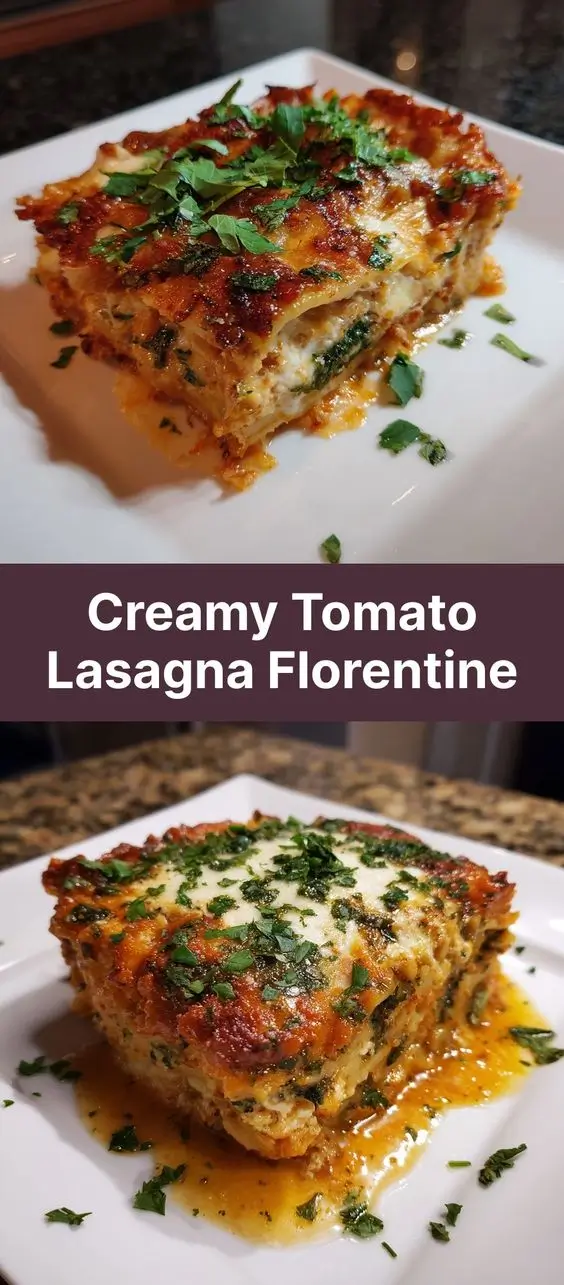
Creamy Tomato Lasagna Florentine: A Rich, Comforting Classic with a Spinach Twist
Indulge in the luxurious layers of Creamy Tomato Lasagna Florentine, a sumptuous evolution of traditional Italian lasagna that blends hearty tomato sauce, creamy ricotta, tender spinach, and melted cheeses into one unforgettable casserole. This dish—often associated with Florentine cuisine due to its generous use of leafy greens—transforms humble ingredients into a gourmet experience perfect for family dinners, holiday feasts, or elegant weekend cooking projects. Whether you’re serving it at a dinner party or enjoying leftovers over several days, this lasagna promises rich flavor, velvety texture, and satisfying comfort in every bite.
The History of Lasagna and the Florentine Influence
Lasagna traces its roots back to ancient Greece, but it was the Italians who perfected it into the baked pasta dish we know today. The word “lasagna” comes from the Greek *lasanon*, meaning “chamber pot,” later adapted by the Romans as *lasanum* for any type of cooking pot. By the Middle Ages, layered pasta dishes were already common in Italy, particularly in Emilia-Romagna, where fresh egg pasta and rich dairy products like Parmigiano-Reggiano and ricotta thrived.
The term “Florentine“—as in Lasagna Florentine—originates not from Florence’s signature pasta dishes but from its renowned use of spinach. Named after Catherine de’ Medici, a 16th-century Florentine noblewoman who brought her chefs (and love for spinach) to the French court, anything labeled “Florentine” typically features spinach as a star ingredient. Thus, Creamy Tomato Lasagna Florentine combines the robust Italian lasagna tradition with the lush green elegance of Florentine cooking, creating a harmonious blend of textures and flavors that celebrates both culinary heritages.
Ingredients Breakdown: What Makes This Lasagna So Creamy and Flavorful?
The magic of Creamy Tomato Lasagna Florentine lies in its carefully balanced ingredients. Each component plays a vital role in building flavor, texture, and richness:
- Lasagna Noodles: Traditional oven-ready or no-boil noodles are ideal for convenience, but you can also use freshly made or pre-cooked dried lasagna sheets. They provide structure and absorb the sauces beautifully.
- Tomato Sauce: A high-quality marinara or homemade tomato sauce forms the tangy backbone. Opt for San Marzano tomatoes for sweetness and low acidity.
- Fresh Spinach: The hallmark of the “Florentine” style. Fresh baby spinach is sautéed until just wilted to preserve its color, nutrients, and mild earthiness.
- Ricotta Cheese: Whole-milk ricotta adds creaminess and lightness to the cheese layer. It’s less dense than cottage cheese and blends smoothly with eggs and herbs.
- Mozzarella Cheese: Low-moisture mozzarella melts perfectly, creating those irresistible gooey strands with every forkful.
- Parmesan Cheese: Aged Parmigiano-Reggiano delivers umami depth and saltiness, enhancing all other flavors.
- Eggs: Act as a binder for the ricotta mixture, preventing it from separating during baking.
- Heavy Cream or Béchamel (Optional): For extra creaminess, some versions include a béchamel sauce or a splash of heavy cream in the ricotta layer.
- Garlic, Onion, and Herbs: Fresh garlic, sautéed onions, basil, oregano, and parsley elevate the entire dish with aromatic complexity.
- Olive Oil and Butter: Used for sautéing spinach and adding richness to the sauce layers.
Step-by-Step Recipe: How to Make Creamy Tomato Lasagna Florentine
Ingredients
- 12 no-boil lasagna noodles (or 9 regular lasagna noodles, cooked al dente)
- 2 cups marinara sauce (homemade or high-quality store-bought)
- 1 cup tomato passata or crushed tomatoes (for smoother texture)
- 2 tablespoons olive oil
- 1 medium onion, finely chopped
- 4 cloves garlic, minced
- 10 oz fresh spinach (about 10 cups raw), washed thoroughly
- 2 cups whole-milk ricotta cheese
- 1 large egg
- 1 cup grated Parmesan cheese, divided
- 3 cups shredded mozzarella cheese, divided
- 1/4 cup fresh basil, chopped
- 1 tablespoon fresh oregano (or 1 tsp dried)
- Salt and freshly ground black pepper to taste
- 1/4 teaspoon nutmeg (optional, enhances flavor)
- 1/2 cup heavy cream or béchamel sauce (optional, for extra creaminess)
Directions
- Preheat Oven: Preheat your oven to 375°F (190°C). Lightly grease a 9×13-inch baking dish with butter or non-stick spray.
- Prepare the Spinach: In a large skillet over medium heat, warm the olive oil. Add the chopped onion and sauté for 3–4 minutes until translucent. Add the garlic and cook for another 30 seconds until fragrant. Stir in the fresh spinach in batches, allowing each batch to wilt before adding more. Cook until all spinach is wilted and excess moisture has evaporated (about 5–7 minutes total). Season with salt and pepper. Remove from heat and let cool slightly. Squeeze out any excess liquid using a clean kitchen towel or paper towels. Chop finely and set aside.
- Make the Cheese Mixture: In a large bowl, combine the ricotta, egg, 1/2 cup Parmesan, 1 cup mozzarella, chopped basil, oregano, nutmeg (if using), salt, and pepper. Mix until smooth. Fold in the cooked spinach and heavy cream (if using). Set aside.
- Prepare the Sauce: In a separate bowl, mix the marinara sauce with the tomato passata for a smoother, richer base. This prevents the sauce from being too chunky and helps create even layers.
- Assemble the Lasagna:
- Spread about 1/2 cup of tomato sauce on the bottom of the prepared baking dish to prevent sticking.
- Place a single layer of lasagna noodles over the sauce (3 noodles for most brands).
- Spread 1/3 of the ricotta-spinach mixture evenly over the noodles.
- Sprinkle with 1/2 cup mozzarella and a little Parmesan.
- Add 3/4 cup of tomato sauce over the cheese layer.
- Repeat the layers two more times: noodles → ricotta-spinach → mozzarella/Parmesan → sauce.
- On the topmost layer, finish with a final layer of noodles, remaining tomato sauce, the rest of the mozzarella, and Parmesan.
- Cover and Bake: Cover the dish tightly with aluminum foil (tent it slightly so cheese doesn’t stick). Bake for 25 minutes.
- Uncover and Brown: Remove the foil and bake for an additional 15–20 minutes, until the top is golden brown and bubbling. If desired, broil for 2–3 minutes at the end to crisp up the cheese (watch closely to avoid burning).
- Rest Before Serving: Let the lasagna rest for 15–20 minutes after baking. This allows the layers to set and makes slicing much cleaner.
Expert Tips for the Perfect Creamy Tomato Lasagna Florentine
- Don’t Skip the Resting Time: Allowing the lasagna to rest after baking ensures neat slices and prevents a soupy mess when served.
- Squeeze Spinach Dry: Excess moisture from spinach can make the lasagna watery. Always squeeze it well using a cheesecloth or clean towel.
- Use Quality Cheese: Freshly grated mozzarella and real Parmigiano-Reggiano melt better and taste far superior to pre-shredded varieties (which contain anti-caking agents).
- No-Boil Noodles Tip: Ensure enough sauce surrounds the noodles so they absorb liquid and soften properly. If using regular noodles, undercook them slightly (al dente) since they’ll continue cooking in the oven.
- Layer Evenly: Use a spatula to spread cheese mixtures uniformly—this guarantees every bite has balanced flavor.
- Bake Until Bubbling at Edges: The lasagna is done when the edges are bubbling and the center is hot throughout (165°F internal temperature).
- Make Ahead Friendly: Assemble the lasagna up to 24 hours in advance, cover, and refrigerate. Add 10–15 minutes to baking time if starting cold.
- Freeze for Later: Wrap unbaked or baked lasagna tightly and freeze for up to 3 months. Thaw overnight in the fridge before baking.
Variations and Customizations
Creamy Tomato Lasagna Florentine is highly adaptable. Here are some popular twists to suit different tastes and dietary needs:
- Meat Lovers’ Version: Add a layer of cooked Italian sausage, ground beef, or turkey to the sauce for a heartier dish. Brown the meat first, then simmer with the tomato sauce.
- Vegetarian Boost: Include sautéed mushrooms, zucchini, roasted red peppers, or caramelized onions between layers.
- Vegan Option: Substitute ricotta with blended tofu or cashew ricotta, use vegan mozzarella and Parmesan, and skip the egg (use a flax egg instead).
- Gluten-Free: Use gluten-free lasagna noodles (many oven-ready brands are available). Ensure all sauces are certified GF.
- Low-Carb/Keto: Replace lasagna noodles with thinly sliced zucchini (‘zoodles’) or eggplant. Salt and pre-cook slices to remove moisture.
- Creamier Texture: Add a thin layer of béchamel sauce between each noodle layer for a French-Italian hybrid effect.
- Dairy-Free Ricotta Alternative: Blend soaked cashews, nutritional yeast, lemon juice, and garlic for a rich, tangy substitute.
- Spicy Kick: Add red pepper flakes to the sauce or mix chopped roasted jalapeños into the ricotta layer.
Health Considerations and Nutritional Value
While Creamy Tomato Lasagna Florentine is undeniably rich, it can still be part of a balanced diet when enjoyed in moderation. Here’s a breakdown of its health aspects:
Nutritional Highlights (per serving, based on 8 servings):
- Calories: ~400–450 kcal
- Protein: ~20–25g (from cheese, egg, and optional meat)
- Carbohydrates: ~35–40g (mostly from pasta and tomatoes)
- Fats: ~20–25g (saturated fat from full-fat dairy; consider low-fat cheese to reduce)
- Fiber: ~4–6g (thanks to spinach and whole wheat noodles if used)
- Vitamins & Minerals: High in calcium, vitamin A, vitamin K, iron, and folate from spinach; lycopene from tomatoes.
Health Tips:
- Reduce Sodium: Use low-sodium ricotta, mozzarella, and marinara sauce. Limit added salt and rely on herbs for flavor.
- Boost Fiber: Use whole wheat or legume-based lasagna noodles.
- Lower Fat: Substitute part-skim ricotta and mozzarella, though this may reduce creaminess.
- Add More Veggies: Incorporate pureed carrots or butternut squash into the tomato sauce for natural sweetness and added nutrients.
- Portion Control: Serve with a crisp green salad and whole-grain bread for a balanced meal.
Frequently Asked Questions (FAQ)
Can I make lasagna ahead of time?
Yes! Assemble it up to 24 hours in advance and refrigerate. Add 10–15 minutes to the baking time. You can also freeze it (baked or unbaked) for up to 3 months.
Why is my lasagna watery?
Common causes: not squeezing spinach dry, using wet noodles, too much sauce, or cutting too soon. Always let it rest for 15+ minutes before slicing.
Can I use frozen spinach?
Yes. Use 10 oz frozen chopped spinach, thawed completely, and squeezed very dry. It works well and saves time.
Do I need to boil no-boil lasagna noodles?
No—but ensure there’s enough liquid (sauce) around them to hydrate during baking. Overlapping slightly is fine.
What’s the difference between lasagna and lasagna Florentine?
Traditional lasagna often includes meat and cheese layers. Lasagna Florentine specifically features spinach as a key ingredient, honoring the Florentine culinary tradition.
Can I make this gluten-free?
Absolutely. Use certified gluten-free lasagna noodles and verify all other ingredients (like sauces) are GF-safe.
How do I reheat leftover lasagna?
Cover with foil and reheat in a 350°F oven for 20–25 minutes. Alternatively, microwave individual portions for 2–3 minutes.
Is lasagna freezer-friendly?
Yes. Cool completely, wrap tightly in plastic and foil, and freeze. Thaw in the fridge overnight before reheating.
Summary
Creamy Tomato Lasagna Florentine is a decadent fusion of Italian comfort food and Florentine elegance, featuring layers of tender pasta, rich tomato sauce, creamy ricotta, and vibrant spinach. Baked to golden perfection, it’s a show-stopping dish that satisfies crowds and freezes beautifully for future meals.