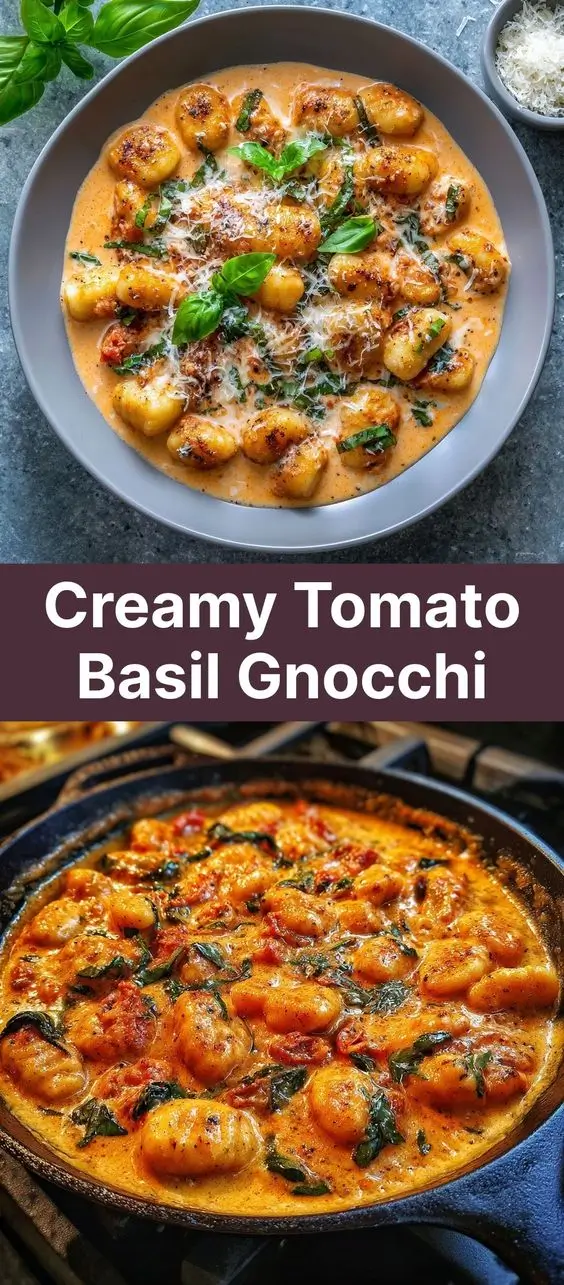
Creamy Tomato Basil Gnocchi is a luxurious yet comforting dish that brings together the velvety richness of cream, the bright acidity of ripe tomatoes, and the earthy sweetness of fresh basil, all wrapped around soft, pillowy gnocchi. This recipe is a modern fusion of Italian culinary traditions, transforming humble ingredients into a restaurant-worthy meal that can be prepared in under 30 minutes. Whether you’re cooking for a weeknight dinner or impressing guests at a weekend gathering, this dish delivers bold flavors with minimal effort. Below is an exhaustive guide that dives deep into every aspect of creating the perfect Creamy Tomato Basil Gnocchi — from its historical roots to nutritional insights, expert tips, variations, and more.
The History
Gnocchi, small dumplings traditionally made from potato, semolina, or flour, have roots stretching back centuries across various European cultures. The word “gnocchi” comes from the Italian word nocchio, meaning “a knot in wood,” or possibly from nocca, meaning “knuckle,” both evoking the small, knuckle-like shape of the dumplings. While their exact origin is debated, gnocchi likely emerged in Northern Italy, particularly in regions like Lombardy, Veneto, and Piedmont, where potatoes were introduced in the 16th century following the Columbian Exchange.
Originally, gnocchi were made from breadcrumbs, ricotta, or even leftover polenta before potatoes became widely available. Potato gnocchi gained popularity due to their soft texture and ability to absorb sauces. Over time, regional variations developed: gnocchi di patate (potato gnocchi), gnocchi alla romana (semolina-based), and ricotta gnocchi became staples across Italy.
The pairing of gnocchi with tomato sauce evolved as the tomato — initially met with suspicion in Europe — became embraced in Italian cuisine by the 18th century. As canned and fresh tomatoes became pantry essentials, simple tomato sauces enhanced with garlic, olive oil, and herbs became go-to pairings for gnocchi. The addition of cream and fresh basil to create a “creamy tomato” variation is a more modern twist, inspired by fusion cooking and the desire for richer textures. Today, Creamy Tomato Basil Gnocchi reflects a global palate — combining rustic Italian roots with contemporary comfort food sensibilities.
Ingredients Breakdown
Every ingredient in this recipe plays a crucial role in building layers of flavor, texture, and aroma. Understanding each component helps elevate your cooking technique and allows for informed substitutions.
- Gnocchi (16 oz / 450g): Fresh or shelf-stable vacuum-packed gnocchi are ideal for this recipe due to their tender texture. Frozen gnocchi work well too but may require slightly longer cooking time. Avoid overcooking, as gnocchi can become mushy.
- Extra Virgin Olive Oil (2 tbsp): Used to sauté aromatics, high-quality olive oil adds fruitiness and depth. Choose a cold-pressed variety for best flavor.
- Garlic (4 cloves, minced): Freshly minced garlic provides a pungent, aromatic base. Roasted garlic can be used for a sweeter, milder note.
- Shallot or Yellow Onion (½ cup finely diced): Shallots offer a delicate sweetness; onions provide more bite. Sauté until translucent to build a flavorful foundation.
- Canned Crushed Tomatoes (28 oz / 800g): San Marzano tomatoes are preferred for their low acidity and rich sweetness. Fire-roasted tomatoes add a smoky dimension.
- Fresh Basil (⅓ cup chopped, plus extra for garnish): Adds a floral, slightly peppery freshness. Basil is sensitive to heat, so it’s best added toward the end.
- Heavy Cream (¾ cup): Imparts silkiness and balances the acidity of tomatoes. For a lighter version, half-and-half or full-fat coconut milk can be substituted.
- Vegetable or Chicken Broth (½ cup): Enhances umami and adjusts sauce consistency. Homemade broth adds superior depth.
- Sugar (½ tsp, optional): Neutralizes excess acidity in tomatoes, especially if they’re not perfectly ripe.
- Red Pepper Flakes (¼–½ tsp): Introduces subtle heat. Adjust to taste or omit for mild versions.
- Salt and Black Pepper (to taste): Essential for seasoning balance. Add gradually and taste throughout.
- Grated Parmesan Cheese (½ cup, plus extra for serving): Adds salty, nutty umami. Use freshly grated for optimal melt and flavor.
- Butter (1 tbsp, optional): Swirled in at the end for extra richness and gloss.
Step-by-Step Recipe
- Prepare the Gnocchi: Bring a large pot of salted water to a gentle boil. Add gnocchi and cook according to package instructions (usually 2–4 minutes). They’re done when they float to the surface. Drain carefully and set aside. Do not rinse. For extra texture, sauté cooked gnocchi in a bit of olive oil until lightly golden, then set aside.
- Sauté Aromatics: In a large skillet or Dutch oven, heat olive oil over medium heat. Add diced shallot (or onion) and sauté for 3–4 minutes until soft and translucent. Add minced garlic and red pepper flakes, stirring constantly for 30 seconds until fragrant — do not let garlic brown.
- Build the Sauce Base: Pour in crushed tomatoes, including juices. Stir in sugar (if using), salt, and black pepper. Simmer uncovered for 10–12 minutes, stirring occasionally, allowing the sauce to thicken slightly and develop flavor.
- Incorporate Liquids: Reduce heat to low. Stir in heavy cream and broth. Mix gently to combine. Continue simmering for another 5–7 minutes until the sauce reaches a creamy, luscious consistency. Avoid boiling vigorously to prevent curdling.
- Add Cheese and Herbs: Remove from heat. Stir in grated Parmesan cheese until fully melted and incorporated. Fold in most of the chopped fresh basil, reserving some for garnish.
- Combine with Gnocchi: Add the cooked gnocchi to the sauce. Gently fold to coat each piece evenly. If the sauce is too thick, add a splash of broth or pasta water to loosen. Let sit off heat for 2–3 minutes to allow gnocchi to absorb flavors.
- Finish and Serve: Taste and adjust seasoning. For extra richness, stir in butter just before serving. Garnish with remaining basil, a drizzle of olive oil, and additional Parmesan. Serve immediately.
Tips
- Don’t Overcook Gnocchi: Overcooked gnocchi turn gummy. Remove them from water as soon as they float. If sautéing after boiling, keep the heat moderate to avoid breaking them apart.
- Bloom the Spices: Cooking red pepper flakes with garlic for 15–20 seconds enhances their flavor without adding excessive heat.
- Use Room-Temperature Cream: Cold cream is more likely to split when added to hot sauces. Warm it slightly or temper it by adding a spoonful of hot sauce first.
- Reserve Pasta Water: Though gnocchi aren’t traditional pasta, the starchy cooking water can help emulsify and thicken the sauce if needed.
- Simmer Gently: High heat can cause the cream to separate. Keep the sauce at a low simmer, never a rolling boil.
- Layer the Basil: Add some basil early for infused flavor and the rest at the end for fresh aroma.
- Rest Before Serving: Allowing the dish to sit for a few minutes helps the gnocchi absorb the sauce, enhancing overall flavor integration.
- Prep Ahead: Chop aromatics and measure ingredients in advance. The sauce can be partially prepared up to a day ahead and reheated gently.
Variations and Customizations
This recipe is highly adaptable to dietary needs, preferences, and seasonal availability.
- Protein Additions: Brown Italian sausage, grilled chicken, seared shrimp, or crispy pancetta can turn this into a heartier entrée. Add proteins after sautéing aromatics and before adding tomatoes.
- Vegetable Boost: Stir in sautéed spinach, roasted bell peppers, sun-dried tomatoes, zucchini, or mushrooms for added nutrition and texture.
- Dairy-Free/Vegan Version: Substitute heavy cream with full-fat coconut milk or cashew cream. Use vegan Parmesan or nutritional yeast instead of dairy cheese. Ensure gnocchi are egg-free (many store-bought brands are).
- Gluten-Free: Most potato gnocchi are naturally gluten-free, but always check labels. Pair with certified GF broth and seasonings.
- Herb Variations: Replace basil with fresh oregano, thyme, or parsley. A touch of rosemary can add complexity (use sparingly).
- Tomato Alternatives: Use fresh blended tomatoes in season, or substitute part of the sauce with marinara or arrabbiata for convenience.
- Spicier Kick: Add Calabrian chili paste, harissa, or extra red pepper flakes for heat lovers.
- White Wine Deglaze: After sautéing aromatics, deglaze the pan with ¼ cup dry white wine (e.g., Pinot Grigio). Let it reduce by half before adding tomatoes for a sophisticated depth.
- Cheese Swaps: Try Pecorino Romano for a sharper bite, or fontina for extra meltiness.
- Pesto Twist: Swirl in 2–3 tablespoons of basil pesto at the end for a vibrant, herby upgrade.
Health Considerations and Nutritional Value
While Creamy Tomato Basil Gnocchi is undeniably indulgent, mindful preparation can make it part of a balanced diet.
Nutritional Profile (per serving, approx. 1/4 of recipe):
- Calories: ~450–550 kcal
- Fat: 20–28g (saturated fat: 10–14g)
- Carbohydrates: 55–65g (fiber: 4–6g, sugars: 8–10g)
- Protein: 10–14g
- Sodium: 600–900mg (varies based on broth and cheese)
- Vitamins & Minerals: Rich in vitamin C (from tomatoes), vitamin A, calcium (from dairy), and antioxidants (from basil and tomatoes).
Health Notes:
- High in Saturated Fat: Heavy cream and cheese contribute saturated fat. Opt for lower-fat dairy alternatives or reduce quantities to decrease fat content.
- Refined Carbohydrates: Traditional gnocchi are made from refined flour and potatoes. For higher fiber, consider whole wheat gnocchi (if available) or legume-based alternatives.
- Low in Fiber: Unless vegetables are added, this dish is moderate in fiber. Incorporating leafy greens or beans boosts fiber significantly.
- Lactose Sensitivity: Contains dairy. Lactose-free cream and cheese are available, or use plant-based substitutes.
- Heart-Healthy Modifications: Use olive oil as the primary fat, limit cheese, increase vegetables, and use low-sodium broth to support cardiovascular health.
- Antioxidant Benefits: Lycopene in tomatoes (especially when cooked) is a powerful antioxidant linked to reduced risk of chronic diseases. Basil contains anti-inflammatory compounds like eugenol.
Ingredients
- 16 oz (450g) gnocchi (fresh, vacuum-packed, or frozen)
- 2 tbsp extra virgin olive oil
- 1 medium shallot or ½ yellow onion, finely diced
- 4 garlic cloves, minced
- ¼–½ tsp red pepper flakes (adjust to taste)
- 28 oz (800g) canned crushed tomatoes (preferably San Marzano)
- ½ tsp sugar (optional)
- ¾ cup heavy cream
- ½ cup vegetable or chicken broth
- Salt and freshly ground black pepper (to taste)
- ½ cup freshly grated Parmesan cheese, plus extra for serving
- ⅓ cup fresh basil, chopped (plus extra for garnish)
- 1 tbsp unsalted butter (optional, for finish)
Directions
- Bring a large pot of salted water to a boil. Add gnocchi and cook until they float (2–4 minutes). Drain and set aside. Optionally, sauté in 1 tbsp olive oil until golden.
- In a large skillet over medium heat, warm olive oil. Add shallot and cook until soft (3–4 minutes). Stir in garlic and red pepper flakes; cook 30 seconds until fragrant.
- Add crushed tomatoes, sugar (if using), salt, and pepper. Simmer for 10–12 minutes, stirring occasionally, until slightly thickened.
- Reduce heat to low. Stir in heavy cream and broth. Simmer gently for 5–7 minutes until smooth and creamy.
- Remove from heat. Stir in Parmesan cheese and most of the basil until melted and combined.
- Add cooked gnocchi to the sauce. Gently fold to coat. Adjust consistency with broth if needed.
- Let stand 2–3 minutes. Stir in butter (if using) for extra shine.
- Season to taste. Serve hot, garnished with extra basil, Parmesan, and a drizzle of olive oil.
FAQ
Can I use jarred marinara sauce?
Yes. Substitute the crushed tomatoes with 3 cups of your favorite marinara. Look for one with basil and low sodium. You may need less salt and sugar.
How do I store leftovers?
Cool completely and store in an airtight container in the refrigerator for up to 3 days. Reheat gently on the stove with a splash of broth to restore creaminess.
Can I freeze this dish?
Freezing is not recommended due to the dairy-based sauce, which may separate upon thawing. However, you can freeze the sauce (without cream or cheese) for up to 2 months. Add cream and cheese after reheating.
Why did my sauce curdle?
Dairy curdles due to high heat or acidic environments. Always add cream off-boil and simmer gently. If it curdles slightly, blend with an immersion blender for a smoother texture.
Is this dish vegetarian?
Yes, if you use vegetable broth and ensure the gnocchi contain no egg or animal products. Check labels carefully.
Can I make it ahead?
Yes. Prepare the sauce (without cream, cheese, or gnocchi) up to a day in advance. Reheat and add cream, cheese, and freshly cooked gnocchi when ready to serve.
What wine pairs well with this dish?
A crisp Pinot Grigio, Sauvignon Blanc, or light Chianti complements the acidity and richness. For red lovers, a Barbera or Sangiovese works beautifully.
Can I use fresh tomatoes?
Absolutely. Blanch and peel 2 lbs ripe tomatoes, then crush by hand or blend briefly. Simmer longer to reduce excess liquid and concentrate flavor.
Summary
Creamy Tomato Basil Gnocchi combines tender dumplings with a luxuriously smooth sauce of tomatoes, cream, garlic, and fresh basil for a dish that’s both elegant and comforting. Quick to prepare and endlessly customizable, it’s a modern classic that satisfies every palate.