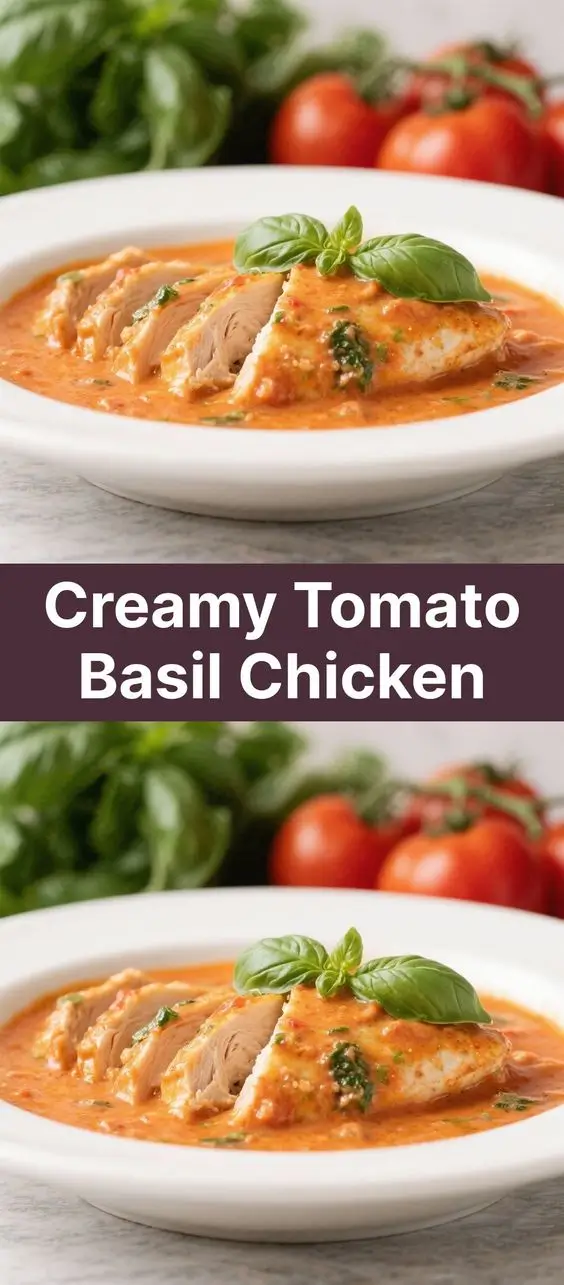
Creamy Tomato Basil Chicken is a luxurious, comforting dish that marries the tangy sweetness of ripe tomatoes with the earthy freshness of basil and the rich creaminess of a velvety sauce. Tender pieces of chicken are seared to golden perfection and then simmered in a luscious tomato-cream sauce, creating a restaurant-quality meal that’s surprisingly simple to prepare at home. This dish strikes the perfect balance between elegance and comfort, making it ideal for weeknight dinners, romantic evenings, or even dinner parties where you want to impress without spending hours in the kitchen.
The History
The roots of Creamy Tomato Basil Chicken can be traced back to Italian-American culinary traditions, where rustic Italian cooking met American tastes for richer, creamier textures. While traditional Italian dishes like pollo al pomodoro (chicken with tomatoes) typically use olive oil, garlic, fresh herbs, and tomatoes with minimal dairy, Italian-American chefs began incorporating heavy cream and butter to create more indulgent versions during the 20th century. This adaptation catered to palates that favored decadent sauces, leading to the birth of creamy tomato-based entrées found on many U.S. Italian restaurant menus today.
The addition of basil—native to Mediterranean cuisine—adds aromatic depth and freshness, balancing the richness of the cream. Over time, this dish evolved into what we now know as Creamy Tomato Basil Chicken: a harmonious blend of Old World flavors and New World richness. It reflects the broader trend of fusion in American cuisine, where immigrant traditions are reimagined using local ingredients and preferences.
Ingredients Breakdown
To achieve the perfect flavor profile and texture in Creamy Tomato Basil Chicken, each ingredient plays a crucial role:
- Chicken breasts or thighs: Boneless, skin-on chicken breasts offer lean tenderness, while thighs provide more flavor and juiciness due to higher fat content. Both work well depending on your preference.
- Olive oil and butter: Olive oil ensures a high smoke point for searing, while butter adds richness and helps build the sauce’s foundation.
- Garlic: Freshly minced garlic brings pungency and depth, essential for building layers of flavor.
- Onion: Yellow or white onions add sweetness when sautéed and contribute body to the sauce.
- Canned crushed tomatoes or tomato puree: These provide consistent acidity and thickness. San Marzano tomatoes are preferred for their sweet-tart balance and low seed count.
- Fresh basil: The star herb imparts a bright, slightly peppery aroma. Dried basil can substitute but lacks vibrancy.
- Heavy cream or half-and-half: Heavy cream delivers a luxuriously thick sauce; half-and-half offers a lighter alternative.
- Chicken broth: Enhances moisture and deepens the savory backbone of the sauce.
- Flour (optional): Used as a thickening agent if a denser sauce is desired.
- Seasonings: Salt, black pepper, red pepper flakes (for heat), and sometimes a pinch of sugar to balance acidity.
- Parmesan cheese (optional): Adds umami and extra creaminess when stirred into the sauce.
Step-by-Step Recipe
- Prep the chicken: Pat 4 boneless, skin-on chicken breasts dry with paper towels. Season generously with salt and pepper on both sides. For extra flavor, lightly dredge in flour seasoned with garlic powder, onion powder, and paprika.
- Sear the chicken: Heat 2 tablespoons of olive oil in a large skillet over medium-high heat. Once shimmering, place chicken in the pan skin-side down. Cook for 5–6 minutes until golden brown and crispy. Flip and cook another 3–4 minutes. Remove chicken and set aside on a plate. (If using boneless, skinless breasts, cook about 4 minutes per side.)
- Sauté aromatics: In the same skillet, reduce heat to medium. Add 1 tablespoon butter and 1 chopped onion. Sauté for 3–4 minutes until softened. Add 3–4 minced garlic cloves and cook for 30 seconds until fragrant—do not let it burn.
- Build the tomato base: Stir in 1 can (28 oz) crushed tomatoes (preferably San Marzano). Add ½ teaspoon dried oregano, ¼ teaspoon red pepper flakes (adjust to taste), and a pinch of sugar. Simmer for 8–10 minutes, stirring occasionally, allowing the sauce to thicken slightly.
- Add liquids: Pour in ½ cup chicken broth to deglaze the pan, scraping up any browned bits (flavor gold!). Let it simmer for 2 minutes.
- Incorporate cream: Stir in ¾ cup heavy cream. Bring to a gentle simmer—do not boil vigorously, as cream may separate. Optional: stir in ¼ cup grated Parmesan cheese for added richness.
- Return chicken to pan: Place the seared chicken back into the sauce, nestling it gently. Spoon sauce over the top. Cover and simmer on low for 15–20 minutes, or until chicken reaches an internal temperature of 165°F (74°C).
- Finish with fresh basil: Remove from heat. Stir in ½ cup loosely packed fresh basil leaves, torn or chopped. Adjust seasoning with salt and pepper.
- Serve: Plate the chicken and generously ladle the creamy tomato sauce over the top. Garnish with additional basil and shaved Parmesan.
Tips
- Don’t overcrowd the pan: Sear chicken in batches if necessary to ensure proper browning, which enhances flavor through the Maillard reaction.
- Use room-temperature cream: Cold cream can cause the sauce to break or curdle. Let it sit out for 15–20 minutes before adding.
- Simmer gently: Keep the heat low when adding cream to prevent separation. A slow, steady simmer preserves the silky texture.
- Reserve pasta water (if serving over pasta): The starchy liquid helps bind the sauce to noodles for a restaurant-style finish.
- Rest the chicken: Let the chicken rest for 5 minutes after cooking to retain juices.
- Boost flavor: Deglaze with a splash of white wine before adding tomatoes for an extra layer of complexity.
- Thicken the sauce: If the sauce is too thin, mix 1 teaspoon cornstarch with 1 tablespoon cold water and stir it in, simmering for 2–3 minutes until thickened.
Variations and Customizations
Creamy Tomato Basil Chicken is highly adaptable to different dietary needs, flavor preferences, and ingredient availability:
- Dairy-free version: Substitute heavy cream with full-fat coconut milk and omit Parmesan. Use olive oil instead of butter.
- Gluten-free: Skip the flour dredge or use a gluten-free flour blend. Ensure all other ingredients (like broth) are certified GF.
- Vegetarian twist: Replace chicken with sautéed mushrooms, tofu, or chickpeas for a hearty plant-based alternative.
- Spicy kick: Increase red pepper flakes or add diced jalapeños or Calabrian chili paste.
- Herb variations: Add thyme, oregano, or rosemary along with basil for a more complex herbal note.
- Cream alternatives: Use Greek yogurt (tempered with warm sauce first) or cashew cream for a healthier twist.
- Protein swaps: Try with shrimp, turkey cutlets, or pork tenderloin.
- Low-carb/keto: Serve over zucchini noodles, cauliflower rice, or steamed broccoli instead of pasta.
- Slow cooker method: After searing, transfer everything to a slow cooker and cook on low for 4–6 hours.
- Instant Pot version: Use sauté function for searing and sautéing, then pressure cook for 8 minutes with quick release.
Health Considerations and Nutritional Value
While Creamy Tomato Basil Chicken is undeniably rich, it can still fit into a balanced diet with mindful modifications:
- Nutrient highlights: Chicken provides high-quality protein and essential amino acids. Tomatoes are rich in lycopene, vitamin C, and antioxidants. Basil contains anti-inflammatory compounds like eugenol.
- Calorie content: A typical serving (chicken + sauce, no sides) ranges from 450–600 calories, largely due to cream and butter.
- Saturated fat: Heavy cream and butter contribute significant saturated fat. To reduce, use half-and-half, evaporated milk, or blended silken tofu.
- Sodium: Canned tomatoes and broth can be high in sodium. Opt for low-sodium versions and control added salt.
- Heart health: Limit portion sizes and pair with fiber-rich sides like whole grains or vegetables to balance the meal.
- Portion control: One breast per person is sufficient. Serve with generous vegetables to increase volume without excess calories.
- Allergens: Contains dairy and possibly gluten (if dredged). Always check labels for cross-contamination if allergies are severe.
Ingredients
- 4 boneless, skin-on chicken breasts (about 6 oz each)
- Salt and freshly ground black pepper (to taste)
- 2 tbsp olive oil (divided)
- 1 tbsp unsalted butter
- 1 medium yellow onion, finely chopped
- 3–4 garlic cloves, minced
- 1 (28 oz) can crushed San Marzano tomatoes
- ½ tsp dried oregano
- ¼ tsp red pepper flakes (adjust to taste)
- Pinch of sugar (optional)
- ½ cup low-sodium chicken broth
- ¾ cup heavy cream (or half-and-half)
- ¼ cup grated Parmesan cheese (optional)
- ½ cup fresh basil leaves, loosely packed and torn
- 2 tbsp all-purpose flour (optional, for dredging)
- 1 tsp garlic powder (optional, for dredge)
Directions
- Pat chicken dry and season with salt and pepper. If desired, mix flour and garlic powder on a plate and lightly coat chicken.
- Heat 1½ tbsp olive oil in a large oven-safe skillet over medium-high heat. Sear chicken skin-side down for 5–6 minutes until golden. Flip, cook 3–4 minutes more. Transfer to a plate.
- Melt butter with remaining oil in the same pan. Add onion; cook 3–4 minutes until soft. Add garlic; cook 30 seconds.
- Stir in crushed tomatoes, oregano, red pepper flakes, and sugar. Simmer 8–10 minutes, stirring often.
- Pour in chicken broth, scrape bottom of pan. Simmer 2 minutes.
- Stir in heavy cream and Parmesan (if using). Bring to a gentle simmer.
- Return chicken to skillet, skin-side up. Spoon sauce over. Cover and simmer on low 15–20 minutes, until chicken is cooked through.
- Remove from heat. Stir in fresh basil. Taste and adjust seasoning.
- Serve hot over pasta, rice, mashed potatoes, or zoodles. Garnish with extra basil and Parmesan.
FAQ
Can I use frozen chicken?
It’s best to thaw chicken completely before cooking for even searing and food safety. Cooking from frozen may result in uneven doneness.
Can I make this ahead of time?
Yes! Prepare the sauce and cook the chicken separately. Store in the fridge for up to 2 days. Reheat sauce, add chicken, and simmer briefly before serving. Add fresh basil at the end.
How do I store leftovers?
Cool completely and store in an airtight container in the refrigerator for up to 3–4 days. Reheat gently on the stove to avoid curdling the cream.
Can I freeze Creamy Tomato Basil Chicken?
Freezing is possible, but dairy-based sauces may separate upon thawing. For best results, freeze without cream and add it fresh when reheating. Thaw overnight, reheat sauce, stir in cream, then add chicken.
Why did my sauce curdle?
High heat or sudden temperature changes can cause cream to curdle. Always add cream slowly over low heat and avoid boiling. If it separates, remove from heat, whisk in a spoonful of sour cream or cornstarch slurry, or blend briefly with an immersion blender.
What pairs well with this dish?
Excellent sides include fettuccine, penne, risotto, garlic bread, roasted vegetables, arugula salad, or a crisp white wine like Pinot Grigio.
Can I use dried basil instead of fresh?
Yes, but use 1–2 teaspoons dried basil instead of ½ cup fresh. Add it earlier in the cooking process to rehydrate and release flavor. Fresh basil added at the end provides superior brightness.
Summary
Creamy Tomato Basil Chicken is a sumptuous, flavor-packed dish that combines tender chicken with a rich, aromatic tomato-cream sauce elevated by fresh basil. Easy enough for weeknights yet elegant enough for guests, it’s a versatile favorite that brings comfort and sophistication to the table.