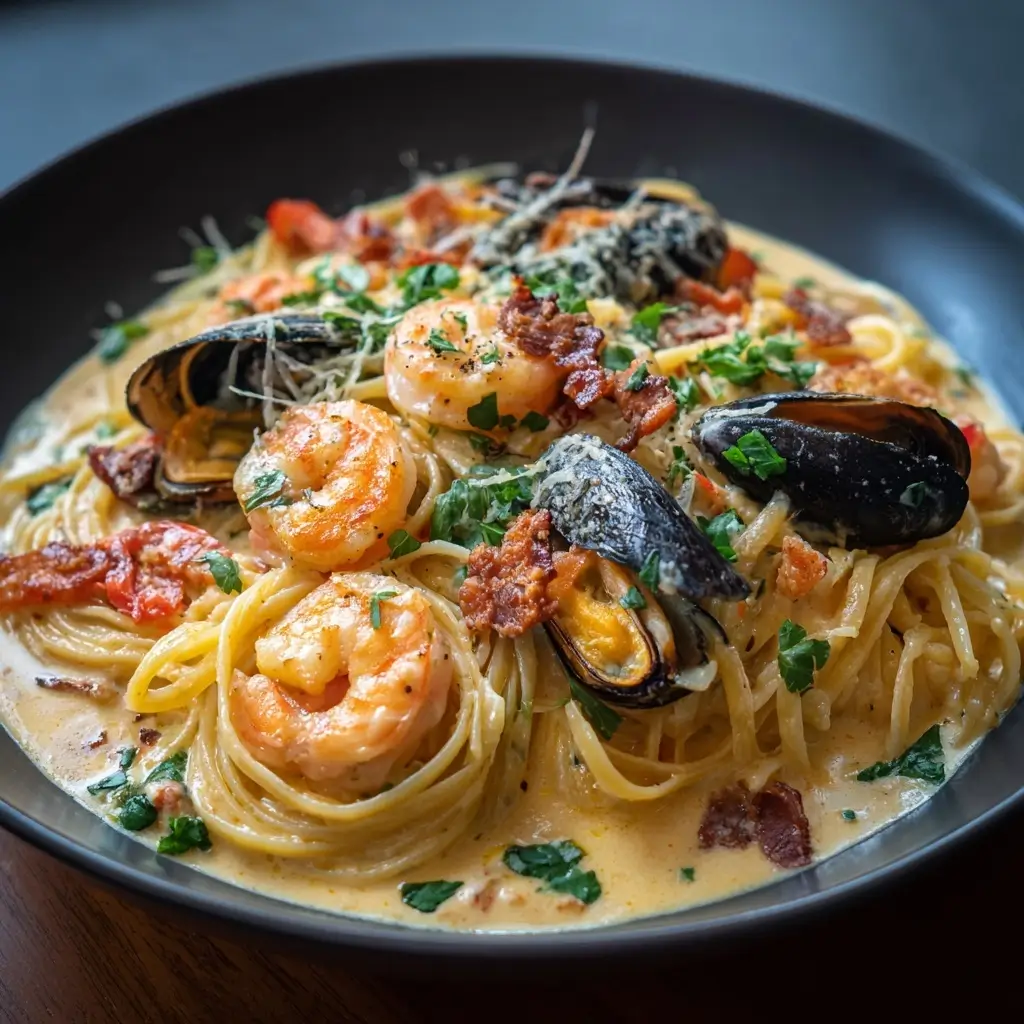
Creamy Seafood Pasta without Bacon
Dive into a luxurious bowl of Creamy Seafood Pasta, a dish that brings the flavors of the ocean to your dinner table with elegance and simplicity. This rich, velvety pasta combines succulent shrimp, tender scallops, and flaky white fish in a luscious cream sauce infused with garlic, white wine, and fresh herbs. Perfect for date nights, special occasions, or whenever you’re craving something indulgent yet effortless, this bacon-free version keeps the focus on the natural sweetness of the seafood while delivering a creamy, satisfying experience.
The History of Creamy Seafood Pasta
While pasta dishes have deep roots in Italian culinary tradition, the concept of creamy seafood pasta is a more modern evolution, blending Mediterranean techniques with global tastes. Traditional Italian cooking often emphasizes simplicity—olive oil, tomatoes, garlic, and fresh herbs—but the use of heavy cream in pasta sauces became popular in the 20th century, particularly through French and American interpretations of Italian cuisine.
Cream-based seafood dishes began gaining traction in coastal regions where fresh catches were abundant, and chefs sought ways to elevate delicate seafood with rich, complementary sauces. Over time, variations emerged in restaurants worldwide, incorporating local ingredients and preferences. The exclusion of bacon or pancetta in certain versions caters to those avoiding pork for dietary, religious, or health reasons, proving that decadence doesn’t require meat. Today’s creamy seafood pasta stands as a testament to culinary fusion—honoring tradition while embracing innovation and inclusivity.
Ingredients Breakdown
The magic of this dish lies in its balance of fresh, high-quality ingredients. Each component plays a vital role in building flavor, texture, and aroma.
- Pasta: Linguine or fettuccine are ideal due to their ability to hold creamy sauces. They offer a slightly firm bite (al dente) that contrasts beautifully with the soft seafood.
- Seafood Mix: A combination of large shrimp (peeled and deveined), bay scallops, and mild white fish like cod or halibut ensures a variety of textures and flavors. Freshness is key—look for firm, translucent seafood with a clean ocean scent.
- Heavy Cream: Forms the base of the sauce, providing richness and body. For a lighter option, half-and-half can be used, though it yields a less luxurious texture.
- Garlic and Shallots: Sautéed gently to build a fragrant foundation without overpowering the delicate seafood.
- Dry White Wine: Adds acidity and depth, helping to deglaze the pan and enhance the overall complexity of the sauce. Choose a crisp, unoaked variety like Pinot Grigio or Sauvignon Blanc.
- Fresh Herbs: Parsley and chives contribute brightness, while a touch of thyme adds earthiness. Basil can be added for a Mediterranean twist.
- Lemon Juice and Zest: Essential for cutting through the richness and highlighting the natural sweetness of the seafood.
- Butter and Olive Oil: Used together for sautéing—butter adds flavor, olive oil prevents burning.
- Grated Parmesan Cheese: Optional but recommended for umami and a subtle salty tang. Use freshly grated for best results.
- Salt and Pepper: To taste, enhancing all other components without dominating.
- Nutmeg (pinch): A secret ingredient that subtly warms the cream sauce and complements dairy-based flavors.
Step-by-Step Recipe
- Prepare the Ingredients: Start by gathering and prepping everything. Peel and devein the shrimp, pat dry the scallops and fish, mince the garlic, finely chop the shallot, and measure out the cream, wine, and herbs. This mise en place ensures smooth cooking.
- Cook the Pasta: Bring a large pot of salted water to a boil (about 1 tablespoon salt per 4 quarts water). Add the linguine and cook according to package instructions until al dente—usually 8–10 minutes. Reserve 1 cup of pasta water before draining, then set aside.
- Sear the Seafood: Pat the seafood dry thoroughly to ensure proper searing. In a large skillet over medium-high heat, warm 1 tablespoon olive oil and 1 tablespoon butter. Add the shrimp first (they take longest), cooking 1–2 minutes per side until pink and opaque. Remove and set aside. Repeat with scallops (1–2 minutes total) and fish (2–3 minutes), cooking in batches if necessary to avoid crowding. Set all seafood aside on a plate, loosely covered.
- Build the Sauce: Reduce heat to medium. In the same skillet, add another tablespoon each of butter and olive oil. Sauté the chopped shallot for 2–3 minutes until softened, then add the minced garlic and cook for 30 seconds until fragrant. Be careful not to burn the garlic.
- Deglaze with Wine: Pour in ½ cup of white wine, scraping up any browned bits from the bottom of the pan. Simmer for 2–3 minutes until reduced by half, concentrating the flavor.
- Add Cream and Seasonings: Stir in 1 ½ cups heavy cream, a pinch of nutmeg, salt, and black pepper. Bring to a gentle simmer and let cook for 4–5 minutes to thicken slightly. Taste and adjust seasoning.
- Combine Pasta and Sauce: Add the drained pasta to the skillet and toss to coat. If the sauce is too thick, add reserved pasta water ¼ cup at a time until desired consistency is reached.
- Incorporate Seafood and Finish: Gently fold in the cooked seafood, being careful not to break the delicate pieces. Warm through for 1–2 minutes. Remove from heat and stir in lemon juice (1 tablespoon), zest (1 teaspoon), and most of the chopped parsley and chives.
- Serve: Divide among warmed bowls. Top with extra herbs, a sprinkle of Parmesan (if using), and a final twist of black pepper. Serve immediately with lemon wedges on the side.
Tips for the Best Creamy Seafood Pasta
- Use Fresh Seafood: Whenever possible, opt for fresh rather than frozen. If using frozen, thaw completely in the refrigerator and pat dry before cooking.
- Don’t Overcook the Seafood: Seafood continues to cook even after removal from heat. Remove it from the pan just before it’s fully done to prevent rubbery texture.
- Avoid Boiling the Cream: Keep the cream at a gentle simmer. Boiling can cause it to separate or curdle, especially if acidic ingredients are added too quickly.
- Reserve Pasta Water: The starchy liquid helps bind the sauce to the pasta and adjusts consistency naturally.
- Season in Layers: Salt each component—the pasta water, the sauce, and the finished dish—to build balanced flavor.
- Warm Your Serving Plates: Keeps the dish hot longer and enhances the dining experience.
- Add Greens: For color and nutrition, stir in baby spinach or arugula at the end until just wilted.
- Finish Off Heat: Add delicate ingredients like lemon juice and fresh herbs off the burner to preserve their brightness.
Variations and Customizations
This recipe is highly adaptable to personal taste and dietary needs:
- Gluten-Free: Use gluten-free pasta such as brown rice or corn-based linguine. Ensure all other ingredients (like broth or seasonings) are certified GF.
- Dairy-Free: Substitute heavy cream with full-fat coconut milk or a cashew cream blend. Use vegan butter and omit Parmesan or use a plant-based alternative.
- Shellfish-Free: Omit shrimp and scallops; use only white fish or substitute with imitation crab (though flavor and texture will differ).
- Low-Carb/Keto: Replace pasta with spiralized zucchini (zoodles) or shirataki noodles. Cook separately and toss with sauce just before serving.
- Spicy Kick: Add red pepper flakes during the garlic step or finish with a drizzle of chili oil.
- Herb Variations: Try tarragon for a licorice note, dill for a Scandinavian flair, or cilantro for a fresher, bolder profile.
- Add Vegetables: Incorporate sun-dried tomatoes, artichoke hearts, roasted red peppers, or asparagus for added texture and flavor.
- Cream Substitutes: For a lighter version, use evaporated milk or a roux-thickened milk sauce, though the result will be less rich.
- Wine-Free: Replace wine with seafood stock or chicken broth mixed with a splash of lemon juice and a teaspoon of apple cider vinegar for acidity.
Health Considerations and Nutritional Value
Creamy Seafood Pasta is undeniably rich, but it also offers several nutritional benefits when prepared thoughtfully:
- High-Quality Protein: Seafood is an excellent source of lean protein, essential for muscle repair and satiety.
- Omega-3 Fatty Acids: Found in fatty fish like salmon (if substituted), these support heart and brain health. While cod and shrimp have lower levels, they still contribute beneficial fats.
- Low in Saturated Fat (with modifications): By reducing cream quantity or using lighter alternatives, you can decrease saturated fat content significantly.
- Rich in Vitamins and Minerals: Shrimp provide selenium, vitamin B12, and iodine. Scallops offer magnesium and phosphorus. Lemon adds vitamin C, boosting iron absorption.
- Calorie Awareness: A standard serving (without modifications) ranges from 600–800 calories, largely from cream and cheese. Portion control and vegetable additions help balance the meal.
- Sodium Content: Can be high depending on added salt and cheese. Use low-sodium ingredients and emphasize herbs and lemon for flavor instead.
- Allergens: Contains shellfish, fish, dairy, and wheat (unless substituted). Always inform guests of potential allergens.
- Pregnancy and Seafood: Most seafood used in this recipe (shrimp, scallops, cod) are low in mercury and safe during pregnancy when cooked thoroughly. Avoid raw or undercooked seafood.
To make it heart-healthier: reduce cream by half, use olive oil as the primary fat, increase vegetables, and serve with a side salad.
Ingredients
- 12 oz (340g) linguine or fettuccine
- 1 lb (450g) mixed seafood (large shrimp, bay scallops, white fish like cod)
- 3 tbsp unsalted butter, divided
- 3 tbsp olive oil, divided
- 1 medium shallot, finely chopped
- 4 cloves garlic, minced
- ½ cup dry white wine
- 1 ½ cups heavy cream
- 1 tbsp lemon juice
- 1 tsp lemon zest
- ¼ cup fresh parsley, finely chopped
- 2 tbsp fresh chives, snipped
- ½ tsp freshly ground black pepper
- ½ tsp salt (or to taste)
- Pinch of ground nutmeg
- Optional: ½ cup grated Parmesan cheese
- Red pepper flakes (optional, to taste)
- Reserved pasta water (about 1 cup)
Directions
- Bring a large pot of salted water to a boil. Cook pasta until al dente. Reserve 1 cup of pasta water, then drain and set aside.
- In a large skillet over medium-high heat, warm 1 tbsp olive oil and 1 tbsp butter. Sear shrimp for 1–2 minutes per side, then remove. Repeat with scallops and fish, cooking until just done. Set all seafood aside.
- Reduce heat to medium. Add another tbsp each of butter and olive oil. Sauté shallot until soft (2–3 minutes). Add garlic and cook 30 seconds.
- Pour in white wine, scrape the pan, and simmer until reduced by half (2–3 minutes).
- Stir in heavy cream, nutmeg, salt, and pepper. Simmer gently for 4–5 minutes to thicken slightly.
- Add cooked pasta to the sauce, tossing to coat. Add reserved pasta water as needed for desired consistency.
- Gently fold in seafood and warm through (1–2 minutes).
- Remove from heat. Stir in lemon juice, zest, parsley, chives, and Parmesan (if using).
- Season to taste. Serve immediately with extra herbs and lemon wedges.
FAQ
Can I make this ahead of time?
Best served fresh, but you can prep ingredients in advance. Cook seafood and store separately. Reheat gently when combining with pasta and sauce.
Can I freeze creamy seafood pasta?
Not recommended. Dairy-based sauces tend to separate upon freezing and reheating. Seafood also becomes tough. Enjoy leftovers within 1–2 days refrigerated.
What if I don’t have white wine?
Substitute with seafood or vegetable broth plus 1 tsp lemon juice and ½ tsp apple cider vinegar for acidity.
How do I prevent the sauce from breaking?
Avoid boiling the cream. Keep heat moderate and add acidic ingredients off the heat or at the very end.
Can I use canned or frozen seafood?
Yes, but thaw frozen seafood properly and drain canned options well. Flavor and texture may vary.
Is this dish safe for pregnant women?
Yes, as long as all seafood is fully cooked and low-mercury varieties are used.
How can I make it spicier?
Add red pepper flakes during cooking or finish with hot sauce or chili oil.
What wine pairs well with this dish?
A crisp white like Sauvignon Blanc, Pinot Grigio, or Chardonnay (unoaked) complements the cream and seafood perfectly.
Summary
Creamy Seafood Pasta without Bacon is a luxurious, flavorful dish that highlights the natural sweetness of fresh shrimp, scallops, and white fish in a silky garlic-white wine cream sauce. Elegant enough for special dinners yet simple enough for weeknights, this bacon-free recipe proves that indulgence and refinement can go hand in hand.