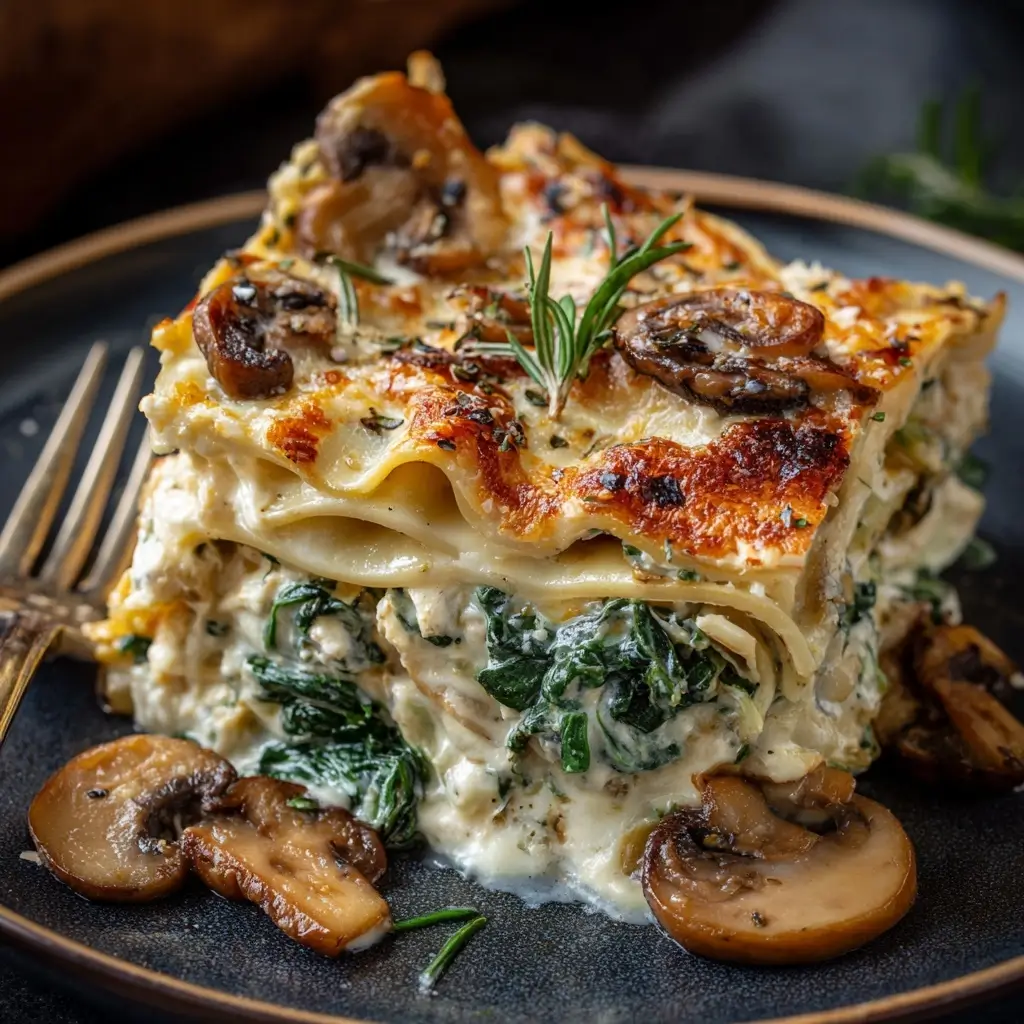
Creamy Mushroom and Spinach Lasagna
Indulge in the rich, velvety comfort of Creamy Mushroom and Spinach Lasagna—a luxurious twist on a classic favorite that brings earthy mushrooms, vibrant spinach, and creamy cheese layers together between tender sheets of lasagna pasta. This dish is perfect for cozy family dinners, holiday gatherings, or when you simply crave something deeply satisfying and full of flavor. With its luscious béchamel sauce, savory sautéed vegetables, and perfectly baked finish, this lasagna delivers gourmet satisfaction with every bite.
The History
Lasagna, one of Italy’s most iconic dishes, has roots stretching back to ancient Roman times, where layered flatbreads were cooked with meats and spices. The word “lasagna” itself comes from the Greek word lasanon, meaning “cooking pot,” which the Romans adapted into lasanum. By the Middle Ages, Italians in Naples began crafting early versions of modern lasagna using hand-rolled pasta sheets layered with cheese and meat. Over centuries, regional variations evolved across Italy—some using ricotta, others béchamel, and still others relying on local cheeses like mozzarella or pecorino.
The version we now recognize as traditional Italian-American lasagna became popular in the 20th century, especially after waves of Italian immigrants brought their recipes to North America. While meat-based lasagnas dominate many menus, vegetarian adaptations have gained popularity due to increased interest in plant-forward diets, seasonal produce, and health-conscious eating. Creamy Mushroom and Spinach Lasagna is a contemporary evolution of this heritage—a celebration of umami-rich mushrooms and nutrient-dense greens, all enveloped in a silky, dairy-laden embrace. It reflects modern culinary values: balance, depth, and indulgence without sacrificing nutrition.
Ingredients Breakdown
To create a truly exceptional Creamy Mushroom and Spinach Lasagna, each ingredient plays a pivotal role in building flavor, texture, and structure:
- Lasagna Noodles: Use no-boil (oven-ready) lasagna sheets for convenience, or traditional dried noodles that you pre-cook until al dente. Whole wheat or gluten-free alternatives can be used for dietary needs.
- Mushrooms: Cremini, button, or shiitake mushrooms are ideal for their meaty texture and deep umami flavor. Sliced thinly, they absorb seasonings beautifully and release moisture that enhances the sauce.
- Fresh Spinach: Young baby spinach adds color, nutrients, and a mild vegetal sweetness. It wilts down significantly, so buy more than you think you need—about 10 oz fresh yields roughly 1 cup cooked.
- Onion & Garlic: Yellow onion provides sweetness when caramelized, while garlic contributes aromatic depth. Both form the flavor foundation of the filling.
- Olive Oil: Extra virgin olive oil is used for sautéing; it imparts fruitiness and helps develop fond (the browned bits) that boosts overall savoriness.
- Béchamel Sauce: A classic French white sauce made from butter, flour, and milk. It creates a smooth, creamy layer that keeps the lasagna moist and rich. Infusing it with nutmeg enhances warmth and complexity.
- Heavy Cream or Half-and-Half: Added to the béchamel or ricotta mixture for extra richness and silkiness.
- Ricotta Cheese: Provides a light, slightly grainy contrast to the smooth béchamel. Opt for whole-milk ricotta for best flavor and texture.
- Shredded Mozzarella: Melts beautifully, creating those irresistible gooey strands. Fresh mozzarella can also be torn into pieces for a softer melt.
- Parmesan Cheese: Grated Parmigiano-Reggiano adds salty, nutty intensity. It’s used both in the cheese blend and sprinkled on top for browning.
- Eggs: Mixed into the ricotta to help bind the filling and prevent separation during baking.
- Fresh Herbs: Parsley, basil, or thyme add brightness. Flat-leaf parsley is particularly effective at cutting through the richness.
- Seasonings: Salt, black pepper, dried oregano, red pepper flakes (optional), and freshly grated nutmeg elevate the entire dish.
- Vegetable or Mushroom Broth (optional): Used to deglaze the pan or thin sauces naturally without adding fat.
Step-by-Step Recipe
- Preheat Oven: Set your oven to 375°F (190°C). Lightly grease a 9×13-inch baking dish with non-stick spray or butter to prevent sticking.
- Sauté Mushrooms and Onions: In a large skillet over medium-high heat, warm 2 tablespoons of olive oil. Add sliced mushrooms and diced onions. Cook for 8–10 minutes, stirring occasionally, until mushrooms release their liquid and begin to brown. Avoid overcrowding the pan—cook in batches if necessary. Once browned, add minced garlic and cook for another 1 minute until fragrant.
- Add Spinach: Stir in fresh spinach a handful at a time, allowing each batch to wilt before adding more. Continue cooking until all spinach is incorporated and excess moisture evaporates (about 4–5 minutes). Season with salt, pepper, oregano, and a pinch of nutmeg. Remove from heat and set aside to cool slightly.
- Prepare Ricotta Mixture: In a large bowl, combine 2 cups ricotta cheese, 1 large egg, ½ cup grated Parmesan, ¼ cup chopped fresh parsley, ½ teaspoon black pepper, and a pinch of nutmeg. Mix well until smooth and uniform.
- Make Béchamel Sauce (Optional but Recommended): In a saucepan, melt 4 tablespoons unsalted butter over medium heat. Whisk in ¼ cup all-purpose flour and cook for 1–2 minutes to form a roux. Gradually pour in 3 cups whole milk, whisking constantly to avoid lumps. Bring to a gentle simmer and cook until thickened enough to coat the back of a spoon (about 8–10 minutes). Stir in ¼ teaspoon nutmeg, salt, and white pepper. Remove from heat.
- Combine Filling: Fold the cooled mushroom-spinach mixture into the ricotta blend. Taste and adjust seasoning as needed.
- Assemble the Lasagna:
- Spread ½ cup of béchamel sauce (or marinara, if using) on the bottom of the prepared baking dish.
- Place a single layer of lasagna noodles over the sauce—break them as needed to fit snugly without overlapping too much.
- Spread one-third of the ricotta-vegetable mixture evenly over the noodles.
- Pour one-quarter of the remaining béchamel over the filling and smooth out with a spatula.
- Sprinkle with a thin layer of shredded mozzarella (about ½ cup).
- Repeat these layers two more times: noodles → ricotta mixture → béchamel → mozzarella.
- For the final layer, top with a last sheet of noodles, the remaining béchamel, a generous amount of mozzarella (1–1.5 cups), and ¼ cup grated Parmesan.
- Cover and Bake: Cover the dish tightly with aluminum foil, making sure it doesn’t touch the cheese (you can use a tent method). Bake for 25 minutes.
- Uncover and Brown: Remove the foil and bake for an additional 15–20 minutes, or until the top is golden brown and bubbly around the edges.
- Rest Before Serving: Let the lasagna rest for 15 minutes after removing it from the oven. This allows the layers to set and makes slicing cleaner.
Tips
- Don’t Skip the Resting Time: Allowing the lasagna to sit after baking prevents it from collapsing when cut and ensures even distribution of sauce.
- Control Moisture: Excess water from mushrooms or spinach can make the lasagna soggy. Always sauté mushrooms until deeply browned and squeeze out any leftover liquid from cooked spinach if needed.
- No-Boil Noodle Tip: Ensure there’s enough sauce surrounding no-boil noodles so they hydrate properly during baking. You can add a splash of warm broth or water along the edges if concerned about dryness.
- Use Quality Cheese: Freshly grated cheese melts better than pre-shredded (which contains anti-caking agents). Buy blocks of mozzarella and Parmesan and grate them yourself.
- Boost Umami: Add a tablespoon of tomato paste or soy sauce (yes, really!) to the mushroom mix for deeper savory flavor.
- Freeze for Later: Assemble the lasagna completely, then wrap tightly in plastic and foil. Freeze for up to 3 months. Bake from frozen—add 20–30 minutes covered, then uncover and finish as usual.
- Even Layers: Spread each component evenly to ensure every slice has balanced flavors and textures.
Variations and Customizations
This lasagna is highly adaptable to personal tastes and dietary preferences:
- Dairy-Free Version: Substitute ricotta with blended cashews or tofu ricotta. Use plant-based butter and milk for béchamel, and dairy-free cheese shreds.
- Gluten-Free: Use gluten-free oven-ready lasagna noodles and ensure your flour (for béchamel) is GF certified (e.g., rice flour or cornstarch slurry).
- Keto-Friendly: Replace lasagna noodles with thinly sliced zucchini or eggplant. Reduce or omit onions and carrots, and use heavy cream-based sauces.
- Add Protein: Stir in crumbled cooked sausage, ground turkey, or lentils for a heartier meal.
- Tomato-Based Twist: Instead of béchamel, use a rich marinara or roasted tomato sauce. Combine with a bit of ricotta for creaminess.
- Herb Variations: Swap parsley for basil, thyme, rosemary, or marjoram depending on your preference. Sage pairs wonderfully with mushrooms.
- Extra Veggies: Layer in roasted bell peppers, caramelized leeks, or sautéed kale for added nutrition and color.
- White Wine Enhancement: Deglaze the mushroom pan with ¼ cup dry white wine (like Sauvignon Blanc or Pinot Grigio) before adding spinach—adds elegance and acidity.
- Individual Portions: Assemble mini lasagnas in ramekins or muffin tins for elegant dinner party servings.
Health Considerations and Nutritional Value
Creamy Mushroom and Spinach Lasagna may seem decadent, but with mindful modifications, it can be part of a balanced diet:
- Nutrient Highlights:
- Spinach: Rich in iron, vitamin K, folate, and antioxidants like lutein and beta-carotene, supporting eye health and bone strength.
- Mushrooms: Low in calories and high in selenium, B vitamins (especially riboflavin and niacin), and ergothioneine—an antioxidant linked to reduced inflammation.
- Dairy: Provides calcium, protein, and vitamin D (if fortified), crucial for bone health and muscle function.
- Caloric Content: One serving (1/8 of a 9×13 pan) typically ranges from 350–450 calories, depending on ingredients. Using low-fat ricotta or less cheese reduces this.
- Sodium Levels: Can be high due to cheese and seasoning. Control by reducing added salt, choosing low-sodium cheeses, and enhancing flavor with herbs instead.
- Saturated Fat: Present in full-fat dairy. For a lighter version, substitute half the cheese with cottage cheese, use part-skim ricotta, or reduce total cheese by 25%.
- Fiber Boost: Switch to whole-grain or legume-based lasagna noodles to increase fiber content, aiding digestion and satiety.
- Vegetarian & Heart-Healthy: Naturally cholesterol-free (without meat), and rich in plant compounds that support cardiovascular wellness when consumed in moderation.
- Portion Control: Serve with a large green salad and crusty whole-grain bread for a complete meal without overeating.
Ingredients
- 12 no-boil lasagna noodles (or pre-cooked)
- 2 tbsp olive oil
- 1 lb (450g) cremini mushrooms, thinly sliced
- 1 medium yellow onion, finely diced
- 3 cloves garlic, minced
- 10 oz (280g) fresh baby spinach
- Salt and freshly ground black pepper, to taste
- ½ tsp dried oregano
- ¼ tsp ground nutmeg (freshly grated preferred)
- 2 cups (16 oz / 450g) whole-milk ricotta cheese
- 1 large egg
- ¾ cup (3 oz / 85g) freshly grated Parmesan cheese, divided
- ¼ cup fresh parsley, finely chopped
- 4 tbsp unsalted butter
- ¼ cup all-purpose flour
- 3 cups whole milk, warmed
- 2 cups (8 oz / 225g) shredded mozzarella cheese
- Optional: ¼ cup dry white wine for deglazing
Directions
- Preheat oven to 375°F (190°C). Grease a 9×13-inch baking dish.
- In a large skillet, heat olive oil over medium-high heat. Add mushrooms and onions; cook 8–10 minutes until golden and moisture evaporates.
- Add garlic and cook 1 minute. Stir in spinach in batches until wilted. Season with salt, pepper, oregano, and nutmeg. Remove from heat and let cool.
- In a bowl, mix ricotta, egg, ½ cup Parmesan, parsley, black pepper, and nutmeg. Fold in mushroom-spinach mixture.
- Make béchamel: Melt butter in a saucepan. Whisk in flour; cook 1–2 minutes. Gradually add milk, whisking continuously until thickened. Add nutmeg and salt. Remove from heat.
- Spread ½ cup béchamel in baking dish. Layer: 4 noodles → ⅓ ricotta mixture → ¾ cup béchamel → ½ cup mozzarella. Repeat twice more.
- Top final noodle layer with remaining béchamel, mozzarella, and ¼ cup Parmesan.
- Cover with foil (tent style) and bake 25 minutes. Uncover and bake 15–20 minutes until golden and bubbling.
- Let rest 15 minutes before slicing. Garnish with fresh parsley or basil.
FAQ
Can I make this lasagna ahead of time?
Yes! Assemble it up to 24 hours in advance, cover, and refrigerate. Add 10–15 minutes to baking time if starting cold.
Can I freeze Creamy Mushroom and Spinach Lasagna?
Absolutely. Cool completely, wrap tightly in plastic and foil, and freeze for up to 3 months. Thaw overnight in the fridge or bake from frozen with extra covered time.
Why is my lasagna watery?
Likely causes: not cooking off mushroom/spinach moisture, using wet ricotta, or skipping the resting period. Always sauté veggies thoroughly and let lasagna rest after baking.
Can I use canned spinach?
You can, but fresh is far superior in flavor and texture. If using canned, drain and squeeze out ALL liquid and chop finely.
Is béchamel necessary?
Not mandatory, but highly recommended for creaminess. You can substitute with Alfredo sauce or a ricotta-heavy layer, though the texture will differ.
Can I make it vegan?
Yes. Use cashew ricotta, plant-based béchamel, and vegan cheeses. Add nutritional yeast for cheesy flavor.
How long does leftovers last?
Store covered in the fridge for up to 5 days. Reheat in oven at 350°F or microwave individual portions.
Can I add meat?
Of course. Browned Italian sausage, ground beef, or pancetta can be mixed into the vegetable layer for a meaty version.
Summary
Creamy Mushroom and Spinach Lasagna combines earthy mushrooms, tender spinach, and a luxuriously smooth béchamel with layers of cheesy, noodle-bound perfection—ideal for comforting meals and special occasions alike.
Highly customizable, nutritious, and deeply flavorful, this lasagna satisfies vegetarians and omnivores alike while offering endless possibilities for dietary adaptations and creative twists.