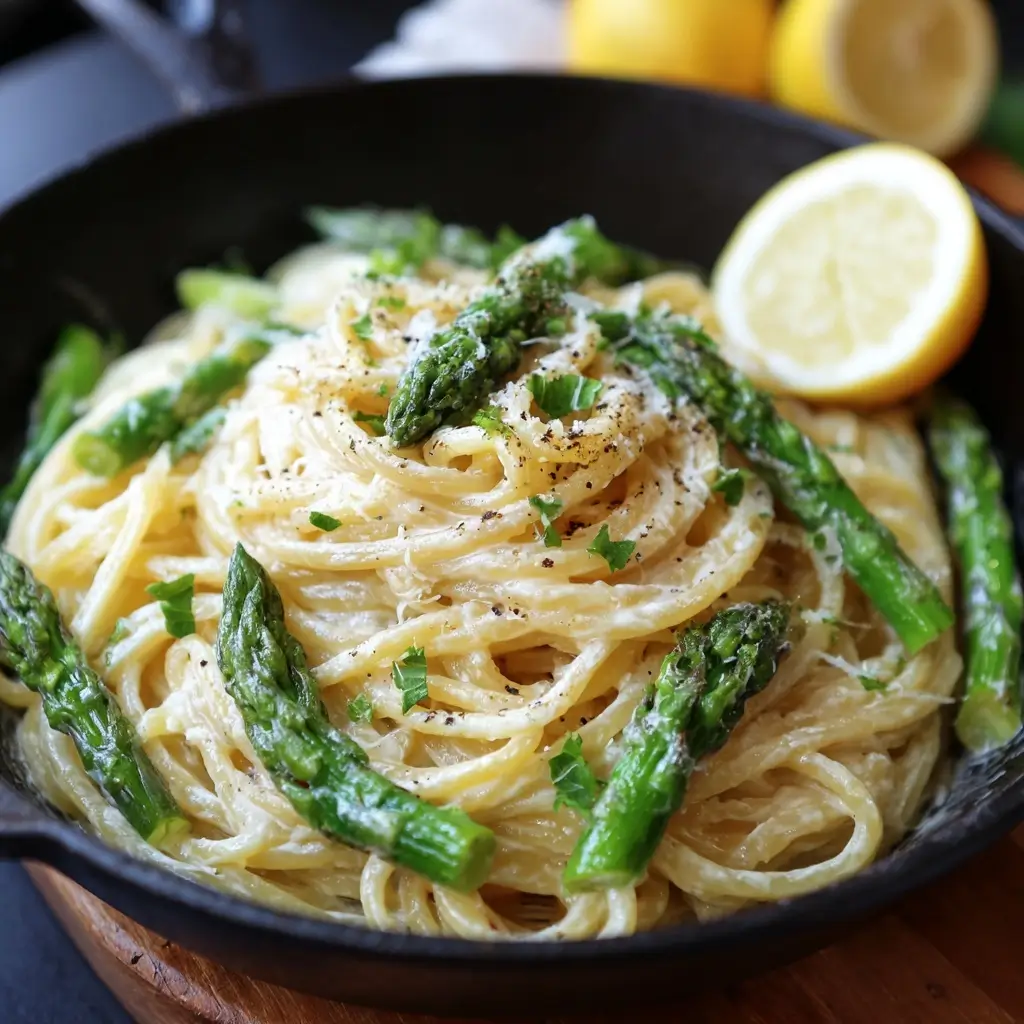
Creamy Lemon Asparagus Pasta is a delightful fusion of fresh, vibrant flavors and rich, velvety textures that elevate a simple weeknight dinner into something truly special. This dish marries the earthy taste of asparagus with the bright acidity of lemon and the luxurious creaminess of a well-balanced sauce, all wrapped around tender pasta. Whether you’re cooking for yourself or serving guests, this recipe promises elegance without excessive effort. With its seasonal charm and healthful ingredients, Creamy Lemon Asparagus Pasta has become a modern classic in contemporary home cooking.
The History
Pasta dishes featuring seasonal vegetables have long been a staple of Mediterranean cuisine, particularly in Italy, where simplicity, freshness, and regional ingredients reign supreme. While there isn’t a centuries-old origin story specifically for Creamy Lemon Asparagus Pasta, its roots can be traced to Italian culinary traditions that celebrate primavera—springtime—harvests. Asparagus, which emerges in early spring, has been prized since Roman times for its delicate flavor and perceived medicinal qualities.
The addition of cream and lemon reflects more modern European influences, especially from French and Californian cooking styles that emerged in the 20th century. Chefs began experimenting with creamy sauces outside traditional Alfredo or carbonara preparations, incorporating citrus to cut through richness. The combination of lemon zest, juice, and cream creates a sauce that’s both refreshing and indulgent—a hallmark of contemporary fusion cuisine.
In recent years, food bloggers, wellness influencers, and farm-to-table restaurants have popularized this dish as part of a broader trend toward light yet satisfying meals that highlight produce. Today, Creamy Lemon Asparagus Pasta appears on menus across the U.S. and Europe, often reimagined with plant-based creams, gluten-free pastas, or protein additions like grilled chicken or shrimp. Its evolution mirrors changing tastes: a desire for meals that are both nourishing and celebratory, seasonal yet accessible year-round.
Ingredients Breakdown
To make an authentic and flavorful Creamy Lemon Asparagus Pasta, each ingredient plays a vital role in building layers of taste, texture, and aroma. Here’s a detailed look at what goes into this dish and why:
- Fettuccine or Linguine (12 oz / 340g): These flat, long noodles hold creamy sauces exceptionally well. Their surface area allows the sauce to cling evenly, ensuring every bite is flavorful. You can substitute with tagliatelle, spaghetti, or even gluten-free alternatives like brown rice pasta.
- Fresh Asparagus (1 lb / 450g): Choose firm, bright green stalks with tightly closed tips. Thicker spears work best as they retain a slight crunch when sautéed. Trim the woody ends before use. Asparagus brings a grassy, slightly sweet note that balances the richness of the cream.
- Heavy Cream (1 cup / 240ml): Provides the base for the luscious sauce. Full-fat cream ensures a silky texture and prevents curdling when mixed with acidic lemon juice. For a lighter version, half-and-half or whole milk can be used, though the sauce will be less rich.
- Grated Parmesan Cheese (¾ cup / 75g): Adds umami depth and helps thicken the sauce naturally. Freshly grated is always better than pre-grated, which often contains anti-caking agents that hinder melting.
- Lemons (2 medium): One provides zest and juice for tanginess; the second adds extra juice if needed. Lemon zest contains aromatic oils that infuse the dish with intense citrus fragrance, while the juice brightens the entire flavor profile.
- Garlic (3 cloves), minced: Offers a pungent backbone to the sauce. When sautéed gently, garlic becomes sweet and mellow, enhancing complexity without overpowering.
- Butter (2 tbsp) and Olive Oil (2 tbsp): Butter adds richness and mouthfeel, while olive oil contributes a fruity undertone and helps prevent burning during sautéing. A combination gives the best of both worlds.
- Salt and Black Pepper (to taste): Essential seasonings that enhance all other components. Be cautious with salt if your Parmesan is already salty.
- Nutritional Yeast (optional, 2–3 tbsp): Often added in vegan versions for a cheesy, nutty flavor and B-vitamin boost.
- Red Pepper Flakes (¼ tsp, optional): Introduces a subtle heat that contrasts beautifully with the cream and citrus.
- Fresh Parsley or Basil (¼ cup, chopped): Used as a garnish, it adds color, freshness, and herbal balance.
Step-by-Step Recipe
- Prepare the Asparagus: Wash the asparagus and trim off the tough, woody ends by bending each spear until it snaps naturally. Cut the remaining spears into 2-inch pieces on a diagonal for elegant presentation and increased surface area for flavor absorption.
- Cook the Pasta: Bring a large pot of salted water to a boil (use about 1 tablespoon of salt per quart of water). Add the pasta and cook according to package instructions until al dente—usually 8–10 minutes. Reserve ½ cup of pasta water before draining. Do not rinse the pasta, as the starch helps the sauce adhere.
- Sauté the Asparagus: While the pasta cooks, heat olive oil and butter in a large skillet over medium heat. Once the butter is melted and slightly foamy, add the asparagus pieces. Sauté for 5–6 minutes, stirring occasionally, until bright green and tender-crisp. Avoid overcooking to preserve texture.
- Add Garlic and Seasonings: Stir in the minced garlic, red pepper flakes (if using), and a pinch of salt. Cook for 30–60 seconds until fragrant—do not let garlic brown.
- Create the Cream Sauce: Pour in the heavy cream, reduce heat to low, and bring to a gentle simmer. Stir in the grated Parmesan cheese gradually, allowing it to melt completely into the sauce. Use a whisk or wooden spoon to ensure smoothness.
- Incorporate Lemon: Zest one lemon directly into the sauce, then stir in 3 tablespoons of freshly squeezed juice. Taste and adjust—add more juice for tartness or more zest for brightness. Be careful not to add too much acid at once, as it may cause the cream to curdle slightly (though this won’t affect flavor).
- Combine Pasta and Sauce: Add the drained pasta to the skillet with the sauce. Toss thoroughly to coat every strand. If the sauce is too thick, add reserved pasta water 1–2 tablespoons at a time until desired consistency is reached. The starch in the water helps emulsify the sauce.
- Final Touches: Remove from heat. Stir in additional Parmesan if desired. Taste and adjust seasoning with salt and black pepper.
- Garnish and Serve: Transfer to warm serving plates. Sprinkle with chopped parsley or basil, extra lemon zest, and a crack of black pepper. Optionally, top with additional shaved Parmesan or a drizzle of high-quality olive oil.
Tips
- Don’t Overcook the Asparagus: It should remain slightly crisp to provide textural contrast against the soft pasta and creamy sauce. If you prefer softer asparagus, blanch it in boiling water for 2 minutes before sautéing.
- Use Fresh Lemon Juice: Bottled lemon juice lacks brightness and can taste metallic. Always opt for fresh lemons, preferably organic if zesting.
- Reserve Pasta Water: This starchy liquid is gold—it binds the sauce and improves texture dramatically. Never skip this step.
- Low Heat for Cream: Keep the heat low when adding dairy to prevent separation. High heat can cause proteins in cream and cheese to break down, leading to a grainy sauce.
- Grate Your Own Cheese: Pre-grated cheeses contain cellulose to prevent clumping, which inhibits smooth melting. Freshly grated Parmigiano-Reggiano melts seamlessly.
- Bloom the Garlic: Cooking garlic briefly in fat unlocks its flavor without bitterness. Burnt garlic ruins the dish, so watch closely.
- Season in Layers: Salt each component—water, vegetables, sauce—for balanced flavor throughout.
- Serve Immediately: Cream-based sauces thicken upon standing. This dish is best enjoyed hot, straight from the pan.
Variations and Customizations
Creamy Lemon Asparagus Pasta is wonderfully adaptable to different dietary needs, preferences, and pantry availability. Here are some creative ways to personalize it:
- Vegan Version: Substitute heavy cream with full-fat coconut milk or cashew cream (blend soaked cashews with water). Use nutritional yeast instead of Parmesan and vegan butter. Ensure pasta is egg-free.
- Gluten-Free Option: Use high-quality gluten-free pasta made from rice, corn, or quinoa. Cook carefully to avoid mushiness, and consider adding xanthan gum if the sauce doesn’t cling well.
- Protein Boost: Add grilled chicken breast, seared shrimp, sautéed mushrooms, or white beans for extra substance. Poached salmon pairs beautifully with lemon and asparagus.
- Dairy-Free Creaminess: Blend steamed cauliflower with vegetable broth to create a neutral, creamy base. Alternatively, use pureed silken tofu for a high-protein alternative.
- Herb Variations: Swap parsley for dill, tarragon, chives, or mint for unique flavor profiles. Dill complements lemon exceptionally well.
- Wine-Infused Sauce: Deglaze the pan with ¼ cup dry white wine (like Sauvignon Blanc or Pinot Grigio) after sautéing asparagus. Let it reduce by half before adding cream for added sophistication.
- Extra Vegetables: Fold in peas, spinach, artichoke hearts, or cherry tomatoes for added color, nutrients, and variety.
- Spicier Kick: Increase red pepper flakes or add a dash of hot sauce. For smokiness, include a pinch of smoked paprika.
- Lemon Substitutes: In a pinch, lime or yuzu can replace lemon, offering a tropical twist. However, lemon remains ideal due to its floral notes and compatibility with cream.
- Baked Version: Transfer the finished pasta to an oven-safe dish, top with breadcrumbs and extra cheese, and broil for 3–5 minutes for a gratin-style finish.
Health Considerations and Nutritional Value
Creamy Lemon Asparagus Pasta can be both delicious and nutritious when prepared thoughtfully. While traditionally rich, small modifications can enhance its health profile without sacrificing flavor.
Nutritional Highlights (per serving, approx. 1/4 of recipe):
- Calories: ~550–650 kcal (depends on cream and cheese amounts)
- Protein: 18–22g (from pasta, cheese, and optional add-ins)
- Fat: 25–35g (mostly unsaturated from olive oil and some saturated from dairy)
- Carbohydrates: 60–70g (complex carbs from pasta)
- Fiber: 5–7g (primarily from whole asparagus)
- Vitamin K: Over 100% DV (from asparagus and greens)
- Vitamin C: ~30% DV (from lemon and asparagus)
- Folate: ~40% DV (asparagus is a natural source)
- Calcium: ~20% DV (from dairy products)
- Iron & Magnesium: Moderate levels from whole grains and vegetables
Health Benefits:
Asparagus is low in calories and packed with antioxidants, including glutathione, which supports detoxification. It also contains inulin, a prebiotic fiber that promotes gut health. Lemon juice aids iron absorption and provides flavonoids with anti-inflammatory properties. Parmesan cheese, while high in sodium, offers bioavailable calcium and conjugated linoleic acid (CLA), which may support metabolic health.
Considerations:
This dish is relatively high in saturated fat and sodium due to cream and cheese. To make it heart-healthier:
– Use reduced-fat cream or Greek yogurt (add at the end off-heat to prevent curdling)
– Reduce cheese quantity and boost flavor with herbs and lemon
– Increase vegetable-to-pasta ratio for more fiber and fewer refined carbs
– Choose whole wheat or legume-based pasta for higher protein and fiber
For individuals managing lactose intolerance, aged cheeses like Parmesan are generally well-tolerated in moderation. Lactose-free cream and plant-based alternatives offer further flexibility.
Ingredients
- 12 oz (340g) fettuccine or linguine
- 1 lb (450g) fresh asparagus, trimmed and cut into 2-inch pieces
- 2 tbsp unsalted butter
- 2 tbsp extra-virgin olive oil
- 3 cloves garlic, minced
- 1 cup (240ml) heavy cream
- ¾ cup (75g) freshly grated Parmesan cheese, plus extra for serving
- Zest and juice of 1 large lemon (about 1 tbsp zest, 3–4 tbsp juice)
- ¼ tsp red pepper flakes (optional)
- Salt and freshly ground black pepper, to taste
- ¼ cup chopped fresh parsley or basil
- Reserved pasta water, as needed
Directions
- Trim the asparagus and cut into diagonal 2-inch pieces. Set aside.
- Bring a large pot of generously salted water to a boil. Add pasta and cook until al dente. Reserve ½ cup of pasta water, then drain and set aside.
- In a large skillet over medium heat, combine butter and olive oil. Once butter is melted, add asparagus and sauté for 5–6 minutes until tender-crisp and vibrant green.
- Add minced garlic, red pepper flakes, and a pinch of salt. Stir and cook for 1 minute until fragrant.
- Pour in heavy cream, reduce heat to low, and bring to a gentle simmer. Gradually whisk in Parmesan cheese until fully melted and smooth.
- Stir in lemon zest and 3 tablespoons of lemon juice. Adjust acidity to taste.
- Add cooked pasta to the skillet and toss to coat. If needed, add reserved pasta water 1–2 tablespoons at a time until sauce reaches a silky consistency.
- Taste and season with salt and black pepper as required.
- Remove from heat. Stir in half of the chopped herbs.
- Serve immediately in warm bowls, garnished with remaining herbs, extra lemon zest, cracked pepper, and additional Parmesan.
FAQ
Can I make this ahead of time?
While best served fresh, you can prep ingredients in advance. Cook the asparagus and measure out all components. Reheat gently on the stove with a splash of milk or broth to revive the sauce.
Why did my sauce separate?
Dairy-based sauces can break due to high heat, too much acid, or rapid temperature changes. To fix, remove from heat, add a splash of cold cream, and whisk vigorously. Emulsifiers like mustard or cornstarch slurry can help stabilize future batches.
Can I freeze leftovers?
Cream-based sauces don’t freeze well—they tend to separate and become grainy upon reheating. Instead, store in an airtight container in the refrigerator for up to 3 days and reheat gently with added liquid.
Is canned asparagus okay?
Fresh is strongly recommended. Canned asparagus lacks texture and has a metallic taste. Frozen asparagus can work in a pinch—thaw and pat dry before sautéing.
What wine pairs well with this dish?
A crisp white wine such as Sauvignon Blanc, Pinot Grigio, or unoaked Chardonnay complements the lemon and cream beautifully. For non-alcoholic options, try sparkling water with lemon or herbal iced tea.
Can I use lemon extract instead of fresh lemon?
No—lemon extract is highly concentrated and intended for baking. It lacks the freshness and balance of real juice and zest. Always use real lemons for optimal results.
How do I prevent overcooking the pasta?
Set a timer, test two minutes before package instructions suggest, and remember that pasta continues to cook slightly when mixed with hot sauce (carryover cooking).
Summary
Creamy Lemon Asparagus Pasta is a harmonious blend of seasonal vegetables, zesty citrus, and velvety sauce that delivers restaurant-quality elegance in a home kitchen setting. Light enough for spring dinners yet satisfying enough for any occasion, this dish celebrates freshness, balance, and simplicity.