Introduction
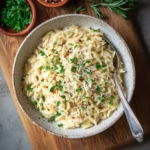
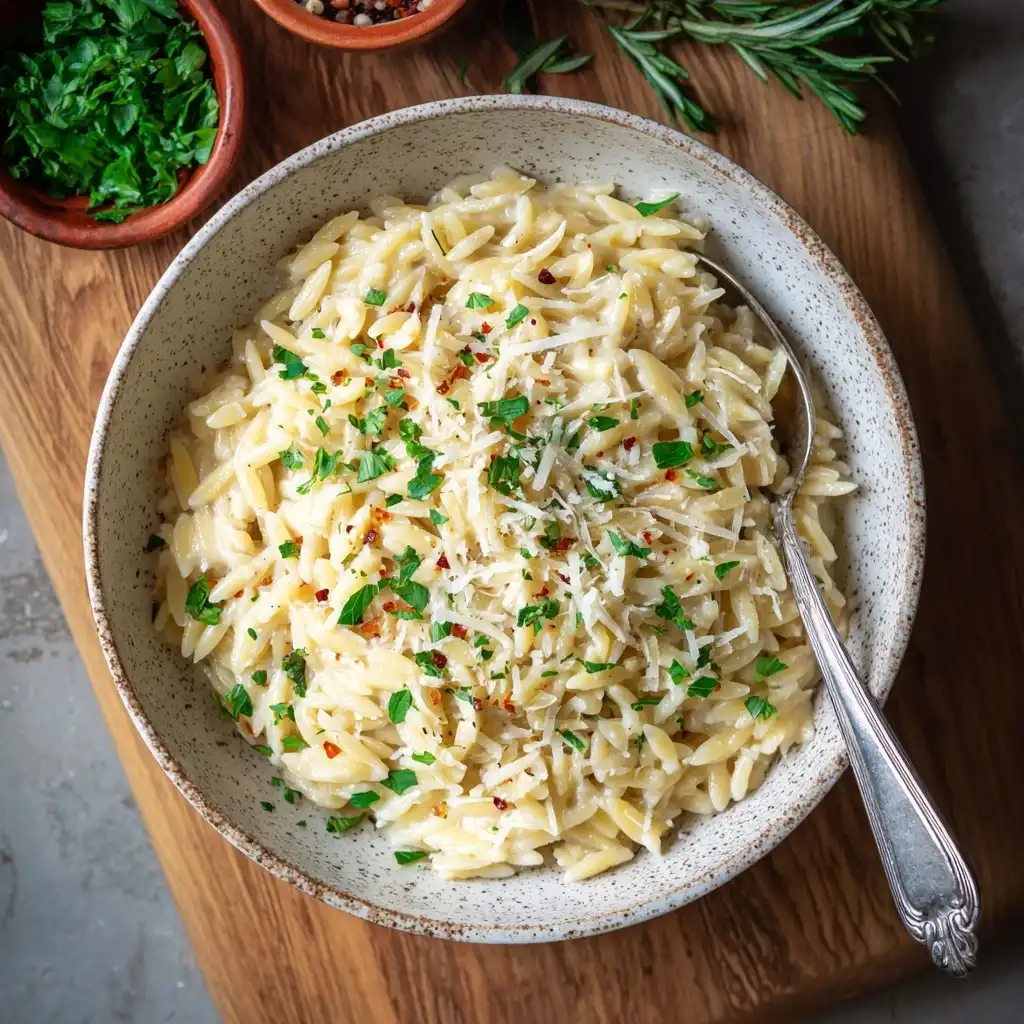
Creamy Garlic Parmesan Orzo is a beloved, restaurant-quality comfort dish that bridges the elegance of Italian cuisine with the cozy familiarity of weeknight dinners. With its velvety texture, aromatic garlic depth, and rich umami from freshly grated Parmesan, this dish delivers luxurious flavor in under 30 minutes—no fancy techniques or hard-to-find ingredients required. Whether served as a standalone main course, a luscious side to roasted chicken or grilled vegetables, or even chilled as a sophisticated pasta salad, creamy orzo adapts effortlessly to any occasion—from casual family meals to dinner parties where guests linger over every bite. Its magic lies not in complexity, but in thoughtful layering: slow-sautéed garlic, properly toasted orzo, a well-balanced dairy emulsion, and the irreplaceable sharp-salty finish of authentic Parmigiano-Reggiano.
The History
Orzo—a rice-shaped pasta originating in Italy (where it’s known as *orzotto*, meaning “little barley”)—has been a pantry staple since at least the 14th century, traditionally used in soups like *minestrone* and brothy *orzotto* dishes echoing risotto’s creaminess. While classic orzo preparations were often light and broth-based, the modern creamy garlic Parmesan version emerged in American home kitchens during the late 20th and early 21st centuries—fueled by the rise of food blogs, cooking shows emphasizing “restaurant tricks at home,” and growing access to high-quality imported cheeses. Chefs and home cooks alike began adapting risotto techniques—stirring gradually, adding warm liquid incrementally—to orzo, capitalizing on its starch-rich surface that naturally thickens sauces. The addition of roasted or sautéed garlic and aged Parmesan reflects broader culinary trends toward bold, savory, umami-forward profiles, while the use of heavy cream or cream cheese nods to indulgent American interpretations of European classics. Today, Creamy Garlic Parmesan Orzo stands as a global hybrid: Italian form meets French technique (à la *monter au beurre*) and American sensibility—simple, satisfying, and deeply shareable.
Ingredients Breakdown
Every element in this recipe plays a distinct, non-negotiable role in building depth, texture, and balance:
- Orzo Pasta (12 oz / 340 g): Use bronze-die extruded orzo for optimal sauce adhesion. Avoid pre-cooked or “instant” varieties—they lack starch integrity and turn mushy. Whole wheat orzo can be substituted but requires +1–2 minutes cooking time and yields a nuttier, denser bite.
- Unsalted Butter (4 tbsp / 60 g): Provides foundational richness and carries fat-soluble garlic aromatics. European-style butter (82–84% fat) enhances mouthfeel and browning capacity.
- Garlic (6 large cloves, finely minced or pressed): Freshness is critical—pre-minced jarred garlic lacks enzymatic pungency and introduces off-flavors. Mincing releases allicin; gentle sautéing transforms sharpness into sweet, caramelized depth.
- Shallots (1 large, finely diced): Adds subtle onion-sweetness and aromatic complexity without overpowering. Onions may be substituted but impart a sharper, more aggressive note.
- Dry White Wine (½ cup / 120 ml): A crisp, high-acid wine like Sauvignon Blanc or Pinot Grigio deglazes the pan, lifts fond, and balances richness. Non-alcoholic substitute: ¼ cup lemon juice + ¼ cup low-sodium vegetable broth.
- Low-Sodium Chicken or Vegetable Broth (3 cups / 720 ml, warmed): Warm broth prevents temperature shock and ensures even, gradual absorption. Low-sodium versions allow precise salt control—critical when pairing with salty Parmesan.
- Heavy Cream (¾ cup / 180 ml): Contributes unctuous body and stabilizes the emulsion. For lighter versions: full-fat coconut milk (unsweetened) or cashew cream (soaked + blended) offer dairy-free creaminess with neutral flavor.
- Freshly Grated Parmigiano-Reggiano (1 ½ cups / 150 g, plus extra for garnish): This is the soul of the dish. Pre-grated “Parmesan” contains anti-caking agents (cellulose) that inhibit melting and create graininess. Authentic Parmigiano-Reggiano (DOP-certified) melts smoothly, adds crystalline umami, and lends a distinctive nutty-savory finish. Never skip grating it fresh.
- Freshly Ground Black Pepper (1 tsp, plus more to taste): Piperine enhances bioavailability of garlic compounds and adds bright, floral heat.
- Fresh Parsley (¼ cup, finely chopped): Added at the end for herbaceous brightness and visual contrast—flat-leaf (Italian) parsley preferred for robust flavor over curly.
- Salt (to taste, approx. 1–1½ tsp): Always season in layers: a pinch when toasting orzo, another when adding broth, and final adjustment after cheese incorporation.
Optional Enhancements: A splash of lemon zest (½ tsp) just before serving lifts richness; a tablespoon of mascarpone adds silkiness; crispy pancetta or prosciutto crumbles lend smoky-salty crunch.
Step-by-Step Recipe
- Toast the Orzo (3–4 min): In a large, heavy-bottomed Dutch oven or wide skillet over medium heat, melt 2 tbsp butter. Add orzo and stir constantly until golden-brown and fragrant—like toasted rice. This step develops nuttiness and prevents clumping. Remove from heat and set aside.
- Sauté Aromatics (4–5 min): In the same pan, add remaining 2 tbsp butter. Once foaming subsides, add shallots and cook until translucent (2 min). Add garlic and stir constantly for 60–90 seconds—just until fragrant and softening. Do not brown garlic; it will turn bitter.
- Build Flavor Base (2 min): Return toasted orzo to the pan. Stir 1 minute to coat grains in butter and aromatics, allowing starches to bloom slightly.
- Deglaze with Wine (2 min): Pour in white wine, scraping up all browned bits (fond) with a wooden spoon. Simmer gently until liquid is nearly evaporated (~90 seconds).
- Gradual Broth Integration (15–18 min): Ladle in ½ cup warm broth. Stir continuously until almost fully absorbed (2–3 min). Repeat, adding broth one ladle at a time, stirring constantly and waiting for near-absorption before adding more. This builds creamy texture through released starch—not stirring causes uneven cooking and gumminess. Total time: ~16 minutes. Orzo should be *al dente*—tender with slight resistance—and broth should be mostly absorbed, leaving a glossy, porridge-like consistency.
- Incorporate Cream & Cheese (3–4 min): Reduce heat to low. Stir in heavy cream and simmer gently 1 minute. Remove from heat. Gradually whisk in grated Parmesan, ¼ cup at a time, stirring vigorously until each addition is fully melted and glossy. Let rest 2 minutes—this allows starches to fully hydrate and sauce to thicken.
- Final Seasoning & Finish (1 min): Stir in black pepper, lemon zest (if using), and parsley. Taste and adjust salt—remember Parmesan is salty. If too thick, loosen with 1–2 tbsp warm broth or cream. Serve immediately.
Tips
- Warm Your Liquids: Cold broth or cream shocks the orzo, causing uneven absorption and a gummy texture. Heat broth and cream separately in a small saucepan until steaming (do not boil).
- Stir Like You Mean It: Constant stirring during broth addition isn’t optional—it agitates starch granules, releasing amylose/amylopectin for natural thickening. Use a heat-resistant silicone spatula for maximum control.
- Grate Cheese Yourself: Pre-grated cheese contains cellulose and potassium sorbate that prevent proper melting and create a greasy, separated sauce. A microplane yields ultra-fine shreds that melt instantly.
- Resist Overcooking: Orzo continues to absorb moisture off-heat. Pull it at *al dente*—it will soften perfectly during the cheese integration and resting phase.
- Rest Before Serving: Allowing the finished dish to sit covered for 2–3 minutes lets residual heat finish cooking and encourages starch gelatinization for ideal creaminess.
- Reheating Hack: Leftovers thicken significantly. Revive with a splash of broth or milk and gentle stovetop warming—never microwave uncovered, which dries it out.
- Pan Choice Matters: A heavy-bottomed pan (enameled cast iron or stainless steel) ensures even heat distribution and prevents scorching—especially crucial during the delicate garlic sauté and final cheese melt.
Variations and Customizations
This versatile base invites endless creativity—without compromising its creamy soul:
- Vegetarian/Vegan: Swap chicken broth for rich mushroom or miso-tamari vegetable broth. Replace butter with vegan butter (Miyoko’s or Earth Balance), heavy cream with full-fat coconut milk or cashew cream, and Parmesan with nutritional yeast + white miso + lemon juice blend (¼ cup nooch + 1 tsp miso + ½ tsp lemon juice per cup “cheese”).
- Protein-Packed: Fold in 1½ cups cooked, shredded rotisserie chicken; seared shrimp (add in last 2 minutes); flaked wild-caught salmon; or pan-seared tofu cubes marinated in tamari-ginger.
- Garden-Fresh: Stir in 1 cup blanched peas and asparagus tips, ½ cup sun-dried tomatoes (oil-packed, chopped), or 1 roasted red pepper (diced). Add greens like baby spinach or arugula at the very end—heat wilts them perfectly.
- Herb-Forward: Infuse butter with fresh thyme or rosemary before sautéing aromatics. Finish with chives, basil ribbons, or tarragon instead of parsley.
- Spice It Up: Add ¼ tsp crushed red pepper flakes with garlic, or swirl in harissa paste (1 tsp) with the cream. For smoky depth, stir in ½ tsp smoked paprika with the shallots.
- “Risotto-Style” Upgrade: Toast orzo with 1 tbsp dry vermouth before wine. Stir in 2 tbsp grated Pecorino Romano with the Parmesan for extra saltiness and tang. Finish with 1 tbsp cold butter for shine (*monter au beurre*).
- Baked Version: Transfer to a buttered baking dish, top with extra cheese and panko, drizzle with olive oil, and bake at 375°F (190°C) for 15–20 minutes until golden and bubbling.
Health Considerations and Nutritional Value
A single 1¾-cup (approx. 300g) serving of Creamy Garlic Parmesan Orzo provides approximately:
- Calories: 520–580 kcal
- Protein: 22–26 g (primarily from Parmesan and dairy)
- Fat: 24–28 g (saturated fat ~14–16 g; balanced by monounsaturated fats from butter and olive oil if used)
- Carbohydrates: 54–58 g (fiber: 2–3 g; net carbs: ~51–55 g)
- Sodium: 680–850 mg (highly dependent on broth and cheese salt content—using low-sodium broth and mindful cheese portioning keeps it moderate)
- Vitamins & Minerals: Excellent source of calcium (45% DV), vitamin A (25% DV), vitamin B12 (35% DV), and phosphorus (30% DV) thanks to dairy and cheese. Garlic contributes allicin (antioxidant, immune-supportive), while parsley adds vitamin K (140% DV per ¼ cup) and folate.
Considerations for Dietary Needs:
- Gluten-Free: Use certified GF orzo (typically made from brown rice or corn). Note: GF orzo absorbs liquid differently—reduce total broth by ¼ cup and monitor closely.
- Lactose Sensitivity: Aged Parmigiano-Reggiano contains negligible lactose (<0.1g per serving). Heavy cream has ~1g lactose per ¼ cup—most tolerate it well. For strict avoidance, use lactose-free cream and butter.
- Lower-Calorie Option: Replace half the cream with whole milk or unsweetened almond milk; use ⅔ cup cheese instead of 1½ cups; increase veggies (spinach, zucchini ribbons) to bulk volume.
- Heart-Healthy Tweaks: Substitute half the butter with extra-virgin olive oil; use part-skim ricotta (¼ cup) + reduced cheese for creaminess with less saturated fat.
- Diabetic-Friendly: Focus on portion control (1 cup serving), pair with non-starchy vegetables, and avoid added sugars. Glycemic load remains moderate due to cheese/fat slowing carb absorption.
While indulgent, this dish offers meaningful nutrition—especially protein and bone-supporting calcium—when enjoyed mindfully as part of a balanced diet.
Ingredients
- 12 oz (340 g) dried orzo pasta
- 4 tbsp (60 g) unsalted butter, divided
- 6 large garlic cloves, finely minced or pressed
- 1 large shallot (about ½ cup), finely diced
- ½ cup (120 ml) dry white wine (e.g., Sauvignon Blanc or Pinot Grigio)
- 3 cups (720 ml) low-sodium chicken or vegetable broth, warmed
- ¾ cup (180 ml) heavy cream, warmed
- 1 ½ cups (150 g) freshly grated Parmigiano-Reggiano cheese (not pre-grated)
- 1 tsp freshly ground black pepper, plus more to taste
- ¼ cup fresh flat-leaf parsley, finely chopped
- Kosher salt, to taste (start with 1 tsp, adjust after cheese)
- Lemon zest (½ tsp, optional but recommended)
Directions
- Bring a large pot of generously salted water to a boil. Cook orzo according to package directions until *al dente* (usually 8–9 minutes). Drain well, rinse briefly under cold water to stop cooking, and set aside. (Note: This stovetop method is an alternative to the traditional “risotto-style” method described above—but yields equally creamy results with less hands-on time.)
- In a large, deep skillet or Dutch oven over medium heat, melt 2 tbsp butter. Add shallots and cook until soft and translucent, about 3 minutes. Add garlic and cook, stirring constantly, for 60–90 seconds until fragrant—do not let it brown.
- Stir in cooked orzo, wine, and 1 cup warm broth. Simmer gently, stirring frequently, until liquid is mostly absorbed (about 4 minutes).
- Add remaining 2 cups broth in two additions, stirring and allowing near-absorption between each (about 4 minutes per addition). Total simmer time: ~12 minutes.
- Reduce heat to low. Stir in warm heavy cream and simmer 1 minute. Remove from heat.
- Gradually whisk in grated Parmesan, ¼ cup at a time, stirring vigorously until smooth and glossy after each addition. Let stand 2 minutes.
- Stir in black pepper, lemon zest (if using), and parsley. Taste and adjust salt and pepper. Serve immediately, garnished with extra Parmesan and parsley.
FAQ
- Can I make this ahead of time?
- Yes! Prepare up to the cheese-integration step, cool completely, then refrigerate in an airtight container for up to 3 days. Reheat gently on the stove with 2–3 tbsp warm broth or milk, stirring constantly until creamy. Avoid microwaving in large batches—it heats unevenly.
- Why did my orzo turn gluey or gummy?
- Overcooking is the #1 culprit—especially during the broth absorption stage. Orzo continues to soften off-heat, so always stop at *al dente*. Also, insufficient stirring prevents even hydration, causing clumping. Using cold broth or skipping the toast step also contributes to pastiness.
- Can I freeze Creamy Garlic Parmesan Orzo?
- Freezing is not recommended. Dairy-based sauces separate upon thawing and reheating, resulting in grainy, oily textures. The starch structure also degrades, leading to mushiness. Best enjoyed fresh or refrigerated for short-term storage.
- What’s the best substitute for Parmigiano-Reggiano?
- Grana Padano is the closest substitute—similar aging process and flavor profile, though milder and slightly sweeter. Pecorino Romano offers sharper saltiness but lacks the nutty complexity. Avoid generic “Parmesan” or pre-grated blends—they won’t melt properly.
- My sauce is too thin—how do I fix it?
- Let it simmer gently for 2–3 more minutes off the cheese step, stirring constantly. If still loose after resting, whisk in 1 tsp cornstarch mixed with 1 tbsp cold broth, then simmer 1 minute. Alternatively, stir in an extra 2–3 tbsp grated cheese—it will thicken as it melts.
- My sauce is too thick or clumpy—what went wrong?
- Adding cold cream or cheese, or overheating after cheese incorporation, causes separation. To rescue: Remove from heat, whisk in 1–2 tbsp warm broth or cream, and stir vigorously until smooth. Next time, ensure all dairy is warm and remove from heat before adding cheese.
- Can I use a different pasta shape?
- While orzo is ideal due to its starch release and rice-like absorption, small shapes like acini di pepe, pastina, or even broken spaghetti can work—but adjust liquid and time. Larger pastas (penne, fusilli) won’t achieve the same creamy cohesion.
- Is there a way to make this in an Instant Pot?
- Absolutely! Use the Sauté function to toast orzo and cook aromatics. Add wine and deglaze. Then add broth, seal lid, and pressure cook on High for 4 minutes. Quick-release, stir in cream and cheese off-heat. Rest 3 minutes before serving.
Summary
Creamy Garlic Parmesan Orzo is a masterclass in simple luxury—transforming humble pantry staples into a rich, velvety, deeply savory dish through technique, quality ingredients, and mindful layering of flavor.
With its adaptable nature, nutritional benefits, and foolproof methods, it earns a permanent place in your repertoire—whether you’re feeding a crowd, meal-prepping with intention, or treating yourself to a bowl of pure, garlicky, cheesy comfort.