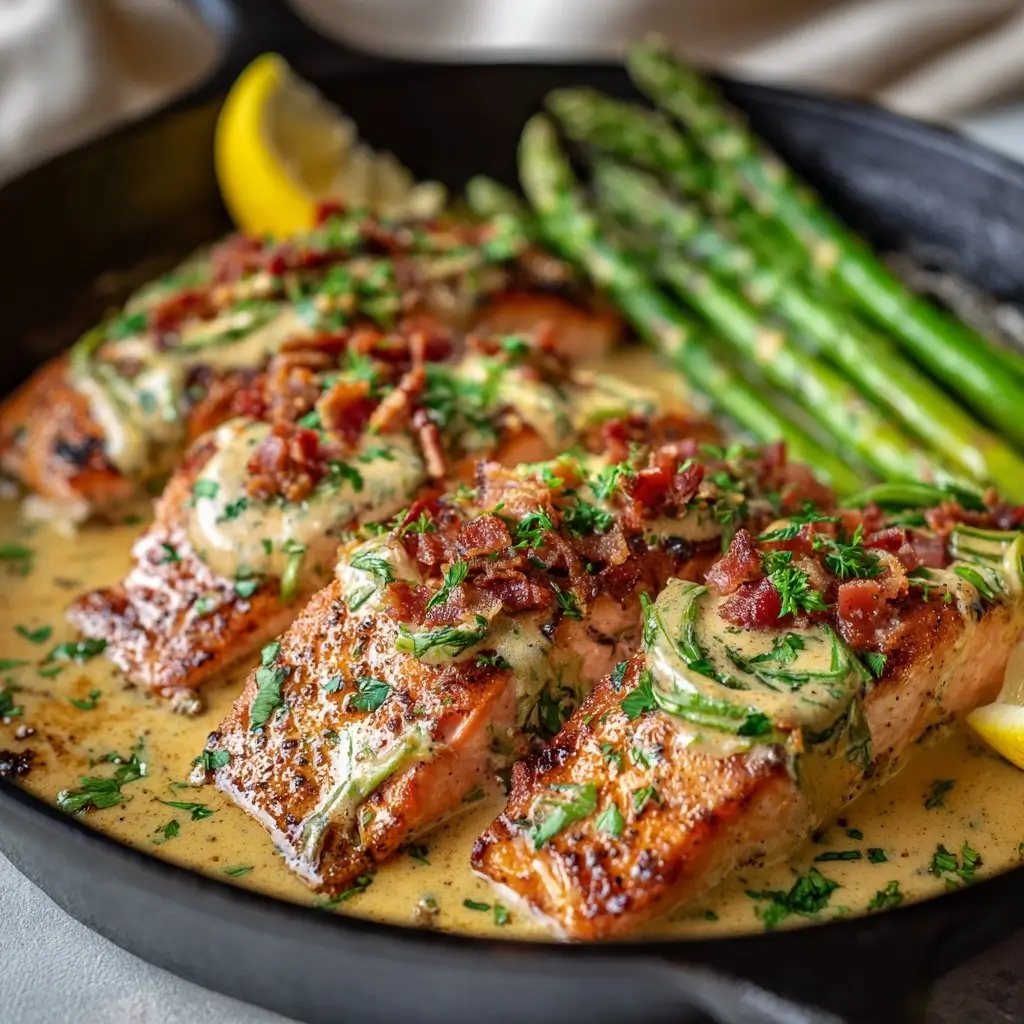
Creamy Dijon Salmon Skillet: A Luxurious One-Pan Wonder
If you’re searching for a dish that effortlessly blends elegance with simplicity, look no further than the Creamy Dijon Salmon Skillet. This savory recipe combines tender, flaky salmon fillets with a rich, velvety sauce infused with sharp Dijon mustard, garlic, and herbs—all cooked in one skillet for minimal cleanup and maximum flavor. Whether you’re preparing a romantic dinner for two or a quick weeknight meal for the family, this dish delivers gourmet results without requiring advanced culinary skills. With its creamy texture, vibrant colors, and balanced taste profile, it’s no wonder this recipe has become a staple in modern home kitchens.
The History of Creamy Dijon Salmon Skillet
While salmon has been a dietary staple in coastal regions—especially among Scandinavian, Pacific Northwest Indigenous, and Alaskan communities—for thousands of years, the concept of combining it with creamy sauces is relatively modern. The use of Dijon mustard in cooking dates back to 19th-century France, where the town of Dijon became renowned for its pungent, smooth mustard made from brown mustard seeds, white wine, vinegar, and spices.
The fusion of French-inspired cream sauces with salmon gained popularity during the mid-20th century as European culinary techniques spread globally. American home cooks began experimenting with pan-seared salmon topped with buttery, mustard-laced sauces during the 1980s and ’90s, especially as salmon farming made the fish more accessible and affordable.
The “skillet” variation emerged from the growing demand for quick, one-pan meals amid increasingly busy lifestyles. By the 2010s, food bloggers and wellness influencers elevated the dish into a celebrated comfort-meets-gourmet recipe, often featuring it on platforms like Pinterest and Instagram. Today’s version—Creamy Dijon Salmon Skillet—marries rustic convenience with fine-dining flair, symbolizing how traditional ingredients can evolve into contemporary classics.
Ingredients Breakdown: What Makes This Dish Shine
The magic of this dish lies in the harmony of high-quality ingredients that each play a vital role in building layers of flavor and texture:
- Salmon Fillets: Rich in omega-3 fatty acids and protein, wild-caught salmon offers superior flavor and firm texture. Look for center-cut fillets with even thickness for consistent cooking.
- Dijon Mustard: The star ingredient. It adds tanginess, depth, and emulsifying power to the sauce. Authentic Dijon mustard contains no artificial preservatives and delivers a clean, sharp bite.
- Heavy Cream: Provides luxurious body and smoothness. It balances the acidity of the mustard and creates a silky sauce that clings to the fish.
- Garlic: Freshly minced garlic brings aromatic warmth and complexity. Sautéed gently, it infuses the entire dish without overpowering.
- Dry White Wine (optional): Adds brightness and helps deglaze the pan, lifting flavorful browned bits (fond) while enhancing the sauce’s sophistication.
- Fresh Herbs: Parsley or dill are commonly used for freshness and color. Thyme or tarragon can also be added for an earthy, slightly anise-like note.
- Lemon Juice: Brightens the richness and cuts through the fat, balancing the overall taste.
- Olive Oil and Butter: Olive oil ensures a good sear on the salmon, while butter adds richness and aids in creating a glossy sauce.
- Salt and Pepper: Essential for seasoning at every stage, enhancing all other flavors.
Optional additions include capers for brininess, green beans or asparagus for vegetables, or a sprinkle of parmesan for extra umami.
Step-by-Step Recipe: How to Make Creamy Dijon Salmon Skillet
- Prepare Ingredients: Pat 4 salmon fillets (6 oz each) dry with paper towels. Season both sides generously with salt and freshly ground black pepper. Mince 3 cloves of garlic. Measure out 1/4 cup Dijon mustard, 1 cup heavy cream, 1/2 cup dry white wine (like Sauvignon Blanc), juice of half a lemon, and chop 2 tablespoons fresh parsley.
- Sear the Salmon: Heat 2 tablespoons olive oil in a large oven-safe skillet over medium-high heat. Once shimmering, place salmon fillets skin-side down (if skin-on) and cook undisturbed for 5–6 minutes until golden brown and easily releases from the pan. Flip carefully and cook for another 2 minutes. Remove fillets to a plate, leaving juices behind. (Do not cook through yet.)
- Build the Sauce Base: Reduce heat to medium. Add 1 tablespoon butter to the same skillet. Stir in minced garlic and sauté for 30 seconds until fragrant. Pour in white wine to deglaze, scraping up any browned bits with a wooden spoon. Simmer for 2–3 minutes until reduced by half.
- Create the Creamy Dijon Sauce: Whisk in Dijon mustard until fully incorporated. Slowly pour in heavy cream, stirring constantly. Bring to a gentle simmer and cook for 4–5 minutes until the sauce thickens slightly. Stir in lemon juice and season with additional salt and pepper to taste.
- Finish Cooking the Salmon: Return salmon fillets to the skillet, nestling them into the sauce. Spoon some sauce over the top. If desired, transfer the skillet to a preheated oven at 375°F (190°C) and bake for 8–10 minutes, or continue cooking on the stovetop over low heat until salmon reaches an internal temperature of 125–130°F (52–54°C).
- Garnish and Serve: Remove from heat. Dot with remaining butter for shine (optional). Sprinkle with chopped parsley and serve immediately.
Tips for Perfect Results Every Time
- Don’t Overcook the Salmon: Salmon continues to cook after removal from heat due to carryover cooking. Aim for slightly underdone when pulling it off the stove; it will finish cooking in the warm sauce.
- Use High-Quality Dijon: Avoid cheap substitutes with added sugars or preservatives. Opt for brands like Maille, Grey Poupon, or stone-ground artisanal mustards.
- Control Sauce Thickness: If the sauce is too thin, simmer longer. If too thick, add a splash of chicken broth or reserved pasta water. For a lighter version, substitute half-and-half or whole milk, though the sauce won’t be as rich.
- Skin On vs. Skin Off: Skin-on fillets hold together better during searing and provide crispiness. If using skinless, reduce initial sear time and handle gently when flipping.
- Acidity Balance: Taste before serving. If the sauce tastes flat, add a bit more lemon juice or mustard. If too sharp, swirl in a teaspoon of honey or a pat of butter.
- Skillet Choice: Use a heavy-bottomed skillet (stainless steel or cast iron) for even heat distribution and beautiful browning. Non-stick works but may not develop as much fond.
Variations and Customizations
This versatile recipe welcomes creativity. Here are several ways to personalize your Creamy Dijon Salmon Skillet:
- Cream-Free Version: Replace heavy cream with full-fat coconut milk for a dairy-free alternative. Add a teaspoon of cornstarch slurry if needed to thicken.
- Herb Twists: Swap parsley for fresh dill (especially delicious with salmon), chives, or a pinch of tarragon for a French bistro vibe.
- Vegetable Add-Ins: Sauté sliced mushrooms, baby spinach, cherry tomatoes, or blanched green beans in the pan before adding the sauce. You can also roast asparagus alongside the salmon and serve on the side.
- Pasta Integration: Turn it into a salmon Alfredo-style dish by tossing cooked fettuccine or linguine into the skillet. Garnish with parmesan and extra herbs.
- Spicy Kick: Add red pepper flakes or a dash of cayenne to the sauce for heat. Harissa paste (½ tsp) can also deepen the flavor profile.
- Wine Substitute: No wine? Use low-sodium chicken or vegetable broth with a splash of apple cider vinegar or lemon juice for acidity.
- Mustard Blend: Mix Dijon with whole grain mustard for texture contrast, or a touch of honey mustard for subtle sweetness.
- Gluten-Free Friendly: This recipe is naturally gluten-free—just ensure all packaged ingredients (like broth or mustard) are certified GF if needed.
Health Considerations and Nutritional Value
The Creamy Dijon Salmon Skillet isn’t just delicious—it packs notable health benefits when enjoyed as part of a balanced diet.
Nutritional Highlights (per serving, based on 4 servings):
- Calories: ~520 kcal
- Protein: ~38g – supports muscle repair and satiety
- Fat: ~38g (mostly heart-healthy unsaturated fats from salmon)
- Omega-3 Fatty Acids: ~2,000–3,000mg – crucial for brain function, reducing inflammation, and cardiovascular health
- Vitamin D: Salmon is one of the best natural sources, supporting immune function and bone health
- B Vitamins: Especially B12 and niacin, essential for energy metabolism and nervous system health
- Selenium: An antioxidant mineral abundant in seafood, important for thyroid function
Considerations:
- Saturated Fat: Heavy cream contributes about 18g saturated fat per serving. To reduce, use half-and-half or evaporated milk, or incorporate blended silken tofu for creaminess with less fat.
- Sodium: Dijon mustard and added salt increase sodium levels. Use low-sodium mustard and control salt during seasoning to keep below 800mg per serving if needed.
- Lactose Sensitivity: Those who are lactose intolerant may opt for lactose-free cream or plant-based alternatives like cashew cream.
- Pregnancy & Mercury: Salmon is generally safe during pregnancy due to low mercury content and high nutrient value. However, limit intake to 2–3 servings per week and choose wild-caught when possible.
Pair this dish with steamed broccoli, quinoa, or a mixed greens salad to boost fiber and micronutrient intake for a well-rounded meal.
Full Ingredient List
- 4 (6-ounce) skin-on salmon fillets, patted dry
- Salt and freshly ground black pepper (to taste)
- 2 tablespoons olive oil
- 1 tablespoon unsalted butter (plus extra for finishing)
- 3 cloves garlic, minced
- 1/2 cup dry white wine (e.g., Sauvignon Blanc or Pinot Grigio)
- 1/4 cup Dijon mustard (high-quality preferred)
- 1 cup heavy cream (or substitute)
- Juice of 1/2 lemon (about 1–1.5 tablespoons)
- 2 tablespoons fresh parsley, finely chopped (plus extra for garnish)
- Optional: 1 teaspoon fresh thyme leaves, 1 tbsp capers, 1 cup spinach or green beans
Directions Recap
- Season salmon with salt and pepper. Heat olive oil in a large skillet over medium-high heat. Sear salmon skin-side down for 5–6 minutes until golden. Flip and cook 2 more minutes. Transfer to a plate.
- In the same skillet, melt butter over medium heat. Add garlic and sauté 30 seconds. Pour in white wine and simmer 2–3 minutes to reduce.
- Add Dijon mustard and whisk to combine. Gradually stir in heavy cream, bringing to a gentle simmer. Cook 4–5 minutes until slightly thickened.
- Stir in lemon juice and season with salt and pepper. Return salmon to the skillet, spooning sauce over fillets.
- Cook on stove or transfer to a 375°F oven for 8–10 minutes, until salmon is just cooked through.
- Remove from heat, dot with butter, sprinkle with parsley, and serve immediately.
Frequently Asked Questions (FAQ)
Can I make this ahead of time?
It’s best served fresh, but you can prep ingredients in advance. The sauce can be partially made and reheated gently, then add salmon just before serving. Fully cooked leftovers reheat well but may have a softer texture.
Can I use frozen salmon?
Yes, but thaw completely in the refrigerator overnight. Pat very dry before cooking to ensure proper searing and prevent splattering.
Is this recipe keto-friendly?
Absolutely! With minimal carbs (under 5g per serving), it fits perfectly into a ketogenic or low-carb lifestyle. Just avoid adding starchy vegetables or pasta.
What sides go well with this dish?
Excellent pairings include garlic mashed cauliflower, roasted Brussels sprouts, wild rice, sautéed spinach, or a crisp arugula salad with lemon vinaigrette.
Can I double the recipe?
Yes, but use two skillets instead of overcrowding one. Overcrowding lowers the pan temperature and prevents proper searing.
How long do leftovers last?
Store in an airtight container in the refrigerator for up to 3 days. Reheat gently in a skillet over low heat to preserve texture. Freezing is not recommended due to the dairy-based sauce separating upon thawing.
Why did my sauce curdle?
Dairy sauces can break if exposed to high heat or extreme acidity. Always simmer gently and add lemon juice toward the end. If sauce separates, remove from heat and whisk in a tablespoon of cold butter or a splash of cream to re-emulsify.
Summary
The Creamy Dijon Salmon Skillet is a restaurant-quality dish that’s surprisingly simple to make at home—featuring succulent salmon bathed in a luscious, tangy cream sauce enriched with garlic and herbs.
Perfect for weeknights or special occasions, this one-pan wonder delivers rich flavor, impressive presentation, and nutritious benefits in every bite.