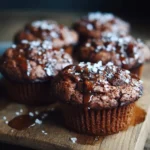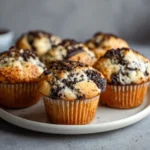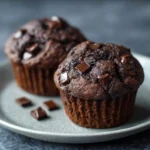
Introduction
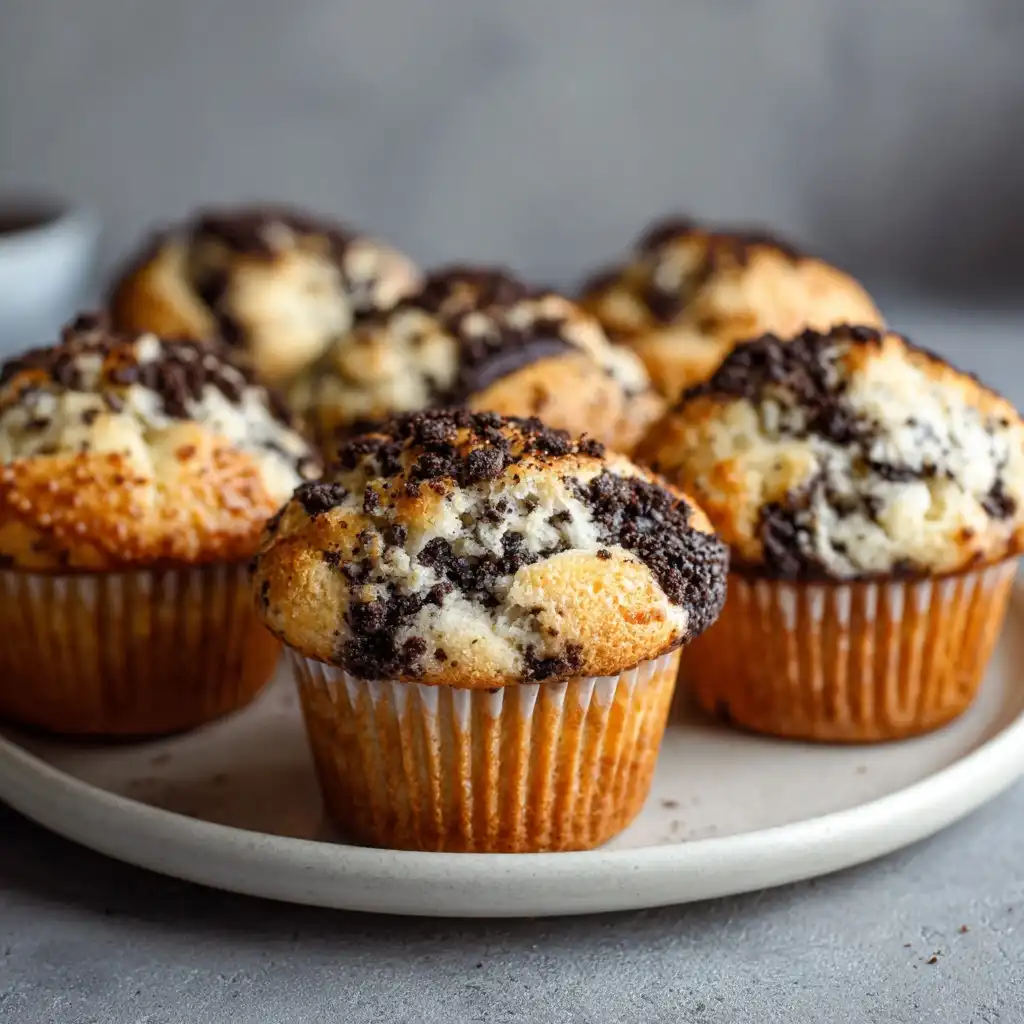
Welcome to the ultimate guide to Cookies and Cream Muffins—a decadent, nostalgic, and irresistibly moist baked treat that bridges the gap between classic American muffins and beloved ice cream parlor indulgence. These muffins capture the magic of creamy vanilla and crunchy chocolate sandwich cookie pieces in every tender, domed bite—perfect for breakfast, afternoon tea, after-school snacks, or even dessert. Whether you’re a seasoned baker or a curious beginner, this comprehensive resource delivers everything you need to craft bakery-quality Cookies and Cream Muffins at home: from historical context and ingredient science to foolproof techniques, smart substitutions, dietary adaptations, and nutrition insights—all grounded in real-world baking experience.
The History
The story of Cookies and Cream Muffins is a delicious evolution rooted in mid-20th-century American food culture. While the iconic Cookies and Cream ice cream flavor was officially trademarked by Dreyer’s (now part of Frontera Foods) in 1979—reportedly inspired by a college student’s suggestion to mix crushed Oreo cookies into vanilla ice cream—the muffin adaptation emerged organically in the 1990s as home bakers began experimenting with flavor crossovers. Early versions appeared in regional church cookbooks and local diner menus across the Midwest and Pacific Northwest, where bakers sought playful, crowd-pleasing twists on traditional blueberry or banana muffins. By the early 2000s, the trend gained momentum through food blogs and cable baking shows, evolving beyond simple add-ins into a fully engineered formula: one that balances batter viscosity to suspend cookie chunks without sinking, stabilizes moisture during baking to prevent dryness, and leverages the Maillard reaction to deepen vanilla-cocoa notes. Today, Cookies and Cream Muffins are a staple at artisanal bakeries, school fundraisers, and coffee shop menus nationwide—and have become a beloved canvas for gluten-free, vegan, keto, and allergen-conscious innovation.
Ingredients Breakdown
Understanding *why* each ingredient matters—not just what it does—is key to mastering these muffins. Below is a detailed functional analysis:
- All-Purpose Flour (2½ cups / 315g): Provides structure via gluten formation. A moderate protein content (10–12%) ensures tenderness without toughness. For optimal lift, always spoon-and-level (never scoop) to avoid dense muffins.
- Granulated Sugar (¾ cup / 150g): Sweetens, tenderizes (by inhibiting gluten development), aids browning, and contributes to crisp exterior texture. Substituting part with brown sugar adds molasses depth and extra moisture—but may darken color and intensify flavor.
- Baking Powder (2 tsp) & Baking Soda (¼ tsp): Dual-leavening system. Baking powder provides primary lift (acid + base reaction with liquid/heat); baking soda neutralizes acidity from buttermilk or yogurt while enhancing browning and spread. Never substitute one for the other without recalculating pH balance.
- Unsalted Butter (½ cup / 113g), melted and cooled: Adds richness, mouthfeel, and flakiness when cooled properly. Melted (not hot) butter integrates smoothly without cooking eggs; cooling prevents scrambling and preserves emulsion stability. Clarified butter can be used for higher smoke point and intensified nuttiness.
- Large Eggs (2, room temperature): Binders, emulsifiers, and leavening contributors. Room temperature ensures uniform incorporation and better air retention. Egg whites add structure; yolks lend richness and moisture.
- Full-Fat Sour Cream or Buttermilk (¾ cup / 175g): Critical for tenderness and tang. The acid gently breaks down gluten strands, while fat and protein boost moisture retention and crumb softness. Low-fat versions risk dryness and diminished flavor complexity.
- Pure Vanilla Extract (2 tsp): Not imitation—real Madagascar bourbon vanilla provides floral, woody, and sweet-cream notes essential to balancing cocoa bitterness. Alcohol-based extract also helps distribute fat-soluble flavor compounds evenly.
- High-Quality Chocolate Sandwich Cookies (1 ½ cups / ~180g crushed, plus extra for topping): Use full-size original Oreos or certified gluten-free equivalents (e.g., Kinnikinnick or Glutino). Crush just before mixing to preserve texture—pre-crushed cookies absorb moisture and turn gummy. Reserve ¼ cup for garnish to ensure visible “cookies” on top post-bake.
- Pinch of Fine Sea Salt (¼ tsp): Enhances all flavors, counters sweetness, and strengthens gluten network subtly. Kosher salt requires volume adjustment; table salt may over-salt due to density.
- Optional Flavor Boosters: 1 tsp espresso powder (enhances cocoa without adding coffee taste), ¼ tsp almond extract (complements vanilla), or a swirl of white chocolate ganache (added in center pre-bake).
Step-by-Step Recipe
- Prep Work (15 minutes): Preheat oven to 425°F (220°C) for optimal initial oven spring. Line a standard 12-cup muffin tin with parchment liners (not paper-only—they tear under sticky batter) or grease thoroughly with non-stick spray + light flour dusting. Measure all ingredients precisely using digital scale (grams preferred) and set out at room temperature.
- Dry Whisk (2 minutes): In large bowl, whisk flour, sugar, baking powder, baking soda, and salt until fully homogenized and aerated—no lumps, no streaks. Sift if flour has settled or appears clumpy.
- Wet Mix (3 minutes): In medium bowl, combine melted & cooled butter, eggs, sour cream/buttermilk, and vanilla. Whisk vigorously for 60 seconds until emulsified—mixture should be pale, slightly thickened, and uniform with no separated fat.
- Combine Gently (90 seconds): Pour wet mixture into dry. Using silicone spatula or wooden spoon, fold *just until no dry flour remains*. Do not overmix—visible streaks are acceptable; overmixing = tunneling, toughness, and peaked muffin tops instead of domed crowns. Batter will be thick, glossy, and slightly lumpy.
- Fold in Cookies (60 seconds): Add 1 ½ cups crushed cookies. Fold gently 8–10 strokes—just enough to disperse without pulverizing pieces. Batter will lighten slightly in color and gain subtle speckling.
- Portion & Top (2 minutes): Divide batter evenly among cups (~¼ cup per muffin, or 65g). Smooth tops lightly. Press 1 tsp reserved cookie pieces onto center of each muffin for visual appeal and textural contrast.
- Bake Strategically (Initial High Heat + Reduce): Place pan on center rack. Bake at 425°F for 5 minutes—this rapid heat expansion creates dramatic domes. *Immediately reduce oven temperature to 350°F (175°C)* and continue baking 15–18 minutes, rotating pan halfway. Muffins are done when deep golden brown, springs back when lightly pressed, and skewer inserted in center comes out clean (no wet batter—crumbs okay).
- Cool Intentionally (Critical!): Let muffins rest in pan for 5 minutes—this sets structure and prevents collapse. Then transfer to wire rack. Cool at least 20 minutes before serving. Warm muffins release steam that softens crust; fully cooled ones develop ideal chewy-yet-tender crumb.
Tips
- Crushing Cookies Like a Pro: Pulse in food processor (1–2 sec bursts) until pea-sized and coarse—not fine crumbs. Or place cookies in heavy-duty zip-top bag and crush with rolling pin, stopping before sandy texture emerges.
- Prevent Sinking Cookies: Toss crushed cookies in 1 tbsp flour before folding in—creates barrier against moisture absorption and helps suspend them evenly.
- Maximize Dome Height: Fill cups ¾ full (not more), use cold batter (refrigerate 15 min pre-bake if kitchen is warm), and never open oven door before 12 minutes.
- Moisture Lock Trick: Brush warm muffins (after 5-min rest) with 1 tbsp melted butter + ½ tsp vanilla—adds shine, richness, and seals in steam.
- Freeze for Freshness: Cool completely, wrap individually in plastic + foil, freeze up to 3 months. Thaw overnight in fridge or reheat wrapped in foil at 325°F for 10 minutes.
- Room Temperature Matters: Cold eggs or dairy cause batter to seize and separate—always bring to 68–72°F (20–22°C) for 30+ minutes before starting.
- Scale Your Batch: This recipe doubles flawlessly—use two tins, staggered racks, and rotate positions at 5- and 12-minute marks.
- Test Doneness Correctly: Insert skewer into *side* of muffin near center—not top—to avoid false positives from surface crust.
Variations and Customizations
From dietary needs to bold creativity, these muffins adapt beautifully:
- Gluten-Free: Swap flour 1:1 with certified GF blend containing xanthan gum (e.g., King Arthur Measure for Measure or Bob’s Red Mill 1-to-1). Add ½ tsp additional xanthan gum if blend lacks it. Increase sour cream by 2 tbsp for elasticity.
- Vegan: Replace eggs with “flax eggs” (2 tbsp ground flax + 6 tbsp water, rested 10 min); butter with refined coconut oil or vegan butter; sour cream with unsweetened soy or coconut yogurt + ½ tsp apple cider vinegar. Use vegan Oreos (e.g., Newman’s Own or Nabisco’s certified vegan line).
- Reduced-Sugar: Substitute ¼ cup granulated sugar with erythritol or allulose blend (not stevia—bitter aftertaste). Keep ½ cup sugar for structure/browning. Add 1 tsp monk fruit extract for sweetness lift.
- Protein-Packed: Add 2 scoops unflavored whey or collagen peptides (not plant-based—may cause grittiness). Reduce flour by 2 tbsp to compensate.
- Double-Chocolate: Add ⅓ cup unsweetened cocoa powder + 2 tbsp extra sugar + 2 tbsp hot coffee (enhances cocoa solubility). Reduce flour by 2 tbsp.
- Mini Muffins: Bake at 425°F → 350°F for 9–11 minutes. Yield: 36. Perfect for parties or portion control.
- Stuffed Surprise: Pipe 1 tsp white chocolate ganache or cream cheese filling into center of each cup *before* adding batter. Creates melty core.
- Seasonal Twists: Add ½ tsp pumpkin pie spice + 2 tbsp canned pumpkin (reduce sour cream by 1 tbsp); or 1 tsp lemon zest + 2 tbsp poppy seeds for bright contrast.
Health Considerations and Nutritional Value
A single standard Cookies and Cream Muffin (1/12th recipe, ~110g) contains approximately:
- Calories: 320–360 kcal
- Total Fat: 15–17g (9–10g saturated, primarily from butter and cookies)
- Carbohydrates: 44–48g (32–36g sugars, mostly added)
- Protein: 4–5g
- Fiber: 0.8–1.2g (low unless GF/oat flour or added psyllium)
- Sodium: 220–280mg (moderate—mostly from cookies and baking soda)
Key Considerations:
- Added Sugars: Represents ~65% of FDA’s recommended daily limit (50g). Ideal for occasional enjoyment—not daily breakfast. Pair with Greek yogurt or berries to lower glycemic impact.
- Trans Fats: Avoid brands with partially hydrogenated oils in cookies—check labels. Most mainstream Oreos are now trans-fat-free.
- Fortification Potential: Enrich with calcium (add 1 tsp calcium citrate), iron (½ tsp blackstrap molasses), or omega-3s (1 tbsp ground chia in dry mix).
- Allergens: Contains wheat, dairy, eggs, soy (in most cookies), and tree nuts (if using almond extract or nut-based toppings). Always verify cookie ingredient lists for facility warnings.
- Digestive Notes: High fat + sugar may trigger reflux or bloating in sensitive individuals. Smaller portions and slower eating mitigate effects.
- Antioxidant Upside: Cocoa in cookies provides flavanols—linked to vascular health—though quantity per muffin is modest (~10–15mg).
For balanced integration: Serve one muffin alongside high-protein, high-fiber foods (e.g., hard-boiled egg + apple slices) to stabilize blood sugar and increase satiety.
Ingredients
- 2½ cups (315g) all-purpose flour, spooned and leveled
- ¾ cup (150g) granulated sugar
- 2 tsp aluminum-free baking powder
- ¼ tsp baking soda
- ¼ tsp fine sea salt
- ½ cup (113g) unsalted butter, melted and cooled to 90°F (32°C)
- 2 large eggs, room temperature
- ¾ cup (175g) full-fat sour cream or buttermilk, room temperature
- 2 tsp pure vanilla extract
- 1 ½ cups (180g) coarsely crushed original chocolate sandwich cookies (e.g., Oreos), plus ¼ cup extra for topping
Directions
- Preheat oven to 425°F (220°C). Line a 12-cup muffin tin with parchment paper liners or grease and flour.
- In a large bowl, whisk together flour, sugar, baking powder, baking soda, and salt until fully combined and lump-free.
- Pour wet ingredients into dry ingredients. Gently fold with a silicone spatula until *just* combined—do not overmix. Batter will be thick and slightly lumpy.
- Add 1 ½ cups crushed cookies and fold gently 8–10 times until evenly distributed.
- Divide batter evenly among prepared muffin cups (about ¼ cup each). Press reserved cookie pieces onto center of each muffin.
- Bake at 425°F for 5 minutes. Without opening oven, reduce temperature to 350°F (175°C) and continue baking 15–18 minutes, until deeply golden and a toothpick inserted into center comes out clean.
- Let muffins cool in pan for 5 minutes. Transfer to wire rack and cool at least 20 minutes before serving.
FAQ
- Can I make these muffins ahead?
- Absolutely. Bake, cool completely, and store in airtight container at room temperature for up to 3 days—or freeze for up to 3 months. Reheat frozen muffins wrapped in foil at 325°F for 12–15 minutes for fresh-from-oven warmth and aroma.
- Why did my muffins sink in the middle?
- Most common causes: overmixing batter (develops excess gluten), opening oven too early (collapses rising structure), underbaking (center collapses as steam escapes), or expired leavening agents. Always test with skewer and replace baking powder/soda every 6 months.
- Can I use Greek yogurt instead of sour cream?
- Yes—but use full-fat plain Greek yogurt *thinned with 1 tbsp milk or cream*. Regular Greek yogurt is too thick and acidic, which can yield dense, rubbery crumb.
- My batter seems too thick—can I add more liquid?
- Resist the urge. Proper batter should mound and hold shape. If unusually thick, double-check flour measurement—over-measuring is the #1 culprit. If truly dry, add liquid 1 tsp at a time—but only after confirming accurate measuring technique.
- Are there dairy-free cookie options?
- Yes: Enjoy Life Soft Baked Chocolate Sandwich Cookies, Glutino Gluten-Free Chocolate Vanilla Creme Cookies, or homemade versions using coconut oil and oat milk. Always verify “dairy-free” label—not just “vegan.”
- How do I get bakery-style tall domes every time?
- Three keys: (1) Start hot (425°F), (2) Fill cups ¾ full, (3) Use chilled batter (refrigerate 15 min before portioning) to slow initial rise and encourage upward expansion over spreading.
- Can I add mix-ins like chocolate chips or nuts?
- You can—but reduce cookie pieces by ¼ cup to maintain structural integrity and flavor balance. Toasted walnuts or dark chocolate chunks (60–70% cacao) complement especially well.
- What’s the best way to store leftovers?
- In an airtight container at room temperature for 2–3 days. Avoid refrigeration—it accelerates staling and dries out crumb. For longer storage, freeze as directed above.
Summary
Cookies and Cream Muffins are a masterclass in joyful baking—melding nostalgic flavor, scientific precision, and adaptable creativity into one supremely moist, tender, and visually stunning treat. With careful attention to ingredient function, controlled mixing, strategic temperature shifts, and thoughtful customization, they deliver consistent, crowd-thrilling results every single time.
Whether enjoyed warm with a glass of cold milk or packed into lunchboxes with pride, these muffins aren’t just dessert—they’re edible comfort, shared tradition, and a reminder that the simplest pleasures, made with intention, remain timeless.