Coconut Rice Pudding: A Creamy, Tropical Delight
The History of Coconut Rice Pudding
Coconut rice pudding is a beloved dessert that spans continents and cultures, reflecting the rich culinary traditions of tropical regions where coconuts thrive. Its origins can be traced back to Southeast Asia, South Asia, the Caribbean, and parts of West Africa, where rice and coconut are staple ingredients. In countries like Thailand, Sri Lanka, India, Jamaica, and the Philippines, variations of this creamy dessert have been enjoyed for generations, often served during festivals, religious ceremonies, or as a comforting family treat.
In Thailand, it’s known as “Khao Niew Mamuang” when served with mango, while in Sri Lanka, “Kiri Bath” (milk rice) sometimes includes coconut milk for added richness. The Caribbean version, especially in Jamaica, features warm spices like nutmeg and cinnamon, giving it a unique depth of flavor. Over time, as trade routes expanded and cultures intermingled, coconut rice pudding evolved into a global comfort food—adapted with local ingredients yet always centered around the luscious combination of rice, coconut milk, and sweetener.
The dish’s enduring popularity lies in its simplicity, affordability, and adaptability. It requires minimal ingredients, most of which are pantry staples in tropical households, and can be made on a stove, in a slow cooker, or even baked in the oven. Today, coconut rice pudding has found a place in modern kitchens worldwide, celebrated not only for its decadent taste but also for its cultural significance and nourishing qualities.
Ingredients Breakdown: What Makes Coconut Rice Pudding So Delicious?
The magic of coconut rice pudding comes from the harmonious blend of simple, wholesome ingredients. Each component plays a vital role in creating a creamy texture and rich, aromatic flavor profile.
- Rice: Traditionally, short-grain white rice such as Arborio, jasmine, or sushi rice is used because of its high starch content, which breaks down during cooking to create a naturally thick and creamy consistency. Some recipes use glutinous (sticky) rice for an even chewier texture.
- Coconut Milk: This is the star ingredient. Full-fat coconut milk provides a luxurious creaminess and distinct tropical flavor. Canned coconut milk is preferred over carton versions (which are often diluted) for best results.
- Sweetener: Sugar is most commonly used—white granulated, brown sugar, or coconut sugar for a deeper molasses-like note. Some versions use condensed milk, palm sugar, or jaggery for added complexity.
- Spices: Warm spices like ground cinnamon, nutmeg, cardamom, or vanilla extract enhance the aroma and balance the sweetness. Freshly grated nutmeg or a split vanilla bean elevates the dish significantly.
- Liquid Base: While some recipes use only coconut milk, others combine it with water, regular milk, or plant-based alternatives like almond or oat milk to adjust richness and cost.
- Optional Add-ins: Raisins, shredded coconut, chopped nuts (like almonds or cashews), mango pieces, banana, or even a splash of rum can be stirred in for extra texture and flavor.
Step-by-Step Recipe: How to Make Creamy Coconut Rice Pudding at Home
Follow this detailed guide to create a silky, fragrant coconut rice pudding that’s perfect for any occasion.
Ingredients
- ½ cup (100g) short-grain white rice (Arborio or jasmine)
- 1 can (13.5 oz / 400ml) full-fat coconut milk
- 1 cup (240ml) water or additional coconut milk
- ⅓ cup (65g) granulated sugar (adjust to taste)
- ¼ teaspoon salt
- 1 teaspoon pure vanilla extract
- ½ teaspoon ground cinnamon
- ¼ teaspoon ground nutmeg (optional)
- ¼ cup (40g) raisins (optional)
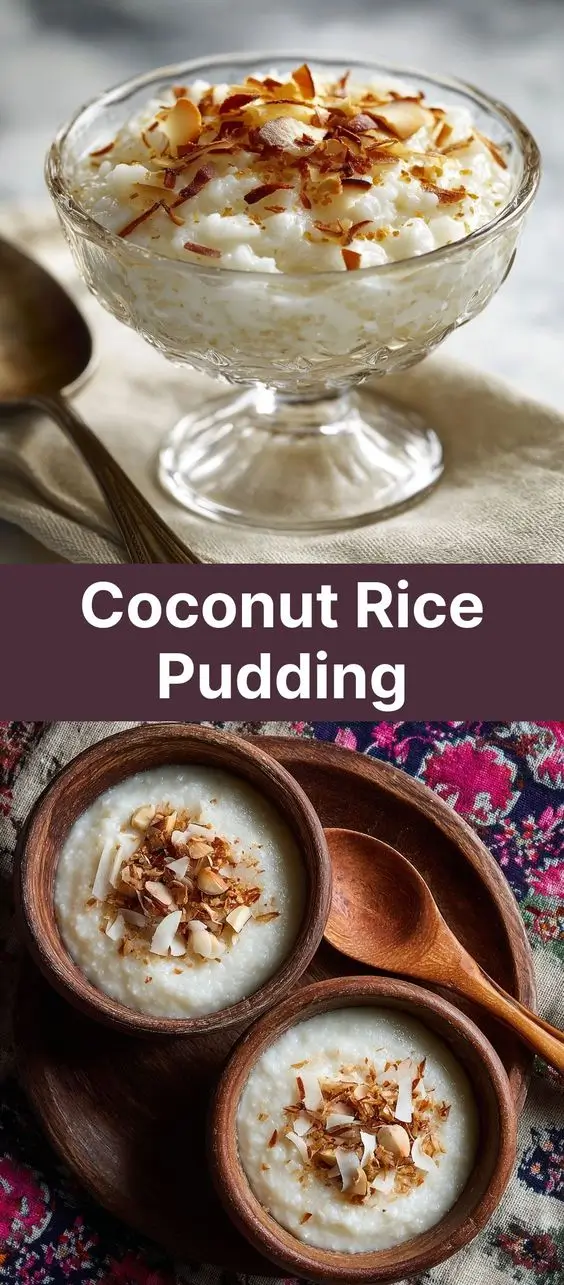
- 2 tablespoons toasted shredded coconut (for garnish)
- Chopped fresh fruit (mango, banana) or nuts for serving
Directions
- Rinse the Rice: Place the rice in a fine-mesh strainer and rinse under cold water until the water runs clear. This removes excess surface starch and prevents clumping.
- Combine Ingredients: In a medium-sized saucepan, add the rinsed rice, coconut milk, water, sugar, salt, cinnamon, and nutmeg. Stir gently to combine.
- Bring to a Simmer: Place the saucepan over medium heat. Bring the mixture to a gentle simmer, stirring occasionally to prevent sticking.
- Reduce Heat and Cook: Once simmering, reduce the heat to low. Cover the pot partially with a lid to allow steam to escape while preventing boil-overs. Cook for 30–40 minutes, stirring every 5–10 minutes, until the rice is very soft and the pudding has thickened to a creamy consistency.
- Add Flavorings: Stir in the vanilla extract and raisins (if using) during the last 10 minutes of cooking. This ensures the raisins plump up without becoming mushy.
- Check Consistency: The pudding should coat the back of a spoon. If it’s too thick, stir in a splash of warm coconut milk or water. If too thin, cook uncovered for a few more minutes.
- Cool Slightly: Remove from heat and let the pudding sit for 5–10 minutes. It will continue to thicken as it cools.
- Serve or Chill: Serve warm, or transfer to individual bowls and refrigerate for at least 2 hours for a chilled version. Garnish with toasted coconut, fresh fruit, or a sprinkle of cinnamon before serving.
Tips for the Perfect Coconut Rice Pudding
- Stir Regularly: Frequent stirring prevents scorching on the bottom and helps release the rice’s starch for a creamier texture.
- Use Full-Fat Coconut Milk: Light coconut milk will result in a thinner, less flavorful pudding. Shake the can well before opening, or stir thoroughly if it has separated.
- Adjust Sweetness: Taste as you go. Some prefer a lightly sweetened pudding, while others enjoy it more decadent. You can always add more sugar later, but you can’t take it out!
- Try a Vanilla Bean: For a gourmet touch, scrape the seeds of one vanilla pod into the mixture instead of using extract.
- Double the Batch: This pudding keeps well and often tastes even better the next day. Store in airtight containers in the fridge for up to 4 days.
- Reheat Gently: When reheating, add a splash of milk or coconut milk and warm over low heat, stirring constantly to restore creaminess.
- Watch the Heat: Cooking over too high a heat can cause the milk to curdle or the rice to burn. Patience is key—low and slow wins the race.
Variations and Customizations
One of the greatest joys of coconut rice pudding is its versatility. Here are some creative ways to customize it to your taste or dietary needs:
- Vegan Coconut Rice Pudding: Already dairy-free! Just ensure your sugar is vegan (some refined sugars use bone char).
- Gluten-Free: Naturally gluten-free as long as all ingredients (especially flavorings) are certified GF.
- Protein Boost: Stir in a scoop of vanilla plant-based protein powder after cooking, or serve with a side of Greek yogurt.
- Tropical Twist: Add diced mango, pineapple, or banana either during cooking or as a topping. Try making a mango coulis for an elegant presentation.
- Spiced Version: Add a pinch of ground cloves, allspice, or ginger for a chai-like warmth. A small piece of fresh ginger can be simmered with the rice and removed before serving.
- Baked Option: Preheat oven to 350°F (175°C). Combine all ingredients in an oven-safe dish, cover with foil, and bake for 1 hour, stirring halfway through.
- Slow Cooker Method: Combine all ingredients in a slow cooker and cook on low for 2.5 to 3 hours, stirring occasionally.
- Alcoholic Twist: Stir in 1–2 tablespoons of dark rum, coconut rum, or Malibu for an adult-friendly dessert. Add during the last 5 minutes of cooking to preserve flavor.
- Floral Notes: Infuse the coconut milk with a few drops of rose water or orange blossom water for a Middle Eastern flair.
- Savory-Sweet Option: Reduce sugar and add a pinch of turmeric, toasted cumin, and black pepper for a subtly spiced, nourishing porridge-style dish.
Health Considerations and Nutritional Value
While coconut rice pudding is undeniably indulgent, it does offer some nutritional benefits when enjoyed in moderation.
Nutritional Highlights (per 1-cup serving, approximate):
- Calories: 320–380
- Fat: 20–25g (mostly healthy medium-chain triglycerides from coconut)
- Carbohydrates: 35–40g
- Protein: 4–5g
- Fiber: 2–3g (especially if using brown rice or adding fruit)
- Calcium & Iron: Small amounts from coconut milk and rice
Health Benefits:
- Coconut Milk: Contains lauric acid, which may support immune function and has antimicrobial properties. MCTs can be a quick source of energy.
- Rice: Easy to digest and hypoallergenic, making this pudding suitable for sensitive stomachs or post-illness recovery.
- Natural Energy: Ideal as a pre- or post-workout snack when paired with protein.
Considerations:
- High in Sugar: Traditional recipes can be high in added sugars. Use natural sweeteners like mashed banana, date syrup, or monk fruit to reduce glycemic impact.
- Calorie-Dense: Due to coconut milk and sugar, portion control is advised for those managing weight or blood sugar.
- Lactose-Free Alternative: A great option for those avoiding dairy, though always check labels for cross-contamination if allergies are severe.
- Low Protein: Pair with nuts, seeds, or a dollop of Greek yogurt to increase satiety and nutritional balance.
Frequently Asked Questions (FAQ)
Can I use brown rice instead of white rice?
Yes, but expect a longer cooking time (up to 50–60 minutes) and a chewier texture. Brown rice also absorbs more liquid, so you may need to add an extra ½ cup of liquid during cooking.
Why did my pudding turn out grainy or curdled?
This usually happens if the coconut milk was overheated or brought to a rapid boil. Always cook on low heat and stir gently. Using high-quality, full-fat canned coconut milk reduces the risk.
Can I freeze coconut rice pudding?
Technically yes, but the texture may become slightly watery upon thawing due to separation. Reheat slowly with extra coconut milk to restore creaminess. Best consumed fresh or refrigerated.
How long does it keep in the fridge?
Up to 4 days in an airtight container. Stir well before serving, as it thickens when chilled.
Can I make it without sugar?
Absolutely. Use ripe mashed banana, applesauce, or a natural sweetener like stevia or erythritol. Adjust to taste.
Is coconut rice pudding safe for babies?
Yes, once they’ve started solids (typically around 6 months). Use unsweetened versions with mild flavors and ensure rice is fully cooked and soft. Consult your pediatrician first.
What’s the difference between coconut milk and coconut cream?
Coconut cream is thicker and higher in fat, with less water. It makes an ultra-rich pudding. You can substitute, but you may need to dilute it slightly with water.
Can I use instant rice?
Not recommended. Instant rice doesn’t release enough starch and can become mushy. Stick to regular short-grain rice for best results.
Summary
Coconut rice pudding is a globally cherished dessert that blends creamy coconut milk, tender rice, and warm spices into a comforting, aromatic treat. Easy to customize and rich in cultural heritage, it’s equally delightful warm or chilled.