Coconut Mango Chia Pudding: A Tropical Delight for Any Time of Day
The History
Chia pudding, as we know it today, has its roots in ancient Mesoamerican civilizations, particularly the Aztecs and Mayans, who revered chia seeds as a source of energy and strength. The word “chia” itself comes from the ancient Nahuatl language, meaning “strength.” These tiny black seeds were not only consumed whole or ground into flour but were also used in religious ceremonies and as currency. Warriors reportedly carried chia seeds on long marches because they provided sustained energy.
Fast forward to the 21st century, chia seeds experienced a global resurgence thanks to their impressive nutritional profile and versatility in modern diets, especially within health-conscious and plant-based communities. The concept of chia pudding evolved as a simple way to enjoy these nutrient-dense seeds by soaking them in liquid until they form a gel-like consistency—similar to tapioca or overnight oats.
Enter the tropical twist: coconut and mango. Coconut water, milk, and flesh have been dietary staples across Southeast Asia, the Caribbean, and Pacific Islands for centuries, valued for their hydration properties and rich flavor. Mangoes, often called the “king of fruits,” originated in South Asia over 4,000 years ago and spread through trade routes to Africa, Latin America, and beyond. Combining these three powerhouse ingredients—chia, coconut, and mango—creates a harmonious fusion of ancient tradition and modern wellness culture. The Coconut Mango Chia Pudding is more than just a trendy breakfast; it’s a celebration of global culinary heritage wrapped in a creamy, refreshing dish that nourishes both body and soul.
Ingredients Breakdown
To craft the perfect Coconut Mango Chia Pudding, each ingredient plays a crucial role—not only in flavor but also in texture and nutrition. Here’s an in-depth look at what goes into this vibrant dessert or breakfast treat:
- Chia Seeds (1/4 cup): These tiny powerhouses are rich in omega-3 fatty acids, fiber, protein, antioxidants, calcium, magnesium, and phosphorus. When soaked in liquid, they absorb up to 10 times their weight, forming a gelatinous texture that gives the pudding its signature thickness.
- Coconut Milk (1 cup, full-fat canned preferred): Adds creaminess and a rich tropical flavor. Full-fat coconut milk provides healthy medium-chain triglycerides (MCTs), which are easily digested and can be used quickly for energy. Light coconut milk can be used for a lower-calorie version, but the result will be less decadent.
- Unsweetened Almond Milk or Coconut Water (1/2 cup): Helps balance the richness of the coconut milk while increasing hydration. Coconut water adds natural electrolytes and subtle sweetness, whereas almond milk keeps the base neutral for stronger mango flavor.
- Ripe Mango (1 large or 1 1/2 cups diced): Provides natural sweetness, vibrant color, and essential vitamins like vitamin C, vitamin A, and folate. Ripe mango blends smoothly into a silky puree, enhancing both taste and texture.
- Maple Syrup or Agave Nectar (1–2 tablespoons, optional): Used to enhance sweetness if your mango isn’t quite ripe enough. These natural sweeteners blend well without overpowering the tropical notes. For a sugar-free option, omit entirely or use a few drops of stevia.
- Vanilla Extract (1/2 teaspoon): Enhances overall flavor complexity with warm, aromatic notes that complement both coconut and mango beautifully.
- Pinch of Salt (optional): Balances sweetness and brings out the natural flavors of all the ingredients.
Optional toppings include:
- Fresh mango cubes
- Toasted coconut flakes
- Chopped pistachios or almonds
- Hemp seeds or granola
- A drizzle of coconut yogurt or Greek yogurt
- Mint leaves for garnish
Step-by-Step Recipe
- Prepare the Mango Puree: Peel and dice one large ripe mango. Place the chunks in a blender or food processor and blend until completely smooth. You should have about 1 1/2 cups of puree. Set aside 1/2 cup for layering or topping later if desired.
- Mix Wet Ingredients: In a mixing bowl or large measuring cup, combine 1 cup of full-fat coconut milk, 1/2 cup of unsweetened almond milk (or coconut water), 1–2 tablespoons of maple syrup (depending on sweetness preference), 1/2 teaspoon of vanilla extract, and a pinch of salt. Whisk together until fully blended.
- Incorporate Mango: Add 1 cup of the freshly made mango puree to the liquid mixture. Stir thoroughly until the color is uniformly golden and the mixture is well combined.
- Add Chia Seeds: Slowly sprinkle 1/4 cup of chia seeds into the wet mixture while continuously whisking. This helps prevent clumping. Continue stirring for 1–2 minutes to evenly distribute the seeds.
- Let It Rest: Cover the bowl with a lid or plastic wrap and refrigerate for 15 minutes. After this initial set, remove and stir again vigorously to break up any clumps that may have formed. Return to the refrigerator.
- Final Soak: Allow the pudding to chill for at least 3–4 hours, preferably overnight. This ensures the chia seeds fully expand and achieve a creamy, tapioca-like consistency.
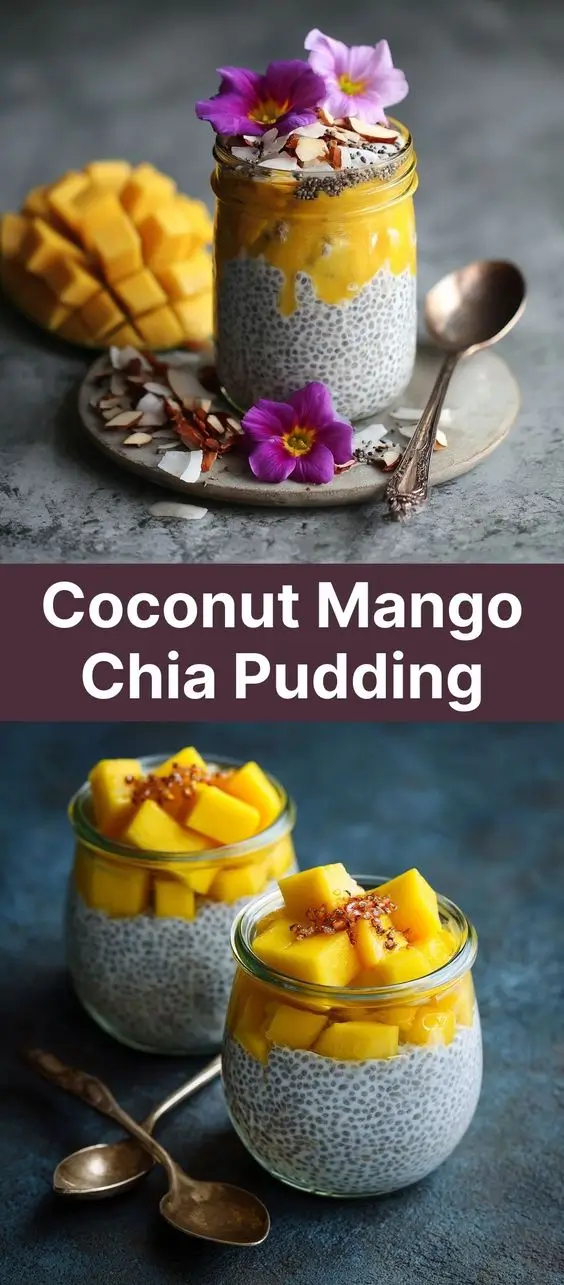
- Layer or Serve: Once set, give the pudding one final stir. You can serve it plain, swirl in extra mango puree for a marbled effect, or create layers by alternating chia pudding with fresh mango cubes or coconut yogurt in a glass.
- Garnish and Enjoy: Top with toasted coconut flakes, fresh fruit, nuts, or a sprinkle of chia seeds for added crunch and visual appeal. Serve cold straight from the fridge.
Tips
- Use Ripe Mangoes: Choose mangoes that yield slightly to gentle pressure and emit a sweet, fruity aroma near the stem. Unripe mangoes lack sweetness and won’t blend smoothly.
- Whisk Immediately: As soon as you add chia seeds to the liquid, start whisking. They begin absorbing moisture instantly, so prompt mixing prevents stubborn clumps.
- Stir Midway: Always stir the pudding after the first 15–30 minutes in the fridge. This second mix ensures uniform texture and eliminates pockets of dry chia seeds.
- Adjust Consistency: If the pudding becomes too thick after refrigeration, thin it out with a splash of almond milk, coconut milk, or even orange juice for a citrusy kick.
- Serve in Transparent Glasses: Layered chia puddings look stunning when served in clear mason jars or parfait glasses. Alternate with fresh fruit, granola, or yogurt for an Instagram-worthy presentation.
- Make Ahead Friendly: This pudding keeps well in the refrigerator for up to 5 days. Prepare multiple servings at once for quick grab-and-go breakfasts or desserts.
- Freeze for Smoothies: Leftover chia pudding can be frozen in ice cube trays and blended later into tropical smoothies for added fiber and thickness.
- Boost Nutrition: Stir in hemp seeds, flaxseed meal, or spirulina powder during mixing for extra protein, omega-3s, or greens.
Variations and Customizations
The beauty of Coconut Mango Chia Pudding lies in its adaptability. Whether you’re catering to dietary needs, seasonal produce, or simply craving variety, here are some creative twists:
- Piña Colada Chia Pudding: Replace half the mango puree with pineapple puree and add a splash of white rum extract (alcohol-free) for a cocktail-inspired treat.
- Protein-Packed Version: Blend in a scoop of unflavored or vanilla plant-based protein powder or Greek yogurt for increased satiety—perfect post-workout fuel.
- Green Detox Twist: Mix in a handful of spinach or kale into the mango puree before blending. The sweetness masks the greens entirely while boosting micronutrient content.
- Keto-Friendly Option: Use low-carb sweeteners like erythritol or monk fruit instead of maple syrup, reduce mango quantity, and increase coconut cream for higher fat content.
- Vegan & Allergen-Free: Ensure all ingredients are certified vegan. Use oat milk or rice milk if nut allergies are a concern.
- Tropical Trio Parfait: Layer coconut mango chia pudding with passionfruit curd and papaya compote for a multi-flavor tropical experience.
- Spiced Mango Chia Pudding: Add a pinch of ground cardamom, turmeric, or ginger for warmth and anti-inflammatory benefits.
- Chocolate-Coconut Swirl: Melt a square of dark chocolate and swirl it into the top layer before chilling for a decadent contrast.
- Baby Food Edition: Omit sweeteners and serve plain coconut-mango chia pudding to toddlers over 12 months old as a nutritious finger food or meal supplement.
Health Considerations and Nutritional Value
Coconut Mango Chia Pudding isn’t just delicious—it’s a powerhouse of nutrients that supports various aspects of health. Let’s break down the key components:
Nutritional Highlights (Per Serving, Approximate Values):
- Calories: ~280–320 kcal
- Total Fat: 18–22g (mostly healthy fats from chia and coconut)
- Saturated Fat: 12–15g (primarily MCTs from coconut, which are metabolized efficiently)
- Carbohydrates: 28–32g
- Dietary Fiber: 10–12g (nearly half your daily needs—great for digestion and gut health)
- Sugars: 15–18g (naturally occurring from mango and minimal added sweeteners)
- Protein: 6–8g (impressive for a plant-based pudding)
- Omega-3 Fatty Acids: ~4,900 mg per 1/4 cup chia seeds (ALA type)
- Vitamins & Minerals: Rich in Vitamin C (from mango), Vitamin E, calcium, magnesium, phosphorus, potassium, and iron.
Health Benefits:
- Digestive Health: High fiber content promotes regular bowel movements and feeds beneficial gut bacteria.
- Heart Health: Omega-3s from chia seeds help reduce inflammation and support cardiovascular function.
- Blood Sugar Regulation: Despite natural sugars, the high fiber and fat content slow glucose absorption, preventing spikes and crashes—ideal for diabetics when portion-controlled.
- Hydration Support: Coconut water and milk contribute electrolytes like potassium and sodium, making this pudding surprisingly hydrating.
- Weight Management: The combination of protein, fiber, and healthy fats increases satiety, helping curb overeating and snacking between meals.
- Skin Glow: Vitamin C boosts collagen production, while mango’s beta-carotene contributes to radiant skin. Antioxidants fight free radicals responsible for aging.
- Bone Strength: Chia seeds contain more calcium per ounce than dairy milk, supporting bone density and dental health.
Considerations:
- Calorie Density: Due to coconut milk and chia seeds, this pudding is calorie-rich. Portion control is advised for those managing weight.
- Allergies: Contains tree nuts (coconut) and potential cross-contamination risks depending on processing facilities. Always check labels if allergies are severe.
- Oxalate Content: Chia seeds are high in oxalates, which may contribute to kidney stone formation in susceptible individuals. Moderation is key.
- Thinning Effect: Chia seeds have mild blood-thinning properties due to omega-3s. Consult a doctor if on anticoagulant medication.
Ingredients
- 1/4 cup chia seeds
- 1 cup full-fat canned coconut milk (well stirred)
- 1/2 cup unsweetened almond milk or coconut water
- 1 large ripe mango, peeled and diced (about 1 1/2 cups)
- 1–2 tablespoons pure maple syrup or agave nectar (optional)
- 1/2 teaspoon pure vanilla extract
- Pinch of sea salt
For Toppings (optional):
- Fresh mango cubes
- Toasted coconut flakes
- Chopped pistachios or slivered almonds
- Hemp seeds or granola
- Coconut or Greek yogurt
- Mint leaves
Directions
- In a blender, combine the diced mango, maple syrup (if using), vanilla extract, and a pinch of salt. Blend until completely smooth. Measure out 1 cup of mango puree for the pudding base; reserve the rest for layering or topping.
- In a medium-sized bowl or large measuring cup, whisk together the coconut milk, almond milk (or coconut water), and 1 cup of the prepared mango puree until fully incorporated.
- Gradually sprinkle in the chia seeds while whisking constantly to avoid clumping. Whisk for 1–2 minutes until the mixture begins to thicken slightly.
- Cover the bowl and refrigerate for 15–30 minutes. Remove and stir vigorously to break up any lumps that may have formed.
- Return to the refrigerator and chill for at least 3–4 hours, or ideally overnight, until the pudding reaches a thick, creamy consistency.
- Before serving, give the pudding a good stir. If it’s too thick, thin with a little extra milk or coconut water.
- Serve in individual glasses or bowls. Swirl in reserved mango puree, layer with fresh fruit, or top with coconut flakes, nuts, and seeds for added texture and visual appeal.
- Chill any leftovers in airtight containers for up to 5 days.
FAQ
Can I make chia pudding without coconut milk?
Yes! While coconut milk adds richness, you can substitute it with almond milk, oat milk, soy milk, or even regular dairy milk. Keep in mind the pudding will be lighter and less creamy.
Is chia pudding safe to eat every day?
Generally, yes—but moderation is important. One serving (about 1/4 cup chia seeds) daily is considered safe for most people and provides excellent nutritional benefits.
Why is my chia pudding too watery?
This usually happens if insufficient chia seeds were used or not enough resting time. Try adding a tablespoon more chia seeds, stirring well, and letting it sit another 2–3 hours.
Can I heat chia pudding?
You can warm it slightly, but heating too much may break down the gel structure. It’s best enjoyed cold or at room temperature.
Can I use frozen mango?
Absolutely. Thaw the mango first and drain excess liquid before blending. Frozen mango works great, especially when fresh ones aren’t in season.
How do I prevent mold or spoilage?
Always store in a clean, airtight container in the fridge. Discard if there’s an off smell, discoloration, or slimy texture. Five days is the maximum recommended shelf life.
Can kids eat chia pudding?
Yes, once children are past toddler stage and can safely consume small seeds. For younger kids, grind the chia seeds first or ensure they’re fully hydrated to prevent choking hazards.
Is this pudding suitable for vegans and gluten-free diets?
Yes, provided all ingredients used are certified vegan and gluten-free. Chia seeds are naturally gluten-free, but always check packaging for cross-contamination warnings.
Summary
Coconut Mango Chia Pudding combines the creamy richness of coconut, the sunny sweetness of mango, and the superfood power of chia seeds into a delicious, nutrient-packed dish perfect for breakfast, dessert, or a snack.
Easily customizable, make-ahead friendly, and loaded with fiber, healthy fats, and antioxidants, this tropical treat delights the palate while supporting overall wellness—one spoonful at a time.