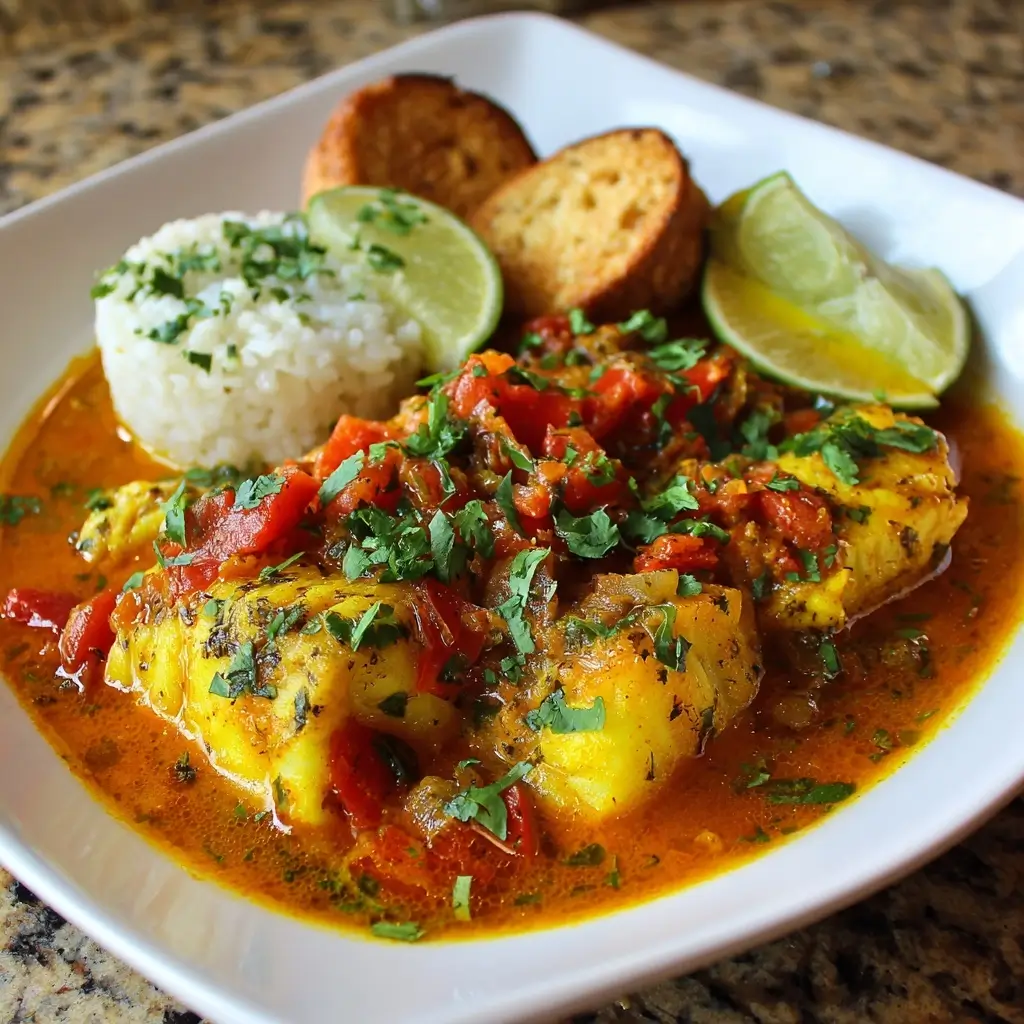
Introduction
Coconut Curry Fish Stew is a rich, aromatic, and comforting dish that brings together the delicate sweetness of fresh fish with the creamy depth of coconut milk and the bold warmth of curry spices. Originating from coastal regions across Southeast Asia, South India, and the Caribbean, this stew exemplifies how diverse culinary traditions have embraced the harmony between seafood and tropical ingredients. Whether served over steaming jasmine rice or with warm flatbreads, Coconut Curry Fish Stew is more than just a meal—it’s an experience that awakens the senses with every spoonful.
The History
The roots of Coconut Curry Fish Stew can be traced back centuries to fishing communities in tropical climates where coconuts, spices, and fresh seafood were abundant. In countries like Thailand, Sri Lanka, Malaysia, Indonesia, and various islands in the Indian and Pacific Oceans, fishermen would return with their daily catch and prepare it using readily available ingredients: coconut milk extracted from grated flesh, freshly ground turmeric, ginger, garlic, lemongrass, and chili peppers. These elements formed the foundation of early curries.
In South India, particularly in Kerala and Tamil Nadu, fish curries made with coconut milk are staples passed down through generations. The use of mustard seeds, curry leaves, and tamarind added complexity and preservation in hot climates. Over time, trade routes introduced new spices such as cumin, coriander, and cinnamon, enriching the flavor profiles further.
In the Caribbean, enslaved Africans adapted traditional West African stews by incorporating local ingredients like Scotch bonnet peppers, allspice (pimento), and coconut milk brought via colonial exchange. Dishes such as Jamaican coconut fish or Trinidadian oil-down evolved into vibrant regional variations of coconut-based seafood stews.
Today, Coconut Curry Fish Stew stands as a symbol of cultural fusion—a testament to how geography, climate, migration, and trade have shaped global cuisine. Its enduring popularity lies not only in its taste but also in its versatility and nourishing qualities.
Ingredients Breakdown
To create an authentic and flavorful Coconut Curry Fish Stew, each ingredient plays a vital role in building layers of aroma, texture, and taste:
- Fish: Firm white fish fillets such as cod, halibut, snapper, sea bass, or mahi-mahi hold up well during cooking without disintegrating. Freshness is key—look for clear eyes (if whole), firm flesh, and a clean ocean scent.
- Coconut Milk: Full-fat canned coconut milk provides the luxurious creaminess essential to the stew. It contributes both fat and natural sugars that balance the heat from spices.
- Curry Base Aromatics: Onions, garlic, ginger, and lemongrass form the foundational sautéed mixture known as “the holy trinity” in many Asian kitchens. Sautéed until golden, they release deep umami notes.
- Spices: Ground turmeric gives the stew its signature golden hue and earthy warmth. Curry powder or paste (store-bought or homemade) adds complexity. For authenticity, consider using toasted coriander, cumin, fenugreek, and mustard seeds.
- Fresh Herbs & Leaves: Thai basil, cilantro, and especially curry leaves (used whole and often fried in oil at the start) elevate fragrance and authenticity.
- Acidic Elements: Lime juice, tamarind paste, or even tomatoes add brightness and cut through the richness of the coconut milk.
- Heat Components: Fresh chilies (like bird’s eye or jalapeño), crushed red pepper flakes, or sambal oelek bring controlled spiciness depending on preference.
- Vegetables (Optional): Bell peppers, eggplant, okra, spinach, or cherry tomatoes can be added for color, nutrition, and texture.
- Liquid Enhancer: Fish or vegetable broth may be used to adjust consistency while adding savory depth.
- Oil: Coconut oil enhances tropical notes; neutral oils like avocado or sunflower work too. Some recipes call for tempering mustard seeds in hot oil first to bloom flavors.
Step-by-Step Recipe
- Prepare Ingredients: Cut 1.5 lbs (700g) of firm white fish into 2-inch chunks. Peel and dice one large onion. Mince 3 cloves of garlic. Grate 1 tablespoon of fresh ginger. Slice 1–2 stalks of lemongrass (white part only) finely or bruise and leave whole for later removal. Chop any vegetables you’re including (e.g., bell pepper, tomato).
- Sauté Aromatics: Heat 2 tablespoons of coconut oil in a heavy-bottomed pot or Dutch oven over medium heat. Add 1 teaspoon of mustard seeds (optional). Once they begin to pop, add 1 chopped onion and cook until translucent (about 5 minutes). Stir in minced garlic, grated ginger, and lemongrass. Cook for another 2–3 minutes until fragrant.
- Bloom Spices: Add 1 tablespoon of curry powder, ½ teaspoon ground turmeric, and a pinch of cayenne (adjust to taste). Stir constantly for about 30 seconds to toast the spices and unlock their essential oils—be careful not to burn them.
- Add Vegetables: If using, add diced bell pepper, eggplant, or other hearty vegetables. Sauté for 4–5 minutes until slightly softened.
- Incorporate Liquids: Pour in 1 can (13.5 oz / 400ml) of full-fat coconut milk and 1 cup of fish or vegetable broth. Stir well to combine. Optionally, add 1 tablespoon of tamarind paste or the juice of half a lime for tanginess. Bring the mixture to a gentle simmer.
- Simmer the Sauce: Let the curry base simmer for 10–15 minutes to allow flavors to meld. Remove whole lemongrass stalks if used unchopped.
- Add Fish: Gently place the fish pieces into the simmering liquid. Do not stir vigorously—use a spatula to submerge them carefully. Cover and poach for 6–8 minutes, or until the fish is opaque and flakes easily with a fork. Avoid overcooking.
- Finish with Freshness: Turn off the heat. Stir in fresh chopped cilantro, a squeeze of lime juice, and optionally a few torn Thai basil leaves. Taste and adjust seasoning with salt and pepper.
- Serve Immediately: Ladle the stew into bowls, ensuring each serving has fish, sauce, and vegetables. Serve hot with rice, naan, roti, or crusty bread.
Tips
- Choose Sustainable Fish: Opt for sustainably sourced fish certified by organizations like MSC (Marine Stewardship Council) to support responsible fishing practices.
- Don’t Boil After Adding Fish: Keep the heat low once fish is added. Vigorous boiling will break apart the delicate flesh.
- Use High-Quality Coconut Milk: Shake the can before opening. Avoid brands with excessive stabilizers or water separation. Brands like Chaokoh or Aroy-D are highly regarded.
- Bloom Spices Properly: Toasting spices in oil releases volatile compounds, enhancing flavor far beyond simply mixing them into liquid.
- Layer Heat Gradually: Start mild and increase spice level incrementally. You can always add more chili, but you can’t remove it!
- Add Greens at the End: Spinach, kale, or bok choy wilt beautifully when stirred in during the last 2 minutes of cooking.
- Let It Rest: Allowing the stew to sit for 10 minutes after cooking helps flavors deepen and integrate.
- Garnish Creatively: Top with sliced scallions, extra cilantro, toasted coconut flakes, a drizzle of chili oil, or a dollop of plain yogurt for contrast.
Variations and Customizations
One of the greatest strengths of Coconut Curry Fish Stew is its adaptability. Here are some inspired twists to suit different palates and dietary needs:
- Thai-Inspired Version: Use red or green curry paste instead of dry spices. Add bamboo shoots, kaffir lime leaves, and palm sugar for balance. Finish with Thai basil.
- Sri Lankan Style: Incorporate roasted curry powder, cinnamon stick, cardamom pods, and pandan leaf. Use tamarind for sourness and serve with hoppers or string hoppers.
- Caribbean Coconut Fish Broth: Include Scotch bonnet pepper, thyme sprigs, allspice berries, and dumplings. Often cooked with root vegetables like yams and plantains.
- Goan Fish Curry: Made with coconut milk, vinegar, and a unique blend of roasted spices including coriander, cumin, and dried red chilies. Traditionally served with poi or rice.
- Seafood Medley: Upgrade to a mixed seafood stew with shrimp, mussels, scallops, and squid alongside fish. Add shellfish in the last 3–5 minutes to prevent overcooking.
- Vegan/Vegetarian Option: Replace fish with tofu, tempeh, or mushrooms (such as king oyster or shiitake). Use vegetable broth and ensure curry paste is vegan-friendly.
- Low-Fat Version: Use light coconut milk and reduce added oil. Increase vegetables like zucchini and cauliflower to bulk up the stew.
- Gluten-Free Friendly: Naturally gluten-free if using tamari instead of soy sauce and verifying curry powder labels. Serve with quinoa or cauliflower rice.
- Instant Pot Shortcut: Sauté aromatics using the “Sauté” function, then add liquids and pressure cook with fish for 2 minutes, followed by quick release.
- Freezer-Friendly Batch: Prepare the curry base ahead and freeze. Thaw and gently reheat, adding fresh fish just before serving.
Health Considerations and Nutritional Value
Coconut Curry Fish Stew offers a balanced profile of macronutrients and micronutrients when prepared thoughtfully:
- Omega-3 Fatty Acids: Fatty fish like salmon or mackerel (if substituted) provide heart-healthy EPA and DHA, which support brain function and reduce inflammation.
- Lean Protein: White fish delivers high-quality protein with minimal saturated fat, aiding muscle repair and satiety.
- Medium-Chain Triglycerides (MCTs): Found in coconut milk, MCTs are metabolized differently than long-chain fats and may offer quick energy, though moderation is advised due to high calorie density.
- Antioxidant-Rich Spices: Turmeric contains curcumin, a powerful anti-inflammatory compound. Ginger aids digestion and reduces nausea.
- Fiber Content: When loaded with vegetables, the stew becomes a good source of dietary fiber, supporting gut health.
- Vitamins and Minerals: Garlic supports immune function; lime juice boosts vitamin C; fish contributes vitamin D and selenium.
Cautions:
- High Sodium: Store-bought broths, canned coconut milk, and curry pastes can be high in sodium. Choose low-sodium versions or make your own broth and spice blends.
- Saturated Fat: Coconut milk is high in saturated fat (~13g per ½ cup). While newer research suggests moderate intake may not be harmful, those monitoring cholesterol should consume in moderation.
- Allergens: Contains fish and possibly shellfish. Coconut is classified as a tree nut by the FDA, so caution is needed for those with nut allergies (though botanically it’s a fruit).
- Merciful Seafood Choices: Be mindful of mercury levels—avoid high-mercury fish like swordfish or king mackerel. Stick to low-mercury options like cod, tilapia, or farmed trout.
Ingredients
- 1.5 lbs (700g) firm white fish fillets (cod, halibut, snapper), cut into chunks
- 2 tbsp coconut oil or neutral oil
- 1 large yellow onion, diced
- 3 cloves garlic, minced
- 1 tbsp fresh ginger, grated
- 1–2 stalks lemongrass, white parts only, finely sliced or bruised
- 1 tbsp curry powder (or 2 tbsp red/green curry paste)
- ½ tsp ground turmeric
- ¼ tsp cayenne pepper (optional, adjust to heat preference)
- 1 red bell pepper, sliced (optional)
- 1 can (13.5 oz / 400ml) full-fat coconut milk
- 1 cup fish or vegetable broth
- 1 tbsp tamarind paste or juice of ½ lime
- 1 cup cherry tomatoes or diced tomatoes (optional)
- Salt and black pepper to taste
- ½ cup fresh cilantro, chopped
- 1–2 Thai chilies, sliced (optional, for garnish)
- Juice of ½ lime (for finishing)
Directions
- In a large pot or Dutch oven, heat coconut oil over medium heat. Add mustard seeds (if using) and let them sizzle until they pop (about 30 seconds).
- Add diced onion and sauté until soft and translucent (5–6 minutes).
- Stir in garlic, ginger, and lemongrass. Cook for 2 minutes until fragrant.
- Add curry powder, turmeric, and cayenne. Stir continuously for 30 seconds to toast the spices.
- If using, add bell pepper and sauté for 3–4 minutes until beginning to soften.
- Pour in coconut milk and broth. Stir well to combine. Add tamarind paste or lime juice, along with tomatoes if desired.
- Bring to a gentle simmer and let cook uncovered for 10–15 minutes to thicken slightly and develop flavor.
- Reduce heat to low. Carefully add fish pieces into the liquid, submerging them gently with a spatula. Do not stir.
- Cover and poach for 6–8 minutes, or until fish is fully cooked—opaque and flaky.
- Remove from heat. Stir in fresh cilantro and final squeeze of lime juice. Season with salt and pepper.
- Let rest for 5–10 minutes before serving to allow flavors to settle.
- Serve hot with steamed rice, quinoa, or flatbread. Garnish with extra herbs, chilies, or toasted coconut.
FAQ
Can I use frozen fish?
Yes, but thaw completely in the refrigerator before cooking to ensure even texture and prevent excess moisture in the stew.
How do I prevent the coconut milk from separating?
Avoid boiling vigorously. Simmer gently, especially after adding coconut milk. Stirring frequently also helps maintain emulsion.
Can I make this ahead of time?
The curry base reheats well, but fish is best added fresh. Prepare the sauce in advance, refrigerate for up to 2 days, then reheat and add raw fish when ready to serve.
Is this stew spicy?
It depends on your ingredients. Using mild curry powder and omitting chilies keeps it family-friendly. Add fresh peppers or hot sauce to increase heat.
What can I substitute for fish?
Tofu, chickpeas, shrimp, chicken, or mushrooms work well as alternatives.
Can I use canned tomatoes?
Absolutely. Diced canned tomatoes add acidity and body, especially useful if skipping tamarind.
How long does leftovers last?
Store in an airtight container in the fridge for up to 2 days. Reheat gently on the stove—microwaving may overcook the fish.
Why did my fish fall apart?
This usually happens from stirring too much or boiling too hard. Poach gently and handle with care.
Can I freeze Coconut Curry Fish Stew?
While possible, freezing may alter the texture of both fish and coconut milk. Better to freeze the base only and add fresh fish upon reheating.
Is coconut milk healthy?
In moderation, yes. It provides beneficial fats and enhances nutrient absorption, but is calorie-dense. Balance with plenty of vegetables and lean proteins.
Summary
Coconut Curry Fish Stew is a globally inspired, nutrient-rich dish that marries succulent fish with creamy coconut milk and aromatic spices for a deeply satisfying meal. Easy to customize and packed with flavor, it’s perfect for weeknight dinners or impressing guests with minimal effort.