Classic Neapolitan Pizza with Fresh Basil & Mozzarella
Introduction
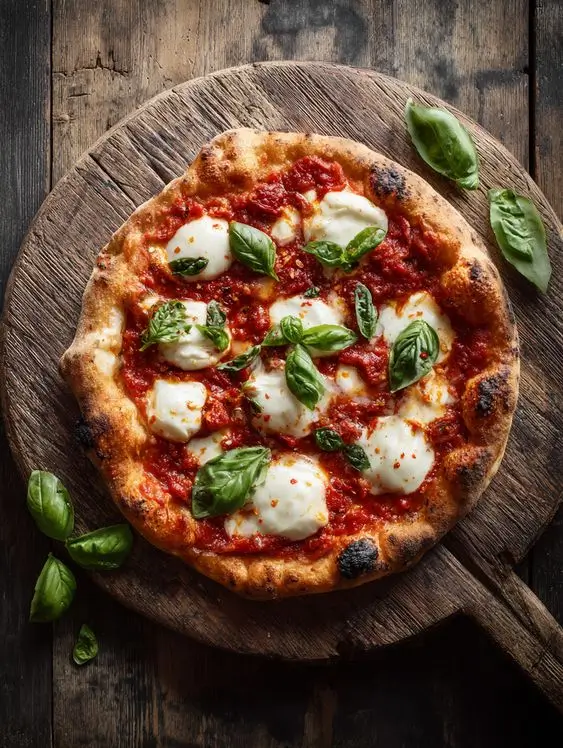
The Classic Neapolitan Pizza with Fresh Basil & Mozzarella is more than just a dish—it’s an edible work of art, a symbol of culinary tradition, and a testament to the beauty of simplicity. Originating from Naples, Italy, this iconic pizza has captured the hearts and taste buds of food lovers around the world. With its soft, chewy crust, vibrant San Marzano tomato sauce, creamy mozzarella di bufala, and fragrant fresh basil, every bite offers a harmonious blend of textures and flavors that celebrate high-quality ingredients prepared with care and precision.
This version of Neapolitan pizza—often referred to as the “Margherita” in honor of Queen Margherita of Savoy—embodies the colors of the Italian flag: red from the tomatoes, white from the mozzarella, and green from the basil. It’s a pizza that doesn’t rely on excess but instead highlights the essence of each component, making it a timeless favorite for purists and gourmets alike. Whether you’re enjoying it in a rustic pizzeria in southern Italy or crafting it at home with passion, the Classic Neapolitan Pizza remains a gold standard in the world of artisanal cuisine.
The History
The origins of the Neapolitan pizza trace back to 18th-century Naples, a bustling port city where working-class families sought affordable, filling meals. Street vendors sold flatbreads topped with oil, garlic, and herbs, which evolved over time into what we now recognize as pizza. However, it was in 1889 that the Neapolitan pizza achieved legendary status.
According to popular lore, Raffaele Esposito, a renowned pizzaiolo (pizza maker), was commissioned to prepare several pizzas for Queen Margherita of Savoy during her visit to Naples. Among the varieties he presented was one featuring tomatoes, mozzarella cheese, and fresh basil—ingredients deliberately chosen to represent the colors of the newly unified Italian flag. The queen declared this version her favorite, and in her honor, Esposito named it “Pizza Margherita.”
This moment marked a turning point. What had been a humble street food embraced by the poor became a national treasure, recognized and protected over time. In 2009, the European Union granted Traditional Speciality Guaranteed (TSG) status to authentic Neapolitan pizza, codifying strict preparation standards under the Associazione Verace Pizza Napoletana (AVPN). This certification ensures that only pizzas made using time-honored methods, specific ingredients, and cooked in wood-fired ovens can bear the title of true Neapolitan pizza.
Today, Neapolitan pizza continues to inspire chefs and home cooks worldwide, serving as both a cultural emblem and a benchmark for quality in the global pizza renaissance.
Ingredients Breakdown
The magic of Classic Neapolitan Pizza lies not in complexity but in the excellence and authenticity of its few core ingredients. Each element plays a vital role, contributing to the balance of flavor, texture, and aroma that defines this beloved dish. Here’s a detailed look at what goes into an authentic Neapolitan pizza:
- 00 Flour (Farina 00): This finely milled Italian wheat flour is essential for achieving the signature tender-yet-chewy crust. Its low protein content (around 11–12%) allows for excellent gluten development without becoming tough, resulting in a light, airy interior with a crisp exterior when baked at high temperatures.
- San Marzano Tomatoes: Grown in the volcanic soil near Mount Vesuvius, these plum tomatoes are prized for their sweet, tangy flavor, low acidity, and thick flesh with minimal seeds. Canned San Marzanos labeled DOP (Denominazione di Origine Protetta) are considered the gold standard for authentic Neapolitan pizza sauce.
- Fresh Mozzarella di Bufala: Made from water buffalo milk, this soft, milky cheese offers a luxurious creaminess and delicate tang. It melts beautifully without releasing excessive moisture, ensuring a moist but not soggy pizza. For a slightly lighter alternative, Fior di Latte (cow’s milk mozzarella) may be used, though buffalo mozzarella remains traditional.
- Fresh Basil (Basilico Fresco): Added after baking or in the final moments of cooking, fresh basil contributes a bright, peppery aroma and herbal freshness that elevates the entire pie. It should be used generously but thoughtfully—never dried, as it loses its vibrancy.
- Extra Virgin Olive Oil: A high-quality, fruity extra virgin olive oil is drizzled over the finished pizza to enhance richness and add a glossy finish. Look for oils from regions like Tuscany or Sicily for optimal flavor.
- Sea Salt: Used to season both the dough and sauce, fine sea salt enhances overall flavor without overpowering the natural ingredients.
- Filtered Water: Pure, room-temperature water is crucial for activating the yeast and developing the dough properly. Chlorinated tap water can inhibit fermentation.
- Fresh Yeast or Active Dry Yeast: Traditionally, fresh compressed yeast is used in Naples, but active dry or instant yeast works well for home bakers. The slow fermentation process (often 8–24 hours) is key to building complex flavor and airy texture in the crust.
Optional additions include a pinch of dried oregano in the sauce or a few slices of freshly grated Parmigiano-Reggiano before baking, though purists often avoid anything beyond the core trio of tomato, mozzarella, and basil.
Step-by-Step Recipe
Creating an authentic Classic Neapolitan Pizza with Fresh Basil & Mozzarella at home requires patience, attention to detail, and ideally, a high-heat oven (preferably wood-fired or pizza oven capable of reaching 800°F/430°C). However, excellent results can also be achieved with a home oven and pizza stone or steel. Follow these steps carefully for a restaurant-quality result.
Ingredients
- 500g (3 ¾ cups) Tipo 00 flour
- 325ml (1 ⅓ cups) filtered water, at room temperature
- 2g (½ tsp) active dry yeast or 6g fresh yeast
- 10g (2 tsp) fine sea salt
- 1 tbsp extra virgin olive oil (plus more for drizzling)
- 400g (14 oz) canned San Marzano tomatoes (DOP certified if possible)
- 2 large pinches of sea salt
- 6–8 fresh basil leaves
- 4 balls (125g each) fresh mozzarella di bufala, drained and torn into pieces
- Optional: a pinch of dried oregano
Dough Preparation (Day 1 or 8–24 Hours Before Baking)
- In a small bowl, dissolve the yeast in lukewarm water and let sit for 5–10 minutes until frothy.
- In a large mixing bowl, combine the 00 flour and salt. Make a well in the center and pour in the yeast mixture and olive oil.
- Using a wooden spoon or your hands, mix until a shaggy dough forms. Turn onto a lightly floured surface and knead for 8–10 minutes until smooth and elastic. Alternatively, use a stand mixer with a dough hook on medium speed for 6–8 minutes.
- Form the dough into a ball, place in a lightly oiled bowl, cover with plastic wrap or a damp cloth, and let rise at room temperature for 2 hours.
- After the initial rise, divide the dough into four equal portions (about 250g each). Shape each into a tight ball (a technique known as “boule”), place on a floured tray or in individual containers, and refrigerate for 8–24 hours for cold fermentation. This develops flavor and improves texture.
Sauce Preparation
- Drain the San Marzano tomatoes, reserving the juice. Crush the tomatoes by hand or pulse briefly in a food processor until chunky-smooth. Avoid over-blending; the sauce should remain rustic.
- Mix in a pinch of salt and optional oregano. Set aside at room temperature. Do not cook the sauce.
Shaping & Baking (Day 2)
- Remove dough balls from the refrigerator 2–3 hours before baking to bring them to room temperature. This makes stretching easier and prevents tearing.
- Preheat your oven to its highest setting (ideally 500–550°F / 260–290°C) with a pizza stone or baking steel inside for at least 45 minutes. For best results, use a wood-fired oven heated to 800°F (430°C).
- On a lightly floured surface, gently press one dough ball into a disc. Using your fingertips, begin stretching outward from the center, rotating continuously. Avoid using a rolling pin—this compresses air bubbles essential for a light crust. Aim for a 10–12 inch round with a slightly thicker outer edge (cornicione).
- Transfer the stretched dough to a pizza peel generously dusted with semolina or cornmeal to prevent sticking.
- Spread about 3–4 tablespoons of tomato sauce evenly over the base, leaving the rim bare. Scatter torn mozzarella pieces over the sauce. Tear 2–3 basil leaves and tuck them into the toppings.
- Drizzle lightly with olive oil.
- Slide the pizza onto the preheated stone or steel. Bake for 6–8 minutes in a home oven (or 60–90 seconds in a wood-fired oven) until the crust puffs and browns in spots, the cheese melts and sags slightly, and the edges develop leopard spotting (small charred blisters).
- Remove with a peel or large spatula. Immediately garnish with additional fresh basil and a final drizzle of olive oil.
- Allow to rest for 1 minute before slicing. Repeat with remaining dough balls.
Tips
- Fermentation is Key: Cold fermenting the dough for 24 hours yields superior flavor and texture. Don’t rush the rise.
- Keep Sauce Cold and Raw: Cooking the tomato sauce alters its fresh character. Authentic Neapolitan sauce is uncooked.
- Drain Mozzarella Well: Excess moisture from mozzarella can make the pizza soggy. Place cheese on paper towels for 15–30 minutes before use.
- Use Semolina on the Peel: It acts as tiny ball bearings, helping the pizza slide off smoothly into the oven.
- Don’t Overload Toppings: Less is more. Too much cheese or sauce will weigh down the crust and hinder proper baking.
- High Heat is Crucial: The intense heat creates rapid oven spring, charring the crust while keeping the interior tender.
- Rotate the Pizza: If baking in a home oven, rotate halfway through for even cooking.
- Eat Immediately: Neapolitan pizza is best enjoyed fresh out of the oven. The texture degrades quickly upon standing.
- Invest in a Pizza Steel or Stone: These retain heat better than regular baking sheets and mimic professional ovens.
- Practice Stretching Dough: Hand-stretching takes practice. Be gentle and patient—use gravity by letting the dough hang over your knuckles.
Variations and Customizations
While the Classic Neapolitan Margherita stands strong on its own, there are respectful variations that maintain the spirit of authenticity while offering subtle enhancements:
- Pizza Margherita DOC: The official AVPN-approved version includes only San Marzano tomatoes, mozzarella di bufala, fresh basil, sea salt, and extra virgin olive oil—no extras allowed.
- Pizza Marinara: A vegan-friendly alternative without cheese, topped with tomato, garlic, oregano, and olive oil—historically eaten by seafarers’ wives.
- Margherita with Fior di Latte: Substitute cow’s milk mozzarella for a milder, less rich profile—ideal for those who find buffalo mozzarella too strong.
- Bufala e Basilico: Skip the tomato sauce entirely and go all-in on fresh mozzarella and basil, finished with cherry tomatoes or tomato confit.
- Aglio e Olio: Drizzle additional garlic-infused olive oil after baking for a fragrant kick.
- Add Anchovies or Cured Meats: While not traditional, a few filets of anchovy or a sprinkle of lardo can add umami depth—best added before baking.
- Grated Pecorino or Parmigiano-Reggiano: A light grating adds savory complexity. Add sparingly to avoid overpowering the delicate balance.
- Cherry Tomato Variation: Use halved, roasted cherry tomatoes instead of crushed San Marzanos for a sweeter, juicier bite.
- Spicy Kick: Add a few flakes of Calabrian chili or a drizzle of spicy oil post-bake for heat lovers.
- Dough Variations: Experiment with whole wheat 00 flour blends (up to 20%) or add a touch of malt powder for enhanced browning and flavor.
Note: Any addition beyond the classic trio moves the pizza outside AVPN guidelines—but creativity has its place, especially in home kitchens!
Health Considerations and Nutritional Value
The Classic Neapolitan Pizza, when made with traditional ingredients and moderation, can fit into a balanced diet. Here’s a nutritional breakdown per typical slice (1/4 of a 12-inch pizza):
- Calories: ~250–300 kcal
- Carbohydrates: ~35–40g (primarily from refined 00 flour)
- Protein: ~12–15g (from mozzarella and wheat)
- Fat: ~10–12g (mostly from mozzarella and olive oil, including healthy monounsaturated fats)
- Sodium: ~600–800mg (can vary based on cheese and added salt)
- Sugars: ~5g (naturally occurring from tomatoes)
- Fiber: ~2g (low due to refined flour; higher if whole grain options are used)
Health Benefits:
- Lycopene: Found in abundance in San Marzano tomatoes, this antioxidant is linked to reduced risk of heart disease and certain cancers.
- Calcium and Protein: Mozzarella provides essential nutrients for bone and muscle health.
- Heart-Healthy Fats: Extra virgin olive oil contains anti-inflammatory compounds and supports cardiovascular wellness.
- B Vitamins: Present in wheat flour and dairy, supporting energy metabolism.
Considerations:
- Gluten Content: Contains gluten; not suitable for those with celiac disease or gluten sensitivity.
- Lactose: Mozzarella contains lactose; individuals with lactose intolerance may need alternatives.
- Glycemic Index: White flour base has a moderate-to-high GI. Pairing with a side salad can help balance blood sugar response.
- Sodium Levels: Can be high depending on cheese and added salt. Opt for lower-sodium mozzarella if needed.
- Portion Control: Best enjoyed in moderation as part of a varied diet. One slice with a green salad makes a satisfying meal.
To increase nutritional value, consider adding nutrient-dense toppings like arugula, sautéed mushrooms, or grilled vegetables after baking—though these deviate from strict tradition.
Directions
For a complete step-by-step guide, refer to the Step-by-Step Recipe section above. In summary:
- Ferment dough overnight (8–24 hours).
- Prepare raw San Marzano tomato sauce.
- Bring dough to room temperature.
- Preheat oven with pizza stone/steel.
- Hand-stretch dough into a thin round.
- Top with sauce, mozzarella, and basil.
- Bake at high heat until crust is blistered and cheese is melted.
- Finish with fresh basil and olive oil.
- Slice and serve immediately.
FAQ
Q: Can I make Neapolitan pizza in a regular oven?
A: Yes! While a wood-fired oven delivers the ideal result, a home oven set to maximum heat (500°F+/260°C+) with a preheated pizza stone or steel can produce excellent results. Broil for the last minute if needed to boost top heat.
Q: Why is my pizza soggy in the middle?
A: Common causes include excess sauce, undrained mozzarella, insufficient oven heat, or under-stretched dough. Ensure ingredients are well-drained and oven is fully preheated.
Q: Can I freeze the dough?
A: Yes. After portioning, freeze dough balls in sealed containers for up to 3 months. Thaw in the refrigerator overnight, then bring to room temperature before shaping.
Q: Is 00 flour necessary?
A: Highly recommended. All-purpose flour can be used in a pinch, but 00 flour gives the proper texture and blistering capability.
Q: Can I use dried basil?
A: Not advised. Dried basil lacks the brightness and aromatic punch of fresh. Always use fresh basil, added at the end.
Q: How do I store leftovers?
A: Neapolitan pizza is best eaten fresh. If needed, reheat in a hot oven or skillet to restore crispness—avoid microwaving.
Q: What is the ideal thickness of the crust?
A: The center should be thin (2–3mm) but not translucent, with a raised, airy cornicione (edge) about 1–2cm tall.
Q: Can I make the dough without yeast?
A: Traditional Neapolitan pizza relies on yeast fermentation. For a sourdough version, replace yeast with an active starter (adjust hydration accordingly).
Summary
The Classic Neapolitan Pizza with Fresh Basil & Mozzarella is a masterpiece of simplicity, rooted in centuries-old tradition and elevated by the finest ingredients. From its golden, blistered crust to its vibrant topping triad, it represents the soul of Italian cuisine.
Baked with care and consumed with joy, this timeless Margherita-style pizza transcends trends—offering a delicious, authentic experience that honors history while delighting modern palates around the world.