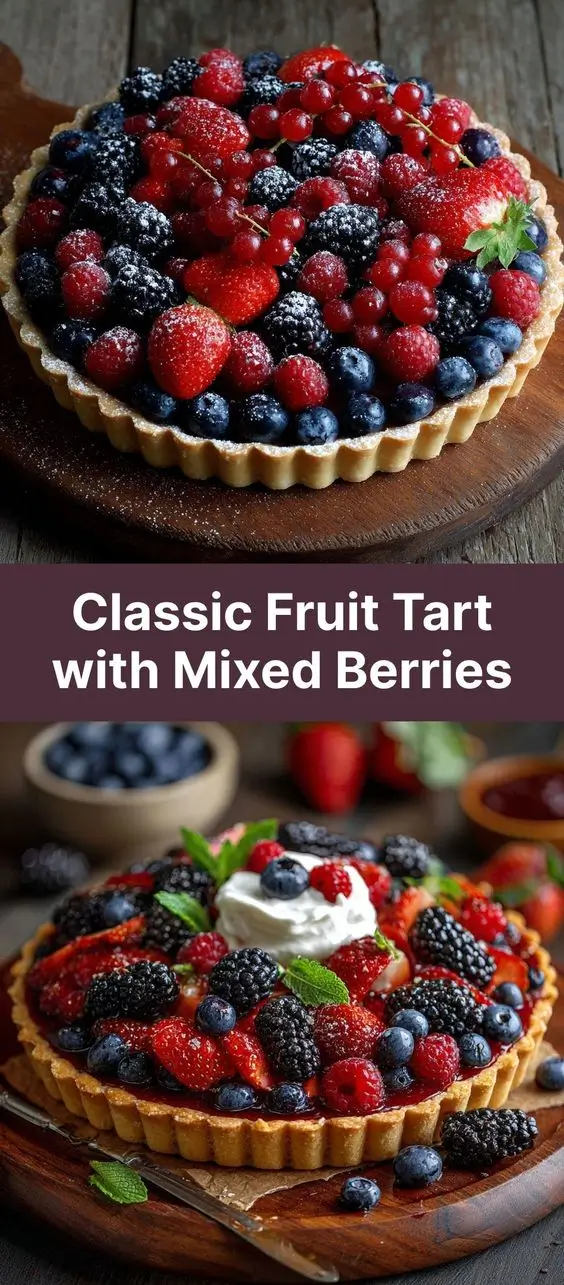
Classic Fruit Tart with Mixed Berries
The Classic Fruit Tart with Mixed Berries is a timeless dessert that marries elegance with simplicity. With its buttery, crisp tart shell and a luscious layer of pastry cream, crowned by a vibrant array of fresh berries, this tart is as delightful to the eyes as it is to the palate. Whether served at a summer garden party, a family brunch, or as a show-stopping finale to an elegant dinner, this fruit tart never fails to impress. Its balance of textures—crisp crust, smooth custard, and juicy berries—makes it a favorite among dessert lovers of all ages.
The History
Fruit tarts have their roots deeply embedded in European culinary traditions, particularly in France and Italy, where pastry-making has been elevated to an art form. The concept of encasing sweet fillings in a flaky or shortcrust pastry dates back to medieval times, when tarts were often made with meat or fish. However, by the Renaissance period, sweet versions began to emerge, especially in French cuisine.
The modern fruit tart, as we know it today, gained popularity in the 19th century with the refinement of pastry cream (also known as crème pâtissière) and the increased availability of fresh fruits due to improved agricultural practices and trade. French patisseries began showcasing these colorful creations, emphasizing seasonal fruits arranged in artistic patterns.
In the 20th century, the fruit tart crossed borders and evolved with regional adaptations. In America, it became a staple at bakeries and home kitchens alike, often simplified for accessibility but still retaining its sophisticated charm. Today, the classic fruit tart symbolizes both rustic charm and refined taste, making it a beloved dessert across continents and cultures.
Ingredients Breakdown
To create a perfect Classic Fruit Tart with Mixed Berries, each ingredient plays a crucial role in building flavor, texture, and structure. Let’s take a closer look at what goes into this exquisite dessert:
- All-Purpose Flour: Provides the structure for the tart shell. It contains gluten-forming proteins that give the dough its elasticity and strength.
- Unsalted Butter (cold): Adds richness and flakiness to the crust. Using cold butter ensures pockets of fat that melt during baking, creating steam and lift in the pastry.
- Powdered Sugar: Sweetens the crust while also contributing to a tender, fine crumb. Its fine texture integrates smoothly without overworking the dough.
- Egg Yolk: Binds the dough together and adds moisture and richness, enhancing browning and tenderness.
- Salt: Balances sweetness and enhances overall flavor.
- Water (ice-cold): Helps bring the dough together without warming the butter, preserving the flaky texture.
- Heavy Cream: Forms the base of the pastry cream, providing a luxurious mouthfeel and richness.
- Milk: Thins the cream mixture and contributes to a smooth custard consistency.
- Granulated Sugar: Sweetens the pastry cream; can be adjusted based on preference.
- Cornstarch: Acts as a thickening agent for the custard, ensuring it sets properly and holds its shape under the weight of the fruit.
- Egg Yolks (for custard): Add thickness, color, and a velvety texture to the pastry cream.
- Vanilla Extract: Imparts warm, aromatic flavor to the custard. Pure extract yields superior taste compared to artificial alternatives.
- Salted Butter (for custard): A small amount enriches the custard and gives it a glossy finish.
- Fresh Mixed Berries: Strawberries, blueberries, raspberries, blackberries, and kiwi (optional) add freshness, color, acidity, and natural sweetness. Seasonal and ripe berries yield the best results.
- Apricot Jam (or neutral glaze): Heated and brushed over the fruit to create a shiny, protective coating that preserves appearance and prevents drying.
Step-by-Step Recipe
Follow these detailed steps to create a flawless Classic Fruit Tart with Mixed Berries from scratch.
Part 1: Making the Tart Shell (Pâte Sucrée)
- Prepare the Dough: In a food processor, pulse 1 ½ cups (190g) all-purpose flour, ¼ cup (30g) powdered sugar, and a pinch of salt until combined. Add ½ cup (115g) cold unsalted butter, cut into small cubes, and pulse until the mixture resembles coarse sand with some pea-sized pieces of butter remaining.
- Add one large egg yolk and 1–2 tablespoons of ice water, pulsing just until the dough begins to clump together. Do not overmix.
- Turn the dough out onto a lightly floured surface and gently shape it into a flat disk. Wrap in plastic wrap and refrigerate for at least 1 hour (up to 2 days).
- Preheat oven to 375°F (190°C). Roll the chilled dough into a 12-inch circle on a floured surface. Carefully transfer it to a 9-inch tart pan with removable bottom. Press gently into the edges and trim excess dough.
- Prick the bottom of the crust with a fork. Line with parchment paper and fill with pie weights or dried beans. Blind bake for 15 minutes. Remove weights and parchment, then bake for another 10–12 minutes, until golden brown. Let cool completely.
Part 2: Preparing the Pastry Cream
- In a medium saucepan, combine 1 cup (240ml) heavy cream and ½ cup (120ml) whole milk. Heat over medium until steaming (do not boil).
- In a separate bowl, whisk 3 egg yolks with ½ cup (100g) granulated sugar until pale and slightly thickened. Whisk in 3 tablespoons (24g) cornstarch until smooth.
- Slowly pour about one-third of the hot cream mixture into the egg mixture, whisking constantly to temper the eggs. Pour everything back into the saucepan.
- Cook over medium heat, stirring constantly with a wooden spoon or spatula, until the mixture thickens and comes to a gentle boil. Boil for 1 minute to ensure the cornstarch is fully activated.
- Remove from heat. Stir in 1 teaspoon vanilla extract and 1 tablespoon (14g) salted butter until smooth and glossy.
- Transfer to a bowl, press plastic wrap directly onto the surface to prevent a skin from forming, and refrigerate for at least 2 hours or until thoroughly chilled.
Part 3: Assembling the Tart
- Once the tart shell and pastry cream are completely cooled, spread the pastry cream evenly into the shell using an offset spatula. Smooth the top.
- Wash and dry all berries thoroughly. Hull strawberries and slice them vertically into even slices. Leave smaller berries like blueberries and raspberries whole.
- Begin arranging the berries from the outer edge toward the center in concentric circles or a decorative pattern of your choice. Alternate colors and types for visual appeal.
- In a small saucepan, gently warm ⅓ cup apricot jam with 1 tablespoon water until melted and fluid. Strain if needed to remove chunks.
- Using a pastry brush, lightly coat the arranged fruit with the warm glaze. This adds shine and protects the fruit from drying out.
- Chill the assembled tart for 30 minutes before serving to set the layers and enhance flavors.
Tips
- Keep Ingredients Cold: For a flaky crust, ensure butter and water are very cold. Work quickly to prevent the butter from softening.
- Don’t Skip Blind Baking: Pre-baking the crust prevents sogginess when filled with creamy custard.
- Chill the Pastry Cream Properly: Allow ample time for the custard to cool and set—it should be firm enough to support the fruit without oozing.
- Dry the Fruit Completely: Wet berries will dilute the glaze and make the tart soggy. Pat them dry with paper towels after washing.
- Use a Tart Pan with Removable Bottom: Makes releasing the tart easy without damaging the delicate crust.
- Glaze Immediately Before Serving: If storing, apply the glaze just before serving to maintain shine and freshness.
- Customize the Pattern: Use kiwi slices, mango, or passionfruit for tropical flair, or arrange berries in geometric designs for special occasions.
- Make Ahead: The tart shell and pastry cream can be made 1–2 days in advance. Store separately in the fridge and assemble the day of serving.
Variations and Customizations
The beauty of the Classic Fruit Tart lies in its versatility. Here are several ways to personalize your creation:
- Chocolate Pastry Cream: Add 2 tablespoons cocoa powder or melted dark chocolate to the custard for a rich twist.
- Lemon Curd Layer: Spread a thin layer of lemon curd beneath the pastry cream for a tangy contrast.
- Almond Crust: Replace ¼ cup of flour with finely ground almonds for a nutty, marzipan-like flavor.
- Seasonal Fruits: Swap berries for sliced peaches, figs, grapes, or pomegranate arils depending on the season.
- Gluten-Free Option: Use a gluten-free flour blend for the crust (ensure it contains a binder like xanthan gum).
- Dairy-Free Version: Substitute plant-based butter, coconut cream, and almond milk in both crust and custard.
- Mini Tarts: Make individual tarts using muffin tins or small tartlet pans—perfect for parties.
- Herb Infusion: Infuse the milk with fresh basil, mint, or lavender for a fragrant custard variation.
- Boozy Twist: Add 1 tablespoon Grand Marnier, Chambord, or Amaretto to the pastry cream for adult appeal.
Health Considerations and Nutritional Value
While undeniably delicious, the Classic Fruit Tart does contain refined sugars and saturated fats. However, it also offers nutritional benefits, especially when made with care and quality ingredients.
Nutritional Highlights:
- Berries: Packed with antioxidants, vitamin C, fiber, and phytonutrients. Blueberries and raspberries, in particular, are linked to heart health and anti-inflammatory effects.
- Eggs: Provide high-quality protein, choline (important for brain health), and essential amino acids.
- Dairy: Offers calcium, vitamin D, and healthy fats—especially beneficial when using full-fat, minimally processed ingredients.
Healthier Modifications:
- Reduce sugar in both crust and custard by up to 25% without sacrificing structure.
- Use honey or maple syrup as partial substitutes for sugar (note: may alter texture slightly).
- Opt for low-fat milk in the custard, though full-fat yields the creamiest result.
- Add a sprinkle of chia seeds or ground flaxseed to the crust for added fiber and omega-3s.
- Serve smaller slices and pair with a side of Greek yogurt for balanced indulgence.
Calorie-conscious? A typical slice (1/8 of a 9-inch tart) ranges from 300–400 calories, depending on ingredients and portion size. Mindful eating and moderation allow you to enjoy this dessert as part of a balanced diet.
Ingredients
Tart Shell:
- 1 ½ cups (190g) all-purpose flour
- ¼ cup (30g) powdered sugar
- Pinch of salt
- ½ cup (115g) cold unsalted butter, cubed
- 1 large egg yolk
- 1–2 tbsp ice water
Pastry Cream:
- 1 cup (240ml) heavy cream
- ½ cup (120ml) whole milk
- 3 large egg yolks
- ½ cup (100g) granulated sugar
- 3 tbsp (24g) cornstarch
- 1 tsp pure vanilla extract
- 1 tbsp (14g) salted butter
Assembly:
- 2 cups mixed fresh berries (strawberries, blueberries, raspberries, blackberries)
- ⅓ cup apricot jam
- 1 tbsp water
Directions
- Make the Tart Shell: Combine flour, powdered sugar, and salt in a food processor. Add cold butter and pulse until crumbly. Mix in egg yolk and 1–2 tbsp ice water until dough forms. Shape into a disk, wrap, and chill for 1 hour.
- Roll out dough on floured surface, transfer to 9-inch tart pan, and press into place. Trim edges. Prick base with fork, line with parchment, and fill with weights.
- Blind bake at 375°F (190°C) for 15 minutes. Remove weights and bake 10–12 minutes more until golden. Cool completely.
- Make Pastry Cream: Heat cream and milk in saucepan until steaming. Whisk egg yolks, sugar, and cornstarch in a bowl. Temper eggs with hot cream, then return to pan.
- Cook, stirring constantly, until thick and bubbling. Remove from heat; stir in vanilla and butter. Cover surface with plastic wrap and chill 2+ hours.
- Assemble Tart: Spread chilled pastry cream into cooled tart shell. Arrange washed and dried berries in decorative pattern.
- Warm apricot jam with water, strain if needed, and brush gently over fruit. Chill 30 minutes before serving.
- Slice with a sharp knife and serve immediately.
FAQ
Can I make the tart ahead of time?
Yes! Prepare the crust and pastry cream up to 2 days in advance. Store covered in the refrigerator. Assemble with fruit and glaze no more than 4 hours before serving to prevent sogginess.
Why did my pastry cream curdle?
Curdling usually occurs from overheating or adding hot liquid too quickly to eggs. Always temper eggs slowly and cook custard over medium heat, stirring constantly.
Can I use store-bought pastry cream or crust?
Absolutely. For a quicker version, use a pre-made tart shell and instant or canned pastry cream. However, homemade yields superior flavor and texture.
How do I prevent a soggy bottom crust?
Ensure the crust is fully blind-baked and cooled before filling. You can also brush the baked crust with melted white or dark chocolate (cooled) to create a moisture barrier.
Can I freeze this tart?
Freezing is not recommended once assembled. The fruit will release water upon thawing, and the custard may separate. However, the unbaked tart dough freezes well for up to 3 months.
What other glazes can I use?
Alternatives include warmed red currant jelly, apple jelly, or a neutral commercial glaze. For a vegan option, use agave nectar or simple syrup.
Can I use frozen berries?
Not recommended. Frozen berries release too much moisture and lose their shape. Always use fresh, ripe berries for the best appearance and texture.
Is this tart suitable for vegetarians?
Yes, this recipe is vegetarian-friendly. For vegan adaptation, see customization suggestions above.
Summary
The Classic Fruit Tart with Mixed Berries combines a buttery, crisp pâte sucrée shell with silky homemade pastry cream and a rainbow of fresh, glossy berries for a dessert that’s as beautiful as it is delicious. Perfect for any occasion, it balances elegance and simplicity in every bite.