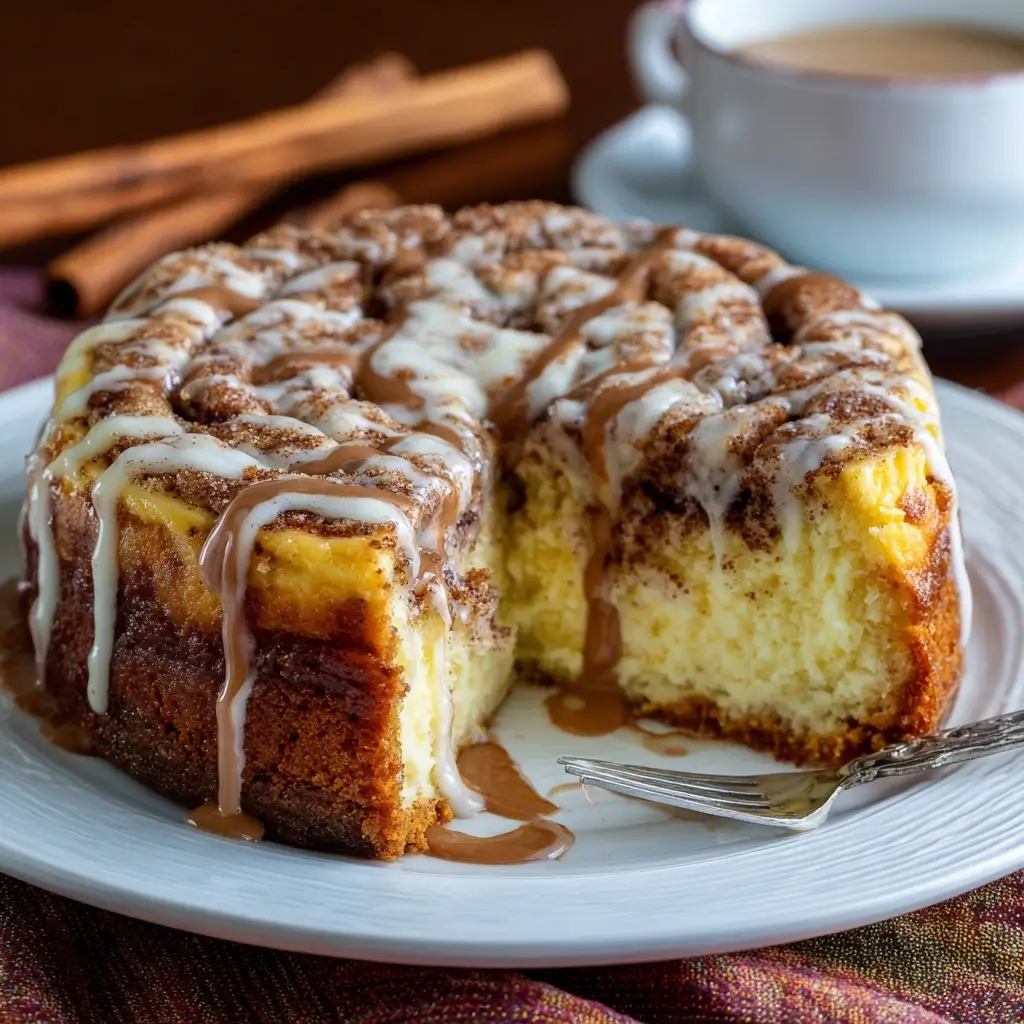
Cinnamon Roll Cheesecake: The Ultimate Decadent Fusion Dessert
Introduction
If you’ve ever stood at the crossroads of loving cinnamon rolls and craving cheesecake, then the Cinnamon Roll Cheesecake is your sweet salvation. This indulgent dessert combines the rich, creamy texture of a classic cheesecake with the warm, spiced sweetness of freshly baked cinnamon rolls. It’s a harmonious blend of two beloved treats that results in a show-stopping dessert perfect for holidays, special occasions, or simply when you want to treat yourself to something extraordinary. With its buttery crust, swirls of cinnamon-sugar filling, velvety cheesecake center, and a luscious glaze on top, this dessert is not just food—it’s an experience.
The History
The origins of the Cinnamon Roll Cheesecake are rooted in modern American dessert innovation, emerging from the broader trend of fusion desserts in the late 20th and early 21st centuries. While cheesecake itself dates back to ancient Greece—where it was served to athletes during the first Olympic games—the version we know today evolved through European and American culinary traditions. Cinnamon rolls, on the other hand, have their roots in Scandinavian baking, particularly Swedish kanelbullar, which became popular in the United States through immigrant communities.
The idea of combining these two iconic desserts likely began in home kitchens where bakers sought to amplify flavor and texture by merging elements of both. Food bloggers, Pinterest enthusiasts, and dessert influencers helped popularize the concept around the 2010s, leading to viral recipes and variations across social media platforms. Today, the Cinnamon Roll Cheesecake stands as a symbol of creative baking—a decadent hybrid that celebrates tradition while embracing bold new flavors.
Ingredients Breakdown
To achieve the perfect balance of textures and flavors in a Cinnamon Roll Cheesecake, each ingredient plays a crucial role. Here’s a detailed breakdown:
- Cream Cheese: Full-fat, brick-style cream cheese (like Philadelphia) is essential for a rich, smooth, and dense cheesecake base. It should be softened to room temperature before use to ensure a lump-free batter.
- Granulated Sugar: Adds sweetness and helps create a light, airy texture when beaten with cream cheese and eggs.
- Eggs: Provide structure and help the cheesecake set properly during baking. Use large eggs at room temperature for even incorporation.
- Sour Cream: Enhances creaminess and adds a slight tang that balances the sweetness.
- Vanilla Extract: Deepens the flavor profile and complements the cinnamon and sugar layers.
- Flour (all-purpose): A small amount helps stabilize the cheesecake and prevents cracking.
- Ground Cinnamon: The star spice that infuses warmth and aroma throughout the swirls and topping.
- Brown Sugar: Used in the swirl layer for its molasses-rich depth, mimicking the gooey center of a real cinnamon roll.
- Butter: Unsalted butter is used in both the crust and the swirl mixture for richness and flavor. Melted butter binds the swirl ingredients and enhances mouthfeel.
- Graham Crackers or Cinnamon Graham Crackers: Form the base crust, providing a slightly sweet, crunchy foundation. Cinnamon graham crackers enhance the thematic flavor.
- Powdered Sugar: Essential for the final glaze, creating a silky, pourable icing that drapes beautifully over the cooled cheesecake.
- Milk or Cream: Thins the glaze to the ideal consistency for drizzling.
- Optional Add-ins: Chopped pecans, walnuts, raisins, or even mini marshmallows can be added between layers for extra texture and nostalgic flair.
Step-by-Step Recipe
Ingredients
- 1 ½ cups graham cracker crumbs (about 12 full sheets)
- ¼ cup granulated sugar
- 6 tablespoons unsalted butter, melted
- 4 (8 oz) packages cream cheese, softened
- 1 ½ cups granulated sugar
- 1 cup sour cream
- 2 teaspoons pure vanilla extract
- 3 tablespoons all-purpose flour
- 4 large eggs, at room temperature
- ½ cup brown sugar, packed
- 2 teaspoons ground cinnamon
- 3 tablespoons unsalted butter, melted
- 1 ½ cups powdered sugar
- 2–3 tablespoons milk or heavy cream
- ½ teaspoon vanilla extract (for glaze)
Directions
- Preheat Oven & Prepare Pan: Preheat your oven to 325°F (165°C). Grease a 9-inch springform pan thoroughly and wrap the outside bottom and sides with heavy-duty aluminum foil to prevent water from seeping in during the water bath.
- Make the Crust: In a medium bowl, combine graham cracker crumbs, ¼ cup granulated sugar, and melted butter. Mix until the crumbs are evenly moistened. Press the mixture firmly into the bottom and slightly up the sides of the prepared pan. Bake for 8 minutes, then remove and let cool while you prepare the filling.
- Prepare the Cheesecake Batter: In a large mixing bowl, beat the softened cream cheese on medium speed until smooth and creamy (about 2 minutes). Gradually add 1 ½ cups granulated sugar and continue beating until well combined. Scrape down the sides of the bowl. Add sour cream and vanilla extract; mix until incorporated. Add flour and mix just until blended. Add eggs one at a time, beating on low speed after each addition until just combined. Do not overmix—this can lead to cracks.
- Create the Cinnamon-Sugar Swirl Mixture: In a small bowl, mix together brown sugar and cinnamon. Stir in 3 tablespoons of melted butter to form a thick paste.
- Layer the Cheesecake: Pour about two-thirds of the cheesecake batter over the cooled crust. Dollop half of the cinnamon-brown sugar mixture randomly over the batter. Use a knife or skewer to gently swirl it in a marbled pattern. Pour the remaining cheesecake batter on top. Dollop the rest of the cinnamon mixture over the surface and swirl again lightly.
- Bake with Water Bath: Place the springform pan inside a larger roasting pan. Carefully pour hot water into the outer pan until it reaches halfway up the sides of the springform pan. This creates a steamy environment that prevents cracking. Bake for 65–75 minutes, or until the edges are set but the center still jiggles slightly like Jell-O when nudged.
- Cool Gradually: Turn off the oven, crack the door open slightly, and let the cheesecake cool inside for 1 hour. This slow cooling helps prevent collapse and cracks. Remove from oven and water bath, then run a knife around the edge to loosen. Cool completely at room temperature (about 2 hours), then refrigerate for at least 6 hours—preferably overnight.
- Make the Glaze: In a small bowl, whisk together powdered sugar, 2 tablespoons milk, and ½ teaspoon vanilla. Add more milk if needed until the glaze is smooth and drizzle-able.
- Finish and Serve: Drizzle the glaze generously over the chilled cheesecake. For extra flair, sprinkle with cinnamon sugar or chopped toasted nuts. Slice with a hot, clean knife for clean cuts.
Tips
- Room Temperature Ingredients: Ensure cream cheese, eggs, and sour cream are fully at room temperature to avoid lumps and ensure smooth batter.
- Avoid Overmixing: Mix only until ingredients are incorporated. Overbeating introduces air, which can cause cracks during baking.
- Use a Water Bath: This gentle, moist heat is critical for even cooking and preventing surface cracks.
- Don’t Rush Cooling: Allow gradual cooling in the oven and at room temperature before refrigerating to prevent sinking.
- Chill Thoroughly: At least 6 hours, but overnight is best for clean slicing and optimal texture.
- Wipe the Knife Between Slices: Use a sharp knife dipped in hot water and wiped dry between cuts for neat slices.
- Prevent Leaks: Double-wrap the springform pan with foil or use a slow cooker liner for extra protection against water intrusion.
Variations and Customizations
The beauty of the Cinnamon Roll Cheesecake lies in its versatility. Here are some delicious ways to customize it:
- Biscuit Dough Crust: Replace graham crackers with crushed canned biscuit dough, baked until golden, for a more authentic cinnamon roll base.
- Swirled Baked Cinnamon Roll Layer: Embed strips of unbaked cinnamon roll dough beneath the cheesecake layer before baking for melty, gooey pockets.
- Apple-Cinnamon Version: Add finely diced cooked apples to the swirl mixture for an apple pie twist.
- Pumpkin Spice Infusion: Mix ½ cup pumpkin puree and pumpkin pie spice into the batter for a fall-themed dessert.
- Gluten-Free Option: Use gluten-free graham crackers and certified gluten-free flour for a safe alternative.
- Dairy-Free Version: Substitute dairy-free cream cheese, butter, and sour cream alternatives (like those made from cashews or coconut).
- Mini Cheesecakes: Make individual servings in muffin tins lined with parchment. Reduce baking time to 25–30 minutes.
- No-Bake Version: Create a no-bake version using whipped cream, gelatin, and a cold-set crust, though it won’t have the same dense texture.
- Chocolate Swirl: Add a chocolate ribbon by swirling melted chocolate along with the cinnamon mixture.
- Streusel Top: Sprinkle a crumb topping (flour, butter, brown sugar, oats) over the batter before baking for a cobbler-like crunch.
Health Considerations and Nutritional Value
While undeniably delicious, the Cinnamon Roll Cheesecake is a high-calorie, high-fat dessert best enjoyed in moderation. A typical slice (1/12th of a 9-inch cake) contains approximately:
- Calories: 450–520
- Total Fat: 30–35g (mostly saturated from cream cheese and butter)
- Carbohydrates: 40–45g
- Sugars: 30–35g (from multiple sources including granulated and brown sugars)
- Protein: 7–9g (from eggs and dairy)
- Calcium: Moderate amounts from dairy ingredients
Health Notes:
- This dessert is not suitable for low-sugar, low-fat, or ketogenic diets without significant modifications.
- Lactose-intolerant individuals may need dairy alternatives.
- High saturated fat content means it should be consumed occasionally, especially for those managing cholesterol or heart health.
- To reduce sugar, consider using a monk fruit or erythritol-based sweetener designed for baking, though texture may vary.
- Serving with fresh berries can add fiber, vitamins, and a tart contrast that balances sweetness.
FAQ
Q: Can I make this ahead of time?
A: Absolutely! This cheesecake tastes even better the next day. Prepare it 1–2 days in advance and store covered in the refrigerator.
Q: Why did my cheesecake crack?
A: Cracking is usually due to overmixing, rapid temperature changes, or under-cooling. Using a water bath and gradual cooling minimizes this risk.
Q: Can I freeze Cinnamon Roll Cheesecake?
A: Yes. Wrap tightly in plastic and foil; freeze for up to 2 months. Thaw overnight in the fridge before glazing and serving.
Q: Can I use store-bought cinnamon roll dough?
A: Yes! Press baked or partially baked cinnamon roll dough into the crust, or cut into pieces and layer within the batter for a pull-apart effect.
Q: How do I get perfect swirls?
A: Use a toothpick or skewer in a figure-eight motion. Don’t over-swirl—just enough to create a marbled effect.
Q: Is a water bath really necessary?
A: Highly recommended. Without it, the cheesecake is more prone to cracking, drying out, and uneven baking.
Q: Can I make it without a springform pan?
A: Not easily. The pan allows for easy removal without damaging the delicate crust and sides. Alternatives like deep pie plates won’t hold the volume.
Summary
The Cinnamon Roll Cheesecake is a luxurious fusion dessert that brings together the comforting warmth of cinnamon rolls and the creamy elegance of cheesecake. Baked to perfection with a graham cracker crust, spiced swirls, and a silky glaze, it’s a must-try for any dessert lover.