Introduction
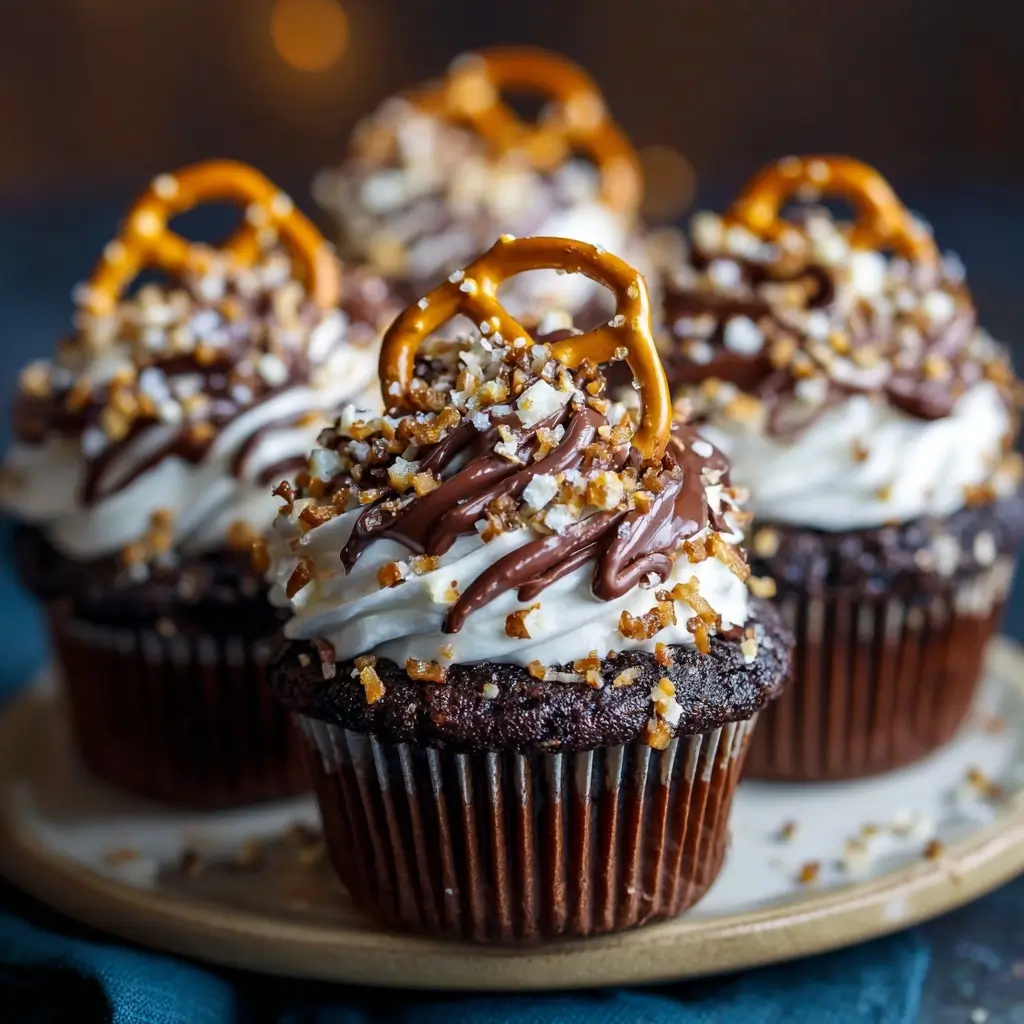
Chocolate Pretzel Cupcakes are the ultimate sweet-and-salty symphony in a single, perfectly portioned treat—elegantly balancing rich cocoa depth with the bold, buttery crunch of pretzels. More than just a dessert, they’re an experience: decadent yet playful, nostalgic yet sophisticated, and irresistibly textural. Whether served at birthday parties, bridal showers, holiday cookie exchanges, or as a gourmet afternoon pick-me-up, these cupcakes consistently steal the spotlight—not only for their stunning visual appeal (think glossy chocolate ganache crowns studded with golden pretzel rods) but for their deeply satisfying contrast of flavors and mouthfeels. Their growing popularity across bakeries, food blogs, and social media platforms reflects a broader culinary trend embracing bold juxtapositions—where indulgence meets intrigue, and every bite tells a story of balance, craftsmanship, and joyful surprise.
The History
The origins of Chocolate Pretzel Cupcakes lie at the fascinating intersection of two iconic American food traditions: the humble pretzel and the beloved cupcake. Pretzels trace back to 7th-century European monasteries—where monks shaped dough into the symbolic form of arms crossed in prayer, dubbing them “bracellae” (Latin for “little arms”). Immigrating to Pennsylvania in the 18th century, German settlers brought their pretzel-making expertise, establishing America’s first commercial pretzel bakery in Lititz, PA, in 1861. Meanwhile, cupcakes—as individual-sized cakes baked in molds—gained traction in the U.S. as early as the late 18th century, with the term “cup cake” first appearing in Amelia Simmons’ 1796 cookbook American Cookery, referencing recipes measured by the cup rather than weight. The modern cupcake renaissance began in the early 2000s, fueled by shows like Cupcake Wars and NYC’s Magnolia Bakery fame. Chocolate Pretzel Cupcakes emerged organically from this cultural momentum—likely pioneered by innovative home bakers and boutique pastry chefs experimenting with savory-sweet pairings in the mid-to-late 2000s. Inspired by the runaway success of chocolate-covered pretzels (a confection dating back to the 1930s), bakers began embedding pretzel pieces directly into batter and topping frosted cupcakes with crushed pretzels, caramel drizzle, and sea salt. By 2012–2014, the combination had solidified as a mainstream bakery staple—appearing on menus from Milk Bar to Sprinkles, and earning dedicated features in Bon Appétit, Food & Wine, and Martha Stewart Living. Today, it stands as a testament to American culinary ingenuity: a harmonious fusion of old-world tradition and new-world creativity.
Ingredients Breakdown
Every exceptional Chocolate Pretzel Cupcake begins with intentionality—from the origin of the cocoa to the type of pretzel—and understanding each component empowers bakers to elevate flavor, texture, and consistency.
- Unsweetened Cocoa Powder (Dutch-processed preferred): Provides deep, velvety chocolate intensity without acidity. Dutch-processing neutralizes natural cocoa’s bitterness, yielding smoother, richer notes ideal for balancing salt. Opt for high-fat (22–24%) varieties like Valrhona or Cacao Barry for maximum mouthfeel.
- Granulated Sugar: Not just for sweetness—it aids in creaming with butter for optimal aeration and contributes to crust formation and tenderness. A small portion can be replaced with light brown sugar for subtle molasses warmth and added moisture retention.
- Brown Sugar (light or dark): Adds caramel-like complexity, moisture, and chewiness. Dark brown sugar intensifies molasses notes, complementing pretzel’s malty undertones.
- All-Purpose Flour (unbleached, 10–11% protein): Offers reliable structure without toughness. For gluten-free versions, a 1:1 certified GF blend with xanthan gum is essential; almond or oat flour alone will yield dense, crumbly results.
- Baking Powder & Baking Soda: A dual-leavening system ensures both lift (baking powder) and acid-neutralization (soda reacts with cocoa’s acidity and brown sugar’s molasses), resulting in domed, springy cupcakes—not flat or dense.
- Salt (fine sea salt or kosher): Critical for flavor enhancement—not just in the pretzels, but throughout the batter. Salt heightens chocolate’s fruity and roasted notes while suppressing perceived bitterness.
- Eggs (large, room temperature): Act as emulsifiers and structural agents. Room-temp eggs incorporate more air during mixing and bind ingredients seamlessly. Extra yolks (in some variations) add richness and density; whites contribute lift.
- Buttermilk (or DIY substitute): Its mild acidity tenderizes gluten, activates baking soda, and imparts subtle tang—counterbalancing sweetness and enhancing pretzel’s savory profile. Full-fat buttermilk yields superior moisture and flavor over low-fat versions.
- Vegetable Oil or Melted Coconut Oil: Ensures moist, tender crumb that stays fresh longer than all-butter cakes. Oil remains liquid at room temp, unlike butter which firms up—crucial for soft, plush cupcakes even after refrigeration.
- Vanilla Extract (pure, not imitation): Rounds out chocolate and pretzel flavors with warm, floral depth. Madagascar Bourbon vanilla is ideal; Mexican or Tahitian varieties offer nuanced fruitier or spicier accents.
- Pretzels (unsalted or lightly salted, traditional rod or mini twists): The star contrast agent. Rod pretzels provide dramatic visual appeal and sturdy crunch; mini pretzels distribute evenly for consistent texture. Avoid honey-glazed or flavored pretzels unless intentionally building a specific variation (e.g., cinnamon-pretzel). For gluten-free batches, use certified GF pretzels—many brands now offer excellent rice- or corn-based options with authentic snap.
- Heavy Cream (for ganache/frosting): High fat content (36–40%) ensures silky, stable ganache that sets firmly yet melts luxuriously on the tongue. Ultra-pasteurized versions may separate; opt for pasteurized, non-UHT cream when possible.
- Sea Salt Flakes (Maldon or fleur de sel): Applied as a finishing touch, these delicate, pyramid-shaped crystals deliver bursts of clean salinity that cut through sweetness and elevate every bite.
Step-by-Step Recipe
- Preheat & Prep (15 minutes): Position oven rack in center position. Preheat oven to 350°F (175°C). Line standard 12-cup muffin tin with high-quality parchment liners (not paper-only—they prevent sticking and support tall domes). Lightly grease the wells *around* the liners for extra security. Coarsely chop ¾ cup pretzel rods (reserve 12 whole rods for garnish) and set aside. Measure and sift dry ingredients: 1¼ cups all-purpose flour, ¾ cup unsweetened Dutch-process cocoa powder, 1½ tsp baking powder, ½ tsp baking soda, and 1 tsp fine sea salt. Whisk thoroughly to aerate and eliminate lumps.
- Cream Wet Base (5 minutes): In a large bowl, combine 1 cup granulated sugar, ½ cup light brown sugar, and ½ cup unsalted butter (softened to 65°F/18°C—cool to the touch but yielding to gentle pressure). Beat with a stand mixer fitted with paddle attachment on medium speed for 3–4 minutes until pale, fluffy, and nearly doubled in volume. Scrape bowl thoroughly. Add 2 large room-temperature eggs one at a time, beating 1 minute after each addition until fully emulsified and glossy. Mix in 2 tsp pure vanilla extract.
- Alternate Dry & Wet (3 minutes): Reduce mixer speed to low. Add one-third of the dry ingredients; mix just until incorporated (~15 seconds). Pour in half of the buttermilk mixture (1 cup buttermilk + ⅓ cup neutral oil + 1 tsp vanilla); mix until just combined. Repeat with another third of dry, remaining buttermilk mixture, then final third of dry—pausing mixer between additions and scraping bowl each time. Do *not* overmix; batter should be smooth with no dry streaks but may have slight lumps. Overmixing develops gluten → tough cupcakes.
- Fold in Pretzels (1 minute): Gently fold in the coarsely chopped pretzels using a silicone spatula—just 8–10 strokes until evenly distributed. Over-folding crushes pretzels into dust; under-folding leaves pockets of plain batter. Batter will be thick, shiny, and pourable—like soft pudding.
- Fill & Bake (22–25 minutes): Use a large cookie scoop (3 tbsp) or ¼-cup measure to portion batter evenly into liners—fill each ~¾ full (≈¼ cup per cupcake). Tap pan sharply twice on counter to release air bubbles. Place in preheated oven. Bake 22 minutes, then rotate pan front-to-back. Continue baking 2–3 minutes more, or until a toothpick inserted into the center comes out with *moist crumbs* (not wet batter, not completely clean—this ensures moistness). Total bake time varies by oven; begin checking at 21 minutes. Avoid opening oven door before 18 minutes—temperature fluctuations cause sinking.
- Cool Strategically (30 minutes minimum): Remove pan from oven. Let cupcakes cool *in the pan* on a wire rack for 15 minutes—this allows internal steam to escape gradually, preventing soggy bottoms and dome collapse. After 15 minutes, carefully lift each liner and transfer cupcakes to the wire rack. Cool completely (≈15 more minutes) before frosting. Warm cupcakes melt frosting; cold cupcakes hold intricate piping. For best texture, cool uncovered—steam must dissipate fully.
- Prepare Ganache Topping (10 minutes + chill): While cupcakes cool, make ganache: Heat 1 cup heavy cream in a small saucepan over medium-low heat until steaming and tiny bubbles form at edges (do not boil). Meanwhile, finely chop 8 oz high-quality semi-sweet or bittersweet chocolate (60–70% cacao) and place in heatproof bowl. Pour hot cream over chocolate. Let sit undisturbed 3 minutes. Stir gently with silicone spatula in concentric circles from center outward until smooth, glossy, and fully emulsified. Cover surface directly with plastic wrap and refrigerate 30–45 minutes—until thickened to pipeable consistency (like softened butter). Stir once halfway through chilling to ensure even setting.
- Frost & Garnish (5 minutes): Fit large piping bag with wide round tip (Wilton #2A or Ateco #808). Fill with chilled ganache. Pipe generous swirls onto each cooled cupcake, starting at outer edge and spiraling inward. Immediately press one whole pretzel rod vertically into center of each swirl. Finish with a light sprinkle of flaky sea salt over ganache—just enough to catch the eye and tongue. Optional: drizzle with salted caramel or white chocolate for layered elegance.
Tips
- Room Temperature Is Non-Negotiable: Cold eggs or buttermilk cause batter to seize, leading to uneven texture and poor rise. Pull dairy and eggs from fridge 60–90 minutes before baking—or submerge eggs in warm water for 5 minutes and warm buttermilk in microwave for 5 seconds.
- Measure Flour Correctly: Never scoop flour directly from the bag—that compacts it and adds up to 25% extra. Instead, fluff flour in its container with a spoon, then spoon into measuring cup and level off with straight edge.
- Chop Pretzels Just Before Folding: Pre-chopped pretzels absorb moisture from batter and lose crunch. Chop right before folding for maximum textural impact.
- Understand Your Oven: Use an independent oven thermometer. Many ovens run hot or cold—especially older models. A 25°F variance can mean sunken centers or cracked tops.
- Don’t Skip the Pan Tap: Trapped air bubbles create tunnels and weak spots in the crumb. Tapping firmly releases them pre-bake for uniform structure.
- Ganache Consistency Is Key: Too warm = runs off cupcakes. Too cold = grainy or breaks. If ganache separates, add 1 tsp warm cream and stir vigorously until re-emulsified. If too stiff, microwave in 3-second bursts, stirring between.
- Freeze for Future Joy: Unfrosted, completely cooled cupcakes freeze beautifully for up to 3 months. Wrap individually in plastic, then place in airtight freezer bag. Thaw overnight in fridge, then bring to room temp before frosting. Ganache freezes well too—thaw in fridge overnight, then stir to restore shine.
- Scale Up Confidently: This recipe doubles flawlessly. Triple only if using professional-grade mixer—home mixers may struggle with volume. When scaling, always weigh ingredients for precision.
- Make-Ahead Magic: Bake cupcakes 1 day ahead. Store unfrosted in airtight container at room temp. Whip ganache same-day or refrigerate up to 5 days—rewhip before piping for airy texture.
- Texture Troubleshooting: If cupcakes are dense, check expiration dates on leaveners—old baking powder/soda loses potency. If overly crumbly, butter was likely too warm or overmixed. If domes crack, oven temp was too high or batter overfilled.
Variations and Customizations
Chocolate Pretzel Cupcakes serve as a versatile canvas for creative expression—adaptable for dietary needs, seasonal themes, global flavors, and special occasions.
- Gluten-Free Version: Substitute 1:1 gluten-free all-purpose flour blend (with xanthan gum) for AP flour. Use certified GF pretzels (e.g., Snyder’s Gluten-Free Mini Twists or Quinn Peanut Butter Pretzels). Add ½ tsp xanthan gum if blend doesn’t include it. Increase buttermilk by 1 tbsp for moisture compensation.
- Vegan Adaptation: Replace eggs with 2 flax eggs (2 tbsp ground flaxseed + 6 tbsp water, rested 10 min). Swap butter for vegan butter (Miyoko’s or Earth Balance). Use plant-based buttermilk (1 cup unsweetened almond milk + 1 tbsp apple cider vinegar). Choose dairy-free chocolate (Enjoy Life or Hu Kitchen) for ganache. Top with vegan pretzels (Rold Gold Thin pretzels are accidentally vegan).
- Peppermint Pretzel: Add ½ tsp pure peppermint extract with vanilla. Fold in ½ cup crushed candy canes with pretzels. Frost with dark chocolate ganache and garnish with crushed candy cane + pretzel rod.
- Espresso Pretzel: Dissolve 1 tbsp instant espresso powder in warm buttermilk before adding to batter. Use dark chocolate ganache spiked with 1 tsp espresso. Dust with cocoa powder and flaky salt.
- Peanut Butter Pretzel: Swirl 2 tsp creamy peanut butter into each cupcake liner before adding batter. Frost with peanut butter–chocolate ganache (add ¼ cup PB to warm ganache). Top with pretzel + roasted peanuts.
- Spiced Pretzel (Holiday Edition): Add 1 tsp ground cinnamon, ¼ tsp ground ginger, ⅛ tsp ground cloves, and pinch of nutmeg to dry ingredients. Use milk chocolate ganache and garnish with candied ginger + pretzel.
- Mini Cupcake Batch: Fill mini muffin tins ⅔ full. Reduce bake time to 10–12 minutes. Yield: 36–42 minis. Perfect for weddings or party favors—top with mini pretzel twists and micro sea salt flakes.
- Decadent Layer Cake: Double recipe and bake in three 6-inch round pans (20–24 min) or two 8-inch pans (28–32 min). Stack with pretzel-studded chocolate buttercream and ganache drip. Decorate with pretzel “fences” and gold leaf.
- Boozy Twist (Adults Only): Add 2 tbsp bourbon or Irish cream liqueur to buttermilk mixture. Infuse ganache with 1 tsp bourbon. Garnish with bourbon-caramel drizzle and smoked sea salt.
- Everything Bagel Pretzel (Savory-Sweet Fusion): Reduce sugar to ¾ cup total. Add 1 tsp onion powder, 1 tsp garlic powder, and 1 tbsp everything bagel seasoning to dry ingredients. Frost with white chocolate–brown butter ganache and top with pretzel + sesame + poppy seeds.
Health Considerations and Nutritional Value
While Chocolate Pretzel Cupcakes are inherently indulgent, mindful ingredient choices and portion awareness allow for thoughtful enjoyment within a balanced lifestyle. A standard cupcake (approx. 120g, unfrosted) contains ~280–320 calories, with variations depending on pretzel quantity, chocolate type, and frosting richness. Key nutritional insights include:
- Macronutrient Profile: Primarily carbohydrate-driven (35–40g), with moderate fat (12–16g—mostly unsaturated from cocoa and oil) and modest protein (3–4g). The pretzels contribute negligible protein but add trace minerals like iron and B vitamins from enriched flour.
- Cocoa Benefits: High-flavanol dark chocolate (70%+) offers antioxidants like epicatechin, linked to improved endothelial function and reduced oxidative stress. Dutch-processed cocoa retains significant polyphenols—though alkalization reduces some acid-sensitive compounds, the overall antioxidant capacity remains robust.
- Sodium Awareness: One cupcake contains ~220–300mg sodium—largely from pretzels and added salt. While below the daily limit (2,300mg), those managing hypertension should consider low-salt pretzels or omitting added salt in batter.
- Sugar Context: Contains ~22–26g added sugar per cupcake. The FDA recommends ≤25g added sugar/day for women and ≤36g for men. Enjoying one cupcake fits within guidelines—especially when replacing other high-sugar snacks.
- Dietary Modifications: Gluten-free and vegan versions maintain similar caloric profiles but may differ in fiber (GF blends often lower) or saturated fat (vegan butter varies). Using blackstrap molasses instead of brown sugar boosts iron and calcium.
- Functional Additions: Boost nutrition subtly by adding 2 tbsp ground flaxseed (omega-3s, fiber) or ¼ cup unsweetened shredded coconut (MCTs) to batter—adjust liquid slightly if needed.
- Mindful Pairing: Serve with tart raspberry coulis or Greek yogurt “frosting” to add probiotics and reduce overall sugar load. Pairing with green tea enhances cocoa flavanol absorption.
- Not a Health Food—but Not Off-Limits: These cupcakes align with the principles of intuitive eating: honoring hunger, respecting fullness, and rejecting moral labels (“good”/“bad”). Enjoyment, celebration, and sensory pleasure are vital components of holistic wellness.
Ingredients
- 1¼ cups (150g) all-purpose flour, spooned & leveled
- ¾ cup (75g) unsweetened Dutch-process cocoa powder
- 1½ tsp baking powder
- ½ tsp baking soda
- 1 tsp fine sea salt
- 1 cup (200g) granulated sugar
- ½ cup (100g) light brown sugar, packed
- ½ cup (113g) unsalted butter, softened to 65°F
- 2 large eggs, room temperature
- 2 tsp pure vanilla extract
- 1 cup (240ml) full-fat buttermilk, room temperature
- ⅓ cup (80ml) neutral oil (vegetable, canola, or refined coconut)
- ¾ cup (90g) coarsely chopped unsalted pretzel rods
- 12 whole pretzel rods, for garnish
- Flaky sea salt (Maldon or fleur de sel), for finishing
- For Ganache:
- 8 oz (227g) high-quality semi-sweet or bittersweet chocolate (60–70% cacao), finely chopped
- 1 cup (240ml) heavy cream (36–40% fat)
Directions
- Preheat oven to 350°F (175°C). Line 12-cup standard muffin tin with parchment cupcake liners. Lightly grease wells around liners. Coarsely chop ¾ cup pretzel rods; set aside. Reserve 12 whole rods for garnish.
- In a medium bowl, whisk together flour, cocoa powder, baking powder, baking soda, and salt until fully combined and lump-free. Set aside.
- In a large bowl, beat granulated sugar, brown sugar, and softened butter with electric mixer on medium speed for 3–4 minutes until light, fluffy, and pale. Scrape bowl.
- Add eggs one at a time, beating 1 minute after each until fully incorporated and glossy. Add vanilla and beat 30 seconds.
- Reduce mixer speed to low. Add one-third of dry ingredients; mix until just combined (~15 sec). Add half of buttermilk-oil-vanilla mixture; mix until just combined. Repeat with another third dry, remaining wet mixture, then final third dry—scraping bowl each time. Batter will be thick and shiny.
- Fold in chopped pretzels gently with silicone spatula—8–10 strokes only—until evenly dispersed.
- Portion batter evenly into lined cups (≈¼ cup each, filling ¾ full). Tap pan firmly twice on counter.
- Bake 22–25 minutes, rotating pan at 22 minutes, until toothpick inserted in center emerges with moist crumbs (not wet batter). Do not overbake.
- Cool cupcakes in pan on wire rack for 15 minutes. Carefully lift from liners and cool completely on rack (15+ min).
- For ganache: Heat cream in small saucepan over medium-low until steaming (not boiling). Pour over chopped chocolate in heatproof bowl. Let sit 3 minutes. Stir gently until smooth and glossy. Cover surface with plastic wrap. Chill 30–45 minutes until thickened to pipeable consistency.
- Fit piping bag with wide round tip. Fill with ganache. Pipe generous swirl onto each cooled cupcake. Press one whole pretzel rod upright into center of each swirl. Sprinkle lightly with flaky sea salt.
- Let ganache set 10 minutes before serving. Store covered at room temperature up to 2 days, or refrigerate up to 5 days (bring to room temp before serving).
FAQ
- Can I use regular (natural) cocoa powder instead of Dutch-process?
- Yes—but expect a sharper, more acidic chocolate flavor and slightly lighter crumb. To compensate, increase baking soda to ¾ tsp and reduce baking powder to 1 tsp. Natural cocoa works best with buttermilk’s acidity for proper leavening.
- Why do my cupcakes sink in the center?
- Sinking is usually caused by underbaking (remove too soon), opening oven too early, excessive leavening (old or double-measured baking powder), or overmixing batter. Ensure toothpick test shows *moist crumbs*, not wet batter—and avoid jostling cupcakes during first 18 minutes of baking.
- Can I make these ahead for a party?
- Absolutely! Bake cupcakes up to 2 days ahead—store unfrosted in airtight container at room temperature. Ganache can be made 5 days ahead—refrigerate, then rewhip 2–3 minutes before piping for airy texture. Assemble day-of for optimal crunch.
- My ganache is too runny—even after chilling!
- This indicates either insufficient chocolate-to-cream ratio (aim for 2:1 by weight), overheated cream (causing fat separation), or using ultra-pasteurized cream. Fix by chilling longer (up to 1 hour), then whipping with hand mixer until thickened. If still loose, gently reheat ganache to 95°F and stir in 1 tsp additional chopped chocolate.
- Are there low-sugar alternatives?
- You can replace up to half the granulated sugar with monk fruit–erythritol blend (like Lakanto), but expect slightly drier texture and less browning. Brown sugar is harder to substitute successfully—its moisture and acidity play functional roles. Consider reducing total sugar by ¼ cup and adding 1 tbsp applesauce for moisture retention.
- Can I bake these in a jumbo muffin tin?
- Yes—with adjustments. Fill 6-cup jumbo tin ⅔ full. Increase bake time to 28–32 minutes. Insert toothpick near edge first—centers take longer. Cool in pan 20 minutes before removing. Yields 6 dramatic, restaurant-style cupcakes.
- How do I prevent pretzels from getting soggy in the batter?
- Use *unsalted* or *lightly salted* pretzels (avoid honey-glazed or seasoned varieties), chop them coarsely (not finely), and fold in *immediately* before portioning. The coarse pieces retain integrity better than fine crumbs, and minimal batter contact preserves crunch.