Chocolate Mousse Cake
Chocolate Mousse Cake: A Decadent Delight for Every Occasion
The History of Chocolate Mousse Cake
The origins of chocolate mousse cake can be traced back to the rich culinary traditions of France, where “mousse” — meaning “foam” or “froth” in French — became a celebrated dessert texture in the early 20th century. While traditional mousse was served as a light, airy standalone dessert, bakers and pastry chefs began experimenting with layering techniques, eventually combining the ethereal quality of chocolate mousse with structured cake bases to create what we now know as the chocolate mousse cake.
This dessert evolved over time, merging European elegance with American indulgence. In the mid-20th century, as refrigeration became more accessible and chocolate production expanded globally, home bakers began crafting their own versions using gelatin, whipped cream, and high-quality cocoa. By the 1980s, chocolate mousse cake had become a staple at fine dining restaurants and special occasion menus, admired for its luxurious texture and deep chocolate flavor.
Today, this dessert is a global favorite, with variations appearing in bakeries from Paris to Tokyo to New York City. Whether served at weddings, birthdays, or holiday gatherings, the chocolate mousse cake stands as a testament to the timeless appeal of chocolate in its most velvety, dreamlike form.
Ingredients Breakdown: What Makes This Cake So Irresistible?
The magic of a perfect chocolate mousse cake lies not just in its presentation but in the careful balance of ingredients that contribute to its silky texture, rich flavor, and structural integrity. Each component plays a crucial role:
- Dark Chocolate (70% cacao): The star of the show. High-quality dark chocolate provides depth, bitterness that balances sweetness, and a smooth melt-in-the-mouth experience. Using couverture chocolate enhances shine and texture.
- Unsalted Butter: Adds richness and helps emulsify the chocolate mixture, contributing to a glossy, firm set when chilled.
- Eggs (separated): Egg yolks add creaminess and help stabilize the mousse, while whipped egg whites introduce air, giving the mousse its signature lightness.
- Granulated Sugar: Sweetens the mousse without overpowering the chocolate. Adjustments can be made based on personal preference or the chocolate’s sweetness.
- Heavy Cream (whipping cream): Whipped to soft peaks, it adds volume and a creamy mouthfeel, making the mousse luxuriously smooth.
- Vanilla Extract: Enhances overall flavor complexity and rounds out the chocolate notes.
- Espresso Powder (optional): Deepens the chocolate flavor without adding coffee taste — a secret weapon used by professional chocolatiers.
- Graham Cracker or Chocolate Cookie Crust (or sponge base): Provides a contrasting texture — crunchy and slightly sweet — to support the soft mousse. Some versions use a thin layer of genoise or flourless chocolate cake as the base.
- Gelatin (or agar-agar for vegetarian option): Used in small amounts to help the mousse set firmly, especially important if the cake needs to be transported or sliced cleanly.
- Salt: A pinch enhances all flavors and reduces perceived bitterness.
Step-by-Step Recipe: Crafting the Perfect Chocolate Mousse Cake
Ingredients
- 200g high-quality dark chocolate (70%), chopped
- 100g unsalted butter
- 4 large eggs, separated
- 75g granulated sugar (divided)
- 1 tsp vanilla extract
- 1/4 tsp salt
- 1 tsp instant espresso powder (optional)
- 300ml heavy cream (cold)
- 1 packet (7g) unflavored gelatin + 3 tbsp cold water
- For the crust: 200g chocolate cookies or graham crackers, finely crushed
- 75g melted butter (for crust)
- 1 tbsp sugar (for crust)
Directions
- Prepare the Crust: In a bowl, mix the crushed cookies with melted butter and 1 tbsp sugar. Press firmly into the bottom of a 9-inch springform pan. Use the back of a spoon or a flat glass to create an even, compact layer. Chill in the refrigerator for at least 30 minutes.
- Bloom the Gelatin: Sprinkle gelatin over 3 tablespoons of cold water in a small bowl. Let sit for 5 minutes until it becomes spongy. Gently heat in the microwave for 10–15 seconds or over a double boiler until fully dissolved. Set aside to cool slightly.
- Melt Chocolate and Butter: In a heatproof bowl over simmering water (double boiler), melt the chopped chocolate and butter together until smooth. Remove from heat and let cool slightly.
- Whip Egg Yolks: In a separate bowl, whisk egg yolks with 50g of sugar and vanilla until pale and slightly thickened. Gradually pour in the warm chocolate mixture, stirring constantly. Mix in the dissolved gelatin. Stir in espresso powder if using. Set aside to cool.
- Whip Egg Whites: In a clean, dry bowl, beat the egg whites with a pinch of salt until soft peaks form. Gradually add the remaining 25g of sugar and continue beating until glossy, stiff peaks form. Gently fold one-third of the egg whites into the chocolate mixture to lighten it, then carefully fold in the rest until no white streaks remain.
- Whip Cream: In another bowl, whip the cold heavy cream to soft peaks. Fold half into the chocolate mixture to loosen it, then gently fold in the remaining cream until fully incorporated. Be careful not to deflate the mixture.
- Assemble the Cake: Pour the mousse over the chilled crust. Smooth the top with a spatula. Tap the pan gently on the counter to release any air bubbles.
- Chill: Cover with plastic wrap and refrigerate for at least 6 hours, preferably overnight, to allow the mousse to set completely.
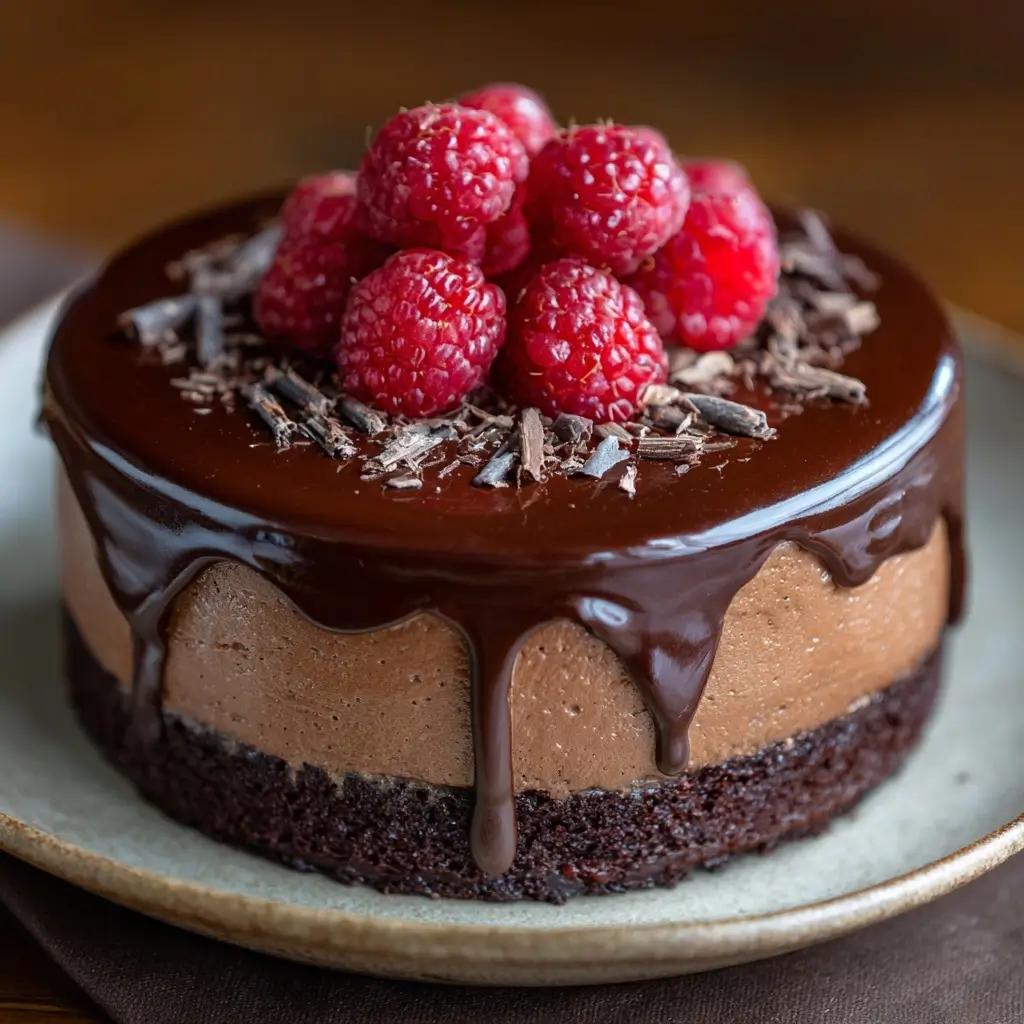
- Serve: Carefully release the springform pan. Garnish with shaved chocolate, fresh berries, whipped cream rosettes, or a glossy chocolate ganache drizzle before serving.
Tips for the Best Chocolate Mousse Cake
- Use room temperature eggs: For best volume when whipping, separate eggs while cold but let whites come to room temperature before beating.
- Avoid overheating chocolate: Keep the double boiler gentle; scorching ruins texture and flavor.
- Fold gently: Overmixing after adding whipped cream or egg whites will result in a dense mousse. Use a large spatula and cut through the center, folding from the bottom up.
- Chill your mixing bowls: Cold bowls help whipped cream and egg whites achieve greater volume.
- Freeze briefly for cleaner slices: If slicing neatly is important, freeze the cake for 20–30 minutes before cutting with a hot, wet knife.
- Don’t skip the espresso powder: It doesn’t make the cake taste like coffee — it intensifies the chocolate flavor dramatically.
- Check gelatin bloom: Ensure gelatin is fully dissolved but not boiled, as excessive heat can weaken its setting power.
Variations and Customizations
One of the joys of chocolate mousse cake is its adaptability. Here are some creative twists to personalize your dessert:
- White Chocolate Mousse Layer: Create a stunning marbled effect or layered look by alternating dark and white chocolate mousse layers.
- Milk Chocolate Version: Substitute dark chocolate with high-quality milk chocolate for a sweeter, creamier profile ideal for kids.
- Flavored Mousses: Infuse the mousse with liqueurs like Grand Marnier, Baileys, Kahlúa, or Amaretto (add 1–2 tbsp after melting chocolate).
- Fruit Swirls: Add a raspberry or strawberry coulis layer between the crust and mousse, or swirl into the mousse before chilling.
- Nutty Crunch: Mix chopped toasted hazelnuts, almonds, or pecans into the crust or fold into the mousse for added texture.
- Peppermint Twist: Add a few drops of peppermint extract and crushed candy canes for a festive holiday version.
- Gluten-Free Option: Use gluten-free cookies (such as Schär or homemade almond flour crust) for the base.
- Dairy-Free/Vegan: Substitute heavy cream with chilled coconut cream, use vegan chocolate, replace butter with coconut oil, and use agar-agar instead of gelatin. Aquafaba can replace egg whites.
- Mini Individual Cakes: Prepare in ramekins or silicone molds for elegant single servings.
- Cake Insert: Place a thin round of chocolate sponge or dacquoise between the crust and mousse for added height and texture contrast.
Health Considerations and Nutritional Value
While undeniably indulgent, understanding the nutritional profile of chocolate mousse cake helps in enjoying it mindfully.
Nutritional Estimate (per slice, 1/12 of cake):
- Calories: ~380–450 kcal
- Fat: 30–35g (mostly from cream, butter, chocolate)
- Saturated Fat: 18–22g
- Carbohydrates: 25–30g
- Sugars: 20–25g
- Protein: 5–6g
- Fiber: 2–3g (especially if using dark chocolate and whole grain crust)
- Cholesterol: ~80mg
- Sodium: ~120mg
Health Notes:
- Dark Chocolate Benefits: Contains antioxidants like flavonoids, which may support heart health and reduce inflammation when consumed in moderation.
- Portion Control: This cake is rich — a small slice is often satisfying. Serve with fresh berries to add fiber and natural sweetness.
- Diabetes Considerations: High in sugar; consider using a sugar substitute like erythritol or monk fruit in reduced-sugar versions. Monitor carbohydrate intake accordingly.
- Heart Health: Due to saturated fat content, those with cardiovascular concerns should enjoy sparingly.
- Pregnancy: Raw eggs pose a slight risk. Use pasteurized eggs or omit raw eggs by cooking the yolks with sugar over a double boiler (like a sabayon) before incorporating.
- Allergens: Contains dairy, eggs, gluten (unless substituted), and possibly nuts depending on customization.
Frequently Asked Questions (FAQ)
Q: Can I make chocolate mousse cake ahead of time?
A: Absolutely! This cake actually improves with time. Prepare it 1–2 days in advance and store covered in the refrigerator. The flavors deepen, and the texture sets perfectly.
Q: Why did my mousse collapse or become watery?
A: Common causes include under-whipped cream or egg whites, over-folding, or insufficient gelatin. Make sure all components are properly whipped and gelatin is correctly bloomed and mixed in.
Q: Can I freeze chocolate mousse cake?
A: Yes, though texture may slightly change. Wrap tightly in plastic and freeze for up to 1 month. Thaw slowly in the refrigerator for best results.
Q: How do I get clean slices?
A: Dip a sharp knife in hot water, wipe dry, and slice slowly. Clean the knife between cuts for neat presentation.
Q: Is there a way to make it without gelatin?
A: Yes, though the mousse will be softer. You can rely on whipped cream and egg whites alone, but it may not hold shape well. Agar-agar is a plant-based alternative with stronger gelling properties.
Q: Can I use milk or semi-sweet chocolate?
A: Yes, but keep in mind they contain more sugar and less cocoa butter, so the mousse will be sweeter and potentially softer. Adjust sugar accordingly.
Q: My crust is too crumbly. How can I fix it?
A: Ensure you’re using enough melted butter — it acts as the glue. Press firmly into the pan and chill thoroughly before adding mousse.
Q: Can I make this in a regular cake pan?
A: A springform pan is ideal for easy removal. If using a regular pan, line it with parchment paper with overhanging edges to lift the cake out.
Summary
The chocolate mousse cake is a masterpiece of texture and flavor, blending a crisp crust with a cloud-like, rich chocolate mousse that melts on the tongue.
Perfect for celebrations or as a luxurious treat, this make-ahead dessert impresses with minimal effort and maximum decadence.