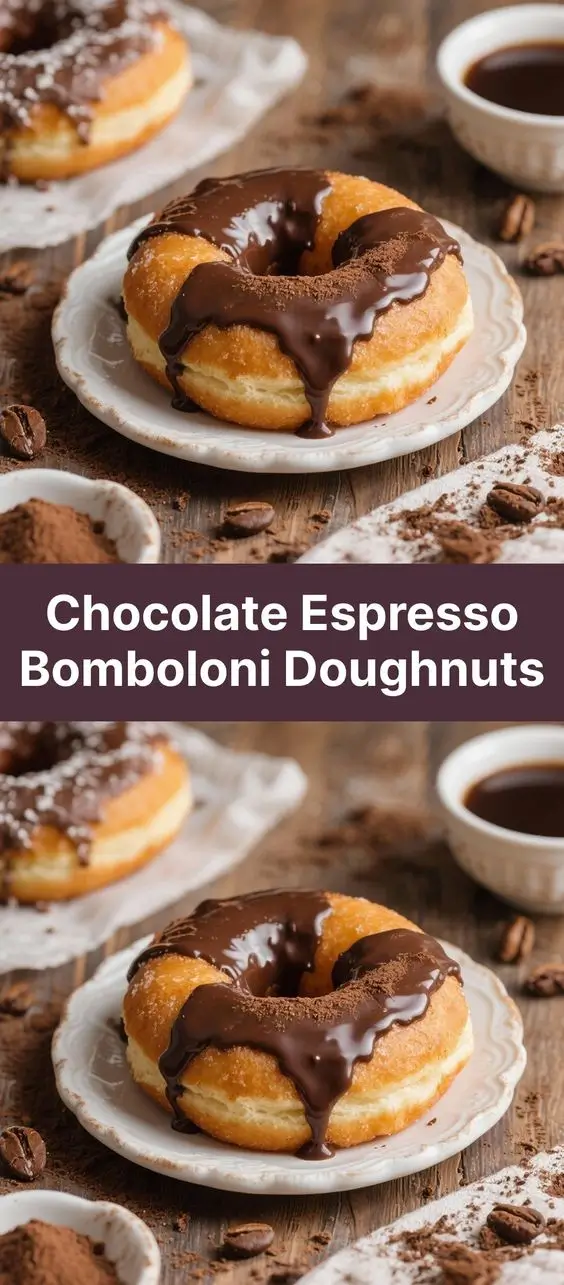
Chocolate Espresso Bomboloni Doughnuts: A Decadent Italian Delight
The History of Bomboloni and the Rise of Chocolate Espresso Fusion
Bomboloni, the beloved Italian filled doughnuts, trace their origins back to Tuscany and Lombardy in the 19th century. Traditionally enjoyed during Carnevale as a sweet indulgence before Lent, these pillowy pastries were initially made with simple ingredients—flour, sugar, eggs, milk, and butter—then deep-fried and dusted with powdered sugar or filled with pastry cream, jam, or Nutella. The name “bomboloni” comes from the Italian word bomba, meaning “bomb,” a nod to their rich, explosive flavor and soft, round shape.
Over time, regional variations emerged across Italy, with northern regions favoring custard fillings and southern areas incorporating citrus zest and liqueurs. As coffee culture flourished in Italy, espresso-infused desserts gained popularity, particularly in cities like Milan and Turin where café life is central to daily routines. This led to the natural evolution of the classic bomboloni into more sophisticated versions, including chocolate and espresso hybrids.
The modern Chocolate Espresso Bomboloni Doughnuts represent a luxurious fusion of two beloved flavors: dark chocolate and bold espresso. Inspired by tiramisu and mocha desserts, this version elevates the humble bomboloni into a gourmet treat perfect for brunch, dessert, or even an afternoon pick-me-up alongside a cappuccino. Today, artisanal bakeries across Europe and North America craft their own renditions, often using high-quality cocoa, freshly brewed espresso, and house-made custard or ganache fillings.
Ingredients Breakdown: What Makes These Bomboloni Irresistible?
The magic of Chocolate Espresso Bomboloni lies in the harmony of premium ingredients that contribute to their tender crumb, rich aroma, and intense flavor profile. Each component plays a vital role in achieving the perfect balance between sweetness, bitterness, and texture.
Dough Ingredients:
- All-Purpose Flour (plus bread flour option): Provides structure and chew. For a softer texture, all-purpose is ideal; for more elasticity, a blend with bread flour works well.
- Granulated Sugar: Adds sweetness and aids in browning during frying.
- Instant Yeast: Ensures a light, airy rise without needing activation in water first.
- Whole Milk (warm): Activates the yeast and adds richness. Can be substituted with oat or almond milk for a dairy-free version.
- Eggs (large): Contribute to tenderness and help bind the dough.
- Unsalted Butter (softened): Imparts a luxurious mouthfeel and flaky layers when incorporated properly.
- Espresso Powder or Freshly Brewed Espresso: Infuses the dough with deep coffee notes. Instant espresso powder dissolves easily, while cooled brewed espresso adds moisture.
- Cocoa Powder (unsweetened, Dutch-processed): Gives the dough its signature chocolate hue and earthy depth.
- Salt: Balances sweetness and enhances overall flavor complexity.
Filling Options:
- Espresso Custard (Crème Pâtissière): A silky blend of egg yolks, sugar, milk, cornstarch, vanilla, and concentrated espresso.
- Dark Chocolate Ganache: Made from chopped dark chocolate and hot heavy cream, optionally spiked with espresso.
- Mocha Cream Filling: A hybrid of whipped mascarpone, Nutella, and cooled espresso for a creamy, spreadable consistency.
Finishing Touches:
- Powdered Sugar (confectioners’ sugar): Dusted on top for visual appeal and subtle sweetness.
- Chocolate Glaze: A glossy coating made from melted chocolate, butter, and warm cream.
- Crushed Coffee Beans or Cocoa Nibs: For crunch and aromatic contrast.
- Edible Gold Flakes or Sprinkles (optional): For special occasions or gourmet presentation.
Step-by-Step Recipe: Crafting Perfect Chocolate Espresso Bomboloni at Home
Making homemade Chocolate Espresso Bomboloni may seem daunting, but with patience and attention to detail, you can achieve bakery-quality results in your kitchen. Follow these detailed steps for success.
Step 1: Activate the Yeast (if not using instant)
In a small bowl, combine ¼ cup warm milk (105–115°F), 1 tsp sugar, and 2¼ tsp active dry yeast. Let sit for 5–10 minutes until foamy. (Skip if using instant yeast.)
Step 2: Prepare the Chocolate Espresso Dough
- In the bowl of a stand mixer fitted with a dough hook, whisk together 3 cups all-purpose flour, ½ cup granulated sugar, ⅓ cup unsweetened cocoa powder, 2 tsp instant espresso powder, and 1 tsp salt.
- Add the activated yeast mixture (or instant yeast directly), 1 large egg, 1 yolk, and ½ cup warm milk. Mix on low until combined.
- Gradually add softened butter (½ cup, cubed) one tablespoon at a time, mixing well after each addition.
- Increase speed to medium and knead for 8–10 minutes until smooth, elastic, and slightly sticky.
- If needed, add up to ¼ cup more flour to prevent excessive stickiness—but avoid over-flouring.
- Shape into a ball, place in a greased bowl, cover with plastic wrap, and let rise in a warm place for 1.5 to 2 hours, or until doubled in size.
Step 3: Roll and Cut the Dough
- Punch down the risen dough and turn it onto a lightly floured surface.
- Roll out to ½-inch thickness using a rolling pin.
- Use a 2.5–3 inch round cutter to cut into circles. Re-roll scraps once for additional doughnuts.
- Place cut doughnuts on parchment-lined baking sheets, cover with a clean towel, and proof for 45–60 minutes until puffy.
Step 4: Fry to Golden Perfection
- Heat vegetable oil, canola oil, or peanut oil in a heavy pot (Dutch oven preferred) to 350–360°F.
- Fry 2–3 doughnuts at a time, flipping once, for about 1.5–2 minutes per side until deep golden brown.
- Drain on a wire rack set over paper towels to absorb excess oil.
- Let cool completely before filling.
Step 5: Prepare the Filling
For Espresso Custard:
- Whisk 3 egg yolks with ¼ cup sugar until pale.
- Heat 1 cup milk with 1 tbsp espresso powder until steaming.
- Temper the yolks with hot milk, then return to saucepan.
- Add 1 tbsp cornstarch slurry, cook over medium heat for 3–5 minutes until thickened.
- Strain, stir in 1 tsp vanilla, chill for 2+ hours.
For Mocha Ganache:
- Heat ½ cup heavy cream with 1 tsp espresso powder.
- Pour over 4 oz chopped dark chocolate, let sit 2 minutes, then stir smooth.
- Cool until pipeable, then transfer to a piping bag.
Step 6: Fill and Finish
- Fit a piping bag with a long Bismarck tip or small round tip.
- Insert the tip into the side of each cooled doughnut and gently inject 1–2 tablespoons of filling.
- Optional: Dip tops in chocolate glaze (melt ½ cup chocolate + 1 tbsp coconut oil, dip top-down).
- Finish with a dusting of powdered sugar, cocoa powder, or crushed coffee beans.
Professional Tips for Success
- Temperature Control is Key: Keep milk and water warm but not hot—over 115°F kills yeast. Use a thermometer for accuracy.
- Don’t Rush the Proofing: Under-proofed doughnuts will be dense; over-proofed ones may collapse when fried. Look for a soft pillow-like feel.
- Oil Temperature Matters: Use a deep-fry or candy thermometer. Below 350°F leads to greasy doughnuts; above 375°F burns the outside before inside cooks.
- Fry in Batches: Crowding lowers oil temperature and causes uneven cooking.
- Cool Before Filling: Warm doughnuts absorb less filling and may break apart.
- Flavor Depth Tip: Add ½ tsp instant espresso to both dough and filling for layered coffee intensity.
- Make-Ahead Friendly: Unfilled doughnuts can be frozen before frying. Thaw and fry as needed.
Variations and Customizations
While classic Chocolate Espresso Bomboloni are divine on their own, feel free to experiment with creative twists:
- Gluten-Free Version: Substitute with a quality gluten-free flour blend containing xanthan gum. Add 1 extra egg yolk for binding.
- Vegan Bomboloni: Use plant-based milk, flax eggs (1 tbsp ground flax + 3 tbsp water = 1 egg), vegan butter, and egg-free custard (cornstarch + non-dairy milk + agar-agar).
- Stuffed with Salted Caramel: Inject a core of espresso caramel before adding chocolate ganache for a sweet-salty-mocha surprise.
- Boozy Twist: Soak the custard with 1 tbsp Kahlúa, Baileys, or Sambuca for adult-friendly flavor.
- Mini Bomboloni: Use a smaller cutter (1.5 inches) for bite-sized versions—perfect for parties or tasting platters.
- Seasonal Variants: Add orange zest for winter holidays, peppermint extract for December, or raspberry jam swirls for spring.
- Baked Option: For a lighter version, brush doughnuts with melted butter and bake at 375°F for 12–15 minutes. Note: they won’t be as fluffy or authentic.
- Protein Boost: Incorporate 1 scoop chocolate espresso protein powder into the dry ingredients (reduce flour by ¼ cup).
Health Considerations and Nutritional Value
While Chocolate Espresso Bomboloni are undeniably decadent, understanding their nutritional content helps with mindful enjoyment.
Nutrition Facts (per average-sized filled bombolone, approx. 3 inches):
- Calories: 320–380
- Total Fat: 18–22g (mostly from butter and frying oil)
- Saturated Fat: 10–12g
- Cholesterol: 70–90mg
- Sodium: 150–200mg
- Total Carbohydrates: 38–45g
- Sugars: 20–25g (includes added sugars from filling and glaze)
- Protein: 5–7g
- Caffeine: ~35–50mg per serving (equivalent to half a shot of espresso)
Health Notes:
- Energy Boost: The combination of carbohydrates, sugar, and caffeine provides a quick energy lift—ideal as a morning treat or post-workout indulgence in moderation.
- Antioxidants: Dark chocolate and espresso both contain beneficial antioxidants like flavonoids and polyphenols, which may support heart health and reduce inflammation.
- Portion Awareness: Due to calorie density, enjoy one bombolone as a treat rather than multiple servings.
- Dietary Modifications: Health-conscious bakers can reduce sugar by 25%, use avocado oil for frying (higher smoke point, heart-healthy fats), or opt for stevia-sweetened fillings.
- Diabetes Consideration: High glycemic load due to refined flour and sugar. Diabetics should consume sparingly and pair with fiber or protein to slow glucose absorption.
- Kid-Friendly Note: Lower the espresso content or omit it entirely for children’s versions.
Complete Ingredient List
For the Chocolate Espresso Dough:
- 3 cups (360g) all-purpose flour, plus more for dusting
- ½ cup (100g) granulated sugar
- ⅓ cup (30g) unsweetened cocoa powder (Dutch-processed preferred)
- 2¼ tsp (7g) instant yeast (or active dry, activated first)
- 1 tsp salt
- 1 large egg + 1 egg yolk
- ½ cup (120ml) warm whole milk (105–115°F)
- ½ cup (113g) unsalted butter, softened
- 2 tsp instant espresso powder (or 2 tbsp strong brewed espresso, cooled)
For the Espresso Custard Filling:
- 3 large egg yolks
- ¼ cup (50g) granulated sugar
- 1 tbsp cornstarch
- 1 cup (240ml) whole milk
- 1 tbsp instant espresso powder
- 1 tsp vanilla extract
For Frying and Finishing:
- Vegetable, canola, or peanut oil (for deep frying)
- Powdered sugar (for dusting)
- Optional: chocolate glaze, cocoa nibs, crushed coffee beans
Directions Recap
- Mix Dough: Combine dry ingredients, add wet, knead with mixer until smooth. Let rise 1.5–2 hours.
- Shape: Roll to ½-inch thickness, cut into rounds, proof 45–60 minutes.
- Fry: Heat oil to 350–360°F, fry 2–3 at a time until golden (3–4 minutes total). Drain on rack.
- Make Filling: Prepare espresso custard or ganache, chill thoroughly.
- Fill: Use a piping bag with long tip to inject filling into side of each cooled doughnut.
- Finish: Dust with powdered sugar, drizzle with chocolate, garnish as desired.
- Serve: Best enjoyed fresh within 6 hours. Store unfilled doughnuts in airtight container for up to 2 days.
Frequently Asked Questions (FAQ)
Can I bake these instead of frying?
Yes, though the texture will differ. Bake at 375°F for 12–15 minutes until set. They’ll be lighter and cake-like, not as rich or traditional.
How do I store leftover bomboloni?
Store unfilled doughnuts at room temperature for 1–2 days. Once filled, consume within 12 hours for best texture. Do not refrigerate filled versions—they become soggy.
Can I freeze Chocolate Espresso Bomboloni?
Yes! Freeze unglazed, unfilled doughnuts on a tray, then transfer to freezer bags. Fry from frozen, adding 30 seconds to cooking time. Do not freeze filled doughnuts.
Why did my doughnuts come out greasy?
Oil was too cold, or dough was under-proofed. Maintain 350–360°F and ensure proper rise before frying.
Can I make the dough the night before?
Absolutely. After the first rise, punch down, cover, and refrigerate overnight. Let sit at room temperature for 30 minutes before shaping and proofing.
What if I don’t have espresso powder?
You can substitute with 2 tbsp very strong brewed coffee or 1 tsp instant coffee granules dissolved in 1 tbsp hot water. Avoid decaf if you want the full flavor impact.
Is there a dairy-free version?
Yes. Use almond, oat, or soy milk, vegan butter, and coconut cream-based custard thickened with cornstarch.
Can kids eat these?
Yes, but reduce or omit espresso for lower caffeine. You can replace it with extra vanilla or chocolate syrup for kid-friendly flavor.
Summary
Chocolate Espresso Bomboloni Doughnuts are a luxurious fusion of Italian tradition and modern flavor innovation—pillowy chocolate doughnuts infused with bold espresso, filled with silky custard or ganache, and finished with elegance.
Perfect for coffee lovers and dessert enthusiasts alike, these homemade treats deliver a rich, aromatic experience that turns any moment into a celebration of taste and craftsmanship.