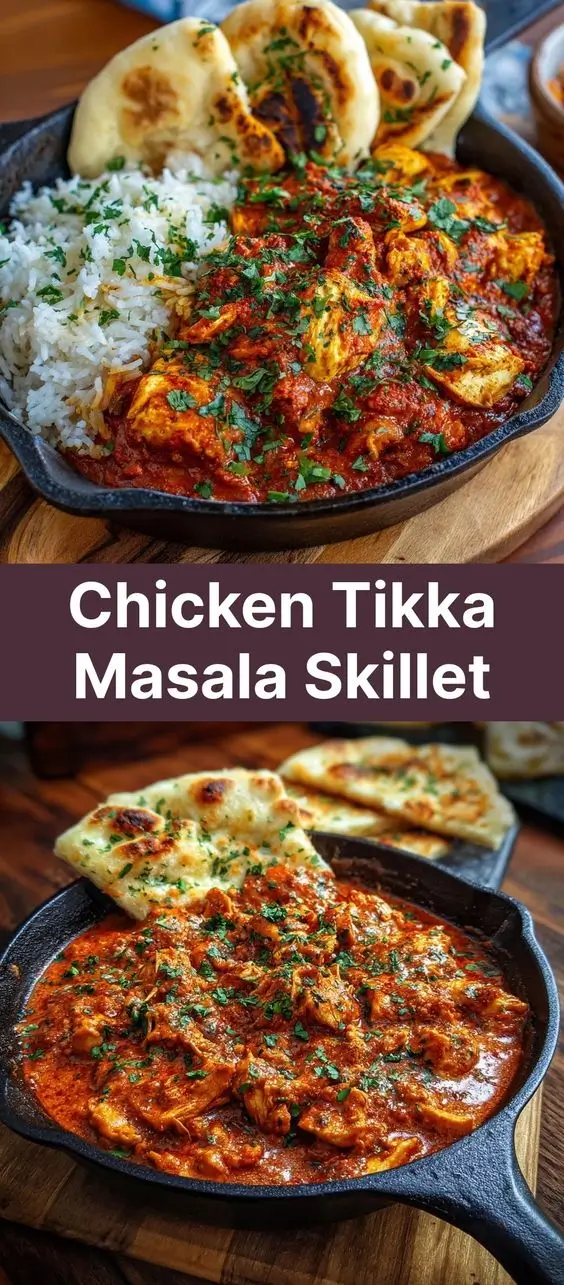
Chicken Tikka Masala Skillet
A rich, creamy, and aromatic one-pan wonder that brings the bold flavors of Indian cuisine straight to your dinner table—without the fuss. Chicken Tikka Masala Skillet is comfort food at its finest, combining tender pieces of marinated chicken with a luxuriously spiced tomato-based sauce, all cooked in a single skillet for maximum flavor and minimal cleanup.
The History
While Chicken Tikka Masala is often hailed as Britain’s national dish, its roots are deeply entwined with South Asian culinary traditions and diasporic innovation. The origins of this beloved dish remain delightfully murky, but most food historians agree it likely emerged in the mid-20th century among South Asian immigrants in the United Kingdom. One popular tale attributes its creation to a Bangladeshi chef in Glasgow who, upon receiving a complaint about dry chicken tikka, improvised by simmering the grilled chicken in a spiced tomato-cream sauce, thus birthing the now-iconic dish.
Traditional chicken tikka, originating from the Indian subcontinent, involves marinating boneless chicken in yogurt and spices, then grilling it in a tandoor oven. However, Chicken Tikka Masala evolved beyond tradition—melding Indian spice palettes with British palates. The “masala” refers to the spiced sauce (typically made with tomatoes, cream, onions, garlic, and an array of warming spices) in which the grilled chicken is finished.
The skillet version modernizes this classic by streamlining the process—eliminating the need for a tandoor or multiple pots—while preserving the soul-warming depth of flavor. It’s a testament to how global cuisines adapt and thrive in new kitchens, making Chicken Tikka Masala Skillet not just a meal, but a delicious piece of culinary history served on a plate.
Ingredients Breakdown
Every great dish starts with great ingredients. Here’s a detailed look at what goes into creating the perfect Chicken Tikka Masala Skillet:
- Boneless, skinless chicken breasts or thighs: Thighs are preferred for their juiciness and richer flavor, though breasts work well for a leaner option.
- Plain Greek yogurt: Used in the marinade to tenderize the chicken and add tangy depth.
- Lemon juice: Adds brightness and helps break down proteins for tenderness.
- Garlic and ginger: Freshly minced for pungent warmth and aromatic complexity.
- Garam masala: A fragrant blend of ground spices (cinnamon, cardamom, cloves, cumin, coriander) essential to Indian cooking.
- Ground cumin and coriander: Earthy, citrusy notes that form the backbone of the spice profile.
- Paprika or Kashmiri red chili powder: Imparts vibrant color and mild heat without overwhelming spice.
- Turmeric: Adds golden hue and subtle earthiness, plus anti-inflammatory benefits.
- Onion: Yellow or red onion finely diced for sweetness and structure in the sauce base.
- Butter or ghee: For sautéing; adds richness and nutty depth.
- Crushed tomatoes or tomato puree: Forms the base of the masala sauce, providing acidity and body.
- Heavy cream or coconut milk: Gives the sauce its signature silkiness. Coconut milk offers a dairy-free alternative with tropical nuance.
- Fresh cilantro: Chopped for garnish, adding herbal freshness.
- Salt and black pepper: To taste, enhancing overall flavor balance.
- Cooked basmati rice or naan bread (for serving): Classic accompaniments that soak up every last drop of sauce.
Step-by-Step Recipe
- Marinate the Chicken: In a bowl, combine 1½ pounds of cubed chicken with ½ cup Greek yogurt, juice of 1 lemon, 1 tablespoon minced garlic, 1 tablespoon grated ginger, 1 teaspoon garam masala, ½ teaspoon ground cumin, ½ teaspoon paprika, ¼ teaspoon turmeric, and salt to taste. Mix thoroughly, cover, and refrigerate for at least 1 hour (overnight for best results).
- Preheat & Sear: Remove chicken from fridge 15 minutes before cooking. Heat 1 tablespoon oil in a large skillet over medium-high heat. Add chicken in batches, searing until golden brown on all sides (about 6–8 minutes total). Do not overcrowd. Transfer seared chicken to a plate and set aside.
- Sauté Aromatics: In the same skillet, melt 2 tablespoons butter or ghee. Add 1 diced onion and cook until soft and translucent (5–7 minutes). Stir in 1 tablespoon minced garlic and 1 tablespoon grated ginger; sauté for another minute until fragrant.
- Bloom the Spices: Add 1 teaspoon garam masala, ½ teaspoon ground cumin, ½ teaspoon ground coriander, ½ teaspoon paprika, and ¼ teaspoon turmeric. Stir constantly for 30 seconds to release essential oils and deepen flavor—be careful not to burn.
- Build the Sauce: Pour in 1 can (14 oz) crushed tomatoes. Stir well, scraping up any browned bits from the bottom of the pan. Simmer for 8–10 minutes, allowing the sauce to thicken slightly and flavors to meld.
- Finish with Cream: Reduce heat to low. Stir in ¾ cup heavy cream or full-fat coconut milk. Return the seared chicken and any accumulated juices to the skillet. Gently simmer for 8–10 minutes, stirring occasionally, until chicken is fully cooked through and sauce is creamy and luscious.
- Season & Garnish: Taste and adjust seasoning with salt, pepper, or a pinch of sugar if the tomatoes are too acidic. Stir in a splash of cream if needed for extra richness. Sprinkle generously with fresh chopped cilantro.
- Serve Immediately: Spoon the hot Chicken Tikka Masala Skillet over steamed basmati rice or alongside warm naan bread. Drizzle with extra cream and garnish with additional cilantro sprigs for presentation.
Tips
- Don’t skip the marinade: Even 30 minutes makes a difference, but 2–4 hours allows deeper flavor penetration and superior texture.
- Use full-fat yogurt: Low-fat versions may separate during cooking and lack the necessary creaminess.
- Resist stirring too much when searing: Let the chicken develop a proper crust for better flavor and appearance.
- Bloom spices properly: Cooking spices briefly in fat unlocks their full aroma and prevents raw bitterness.
- Simmer gently after adding cream: Boiling can cause dairy to curdle. Keep heat low and stir frequently.
- Balance the acidity: If the tomato sauce tastes too sharp, add ½ teaspoon sugar or a splash of cream to mellow it out.
- Make ahead friendly: This dish tastes even better the next day! Store in an airtight container and reheat gently on the stove with a splash of water or cream.
- Skillet size matters: Use a 12-inch or larger skillet to avoid crowding and ensure even cooking.
Variations and Customizations
One of the joys of Chicken Tikka Masala Skillet is its versatility. Here are some creative twists to suit different tastes and dietary needs:
- Dairy-Free Version: Replace yogurt with dairy-free plain yogurt (coconut or almond-based), and use coconut milk instead of heavy cream. Substitute butter with coconut oil or vegan margarine.
- Vegetarian Option: Swap chicken for paneer (Indian cheese), tofu, chickpeas, or mixed vegetables like bell peppers, zucchini, and mushrooms.
- Keto-Friendly: Omit sugar, use full-fat cream, and serve over cauliflower rice. Ensure spices are sugar-free.
- Spice Level Control: Mild? Skip chili powder. Want heat? Add ½ teaspoon cayenne pepper or a chopped green chili when sautéing onions.
- Smoky Flavor Boost: Add ¼ teaspoon smoked paprika or finish with a drizzle of liquid smoke for a tandoor-like essence.
- Herb Variations: Try mint or curry leaves for a unique twist. Fresh fenugreek leaves (kasuri methi) crushed between palms and stirred in at the end add authentic depth.
- Wine Enrichment: Deglaze the pan with ¼ cup dry white wine after sautéing onions for added complexity before adding tomatoes.
- Instant Pot Shortcut: After searing chicken and sautéing aromatics, transfer everything to an Instant Pot. Pressure cook for 8 minutes, quick release, then stir in cream and simmer manually.
Health Considerations and Nutritional Value
Chicken Tikka Masala Skillet can be both indulgent and nutritious, depending on preparation choices. Here’s a breakdown of key health aspects:
Nutrient Highlights:
- High-Quality Protein: Chicken provides lean protein essential for muscle repair and satiety.
- Healthy Fats: Ghee and full-fat dairy offer conjugated linoleic acid (CLA) and fat-soluble vitamins (A, D, E, K). Coconut milk contributes medium-chain triglycerides (MCTs), linked to energy metabolism.
- Antioxidant-Rich Spices: Turmeric contains curcumin, a potent anti-inflammatory compound. Cumin and coriander support digestion and have antioxidant properties.
- Lycopene from Tomatoes: This powerful antioxidant may support heart health and reduce cancer risk, especially when cooked in oil (enhancing absorption).
Dietary Concerns:
- Calorie Density: Traditional versions using cream and butter can be high in calories. Opt for light cream, half-and-half, or evaporated milk to reduce fat content.
- Sodium Levels: Canned tomatoes and pre-made spice blends may contain added salt. Choose low-sodium options and control salt during cooking.
- Lactose Sensitivity: Those sensitive to lactose should use lactose-free yogurt and cream or fully embrace coconut-based alternatives.
- Gluten-Free Friendly: Naturally gluten-free as long as all ingredients (especially spice blends) are certified GF.
Approximate Nutritional Values (per serving, serves 4):
| Calories | 420–480 kcal |
| Protein | 35–40g |
| Fat | 22–28g (Saturated: 12–15g) |
| Carbohydrates | 18–22g (Fiber: 3–4g, Sugar: 8–10g) |
| Sodium | 600–800mg (adjustable) |
Note: Values vary based on ingredient choices (e.g., thighs vs. breasts, cream type, added salt).
Ingredients
- 1½ lbs boneless, skinless chicken breasts or thighs, cut into 1-inch cubes
- ½ cup plain Greek yogurt (full-fat recommended)
- 1 lemon, juiced
- 1 tbsp minced garlic (about 4 cloves)
- 1 tbsp freshly grated ginger
- 1 tsp garam masala (plus more for blooming)
- ½ tsp ground cumin
- ½ tsp paprika (Kashmiri preferred)
- ¼ tsp turmeric
- ½ tsp salt (plus more to taste)
- Freshly ground black pepper
- 1 tbsp vegetable or avocado oil (for searing)
- 1 medium yellow onion, finely diced
- 2 tbsp butter or ghee
- 1 tbsp minced garlic
- 1 tbsp freshly grated ginger
- 1 tsp garam masala
- ½ tsp ground cumin
- ½ tsp ground coriander
- ½ tsp paprika
- ¼ tsp turmeric
- 1 (14 oz) can crushed tomatoes
- ¾ cup heavy cream or full-fat coconut milk
- Fresh cilantro, chopped (for garnish)
- Steamed basmati rice or naan (for serving)
Directions
- In a large mixing bowl, combine chicken, yogurt, lemon juice, 1 tablespoon garlic, 1 tablespoon ginger, 1 teaspoon garam masala, ½ teaspoon cumin, ½ teaspoon paprika, ¼ teaspoon turmeric, ½ teaspoon salt, and a few grinds of black pepper. Mix until chicken is evenly coated. Cover and marinate in the refrigerator for at least 1 hour, or up to overnight.
- Remove chicken from the fridge 15 minutes before cooking. Heat 1 tablespoon oil in a large skillet (preferably cast iron or stainless steel) over medium-high heat.
- Add marinated chicken in a single layer (work in batches if needed) and sear for 2–3 minutes per side until golden brown. Transfer to a plate and set aside.
- Melt butter or ghee in the same skillet over medium heat. Add diced onion and cook until soft and lightly caramelized (6–8 minutes).
- Stir in 1 tablespoon garlic and 1 tablespoon ginger; cook for 1 minute until fragrant.
- Add 1 teaspoon garam masala, ½ teaspoon cumin, ½ teaspoon coriander, ½ teaspoon paprika, and ¼ teaspoon turmeric. Stir constantly for 30 seconds to toast the spices.
- Pour in crushed tomatoes, scraping the bottom of the pan to lift any browned bits. Bring to a simmer and cook for 8–10 minutes, stirring occasionally, until sauce thickens slightly.
- Reduce heat to low. Stir in heavy cream or coconut milk until smooth. Return chicken and juices to the skillet. Simmer gently for 8–10 minutes, until chicken is cooked through and sauce is creamy.
- Taste and season with additional salt, pepper, or a pinch of sugar if needed. Stir in extra cream for richness if desired.
- Remove from heat. Garnish with chopped cilantro. Serve immediately over basmati rice or with warm naan bread.
FAQ
Q: Can I make Chicken Tikka Masala Skillet without yogurt?
A: While yogurt is key for tenderizing and flavor, you can substitute with buttermilk, sour cream, or dairy-free yogurt. For a yogurt-free marinade, use lemon juice, olive oil, and extra spices—but expect a less tender result.
Q: How do I store leftovers?
A: Cool completely and store in an airtight container in the refrigerator for up to 4 days. Reheat gently on the stove with a splash of water or cream to restore consistency.
Q: Can I freeze this dish?
A: Yes, though dairy-based sauces may separate slightly upon thawing. Freeze without garnish for up to 3 months. Thaw overnight in the fridge and reheat slowly, stirring frequently.
Q: Is Chicken Tikka Masala spicy?
A: Not inherently. The dish is more aromatic than hot. Adjust heat with cayenne, chili flakes, or fresh chilies according to preference.
Q: Can I use pre-cooked chicken?
A: Yes. Skip marinating and searing. Add cooked chicken when finishing the sauce and simmer only long enough to heat through (3–4 minutes).
Q: Why did my sauce curdle?
A: High heat or cold cream added too quickly can cause separation. Always lower the heat before adding dairy, and let cream come to room temperature first. A small spoonful of flour mixed into the cream can stabilize it.
Q: What’s the difference between Chicken Tikka and Chicken Tikka Masala?
A: Chicken Tikka is marinated, grilled chicken pieces. Chicken Tikka Masala takes those grilled pieces and simmers them in a creamy, spiced tomato sauce—the “masala” part.
Q: Can I make this in advance?
A: Absolutely. Marinate the chicken, prepare the sauce base (onions, spices, tomatoes), and refrigerate separately. Combine and finish with cream and chicken when ready to serve.
Summary
Chicken Tikka Masala Skillet is a flavorful, one-pan adaptation of a modern classic, blending smoky-spiced grilled chicken with a velvety tomato-cream sauce infused with aromatic Indian spices.
Quick to prepare, endlessly customizable, and packed with protein and rich flavors, it’s the ultimate weeknight comfort meal that brings restaurant-quality taste to your kitchen with ease.