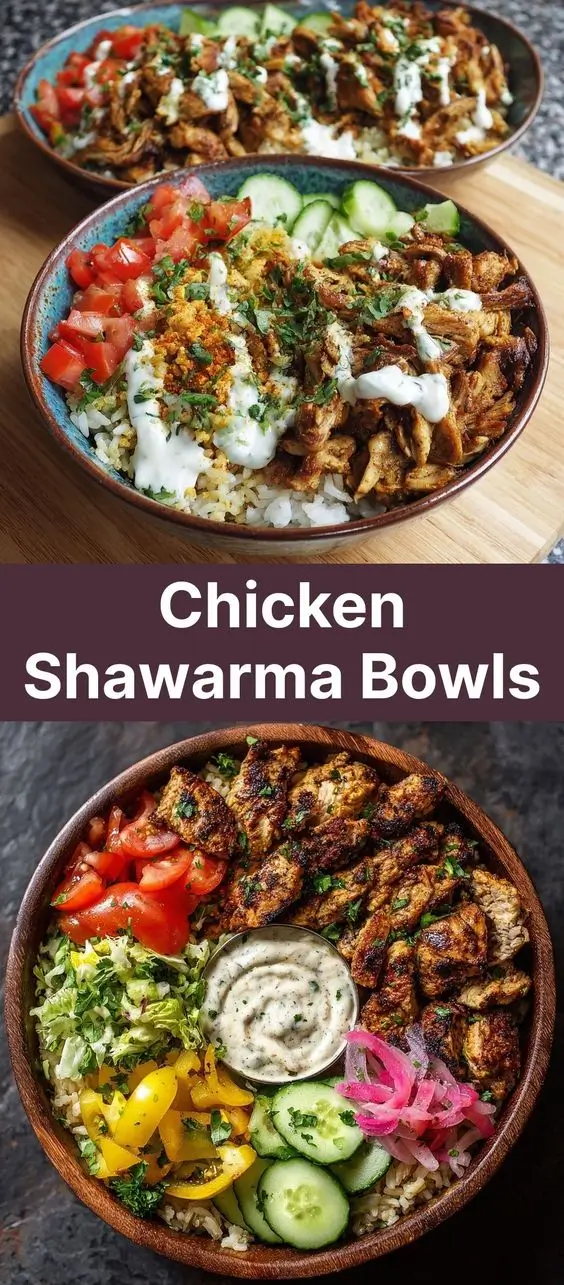
Chicken Shawarma Bowls: A Flavorful Middle Eastern Delight
If you’re craving bold, aromatic flavors with a satisfying balance of protein, grains, and fresh vegetables, the Chicken Shawarma Bowl is your answer. This vibrant dish brings together tender, spiced chicken, fluffy rice or quinoa, crisp veggies, and creamy sauces—all served in a hearty bowl that’s as nutritious as it is delicious. Whether you’re enjoying it for lunch, dinner, or meal prepping for the week, this Middle Eastern-inspired creation is both comforting and exciting.
The History of Chicken Shawarma
Shawarma, a beloved street food staple across the Middle East, has roots that trace back to the Ottoman Empire in the 19th century. The word “shawarma” comes from the Turkish word çevirme, meaning “turning,” which refers to the vertical rotisserie on which marinated meat—typically lamb, beef, or chicken—is slowly roasted. As people traveled and migrated, shawarma evolved regionally, with each culture adding its own twist. In Lebanon, it’s often wrapped in thin flatbread with garlic sauce; in Egypt, it might be served with pickles and fries; and in Israel, it’s commonly paired with tahini and amba (a tangy mango pickle sauce).
In recent years, the popularity of shawarma has soared globally, especially in North America, where health-conscious eaters have embraced the deconstructed “bowl” format. The Chicken Shawarma Bowl maintains all the rich flavors of traditional shawarma while offering greater control over ingredients, making it perfect for grain bowls, meal prep, and dietary customization. It’s a modern adaptation of a timeless favorite—bringing street food sophistication into the home kitchen.
Ingredients Breakdown: Building Blocks of Flavor
The magic of a Chicken Shawarma Bowl lies in its layers. Each component contributes not only to taste but also to texture, color, and nutrition. Let’s break down the essential elements:
- Chicken: Boneless, skinless chicken thighs are ideal—they’re juicier and more flavorful than breasts due to their higher fat content, and they hold up better to the bold marinade.
- Shawarma Spice Blend: The heart of the dish. A mix of paprika, cumin, coriander, turmeric, cinnamon, garlic powder, onion powder, and cayenne delivers warmth, earthiness, and a hint of sweetness.
- Olive Oil & Lemon Juice: These act as carriers for the spices and help tenderize the chicken. Olive oil adds richness, while lemon juice provides brightness and acidity.
- Yogurt (optional in marinade): Greek yogurt can be added to the marinade to further tenderize the chicken and add a subtle tang.
- Grains: Basmati rice, jasmine rice, or quinoa serve as the base. For low-carb options, cauliflower rice or mixed greens work beautifully.
- Vegetables: Fresh ingredients like diced tomatoes, cucumbers, red onions, shredded lettuce, pickled turnips, and sliced bell peppers add crunch and freshness.
- Sauces: Tahini sauce, garlic sauce (toum), or yogurt-based tzatziki elevate the bowl with creaminess and zesty flavor.
- Garnishes: Fresh parsley, sumac, olives, feta cheese, toasted pine nuts, or a squeeze of lemon juice finish the bowl with flair.
Step-by-Step Recipe: How to Make Chicken Shawarma Bowls
Follow these detailed steps to create restaurant-quality Chicken Shawarma Bowls at home:
Ingredients
- 1.5 lbs (700g) boneless, skinless chicken thighs, cut into thin strips
- 3 tbsp olive oil
- 2 tbsp fresh lemon juice
- 4 cloves garlic, minced
- 1 tbsp paprika
- 1 tsp ground cumin
- 1 tsp ground coriander
- 1/2 tsp turmeric
- 1/2 tsp cinnamon
- 1/2 tsp garlic powder
- 1/2 tsp onion powder
- 1/4 tsp cayenne pepper (adjust to taste)
- 1 tsp salt
- 1/2 tsp black pepper
- 1 cup plain Greek yogurt (optional, for marinade)
- 2 cups cooked basmati rice or quinoa
- 1 cup diced tomatoes
- 1 cup diced cucumbers
- 1/2 cup thinly sliced red onions
- 2 cups shredded romaine lettuce or mixed greens
- 1/4 cup chopped fresh parsley
- 1/4 cup crumbled feta cheese (optional)
- 1/4 cup pickled turnips (optional but traditional)
For the Tahini Sauce
- 1/3 cup tahini (sesame seed paste)
- 2 tbsp fresh lemon juice
- 1 clove garlic, minced
- 2–4 tbsp warm water (to thin)
- 1/4 tsp salt
- Pinch of cumin (optional)
Directions
- Marinate the Chicken: In a large bowl, whisk together olive oil, lemon juice, garlic, paprika, cumin, coriander, turmeric, cinnamon, garlic powder, onion powder, cayenne, salt, pepper, and Greek yogurt (if using). Add the chicken strips and toss until fully coated. Cover and refrigerate for at least 2 hours, preferably overnight (up to 24 hours) for maximum flavor penetration.
- Cook the Grains: While the chicken marinates, cook basmati rice or quinoa according to package instructions. Fluff with a fork and set aside. For extra flavor, cook the rice in chicken broth with a cinnamon stick and a few whole cardamom pods.
- Prepare the Tahini Sauce: In a small bowl, combine tahini, lemon juice, garlic, salt, and cumin. Whisk vigorously, then gradually add warm water one tablespoon at a time until the sauce reaches a smooth, pourable consistency. Set aside.
- Cook the Chicken: Heat a large skillet or grill pan over medium-high heat. Add a drizzle of olive oil. Remove chicken from the marinade (shake off excess) and cook in batches to avoid overcrowding. Sear for 5–7 minutes per side until deeply browned and cooked through (internal temperature should reach 165°F / 74°C). Let rest for 5 minutes before slicing or chopping into bite-sized pieces.
- Chop the Vegetables: While the chicken cooks, prepare all fresh vegetables: dice tomatoes and cucumbers, slice red onions thinly, shred lettuce, chop parsley, and assemble pickled turnips if using.
- Assemble the Bowls: In each serving bowl, start with a base of warm rice or quinoa. Arrange chicken on top, followed by tomatoes, cucumbers, red onions, lettuce, and any other desired toppings. Drizzle generously with tahini sauce or garlic yogurt sauce. Sprinkle with parsley, feta, and a pinch of sumac for tang.
- Serve Immediately: Enjoy hot, with warm pita bread on the side or a lemon wedge for extra zest.
Tips for the Perfect Chicken Shawarma Bowl
- Marinate Overnight: The longer the chicken sits in the marinade, the more flavorful and tender it becomes. Don’t skip this step!
- Don’t Crowd the Pan: Overcrowding causes steaming instead of searing. Cook chicken in batches for a beautiful caramelized crust.
- Baste While Cooking: Spoon extra marinade over the chicken during the first few minutes of cooking—but discard any unused raw marinade for safety.
- Add Smoke (Optional): For an authentic grilled flavor, use a smoker box on your gas grill or add a tiny drop of liquid smoke to the marinade (use sparingly).
- Double the Sauce: Sauces make or break the bowl. Make extra tahini or garlic sauce—it keeps well in the fridge for up to a week and doubles as a dip or salad dressing.
- Prep Ahead: Chop vegetables and cook grains in advance. Store separately in airtight containers for quick assembly during busy weeks.
- Warm Your Bowls: For a truly restaurant experience, warm your serving bowls in the oven before plating—this keeps the food hot longer.
Variations and Customizations
The beauty of the Chicken Shawarma Bowl lies in its versatility. Here are some creative twists to suit different tastes and dietary needs:
- Vegan Version: Replace chicken with marinated and roasted chickpeas, cauliflower, or tofu. Use plant-based yogurt in the marinade and vegan tahini sauce.
- Low-Carb/Keto: Skip the rice and use cauliflower rice or a bed of kale and spinach. Increase healthy fats with avocado slices and extra olive oil.
- Spicier Kick: Add harissa paste to the marinade or serve with spicy zhug (a Yemeni green chili sauce) on the side.
- Mediterranean Twist: Include kalamata olives, artichoke hearts, roasted red peppers, and hummus for a Greek-Middle Eastern fusion.
- Breakfast Bowl: Top with a fried or poached egg for a hearty morning version.
- Kids’ Version: Reduce spices slightly, omit onions and hot sauce, and serve with mild tzatziki and apple slices.
- Meal Prep Friendly: Portion out bowls in glass containers (without sauce) and store for up to 4 days. Add sauce and fresh herbs just before eating.
Health Considerations and Nutritional Value
Chicken Shawarma Bowls can be a balanced, nutrient-dense meal when prepared thoughtfully. Here’s a breakdown of the health benefits and considerations:
- High-Quality Protein: Chicken thighs provide lean protein essential for muscle repair and satiety. One serving (about 4 oz) offers approximately 25–30g of protein.
- Healthy Fats: Olive oil and tahini contribute monounsaturated fats, which support heart health and aid in vitamin absorption.
- Fiber-Rich Veggies: Tomatoes, cucumbers, and leafy greens offer fiber, antioxidants, and vitamins A, C, and K.
- Complex Carbohydrates: Basmati rice and quinoa provide sustained energy. Quinoa is a complete protein, containing all nine essential amino acids.
- Probiotics (Optional): Using yogurt in the marinade or sauce introduces beneficial bacteria for gut health.
- Sodium Watch: Be mindful of salt in the marinade and feta cheese. Use reduced-sodium versions if needed, especially for those managing blood pressure.
- Allergens: Contains dairy (yogurt, feta, tahini may be processed with nuts). For nut-free, ensure tahini is made in a dedicated facility.
Nutritional Estimate (per bowl, without pita):
- Calories: ~550–650
- Protein: ~35g
- Fat: ~25g (mostly healthy fats)
- Carbohydrates: ~50g
- Fiber: ~6g
- Sugar: ~6g (naturally occurring)
Frequently Asked Questions (FAQ)
Q: Can I use chicken breast instead of thighs?
A: Yes, but thighs are recommended for juicier results. If using breast, reduce cooking time and avoid overcooking to prevent dryness.
Q: Can I bake the chicken instead of pan-frying?
A: Absolutely! Preheat oven to 425°F (220°C). Place marinated chicken on a lined baking sheet and roast for 20–25 minutes, flipping halfway.
Q: How long does the cooked chicken keep in the fridge?
A: Up to 4 days in an airtight container. Reheat gently in a skillet or microwave.
Q: Is shawarma spice the same as curry powder?
A: No. While both are blends, shawarma spice is Middle Eastern with warm notes of cumin, coriander, and cinnamon, whereas curry powder is Indian-inspired with more turmeric and fenugreek.
Q: Can I freeze marinated chicken?
A: Yes. Freeze raw marinated chicken in zip-top bags for up to 3 months. Thaw overnight in the fridge before cooking.
Q: What can I use instead of tahini?
A: Sunflower seed butter or a blend of Greek yogurt and olive oil can mimic the creaminess, though the flavor will differ slightly.
Q: Are Chicken Shawarma Bowls gluten-free?
A: Yes, as long as all ingredients used are certified gluten-free (especially spices and sauces, which can sometimes contain additives).
Summary
Chicken Shawarma Bowls are a vibrant, customizable meal that combines marinated, spiced chicken with wholesome grains, fresh vegetables, and creamy sauces for a satisfying Middle Eastern-inspired feast. Packed with flavor, protein, and nutrients, this dish is perfect for weeknight dinners, meal prep, or impressing guests with minimal effort.