Introduction
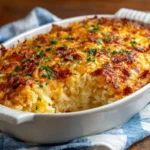
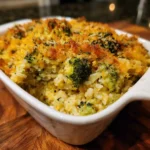
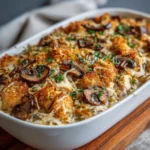
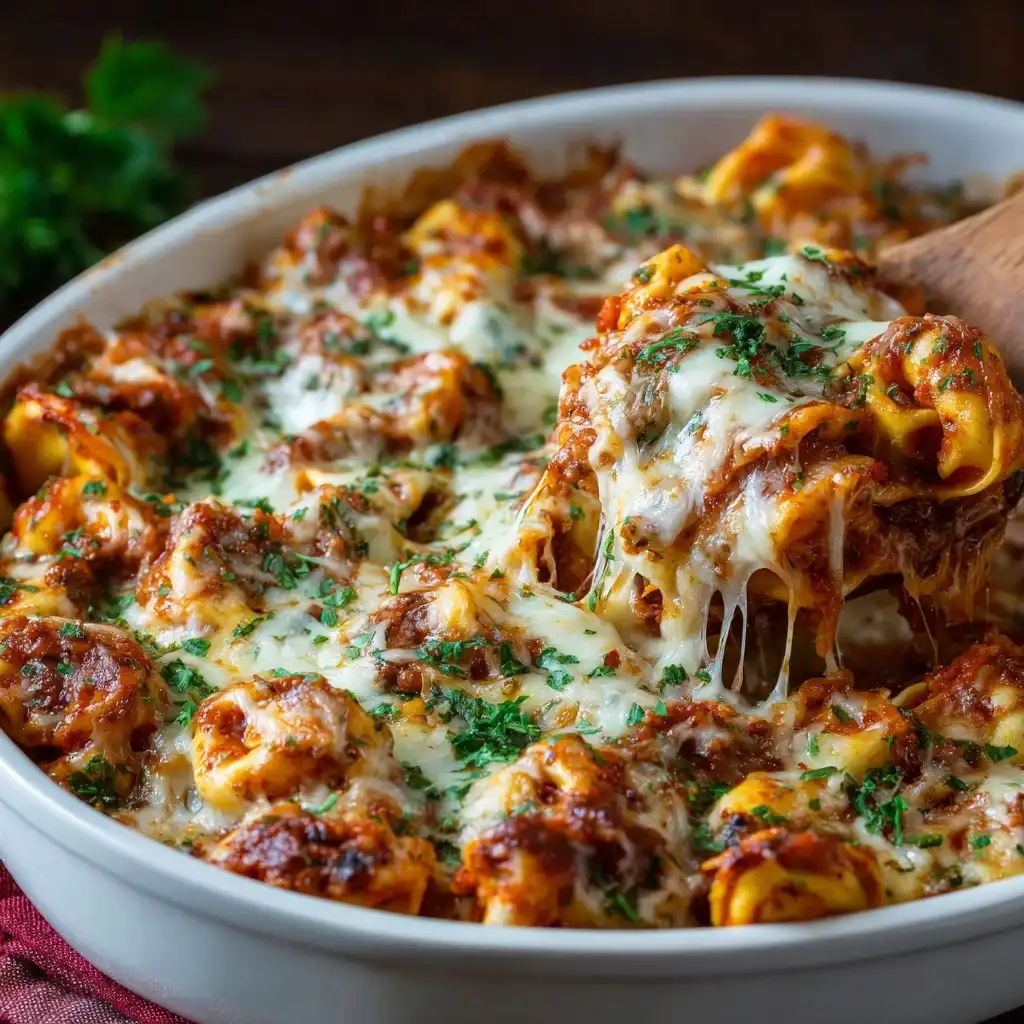
Welcome to the ultimate guide to Cheesy Tortellini Bake—a comforting, crowd-pleasing casserole that marries the tender bite of cheese-filled pasta with rich, melty layers of creamy sauce and golden-brown baked goodness. Whether you’re feeding a busy family after school, hosting a casual dinner party, or seeking a make-ahead meal that reheats beautifully, this dish delivers on flavor, texture, and nostalgia—all in one generously portioned, oven-baked masterpiece. Its simplicity belies its depth: minimal prep, pantry-friendly ingredients, and maximum satisfaction. This isn’t just pasta—it’s warmth served in a baking dish.
The History
The Cheesy Tortellini Bake is a modern American casserole born from the mid-20th-century “dump-and-bake” movement—when home cooks embraced convenience foods like frozen tortellini, canned soups, and pre-shredded cheeses to streamline weeknight dinners. While traditional Italian tortellini trace back to 13th-century Bologna—legend says they were inspired by Venus’s navel—the baked, cheesy reinterpretation is distinctly North American. It evolved alongside innovations like refrigerated and frozen pasta (introduced widely in the 1970s), the rise of creamy cheese sauces (think Velveeta and American cheese blends), and the cultural embrace of casseroles as symbols of hospitality and practicality. Today’s version honors those roots while elevating them: artisanal ricotta-filled tortellini, slow-simmered tomato cream sauces, and gourmet cheese blends reflect a new generation’s desire for both ease and authenticity—making this dish a delicious bridge between heritage and innovation.
Ingredients Breakdown
Every exceptional Cheesy Tortellini Bake begins with intentional ingredient selection—not just for taste, but for balance, texture, and structural integrity during baking. Below is a detailed breakdown of each component’s role:
- Fresh or Frozen Cheese Tortellini: The star. Opt for high-quality ricotta-spinach, four-cheese, or mozzarella-filled varieties. Fresh tortellini cooks faster and offers superior tenderness; frozen provides longer shelf life and consistent texture when properly thawed or added unthawed (adjusting bake time accordingly). Avoid dried tortellini unless rehydrated fully—its dense, chewy nature doesn’t meld well in bakes.
- Heavy Cream or Half-and-Half: Adds luxurious body, richness, and moisture retention. Heavy cream yields a silkier, more indulgent sauce that resists curdling at high heat; half-and-half offers lighter richness with slightly more delicate browning potential.
- Whole Milk or Evaporated Milk: Balances the fat content, adds subtle sweetness, and helps regulate sauce thickness. Evaporated milk contributes caramelized depth and extra creaminess without added water.
- Garlic & Onion (fresh, minced): The aromatic foundation. Sautéed gently in olive oil or butter until fragrant—not browned—to build savory complexity without bitterness.
- Italian Seasoning Blend (dried oregano, basil, thyme, rosemary, marjoram): Offers layered herbaceous notes. Toasting the blend lightly in oil before adding liquids unlocks essential oils and intensifies aroma.
- Crushed San Marzano Tomatoes or High-Quality Tomato Passata: Provides bright acidity and umami depth. Avoid overly sweet or heavily seasoned jarred sauces—this bake relies on clean, balanced tomato flavor that complements, not overpowers, the cheese.
- Grated Parmigiano-Reggiano (aged 24+ months): Salty, nutty, crystalline—essential for umami lift and crust formation. Never substitute pre-grated “Parmesan” (often cellulose-coated); freshness matters profoundly.
- Mozzarella (low-moisture, whole-milk, shredded): Delivers signature stretch and melt. Shred it yourself—pre-shredded contains anti-caking agents that inhibit smooth melting.
- Fontina Val d’Aosta or Gruyère: Adds earthy, buttery complexity and superior browning. Fontina melts luxuriously; Gruyère contributes a subtle toasted-nut finish.
- Full-Fat Ricotta (whipped or drained): Swirled in before baking, it lends cloud-like softness and subtle tang. Draining excess whey (via cheesecloth or fine mesh) prevents pooling and ensures even distribution.
- Freshly Cracked Black Pepper & Sea Salt Flakes: Elevate every other flavor. Add salt in stages—once to the sauce, once to the cheese layer, once to the topping—to ensure uniform seasoning.
- Optional Umami Boosters: A splash of white wine (cooked off), a teaspoon of tomato paste (sautéed until brick-red), or a pinch of red pepper flakes add dimension without heat dominance.
Step-by-Step Recipe
- Preheat & Prep: Position oven rack in the center position and preheat to 375°F (190°C). Lightly grease a deep 9×13-inch ceramic or enameled cast-iron baking dish (avoid thin metal pans—they encourage uneven browning and sticking). Set aside.
- Sauté Aromatics: In a large Dutch oven or heavy-bottomed skillet, heat 2 tbsp extra-virgin olive oil and 1 tbsp unsalted butter over medium-low heat. Add 4 cloves finely minced garlic and ½ cup finely diced yellow onion. Sauté gently for 4–5 minutes, stirring frequently, until translucent and fragrant—but never browned. Stir in 2 tsp dried Italian seasoning and cook 30 seconds more to bloom herbs.
- Build the Sauce Base: Pour in 1 (28 oz) can crushed San Marzano tomatoes (with juices), 1 cup heavy cream, ½ cup whole milk, 2 tbsp tomato paste, and ¼ cup dry white wine (optional but recommended). Bring to a gentle simmer, then reduce heat to low. Simmer uncovered for 12–15 minutes, stirring occasionally, until reduced by ~⅓ and thickened to a velvety, coat-the-back-of-a-spoon consistency. Season with 1½ tsp sea salt and 1 tsp freshly cracked black pepper.
- Par-Cook the Tortellini: Meanwhile, bring a large pot of well-salted water (2 tbsp kosher salt per gallon) to a rolling boil. Add 16 oz fresh or frozen cheese tortellini (do not thaw frozen). Cook according to package directions—usually 3–4 minutes for fresh, 5–6 minutes for frozen—until just al dente (slightly underdone, as it will finish cooking in the oven). Drain thoroughly in a colander, then rinse briefly under cool water to halt cooking. Gently shake dry—excess water dilutes the sauce.
- Combine Pasta & Sauce: In a very large mixing bowl, combine the warm, drained tortellini and the simmered sauce. Fold gently with a silicone spatula until every piece is evenly coated. Let rest 2 minutes to absorb flavors.
- Layer the Cheeses: In a separate bowl, whisk together 1 cup full-fat ricotta, ½ cup grated Parmigiano-Reggiano, 1 large egg yolk, and a pinch of nutmeg. Set aside. In another bowl, combine 2 cups shredded low-moisture mozzarella, 1 cup shredded Fontina Val d’Aosta, and ¼ cup grated Parmigiano.
- Assemble the Bake: Transfer the sauced tortellini into the prepared baking dish, spreading evenly. Dollop the ricotta mixture across the surface in 8–10 mounds, then gently swirl with a knife to create a marbled effect (don’t overmix). Sprinkle the blended cheeses evenly over the top, covering completely. Finish with an extra ¼ cup grated Parmigiano and a light drizzle of olive oil (for golden crust).
- Bake with Precision: Place dish on a parchment-lined baking sheet (to catch spills). Bake uncovered for 25 minutes. Rotate dish front-to-back. Continue baking 12–15 minutes more—until the edges bubble vigorously, the center is hot (165°F internal temp), and the top forms a deeply golden, blistered, crackling crust. If top browns too quickly, tent loosely with foil.
- Rest & Serve: Remove from oven and let rest undisturbed for 15 full minutes. This allows starches to set, prevents sloshing, and lets residual heat finish cooking the center. Garnish with fresh basil ribbons, microgreens, or a final grating of Parmigiano before serving.
Tips
- Texture Tip: For ultra-creamy results, stir 2 tbsp cold butter into the finished sauce off-heat just before combining with pasta—this “mounting” technique adds gloss and richness without splitting.
- No-Stick Secret: Before greasing the dish, rub the interior with a cut clove of garlic—its natural oils help prevent adhesion while adding subtle aroma.
- Make-Ahead Magic: Assemble up to 24 hours ahead—cover tightly with plastic wrap pressed directly onto the surface (to prevent skin), refrigerate, then bake straight from chill—add 8–10 minutes to initial bake time.
- Freezer-Friendly: Fully baked and cooled, wrap dish tightly in double layers of foil + freezer-safe plastic. Freeze up to 3 months. Thaw overnight in fridge, then reheat covered at 325°F for 45 minutes, uncovering last 15 to recrisp top.
- Cheese Melting Hack: Grate all cheeses on the large holes of a box grater *just before assembling*. Cold, freshly grated cheese melts more evenly than room-temp or pre-shredded.
- Acid Balance: If sauce tastes flat after baking, stir in ½ tsp fresh lemon juice or balsamic glaze just before serving—it brightens richness without sourness.
- Golden Crust Guarantee: For extra crunch, mix ¼ cup panko breadcrumbs with 1 tbsp melted butter and 1 tbsp grated Parmigiano, then sprinkle over cheese layer in final 5 minutes of baking.
- Stovetop Shortcut: No oven? Use a deep, oven-safe skillet. After assembly, cover and simmer gently over lowest heat for 20 minutes, then uncover and cook 5 more minutes to set top—finish under broiler for 2 minutes to crisp.
- Serving Temperature Sweet Spot: Serve at 155–160°F—not piping hot. Too-hot cheese becomes rubbery; slightly cooled allows textures to harmonize.
- Leftover Reinvention: Cold leftovers make incredible frittatas—fold into beaten eggs with spinach and herbs, then bake in cast iron.
Variations and Customizations
This recipe is a canvas—adaptable to dietary needs, seasonal produce, global flavors, and pantry whims. Here are 12 thoughtfully crafted variations:
- Classic Meat Lover’s: Brown ½ lb Italian sausage (sweet or hot) and ¼ lb pancetta with aromatics; deglaze with ¼ cup red wine before adding tomatoes.
- Garden Veggie: Fold in 1½ cups roasted zucchini, cherry tomatoes, and baby spinach (wilted separately) before saucing. Top with crumbled feta instead of mozzarella.
- Smoky Chipotle: Replace Italian seasoning with 1 tsp smoked paprika + 1 finely minced chipotle in adobo + ½ tsp ground cumin. Stir in ¼ cup crumbled cotija at the end.
- Truffle Elegance: Whisk 1 tsp white truffle oil into ricotta mixture; garnish with shaved black truffle and chives.
- Lighter Lemon-Herb: Swap cream for Greek yogurt + milk; use lemon zest, fresh dill, and mascarpone instead of ricotta. Top with lemon-thyme breadcrumbs.
- Vegan Wonder: Use plant-based tortellini (cashew-ricotta), cashew cream sauce, nutritional yeast “Parm,” and smoky almond “feta.” Bake with aquafaba meringue topping.
- Breakfast Tortellini Skillet: Add scrambled eggs, crumbled breakfast sausage, and cheddar to warm tortellini; bake until set, top with avocado.
- Seafood Medley: Fold in sautéed shrimp, scallops, and lump crab meat with lemon-dill cream sauce; finish with dill fronds and Old Bay–butter crumbs.
- Spicy Arrabbiata Style: Amp tomato base with 1 tbsp Calabrian chiles + 1 tsp crushed red pepper; use pecorino romano and burrata dollops pre-bake.
- Butternut Squash & Sage: Roast 2 cups cubed squash; blend with cream, sage, and nutmeg; layer with fontina and pepitas.
- Green Goddess: Blend basil, spinach, parsley, garlic, lemon, and olive oil into a vibrant pesto-swirl; top with goat cheese crumbles.
- Everything Bagel: Mix everything bagel seasoning into breadcrumb topping; swirl in scallions and cream cheese into ricotta layer.
Health Considerations and Nutritional Value
A single 1-cup serving (approx. 1/6 of a standard 9×13 bake) provides approximately:
- Calories: 420–480 kcal (varies by cheese/fat choices)
- Protein: 22–28 g (from pasta, ricotta, mozzarella, and Parmigiano—excellent complete protein profile)
- Fat: 20–26 g (mostly unsaturated from olive oil and dairy; saturated fat ~11–14 g—moderate within daily guidelines)
- Carbohydrates: 38–44 g (primarily complex carbs from enriched or whole-wheat pasta; fiber ~2–4 g)
- Vitamins & Minerals: Rich in calcium (55% DV), vitamin B12 (45% DV), phosphorus (40% DV), selenium (35% DV), and riboflavin (30% DV). Tomato base contributes lycopene (enhanced by cooking + fat), a potent antioxidant linked to heart and prostate health.
Smart Swaps for Health Goals:
- Lower-Calorie: Substitute half the cream with unsweetened almond milk + 1 tbsp cornstarch slurry; use part-skim mozzarella and reduce Parmigiano by 25%.
- Higher-Fiber: Choose whole-wheat or legume-based tortellini (lentil or chickpea—adds 5–8g fiber/serving); stir in 1 cup finely chopped kale pre-bake.
- Lactose-Sensitive: Use lactose-free ricotta/mozzarella and aged Parmigiano (naturally low-lactose); verify tortellini ingredients.
- Gluten-Free: Certified GF cheese tortellini (corn/rice/starch-based) works seamlessly—no sauce adjustments needed.
- Low-Sodium: Use no-salt-added tomatoes, unsalted butter, and reduce added salt by 50%; boost flavor with lemon zest, herbs, and garlic.
- Heart-Healthy: Replace half the cheese blend with crumbled feta (lower saturated fat) and add ¼ cup chopped walnuts to topping for omega-3s.
Important Notes: While indulgent, this dish fits well into balanced patterns like Mediterranean or DASH diets when portion-controlled and paired with a large side salad. Avoid ultra-processed “cheese sauces” or canned soups high in sodium and preservatives—building sauce from scratch maximizes nutrient density and minimizes additives.
Ingredients
- 16 oz fresh or frozen cheese tortellini (ricotta-spinach or four-cheese preferred)
- 2 tbsp extra-virgin olive oil
- 1 tbsp unsalted butter
- 4 cloves garlic, finely minced
- ½ cup yellow onion, finely diced
- 2 tsp dried Italian seasoning (oregano, basil, thyme, rosemary, marjoram)
- 1 (28 oz) can crushed San Marzano tomatoes (with juices)
- 1 cup heavy cream
- ½ cup whole milk or evaporated milk
- 2 tbsp tomato paste
- ¼ cup dry white wine (optional but recommended)
- 2 tsp sea salt (divided)
- 1 tsp freshly cracked black pepper (divided)
- 1 cup full-fat ricotta cheese, well-drained
- 1 large egg yolk
- ¼ tsp freshly grated nutmeg
- 2 cups low-moisture mozzarella, shredded
- 1 cup Fontina Val d’Aosta or Gruyère, shredded
- ¾ cup grated Parmigiano-Reggiano (plus extra for garnish)
- Extra virgin olive oil, for drizzling
- Fresh basil leaves, for garnish
Directions
- Preheat oven to 375°F (190°C). Grease a 9×13-inch baking dish with olive oil and rub interior with a cut garlic clove.
- In a large Dutch oven over medium-low heat, warm olive oil and butter. Add garlic and onion; sauté 4–5 minutes until soft and fragrant. Stir in Italian seasoning; cook 30 seconds.
- Add crushed tomatoes, heavy cream, milk, tomato paste, and wine (if using). Bring to a gentle simmer, then reduce heat to low. Simmer uncovered 12–15 minutes, stirring occasionally, until thickened. Season with 1½ tsp salt and ½ tsp pepper.
- Bring 4 quarts salted water to boil. Cook tortellini until al dente (3–6 min depending on type). Drain well, rinse briefly, and shake dry.
- In a large bowl, combine warm tortellini and sauce. Fold gently. Rest 2 minutes.
- In a small bowl, whisk ricotta, egg yolk, nutmeg, remaining ½ tsp salt, and ½ tsp pepper.
- In another bowl, combine mozzarella, Fontina, and ½ cup Parmigiano.
- Transfer pasta mixture to prepared dish. Dollop ricotta mixture evenly; swirl gently. Sprinkle cheese blend over top. Finish with remaining ¼ cup Parmigiano and a light drizzle of olive oil.
- Bake uncovered on parchment-lined sheet for 25 minutes. Rotate. Bake 12–15 minutes more until bubbling at edges, golden on top, and 165°F internally.
- Rest 15 minutes. Garnish with fresh basil and extra Parmigiano before serving.
FAQ
- Can I use dried tortellini?
- No—dried tortellini requires significantly longer cooking and absorbs excessive liquid, resulting in a gummy, dense, and uneven bake. Stick with fresh or frozen for ideal texture and absorption.
- Why does my cheese sauce break or look greasy?
- Common causes: overheating the sauce post-dairy addition, using pre-shredded cheese (anti-caking agents), or adding cold ricotta to hot pasta. Always warm dairy gradually, grate cheese fresh, and let ricotta come to room temperature before mixing.
- Can I prepare this the night before?
- Absolutely. Assemble fully (including cheese topping), cover tightly with plastic wrap touching the surface, and refrigerate up to 24 hours. Add 8–10 minutes to bake time and begin checking at 35 minutes.
- What’s the best way to reheat leftovers?
- Individual portions: microwave covered with damp paper towel on 50% power in 45-second intervals, stirring gently between. Full dish: cover with foil, bake at 325°F for 25–30 minutes, then uncover for 5 minutes to crisp top.
- My bake came out dry—what went wrong?
- Most often due to overcooking, insufficient sauce-to-pasta ratio, or using low-moisture cheeses without enough cream/ricotta. Next time, increase sauce by ¼ cup, reduce bake time by 5 minutes, or add 2 tbsp reserved pasta water before assembling.
- Is there a gluten-free version that holds up well?
- Yes—use certified gluten-free corn or rice-based tortellini. Ensure all cheeses and tomato products are GF-certified. Add 1 tsp xanthan gum to sauce if using GF pasta (helps bind starches).
- Can I freeze this before baking?
- Yes—assemble completely (unbaked), wrap tightly in plastic + foil, freeze up to 3 months. Thaw overnight in fridge before baking as directed. Do not thaw at room temperature.
- What wine pairs best with this dish?
- A medium-bodied Chianti Classico or Barbera d’Asti balances acidity and fruit against the richness. For white lovers, try a fuller Pinot Grigio or lightly oaked Vermentino.
- How do I prevent the bottom from sticking or burning?
- Use a heavy ceramic or enameled cast-iron dish—not thin aluminum. Always grease thoroughly and consider lining the bottom with parchment. Rotate dish halfway through baking for even heat distribution.
- Can I make this vegetarian or vegan?
- Yes—ensure tortellini is egg-free (many are) and use plant-based cheeses. For vegan, swap ricotta for blended cashews + lemon + nutritional yeast, and replace egg yolk with flax “egg” (1 tbsp ground flax + 2.5 tbsp water).
Summary
Cheesy Tortellini Bake is a masterclass in effortless elegance—melding tender, cheese-stuffed pasta with a slow-simmered, herb-kissed tomato-cream sauce and a crescendo of three premium cheeses, all crowned with a shatteringly golden, umami-rich crust.
It’s endlessly adaptable, nutritionally robust, make-ahead friendly, and deeply satisfying—proving that comfort food need not sacrifice sophistication, nourishment, or joy.